
Are the Naruto Whirlpools Worth It? Most Visitors Say Yes, If You Check the Tide First
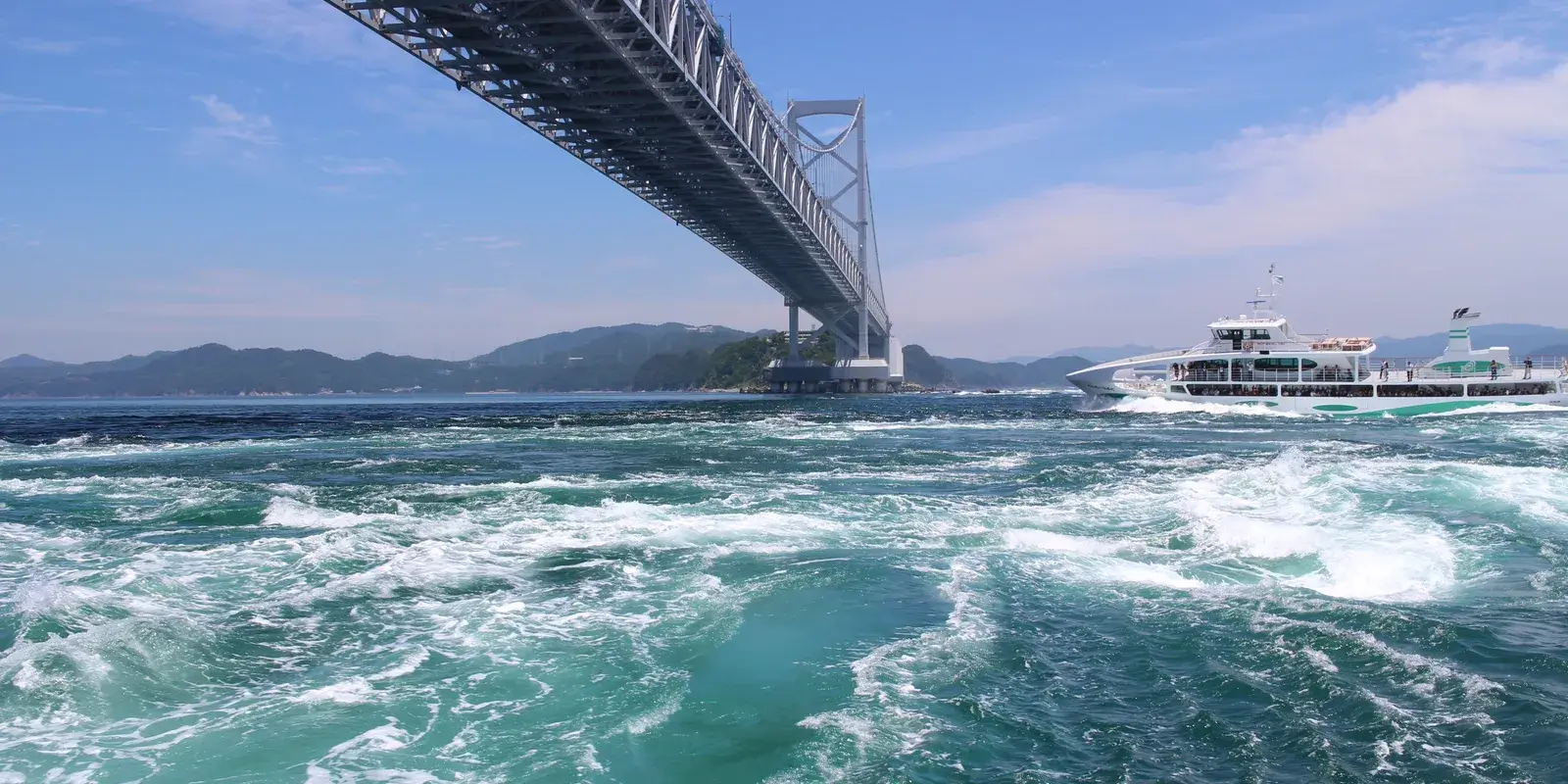
A churning ring of white water directly under a suspension bridge is the image most people picture before they even arrive in Naruto, close to the view Hiroshige painted here about a century and a half ago. Plenty of visitors see exactly that. Plenty of others pay the same fare, walk out onto the walkway forty-five meters above the sea, and see a few ripples. Usually the difference comes down to one detail: whether anyone checked a tide table before leaving the hotel.
Is it worth the detour? (in visitors' own words)
We gathered the voices of international travelers who have actually been to the whirlpools, most of them reviewing on TripAdvisor, and asked, in effect, was it worth it? Weighted by how many other readers found each review helpful, here is how they fell:
The red bar rarely comes from the whirlpools looking unimpressive on their own. It usually comes from a missed tide layered on top of an expensive day. One visitor drove three hours from Osaka, paid a steep toll, timed the trip to the day's high tide, and still wrote: "We followed the High tide timing on that day but there wasn't any whirlpool. Was so disappointing." Another made a two-hour round trip from Tokushima, paid the 510 yen bridge admission, and watched the water at low tide with no luck; their advice to the next reader was blunt: "unless you have a lot of time in Shikoku, you can safely skip this." A visitor who took the sightseeing boat on an off-season afternoon called the ride "ok but nothing exciting" and joked that a boat ride at Niagara Falls gave more thrills. And once, timing never even got the chance to matter: a visitor arrived on a windy, rainy day and was told at the gate that the walkway was closed, too dangerous to open.
The green bar comes from the same set of facts, timed differently. One visitor described the physics of it plainly: "The current in the strait of Naruto is one of the strongest in the world... In right conditions, the whirlpools can measure up to 20m in diameter." Another, who walked the bridge at high tide in spring, called the experience "magnificent", and added that after arriving straight from an express bus with two suitcases, a staff member "almost ran to us to help immediately... and wasted no time to help us store the luggage before we went over to buy tickets." And one visitor's line is worth remembering for the day the tide does not cooperate with your schedule: "We didn't see any whirlpools, but didn't regret walking literally 'below' the bridge to admire the straits."
How the people who live with the strait see it
The red bar here is less than half the size of the visitors' one, even though Japanese reviewers face the same tide gamble. What differs is how a miss gets described. One reviewer, after failing to catch a strong current from the bridge walkway, wrote: "The current wasn't right that day and I couldn't see a big whirlpool. The time I watched from a boat before was also so-so, so I'd hoped this time would be different. It can't be helped. I'll look forward to next time." Another, who had been told it was "the best time today" and still saw little, wrote: "I didn't know you have to go at high tide. Next time I'll actually check before I go." A few even mention this was not their first attempt, which may be part of why a miss reads here as routine rather than ruinous.
The praise, when the timing lands, is not restrained at all. "It's the miraculous overlap of the moon's phases, the tides, and the shape of the land that lets you see this. I really want you to see it at least once. Just be sure to check the date and time carefully," wrote one reviewer. Another added: "It's a magnificent view. Go after checking the weather and the tide. Everyone is bound to be moved. I came sixty years ago too, and it's still wonderful no matter how many times I see it." One reviewer summed up the whole gauge better than any percentage could: "I wasn't expecting much, but it was powerful and I really enjoyed it."
What we wish you'd noticed
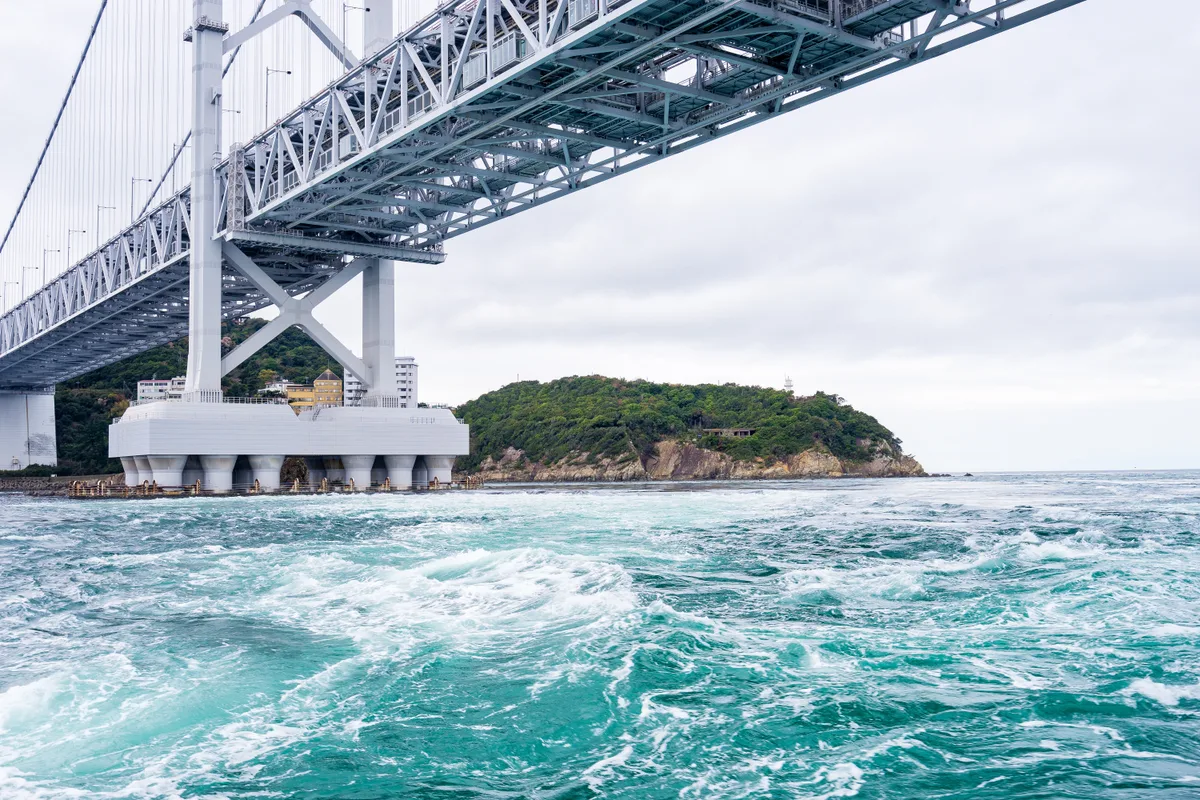
The whirlpools are not always there, and that comes from the nature of the strait rather than any flaw in the ticket. Naruto's own operator states plainly on its ticket page that this is one of the world's three fastest tidal currents, alongside Italy's Strait of Messina and Canada's Seymour Narrows, with currents that pass 20 kilometers an hour at the peak of a spring tide. That peak follows the moon's schedule rather than a ferry timetable. Whirlpools are visible only within a window of roughly one to two hours on either side of the daily tidal peaks, officially up to four such peaks a day, and depending on the day, sometimes only one of them falls inside the walkway's operating hours. Outside that window, the same channel is still moving fast, just without a visible whirl in it.
A missed tide costs a local visitor and a foreign visitor very differently, and that gap explains most of what separates the two gauges above. A reviewer who lives near Naruto and misses the current can come back another day for the price of a bus fare, which is most of why "it can't be helped, I'll look forward to next time" shows up so often in the Japanese reviews. A visitor who has flown in, changed trains, and spent a morning working out an unfamiliar bus schedule to get here is spending something much harder to replace, one of the limited days of a trip that may not happen again for years. The tide treats both visitors the same. What a missed tide takes from each of them is not the same at all.
The size on the operator's own materials is real, but it is the size on the best possible day. The English ticket page lists whirlpools up to 20 meters across; the Japanese guide page gives 20 to 30 meters, at the largest spring tides of spring and autumn. On an ordinary day, at an ordinary hour, the same strait produces smaller eddies, still fast and still strange to watch, but well short of that maximum.
Timing it well, the welcomed way
None of this needs to stop you from going. It only means the two minutes before you leave are worth spending on the operator's own tide schedule, which is free and updated daily. The official Uzu no Michi site marks each day by how strong the tide will be, with a wider viewing window on the strongest days and a narrower one on quieter days, so check which kind of day your visit falls on rather than assuming a fixed number of minutes works every time. Spring and autumn bring the largest whirlpools of the year, so a visit built around one of those seasons, on a day the site marks as a strong tide, gives you the best chance of seeing them at their biggest.
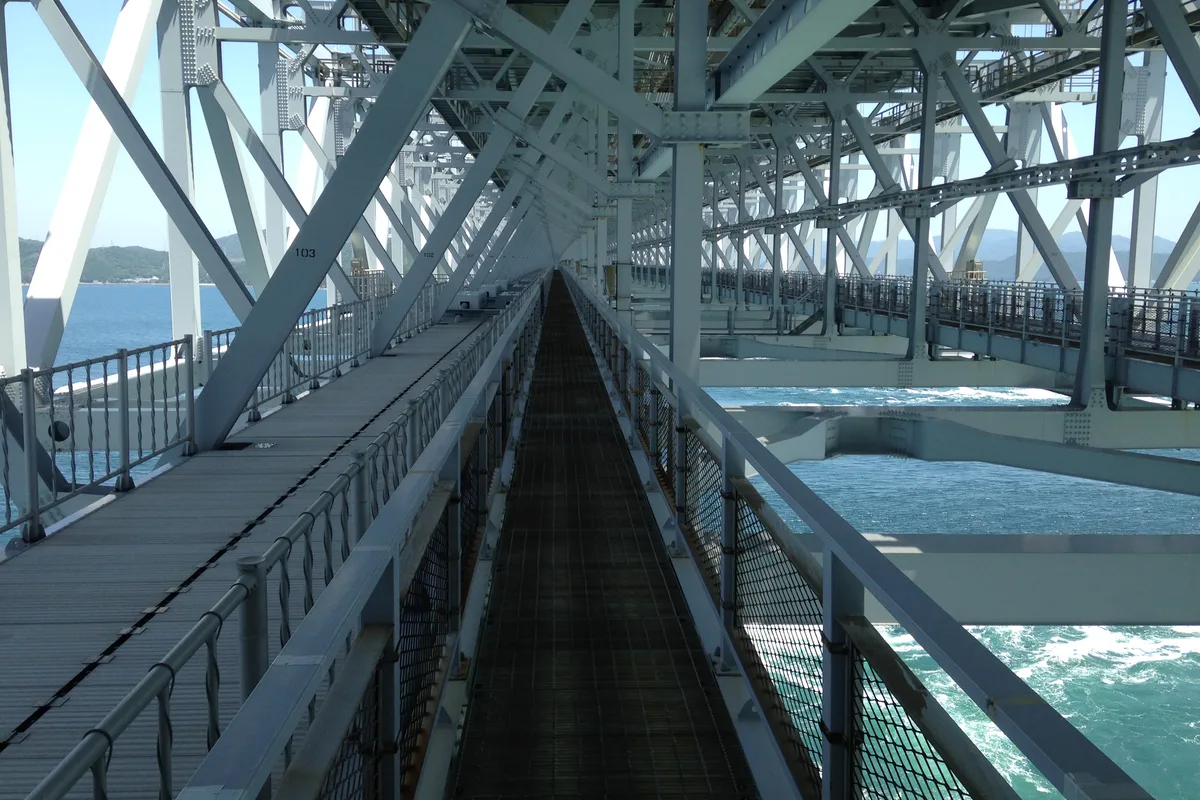
Once you are there, the walkway under the bridge, Uzu no Michi, puts you directly above the strait for 510 yen and includes the glass floor panels that several visitors singled out as the clearest way to watch the current. Visitor reports also describe it as the option most likely to close on short notice in high wind, so it is worth having a second plan ready. The sightseeing boats put you close enough to feel the spray and the motion of the current directly, and visitors who wanted more than a view tended to choose them. Either way, Naruto Park itself has its own observation points, and the bridge and the Seto Inland Sea are worth seeing from the shore regardless of what the tide is doing that hour.
Build a backup into the plan for the day the tide does not cooperate. Several of the Japanese reviewers above still called their visit worthwhile on a quiet day, for the walk and the view alone. Treat the whirlpool as the bonus you are timing for rather than the only reason for the trip, and a visitor who plans for both outcomes does not lose the day to a quiet tide.
If you are touring Shikoku, Takamatsu's Ritsurin Garden sits on the same stretch of coast and pairs naturally with a Naruto morning.
Still deciding which detours on a Japan itinerary earn their travel time? Our hub on what actually matters when choosing places in Japan gathers every gauge we have made.
Sources
- Uzunomichi (Onaruto Bridge Uzu no Michi), Official Ticket & Viewing Information (English): admission price (510 yen adult), operating hours by season, and the description of the Naruto Strait as one of the world's three fastest tidal currents alongside the Strait of Messina and Seymour Narrows, with peak current speeds over 20 km/h and whirlpools up to 20 meters in diameter, visible only within a limited window around up to four daily tidal peaks (the number falling inside operating hours varies by day and season).
- 渦の道 (Uzu no Michi), 総合案内 (official Japanese guide page): walkway length (450 meters), whirlpool diameter up to 20-30 meters at the largest spring tides of spring and autumn, and the site's daily best-viewing-time notice ("本日のうずしおベストタイム").
Visitor voices in this article are quoted verbatim from public reviews on TripAdvisor (international visitors) and jalan and 4travel (Japanese visitors and locals), collected in September 2026. Japanese-language voices are shown in translation; a few Japanese residents' reviews appear as the review platform itself published them, in English. The percentage gauges summarize every usable first-hand voice we collected; they are a reading of real voices rather than a controlled survey sample.
WMJS is written in Japan, in English, with AI help. We check every page, but English is not our first language. If a sentence reads oddly, tell us. One sentence is enough.
Thank you. A person reads every note.
How well do you know Japan?
Based on 51,218+ real Japanese voices
Want to know more? Ask Japanese people
Have a follow-up question about this topic? We'll ask real Japanese people.
Voice Box →