
Is It Rude to Eat While Walking in Japan? — What Japanese People Actually Think
What you'll learn in this article:
- What 270 Japanese people said about eating while walking — and why their answers surprised us
- Why the "rule" isn't a rule at all — it's a spectrum that shifts with context
- The specific things that actually bother people (hint: it's not the eating)
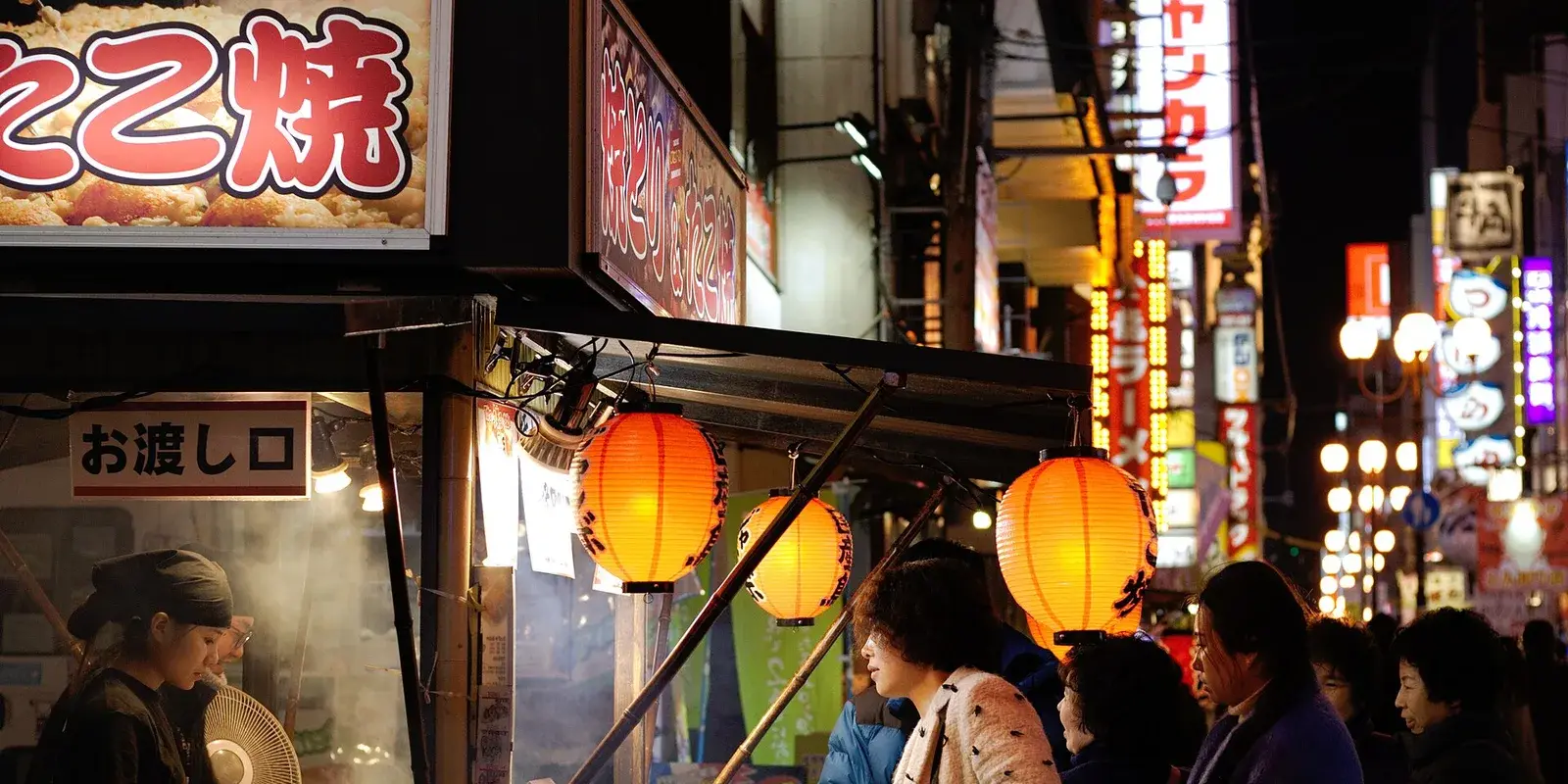
Every travel guide says it: "Don't eat while walking in Japan." But here's the thing — Japan has an entire tourism industry built around tabearuki (食べ歩き), literally "eating while walking." Festivals are centered on it. Food streets are designed for it. And if you've ever walked through a Japanese shopping arcade on a cold evening, you've probably seen Japanese people themselves happily munching on nikuman.
So what's actually going on? We collected 270 real opinions from Japanese people across five different angles — their gut reaction, what specifically bothers them, how they feel about food streets, where ice cream fits in, and how attitudes are shifting across generations — to find out what they actually think.
The short version? It's not about whether you eat. It's about where, what, and how.
Quick Guide
| Context | What Japanese People Said | |
|---|---|---|
| 🟢 Relax | Festivals, food streets, theme parks | These spaces are designed for eating while walking. Enjoy yourself — that's what they're there for. |
| 🟢 Relax | Ice cream, soft serve, crepes | Even Japanese people eat these while walking. As one person put it: "Ice cream is in its own category." |
| 🟡 Good to know | Quiet streets, parks, low-traffic areas | Most people genuinely don't mind — especially if it's not messy and you're not in anyone's way. "If it doesn't bother anyone, I don't care at all." |
| 🔴 Worth noting | Crowded areas, train stations, shopping arcades | This is where it matters. The concern isn't eating — it's bumping, staining someone's clothes, or trailing food smells into enclosed spaces. Stand to the side and eat, or wait for a quieter spot. |
The one thing to remember: Japanese people don't have a blanket ban on eating while walking. What they have is a finely tuned sense of where and when it's considerate. Match your eating to your surroundings — busy and crowded means find a spot to stop; open and relaxed means you're probably fine.
Is it rude to eat while walking in Japan? We collected 270 public posts by Japanese people. Only 30% consider it bad manners — 33% don't mind at all, and 38% say "it depends." Ice cream and festival food are widely accepted exceptions, with 76% approving in at least some contexts. The real concern is not eating itself but bumping people, staining clothes, and food smells in enclosed spaces. Japan's walking-food norm is a spectrum, not a rule.
How We Gathered These Voices
We collected 270 Japanese-language responses across five related topics: general reactions to eating while walking (61 responses), what specifically bothers people (55 responses), feelings about food streets (51 responses), the ice cream exception (51 responses), and generational attitudes (52 responses). We gathered these voices from public Japanese Q&A sites, forums, and social posts.
A quick note: This isn't a scientific survey — it's a collection of what real Japanese people said in their own words, on public platforms. Most English-language guides tell you "don't eat while walking" and leave it there. We wanted to show you the full picture — including the contradictions.
The General Reaction — It's Surprisingly Split
Here's the first thing that surprised us: Japanese people are genuinely divided on this topic. It's not the near-unanimous agreement you might expect from reading travel guides.
One-third of people genuinely don't care. Another third say it depends. And the remaining third think it's poor manners. That's a far cry from the unanimous "absolutely forbidden" impression most guides create.
The most-liked comment in our entire dataset, with over 1,600 likes, was a single word:
ものによる。 It depends on what you're eating.
That response tells you everything about how Japanese people actually think about this topic. It's not yes or no — it's it depends.
人に迷惑がかからなければ、何とも思わない。 If it doesn't bother anyone around me, I don't think anything of it.
コロッケは歩きながら食べた方が美味しい。 Croquettes taste better when you eat them while walking.
That croquette comment got 1,321 likes — more than many of the "bad manners" responses combined. And it captures something important: for many Japanese people, certain foods and certain settings are meant for eating while walking.
But the other side is real too:
常識がないなと思う。 I'd think they have no common sense.
食事は作法です。座って姿勢を正して食べるものです。 Eating is about etiquette. You sit up straight and eat properly.
The tension is genuine — and that's exactly what makes this topic so interesting.
💡 The real answer, from the data
The most-liked response wasn't "absolutely not" or "totally fine" — it was "it depends." When 38% of people say context matters and another 33% say they don't mind at all, the travel guide version of "never do this" starts looking like an oversimplification.
What Actually Bothers People — It's Not the Eating
This is where it gets interesting. When we read the posts about what specifically bothers Japanese people about eating while walking, the focus shifted away from the act itself and toward its consequences.
The 62% who expressed specific concerns weren't saying "eating is inherently wrong." They were pointing to concrete problems:
Staining someone's clothes:
他人の服に食べ物が付いたらどうしますか?時間などを無駄にさせる行為です。 What if food gets on someone else's clothes? You'd be wasting their time.
ソフトクリームを服にべったり付けられて謝罪もなかった。 Someone smeared soft serve on my clothes and didn't even apologize.
Safety risks in crowds:
むせたりしますし。誰かにぶつかって、汚したり汚してしまったり、串がのどに刺さってしまう可能性がある。 You could choke. You might bump into someone and make a mess. And skewers could be genuinely dangerous.
Smell in enclosed spaces:
歩き食べ自体はまあいいけど、たまにソースの匂いが電車まで持ち込まれると正直キツい。 Walking and eating itself is whatever, but when the sauce smell follows you onto the train, that's honestly tough.
This distinction matters enormously for visitors. The issue isn't that you're eating — it's that you might bump someone, stain their clothes, or bring food smells into a shared space. Understanding this changes your behavior in a much more useful way than "just don't do it."
One comment perfectly captured the distinction:
マナー違反じゃなく、お行儀が悪いという方がよろしいかと。 It's not so much a "manners violation" — it's more like "not great etiquette."
There's an important difference between the two. A manners violation suggests you've broken a rule. Poor etiquette suggests you could be a bit more considerate. Most Japanese people are talking about the latter.
💡 The practical takeaway
The concerns are concrete and avoidable: don't walk through crowds with messy food, don't bring strong-smelling food into enclosed spaces, and be aware of the people around you. That's genuinely all most Japanese people are asking for.
The Food Street Paradox
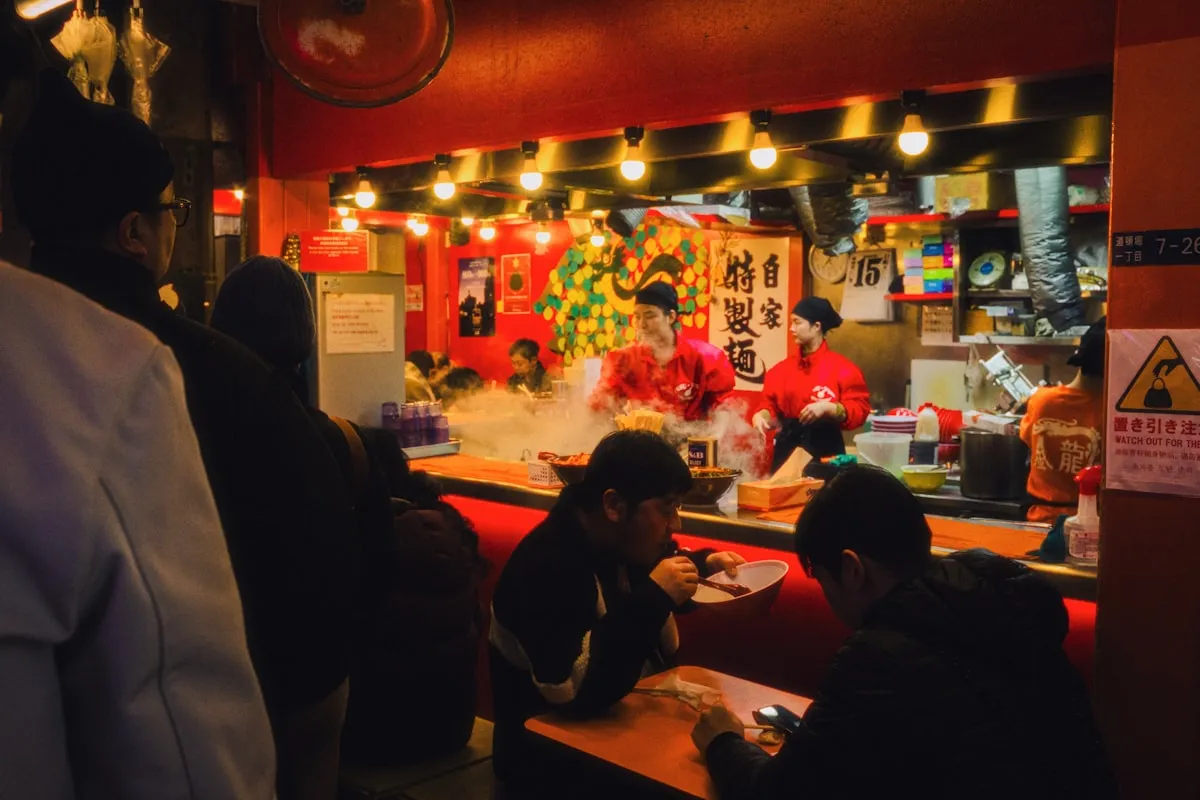
Here's where things get contradictory — and fascinating. Japan has dedicated tabearuki (food walking) streets: Nishiki Market in Kyoto, Komachi-dori in Kamakura, Chinatown in Yokohama, Kobe's Nankinmachi — where stalls hand you steaming pork buns to eat on the spot — the outer market at Tsukiji, and Osaka's Dotonbori, where eating as you walk is woven into the very texture of the street. These places literally sell food designed to be eaten while walking.
So it should be fine there, right? The local perspective is more complicated than you'd expect.
Nishiki Market in Kyoto is the sharpest example. Known for 400 years as "Kyoto's Kitchen" — a market where local chefs and home cooks bought fresh ingredients — it has transformed into a tourist food-walking destination. Since around 2019, as visitor numbers grew, Nishiki Market has asked people to refrain from eating while walking — and to enjoy their food at the stall where they bought it instead.
京都市で買い食い、食べ歩きなんて品のないことは日本人ならしないでください。 Please don't do something as unrefined as eating while walking in Kyoto. Not if you're Japanese.
もう、元の錦市場には戻らないと思いますよ。 I don't think Nishiki Market will ever go back to what it was.
外国人向けの市場になってます。府民は、殆ど行きません。値段がかなり、高いです。 It's become a market for foreign visitors. Kyoto residents almost never go anymore. The prices are quite high.
そこは生活をしている方がおられることを忘れないで欲しい。 Please don't forget that people actually live there.
But there's a flip side — one that shows the paradox in full:
ボランティアの道案内で食べ歩きを止めてほしいと説明すると、約95%の日本人、英語圏や中国語圏の観光客が納得して食べ歩きを止める。 When we explain through volunteer guides that we'd like people to stop eating while walking, about 95% of Japanese visitors and English/Chinese-speaking tourists understand and stop.
This isn't a story about rude tourists vs. strict locals. It's about a real tension between tourism economics (shops selling walking food) and neighborhood livability (residents dealing with crowds and mess). The shops themselves created the food-walking culture — and now the community is managing its consequences.
What this means for you: At designated food streets, look for the cues. Some markets now have "eat here" spots with benches or standing areas near vendors. Nishiki Market has posted signs. When in doubt, buy your food and find a designated eating spot nearby. It's a small gesture that locals genuinely appreciate.
The Ice Cream Exception
If there's one thing almost everyone agrees on, it's this: ice cream is different.
Nearly half of people say ice cream while walking is perfectly fine. And when you add the "depends on the crowd" group, that's 76% who consider it acceptable in at least some situations. This matters because it reveals something important: the "no walking food" norm isn't absolute — it has widely accepted exceptions.
何食べてるの?アイスならセーフじゃない。 What are you eating? If it's ice cream, that's fine, right?
ソフトクリーム買って歩きながら食べてる外国人見て「あ、私もやってるわ」って思った。 I saw a foreigner eating soft serve while walking and thought, "Oh wait, I do that too."
クレープは歩きながら食べるために作られた食べ物。原宿のクレープ文化がその証拠。 Crepes were literally made to be eaten while walking. Harajuku's crepe culture is the proof.
The crepe comment points to something fascinating: the 1980s crepe boom on Harajuku's Takeshita Street was a turning point in Japanese attitudes toward walking food. Before that, eating while walking was almost universally frowned upon. The crepe shops — deliberately designed for takeaway eating — normalized it for an entire generation.
But context still matters, even for ice cream:
パンはOK、ソフトクリームは人混みで危険。場所の混雑度が判断基準。 Bread is OK, but soft serve in a crowd is risky. How crowded it is — that's the real standard.
The practical takeaway: ice cream, soft serve, and crepes are widely accepted while walking — especially in tourist areas, parks, and quieter streets. In a packed shopping arcade or train station, even ice cream gets sideways looks, mainly because of the staining risk.
💡 The ice cream test
If Japanese people themselves do it, it's hard to call it a rule. The "no eating while walking" norm is more like a sliding scale: the messier the food and the more crowded the space, the more considerate you should be. Ice cream on a park bench path? Nobody blinks. Takoyaki in a rush-hour train station? That's a different story.
The Generational Shift
Attitudes toward eating while walking have deeper roots than you might expect — and they're changing.
The origin traces back to Edo-period samurai culture. Walking while eating was considered beneath a samurai's dignity. Over time, this filtered into broader Japanese society through the concept of "refinement" (iki). As one commenter explained:
食べ歩き、買い食いは武士にはご法度でしたが庶民はそこまで「はしたない」とはされていません。しかし江戸の庶民は粋を尊ぶ者が多く、大人が買い食いする姿を粋に感じなかった為、大人は買い食いするなという伝統になっていった。 Eating while walking was forbidden for samurai, but commoners weren't held to the same standard. Still, Edo-period commoners valued refinement, and since adults eating while walking didn't look refined, it became a tradition that adults shouldn't do it.
The Showa era reinforced this through school rules — "no buying and eating on the way home" (kaigui kinshi) was a standard rule for generations of Japanese schoolchildren. The shame-based education around it ran deep:
歩きながらモノを食べるなんて躾がなってない。 Eating while walking means you weren't raised properly.
Then came the 1980s and the Harajuku crepe revolution:
1980年代に原宿竹下通りにクレープ店が開店してから歩き食べが可視化された。 Walking while eating became visible after crepe shops opened on Harajuku's Takeshita-dori in the 1980s.
And the rise of convenience stores in the 1990s eroded the old norms further:
コンビニが当たり前になって子どもだけで買いにくるのも普通になって、「買い食い」って言葉が使われなくなりました。 Once convenience stores became everywhere and kids started buying things on their own, the word "kaigui" stopped being used.
Today, the generational divide is real but nuanced. It's not simply "old people disapprove, young people don't care." Some younger Japanese people are actually stricter than their parents, while some older adults have relaxed their views:
亡き母(昭和一桁世代)は「食べながら歩くなんて有り得ない」と言っていた。今は食べ歩きをする人が増えたため「そこまで悪いということではない」。 My late mother (born in early Showa era) used to say "walking while eating is unthinkable." Now that so many people do it, it's "not that bad."
「歩き食べ」だけが特別にダメという説得力ある論拠は見当たらない。おしゃべりしながら食べるなども「ながら食い」であり、歩き食いのみを非難するのは矛盾。 I can't find a convincing argument for why only walking-while-eating is especially bad. Talking while eating is also "eating while doing something else" — singling out walking seems inconsistent.
What This Means for You
The travel guide version: "Don't eat while walking in Japan."
The reality, according to 270 Japanese people: "It depends — and here's what we actually care about."
Where you can relax:
- Festivals and matsuri — eating while walking is the entire point
- Designated food streets (look for vendor areas with benches or standing spots)
- Theme parks, outdoor events, beach areas
- Ice cream, soft serve, and crepes — widely accepted almost everywhere
- Quiet streets with few pedestrians
Where to be more mindful:
- Crowded shopping arcades and covered streets
- Train stations and platforms
- Near the entrance of shops (food smells can drift inside)
- Any area with "no eating while walking" signs (some tourist spots have posted them)
The golden rule: Stop, stand to the side, and eat. This is what Japanese people themselves do when they grab something on the go. Japan has a long tradition of tachigui (立ち食い) — standing and eating. Street vendors often have a small area nearby where you're expected to eat. Finishing your food before moving on is the single most considerate thing you can do.
And if you do eat while walking? In most situations, you'll be fine. The majority of Japanese people either don't care or understand that visitors come from cultures where this is perfectly normal. As one person put it:
混んでもない普通の道だったら人の勝手じゃね。 If it's just a regular, uncrowded road — it's your business, isn't it?
More Japanese Perspectives
- Convenience store etiquette — What happens inside Japan's most-visited shops: The Unwritten Rules of Japanese Convenience Stores
- The quiet train experience — Another shared-space norm that's more nuanced than guides suggest: Why Japanese Trains Are Silent
- Understanding the "why" behind Japan's norms — The three concepts that explain almost everything: Why Japanese People Choose These Rules
- Taking food home from restaurants — Another food norm that's not what you think: Can You Take Food Home in Japan?
Share Your Experience
Have you eaten while walking in Japan? Did anyone react? We'd love to hear your story — the awkward moments, the happy surprises, and everything in between.
Sources
Online Discussions (Japanese-language platforms)
- Public Japanese Q&A sites, forums, and social posts — first-hand opinions on eating while walking, what specifically bothers people, food streets, the ice cream exception, and generational attitudes.
Note on Quotations
Quotes from online platforms have been lightly edited for readability (fixing typos, formatting for clarity). The meaning and intent of each comment remain unchanged.
Prefer just the numbers? The counts behind this topic live on one page: Eating while walking: what Japanese people actually say, in numbers.
WMJS is written in Japan, in English, with AI help. We check every page, but English is not our first language. If a sentence reads oddly, tell us. One sentence is enough.
Thank you. A person reads every note.
How well do you know Japan?
Based on 51,218+ real Japanese voices
Want to know more? Ask Japanese people
Have a follow-up question about this topic? We'll ask real Japanese people.
Voice Box →