

Is teamLab Worth It? What Visitors Actually Say, and Why the Let-Downs Are Avoidable
You have seen the photos: mirror floors that fall away into infinity, rooms of falling light, a person standing knee-deep in glowing koi. So you arrive half-expecting the most beautiful selfie of your trip, and then you read that it's crowded, or "just an Instagram trap," or that you'll be herded through in the dark, and you start to wonder if it's a tourist trap with a great marketing team.
Here is the short answer: yes, it's usually worth it, but the people who come away disappointed almost all describe the same avoidable thing. They went for the photo, on the wrong ticket, into a crowd. The people who loved it went for the experience, booked a quiet slot, and put the phone down for a while.
Is it worth it? (in visitors' own words)
We gathered the voices of international travelers who have actually been to teamLab and asked, in effect, was it worth it? Weighted by how strongly each opinion resonated with other readers, here is how they fell:
That red bar is bigger than for most places we look at (one in five), and it is worth taking seriously. But read what's inside it. The let-down is almost never "the art was bad." It's the gap between the reels and the room. As one traveler put it: "It's ironic that all the reels I see about teamLab don't show the crowds. If not for this sub, I'd have thought it wasn't crowded." Another, on a busy day: "People were pushing others out of the way to get the shots they wanted. It felt like you were on a factory conveyor belt that kept stopping."
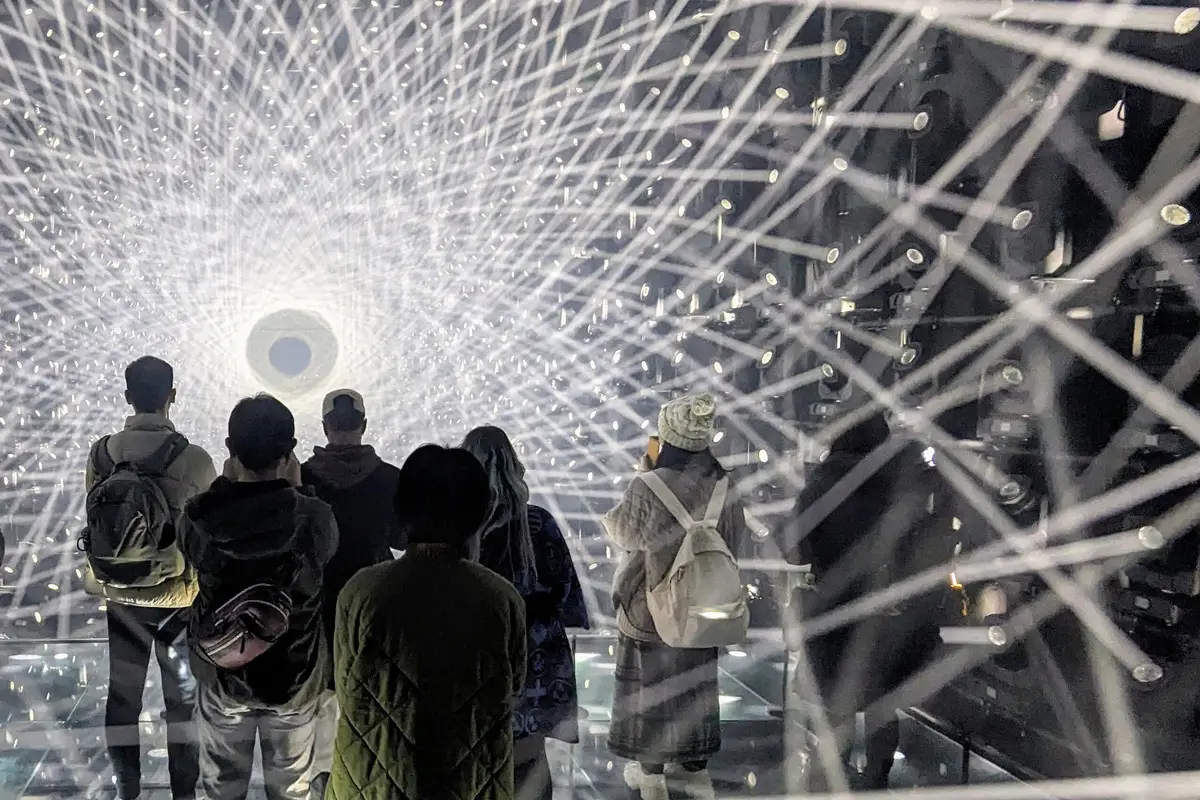
And the most-upvoted voice of all is not a rave but a careful caution, in the same honest register this whole page is written in: "I'd skip it unless you really want to do it, or you're obsessed with immersive art installations." That's fair. teamLab is not a must-do for everyone. But notice the flip side, from someone who reset their expectation before going in: "Borderless is a selfie mecca and overcrowded. Planets is more of an art experience, and is actually life-changing if you are aware and participate." The word that keeps appearing among the people who loved it is participate rather than photograph. One described a single room "that made it feel like you were flying through a wormhole to a new dimension. That alone was enough to make it worth it."
What the Japanese reviews quietly reveal
What Japanese visitors say, in their own reviews, about the very same rooms is a layer most guides skip entirely.
Now compare the two red bars. This time the visitors' let-down (one in five) is more than double the locals' (fewer than one in ten), the reverse of what we usually find. That single fact is the most useful thing on this page, and it tells you exactly where the disappointment comes from. It isn't the art. It's the expectation you walk in holding.
You can watch a Japanese reviewer's expectation correct itself in real time, in the single most-upvoted local review we found: "I'd assumed from the ad photos that you'd just walk through one photogenic room after another, and instead it turned out to be something you'd have to call an experience, a whole-body attraction." That surprise (oh, it's not a photo studio, it's a thing that happens to your body) is the difference between a five-star visit and a let-down. The locals who go in expecting an experience mostly get one. The honest dark edge is candid and specific, never vague: "It was just a dark, flickering place. For an adult ticket, I'd rather have watched a movie," wrote one; others flag the price plainly, or the cold water at Planets. These are useful, concrete complaints, never "it was a trap."
What we wish you'd noticed
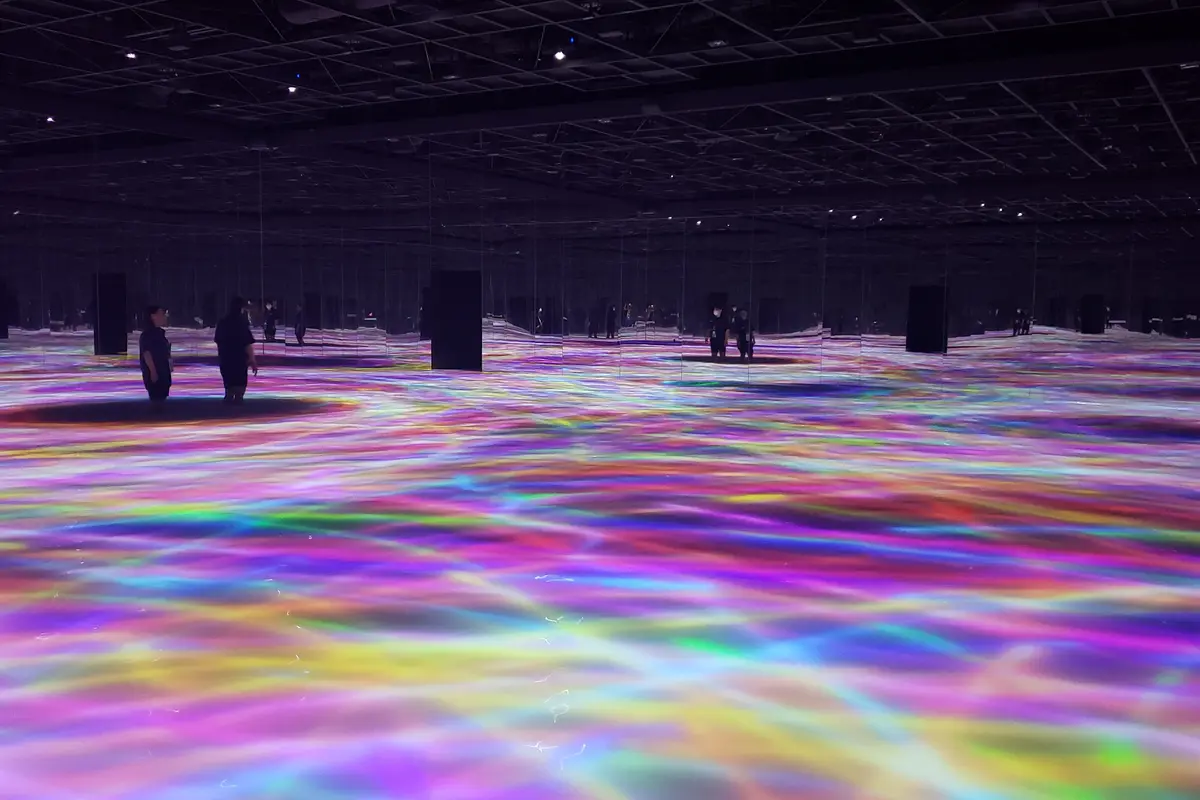
It is a body experience. Not a screen. The thing the happiest visitors keep describing is the moment it stops being something you look at. A Japanese reviewer caught it exactly: "The instant I was barefoot, it shifted from watching to feeling." At Planets you take off your shoes at the door and spend the whole visit barefoot, at times wading knee-deep through real water with koi made of light scattering around your ankles. You cannot photograph your way to that. You have to be in it.
This really is a landmark, and not just a trend. teamLab Borderless holds a Guinness World Record as the most-visited museum in the world dedicated to a single art group: millions of people a year walk into these rooms. The hype is loud because the thing underneath it is genuinely unusual: an international collective of artists, programmers, and engineers making work that responds to your presence and did not exist a generation ago. Japanese beauty is not only old temples and gardens; this is the same culture's other hand.
The crowd is the variable you control. Almost every let-down traces back to the room being too full to feel anything. Almost every rave includes a quiet moment. One local described going around twice: "On a weekday the second loop had thinned out, and I could really lose myself in it." The art doesn't change. The number of people between you and it does. That part is bookable.
The moves that make it go well
Everything above resolves into a handful of moves that turn the 20% let-down into the 57% who'd go again.
- Book a timed ticket in advance, from the official site only. Both venues sell entry for a specific date and time, and the good slots sell out; Planets has no general same-day tickets at the door. teamLab says it cannot guarantee entry on tickets from resale or unofficial sites. The reservation isn't a hurdle between you and the art. It protects your chance to stand in a dark room that responds to you, and not to a crowd.
- Pick the quiet hour. A weekday, or a late evening slot, is the single biggest difference between the visit in the brochure and the visit in the angry reviews. "I'd recommend reserving it late at night," one traveler wrote, "where you aren't skipping anything else for it."
- Go for the experience, and not the feed. Take your photos (teamLab is one of the rare places in Japan where photography is warmly expected), but give at least a few rooms your eyes instead of your screen. The people who put the phone down are the ones who use the word participate.
- Choose your venue on purpose. They are not the same place. Planets (Toyosu) is shorter, barefoot, water-and-body, often a calmer 60–90 minutes. Borderless (Azabudai Hills) is larger, a map-less wander you can lose hours in. You do not need both: visitors who did one and loved it are the rule, and not the exception.
- At Planets, dress for water. Wear or bring something you can roll up past the knee, and don't wear a skirt over the mirror floors. The water is real, and on a cold day it stays cold: a complaint worth pre-empting.
Do these, and the day tends to go the way the heart-warmed reviewers describe rather than the way the conveyor-belt ones do. The art was never the problem. The only thing teamLab asks of you is that you arrive ready to be in it.
Is it worth it, then? If you want a quick photo and nothing more, maybe not, and the most honest voices will tell you so. But book a quiet slot, walk in expecting an experience instead of a backdrop, and let the room respond to you, and you land where most people do: glad you went, and a little surprised by how much.
Still deciding which famous places actually earn a slot on a short trip? Start with what actually matters in Japan. And to choose between Borderless and Planets, book the right way, and know what to wear, the full teamLab Tokyo audio guide is just below.
Sources
- teamLab Planets TOKYO: Official Site: the venue at Toyosu; barefoot, knee-deep water, advance timed tickets, what to wear.
- teamLab Planets TOKYO: Official FAQ: no general same-day tickets at the door; buy only from the official site (entry not guaranteed on resale/unofficial tickets).
- teamLab Borderless, Azabudai Hills: Official Site: the "museum without a map"; artworks move between rooms and have no fixed route.
- teamLab Borderless: Official FAQ: timed-entry tickets bought in advance; official-site purchase guidance.
- JNTO (Japan National Tourism Organization): teamLab Planets TOKYO: explore the space barefoot, at times wading knee-deep in water, your whole body inside the art.
- GO TOKYO (Tokyo Convention & Visitors Bureau): teamLab Borderless: official Tokyo guide to the Azabudai Hills museum.
- Guinness World Records: Most visited museum (single art group): teamLab Borderless recognised as the world's most-visited museum dedicated to a single art group.
WMJS is written in Japan, in English, with AI help. We check every page, but English is not our first language. If a sentence reads oddly, tell us. One sentence is enough.
Thank you. A person reads every note.
How well do you know Japan?
Based on 51,218+ real Japanese voices
Want to know more? Ask Japanese people
Have a follow-up question about this topic? We'll ask real Japanese people.
Voice Box →