
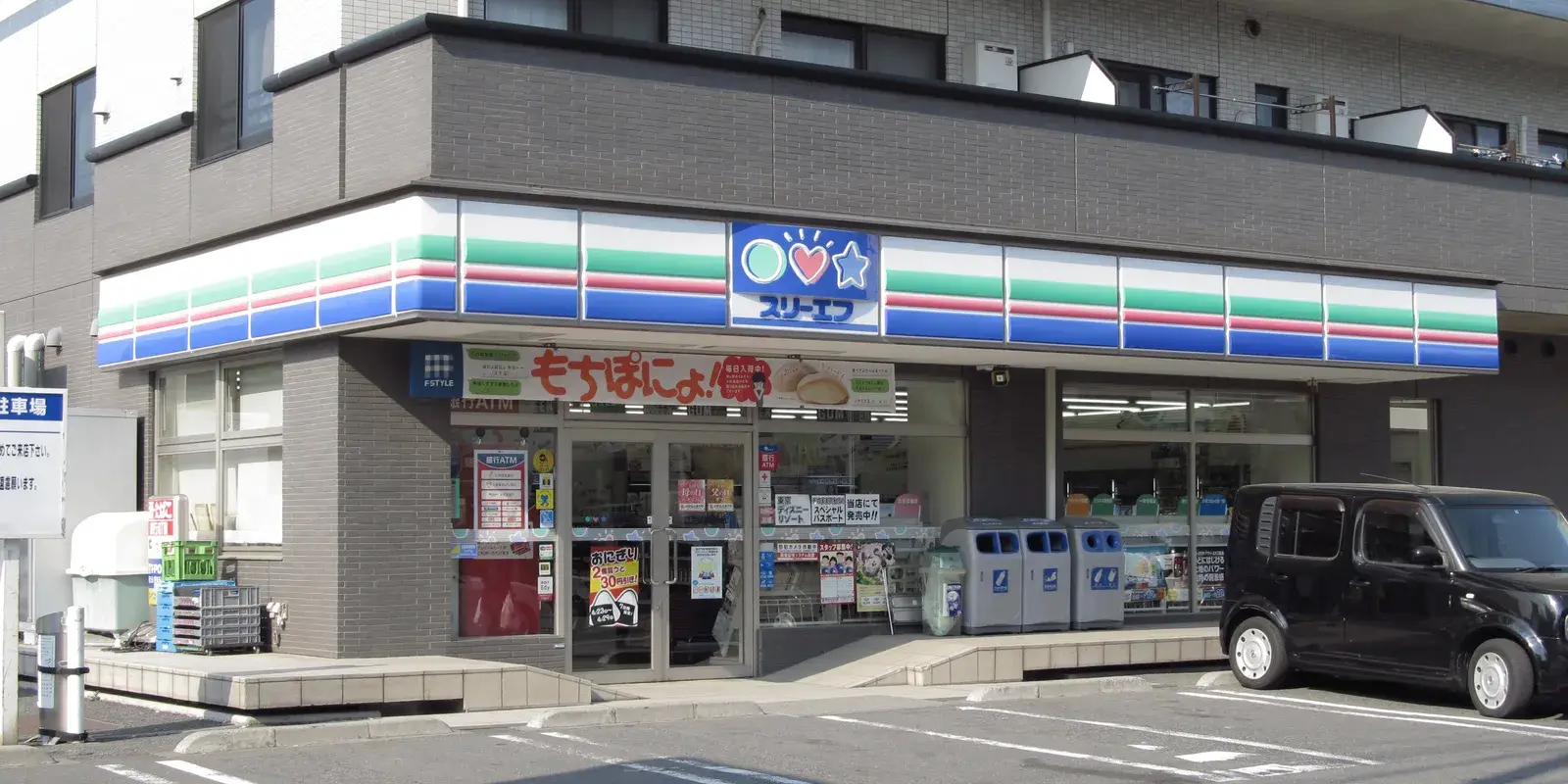
Who Pays for the Konbini Trash Can? The Hidden Cost Behind Japan's Most Convenient Bin
What you'll learn in this article:
- Who actually pays for that convenience store trash can: the city, the company, or someone else
- Why konbini trash is legally different from your household garbage (and why that matters)
- What 76 Japanese voices say about the one thing that turns a quick toss into someone's extra work, and how to be the person staff are quietly glad to see
Who pays for the trash can at a Japanese convenience store? The store does, not the city. By law, konbini trash is "business waste," so the store pays a licensed contractor to haul it away, and in the franchise system that cost usually lands on the individual owner. We collected 76 Japanese voices, and the takeaway is warm and simple: if you sort what you bought into the right slot, staff are genuinely glad you used the bin.
In a country famous for having almost no public trash cans, the konbini bin feels like a small miracle, often the only place for blocks where you can throw something away. Have you ever stood there with an empty coffee cup, wondering if you're allowed to use it? You are. But behind that simple bin is a quiet little system that almost no English guide explains: who pays for it, who sorts it, and why the way you use it gently decides whether you've made someone's day a tiny bit easier or a tiny bit harder.
Here's the good news first: this isn't a warning. The honne, the real feeling, from convenience store staff is surprisingly kind. They're not watching you nervously. The thing that actually wears them down has almost nothing to do with travelers, and once you understand the system, doing the right thing takes about three seconds.
This article picks up where "No Trash Cans, No Problem" leaves off. That one explains why Japan has so few public bins. This one zooms all the way in on the exception, the konbini bin, and answers the question a real viewer asked us: "Does the store manager eat the cost, or the company?"
Quick Guide
| What goes in the bin | What it means for staff | |
|---|---|---|
| 🟢 They're glad | Something you bought there, sorted right (empty the cup, drop the cap/bottle/can in the matching slot) | This is exactly what the bin is for. Sorted trash gets recycled and costs the store less to remove. Staff genuinely appreciate it. |
| 🟡 Mostly fine | A small piece of outside trash, while you're buying something | Most staff quietly look the other way. Just keep it small, and don't leave liquid behind. |
| 🔴 The real burden | Mixed garbage, full bottles, or household trash brought in | This is the one that creates unpaid, unrequested work. It's overwhelmingly a local-resident problem rather than a visitor one. |
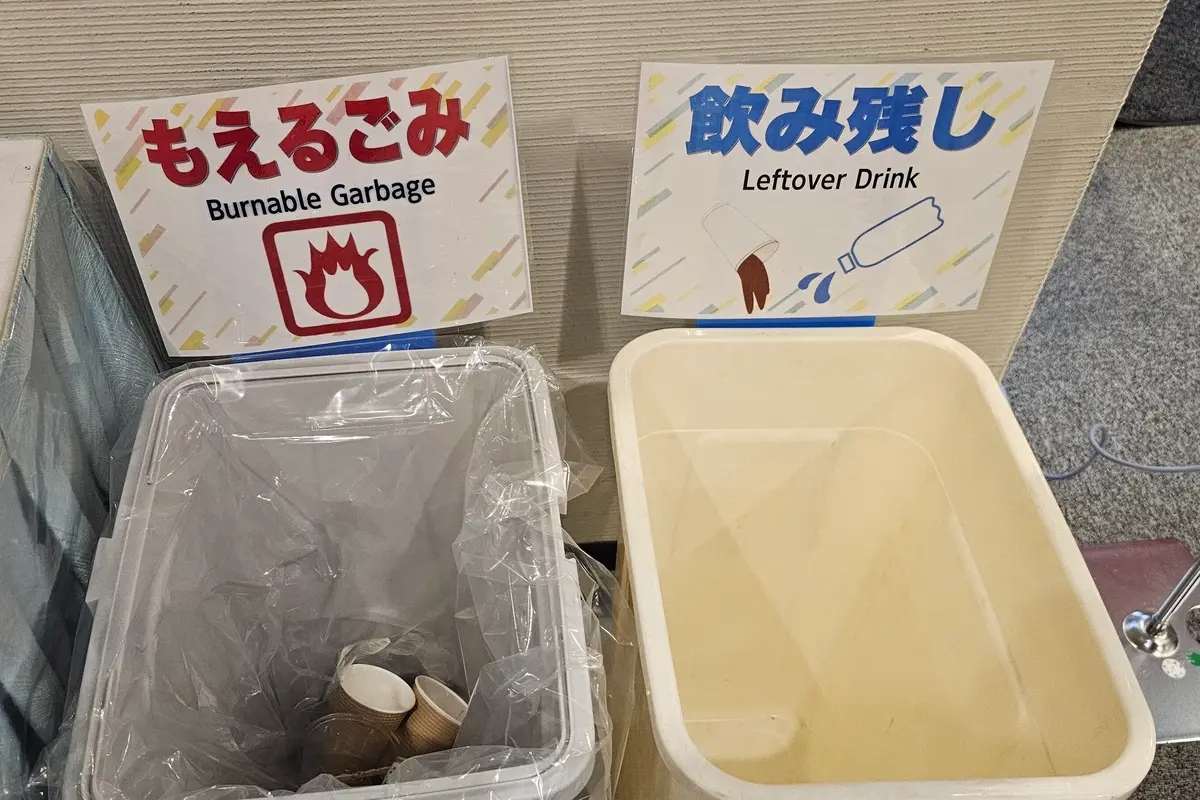
The one thing to remember: Empty your drink before you toss it, and put each part in the matching slot. That's it. That tiny act is the whole difference between trash that gets recycled for free and trash a clerk has to fish out and re-sort by hand.
How We Gathered These Voices
This article started with a comment. On our Japanese channel, we posted a short video about konbini trash cans, and two viewers said something that sent us digging:
コンビニのゴミの費用って店長が被ってんの❓️それとも会社❓️ Wait — does the store manager eat the cost of the konbini trash, or does the company?
基本的には持ち帰って欲しいですが、捨てるなら分別してほしい。ごちゃ混ぜにされた生ゴミや空き缶などを分別するのは大変なんです。 Honestly we'd prefer you take it home — but if you're going to toss it, please sort it. Separating out the mixed-together food scraps and empty cans is really hard.
Those two questions turned out to have answers no English-language guide covers. So we did two things. First, we traced the money (who really pays) through Japanese government and industry sources (all linked at the bottom). Second, we collected 76 Japanese-language voices from convenience store staff and customers on public Q&A sites, forums, blogs, and news interviews, to hear how they actually feel about it.
A quick note: this isn't a controlled scientific survey. It's a collection of what real people said in their own words, on public platforms. We're sharing it so you can see the human side of a bin you've probably used a dozen times.
First, Who Actually Pays?
Here's the part that surprises almost everyone, including many Japanese people.
When the city collects your household garbage in Japan, that's paid for by taxes. But a convenience store's trash is a completely different legal category. Under Japan's Waste Management Act, every business is responsible for disposing of its own waste, at its own expense. Konbini trash counts as "business-related general waste," and by law, it cannot be put out at the neighborhood collection point where households leave their bags.
So how does it leave the store? The store pays for it to leave. A major chain explained it plainly:
自治体の許可を受けた収集運搬会社と契約し、ごみを回収してもらい、適切に処分しています。収集運搬費用と処分費用を店舗が負担しています。 We contract with a licensed collection company to pick up the trash and dispose of it properly. The store bears the collection, transport, and disposal costs. (Major convenience store chain)
Read that last line again: the store bears the costs. Not the city. And here's the answer to our viewer's question: in the franchise model that runs most konbini, that cost falls almost entirely on the individual owner, not the corporate headquarters whose logo is on the sign. Industry reporting describes the same pattern that applies to food waste: disposal costs come out of the local owner's books, while headquarters earns its royalty regardless. The bin is a service the owner of your neighborhood store chooses to pay for, out of a fairly thin margin.
And one more thing that surprises people: no law actually requires a konbini to provide a bin at all. Japan's recycling laws assign businesses the cost of recycling their packaging, but nothing obliges a store to put a public trash can out front. That bin exists purely as a kindness to customers. Which is exactly why how we use it matters so much.
Why the Bins Moved Inside
If you've visited Japan recently, you may have noticed konbini bins are increasingly inside the store now, near the coffee machine, rather than out on the sidewalk. There's a reason, and it's the same reason that quietly inflates the owner's costs.
When bins sat outside, unwatched, they filled up with everything except konbini purchases. Staff and owners describe it vividly:
毎日毎日、すごいゴミの量です。他のコンビニのお弁当、某ハンバーガーショップの食べたあとに残るもの、車で来店して、前日の1日分の大量のゴミをコンビニに捨てていく。 Every single day, the amount of trash is incredible. Bento boxes from other convenience stores, leftovers from a certain burger chain, people who drive up and dump an entire day's worth of car garbage. (Convenience store worker)
Because mixed-in household garbage is technically illegal dumping, and because every extra bag costs the owner money to remove, chains responded by moving bins indoors and posting "no household trash" notices. The line they draw is simple and worth knowing: once something has been carried home, it's treated as household trash. Your in-store coffee cup belongs in the bin. Yesterday's kitchen garbage, carried back in a bag, does not.
This is the context that makes the whole system click. The bin isn't free infrastructure. It's a personal expense someone took on so you'd have somewhere to put your cup, and the people who strain it are overwhelmingly local residents, rarely travelers.
What Actually Creates Work: The Temperature Gauge
So if staff aren't bothered by you using the bin, what does wear them down? We sorted the frustrations in our collected staff voices by what caused them. The pattern is clear, and reassuring.
The single most common complaint wasn't about what people threw away. It was about not emptying it first:
ペットボトル、缶等中身入ったまま捨てる人が多すぎる。ゴミ箱周りが液体でびっちゃびちゃ。 Way too many people throw away PET bottles and cans with the contents still inside. The whole area around the bin gets soaked. (Convenience store worker)
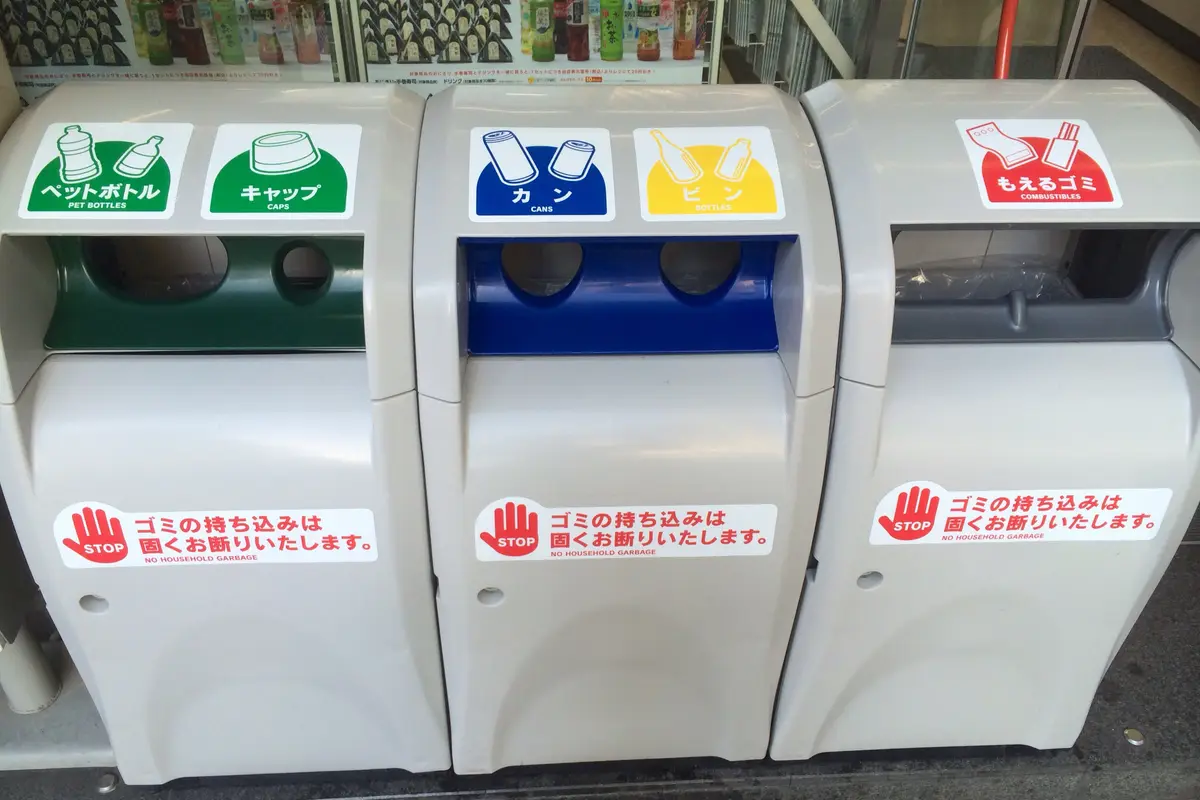
ペットボトルのゴミ箱をあさって、ラベル、キャップ、飲み残りがあれば回収業者が回収してくれないので、私達従業員が処理する。 We have to dig through the PET bottle bin, because if there's a label, a cap, or leftover liquid still in it, the collector won't take it — so we employees deal with it by hand. (Convenience store worker)
That second voice is the quiet heart of this whole article. When a bottle isn't empty and sorted, the recycling contractor rejects it, so a person has to reach in, pour it out, peel the label, and re-sort it. Your three-second skip becomes their thirty-second chore, multiplied by hundreds of bottles a day.
When You Get It Right: The Part That Feels Good
Here's the warm flip side, and it's the reason this is a What Makes Japan Smile story rather than a list of rules.
The same staff who sigh at mixed garbage light up at the opposite. Doing it right isn't invisible to them: they notice, and they're grateful:
きちんと分別してくれると、回収のときに助かります。中身がぐちゃぐちゃだと、リサイクルできるものまで燃えるゴミになってしまう。 When people sort properly, it really helps us at collection time. When it's all mixed up, even recyclable things end up thrown in with the burnables.
きちんと分別して捨ててくれるお客様はありがたい。 Customers who sort their trash properly are a blessing.
お客さんがゴミをゴミ箱にちゃんと捨ててくれると、「気が利くこの人〜!」と嬉しく感じることがある。 When a customer puts their trash in the bin properly, sometimes I genuinely think, "Oh, this person gets it!" and it makes me happy.
Notice what they're not asking for. Nobody expects perfection. Nobody's grading your form. The bar is wonderfully low: buy something, finish your drink, drop the empty bottle in the bottle slot. That's the whole gesture, and on the other side of it is a real person who quietly registers that you cared.
The Cultural Engine: A Bin Built on Trust
Why does such a small thing carry such weight? Because the konbini bin runs on the same quiet engine as a lot of Japanese public life: a system that works only because most people use it as intended, with no one watching.
There's no attendant standing guard, no fee gate, no penalty for tossing your kitchen garbage in. The whole thing is held up by a soft, shared assumption: this is for what you bought here, so use it that way. When you sort your bottle correctly, you're not just saving a clerk thirty seconds. You're keeping faith with an honor system that an owner is personally paying to offer.
This is the same instinct behind so much of what visitors find magical about Japan: streets with no bins that somehow stay clean, the expectation that you'll carry your trash until you find the right place for it, the unspoken choreography of a convenience store run on mutual consideration. The konbini bin is that whole philosophy, shrunk down to a single decision you make in three seconds. (If you're curious how that consideration shapes the rest of the store, our guide to the unwritten rules of Japanese convenience stores walks through the rest.)
What Convenience Store Staff Want You to Know
Pulling all the voices together, here's what the people who empty these bins would actually tell you:
- Yes, please use the bin. That's what it's there for, and they'd rather you use it than struggle.
- Buy something if you can. The bin is for customers; a small purchase keeps the whole arrangement honest.
- Empty your drink first. A bottle with liquid still inside is the single biggest headache: it can't be recycled and it makes a mess.
- Match the slots. Cans, glass bottles, PET bottles, and burnables usually each have their own opening, often with a little picture. When in doubt, follow the illustrations.
- Don't bring in bags of outside garbage. Anything from home or another store isn't theirs to take, and it's the owner who pays for it.
None of this requires you to be perfect. It just asks you to be the kind of person the green bar is made of.
💬 What do you think?
Japanese readers: How do you feel about this?Visitors: Have you experienced this in Japan?
Share your voice →More Japanese Perspectives
- No Trash Cans, No Problem: How "Carry Your Trash" Earns You Respect: why Japan has so few public bins in the first place, and what locals actually feel about visitors who carry their trash.
- The Unwritten Rules of Japanese Convenience Stores: the rest of the quiet etiquette that makes konbini run so smoothly.
Share Your Experience
Have you used a konbini bin and wondered if you were doing it right? Did a small "sumimasen" and a sorted bottle ever earn you a warm smile? Tell us through Voice Box: your story might help the next traveler get it right.
WMJS is written in Japan, in English, with AI help. We check every page, but English is not our first language. If a sentence reads oddly, tell us. One sentence is enough.
Thank you. A person reads every note.
How well do you know Japan?
Based on 51,218+ real Japanese voices
Want to know more? Ask Japanese people
Have a follow-up question about this topic? We'll ask real Japanese people.
Voice Box →