
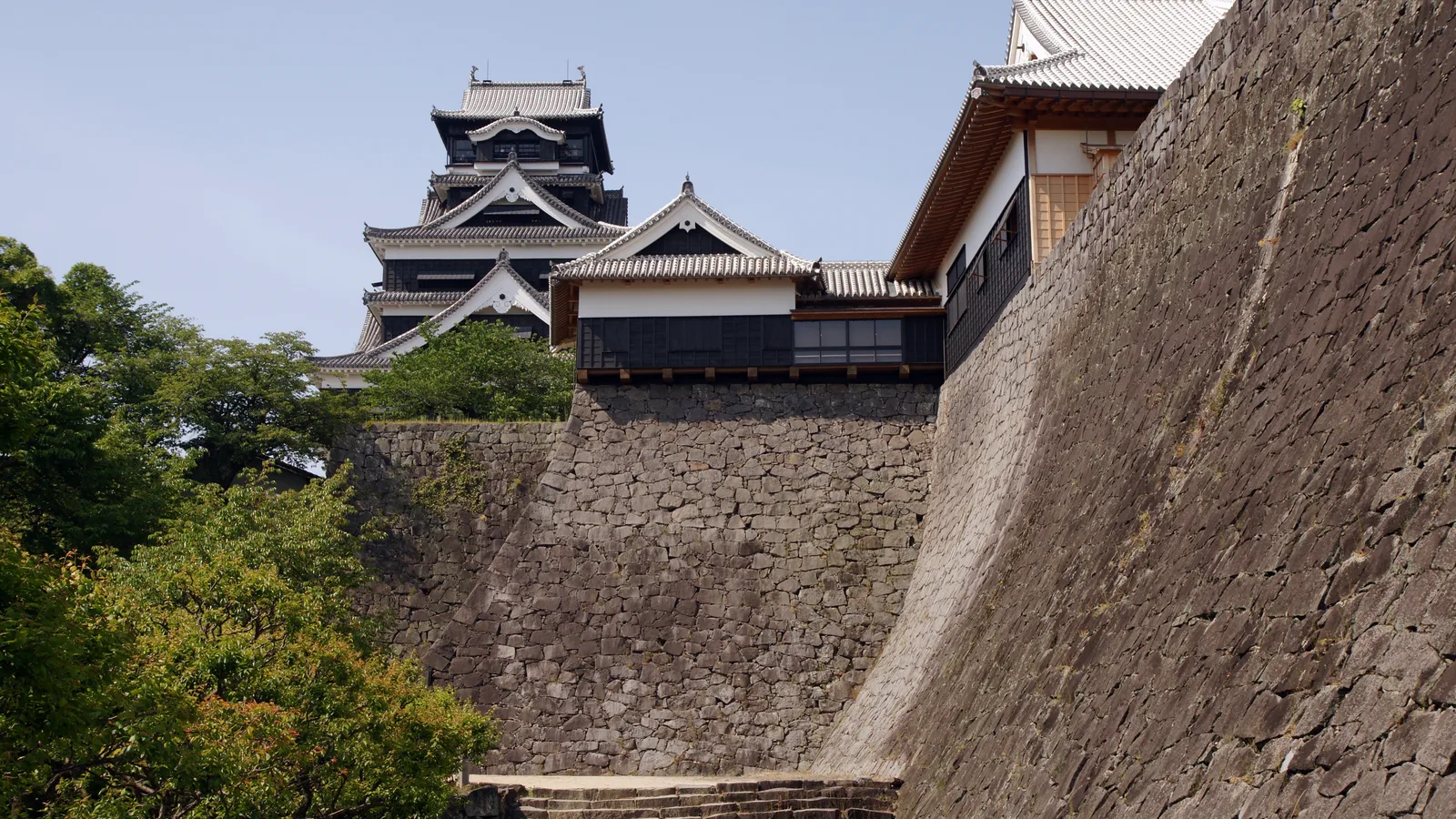
Kumamoto Castle — A Fortress Being Put Back Together, One Numbered Stone at a Time
Kumamoto Castle
By Kei · Born and raised in JapanThe Meaning
Most great castles ask you to imagine the past. Kumamoto asks you to watch the present.
When you stand before Himeji or Matsumoto, you are looking at something finished: an original keep kept whole for four centuries, preserved exactly as it was. Kumamoto is the opposite kind of place. In April 2016, two earthquakes a day apart, the first measuring magnitude 6.5 and the second 7.3, both reaching the top of Japan's intensity scale, tore through the city and its castle. Stone walls that had stood since the early 1600s slid down in great heaps. Turrets cracked. The keep was shaken and shut.
What the castle did next is the whole reason to come. It did not hide the damage behind hoarding and wait. It built a raised wooden walkway, about six meters up, and invited the public to come and look down into the repair, watching craftsmen sort through tens of thousands of fallen stones, number them one by one, and set each back in the exact place it came from. Full restoration is not expected to finish until around fiscal 2052, more than three decades after the quakes. So this is a castle you visit mid-sentence, while it is still being written.
That changes what you are walking toward. You are not here to admire a monument that was finished long ago. You are here to see something being mended, slowly and with enormous care: a wound and a healing in the same view.
The man who built it would have understood the patience of that. Kato Kiyomasa, the warlord who completed Kumamoto Castle in 1607, was as famous for engineering as for war. He reshaped rivers and reclaimed farmland across the province, work still in use today, and people here still call him affectionately by an old honorific, Seishoko-san. His signature was stone. The castle's walls curve outward as they rise, gentle at the foot and almost vertical near the top, a shape built so that no attacker, the story goes, not even a nimble ninja, could climb them. They are called musha-gaeshi: warrior-repelling.
Four hundred years later, those same walls are the thing being put back. The craft that once kept people out is now the craft of bringing the castle back. Keep that in mind as you walk in, and a construction site slowly turns into something closer to a quiet act of devotion.
What Happens When You're There
Step 1: Arriving at a Castle Still Mending
You begin not at a gate but in a small recreated castle town. Sakura-no-baba Josaien, at the foot of the hill, is a cluster of shops and eating places laid out in the style of the old quarter, with local Kumamoto food, a tourist center, and the Wakuwaku-za museum, and it is where most people buy their tickets, away from the queue at the inner gate. It makes a gentle on-ramp: a rebuilt castle town below a castle still rebuilding itself.
From here the keep already shows itself above the trees, black-walled and white-eaved, looking from a distance entirely whole. That first impression is worth holding onto, because it is only half true. The tower is open and repaired; much of the ground you are about to cross is not. Knowing that in advance is the difference between feeling let down by the scaffolding and understanding that the scaffolding is the point.
So set your expectations kindly before you climb. The famous keep is open and waiting. Around it, a thirty-five-year project is underway, and you have arrived in the middle of it, which means you get to see something no visitor will be able to see once it is done.
Step 2: The Stone Walls and the Miracle That Held
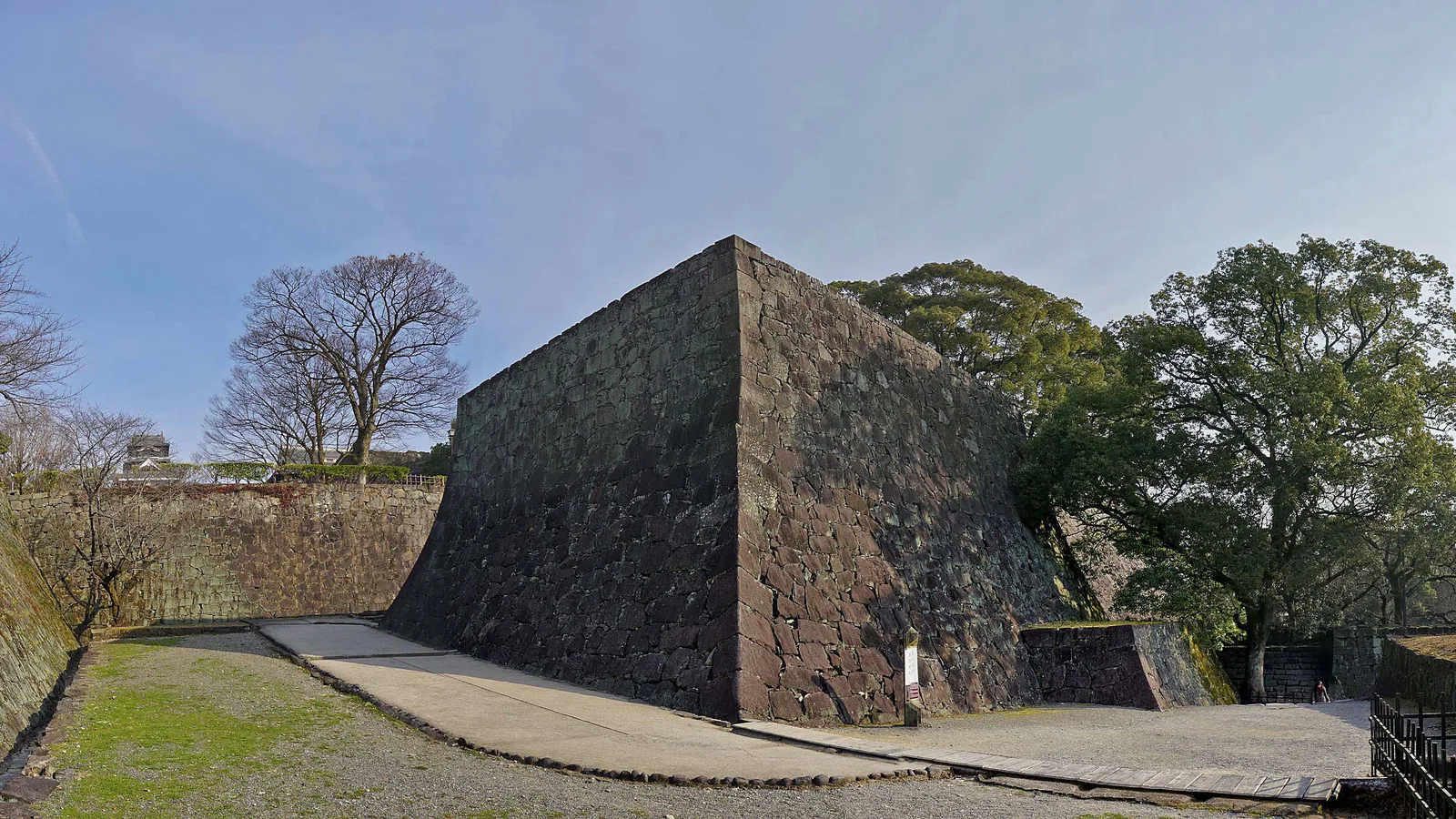
Before you reach the tower, look hard at the stone, because at Kumamoto the stone is the real story.
Kiyomasa's musha-gaeshi walls are unlike the straight ramparts of earlier castles. They start as a slope you feel you could almost walk up, then bend back on themselves the higher they go, until the top overhangs and there is nothing left to grip. The beauty of the curve and the purpose of the curve are the same thing: a wall shaped so precisely to be unclimbable that it became elegant by accident.
Then there is the wall that did not fall. When the 2016 quakes brought down around five hundred stones from two faces of the Iidamaru five-story turret, the turret itself did not collapse. It was left balanced on its corner, held up, almost unbelievably, by just twelve stones stacked at the angle: a single slender column of masonry with the building still poised on top. Photographs of it travelled the country. People called it the miracle one-pillar stone wall, and it became, quietly, a symbol of the whole city's recovery. After nearly four years of taking the wall apart and rebuilding it stone by stone, that section was completed in 2024, reinforced, in a first for Japan, with 246 hidden pressure plates set among the stones so it can ride out the next earthquake.
It is worth standing with that for a moment. The thing people came to photograph was not the strength of the wall but the way it almost fell and didn't. There is something very Japanese in that: an attention not to the flawless but to the thing that endured damage and held. You do not have to be told what to feel here. The stones do it for you.
Step 3: Watching the Repair From the Elevated Walkway
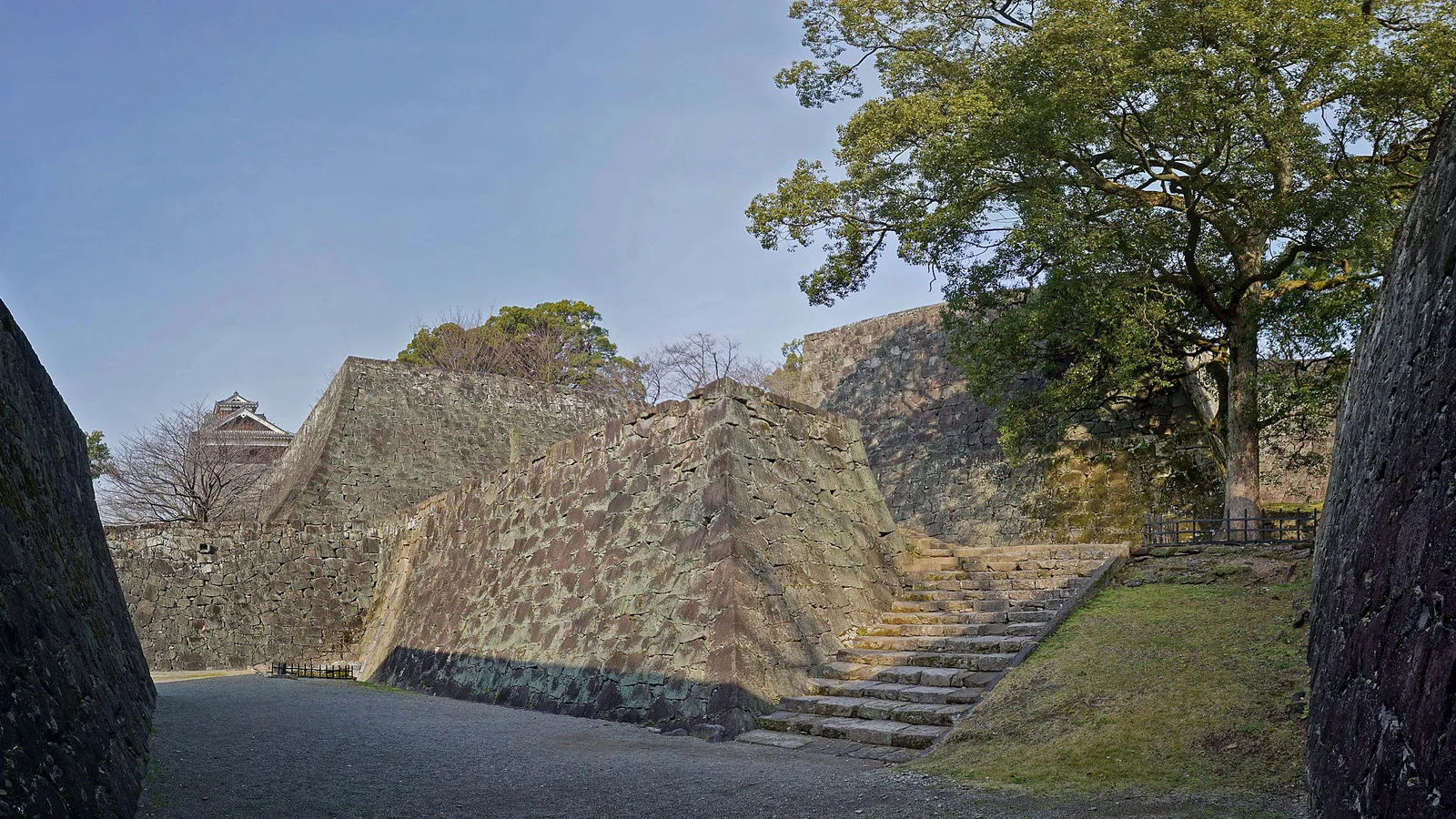
This is the part that exists nowhere else, and it will not exist forever.
Rather than close the damaged grounds, the castle built a special viewing walkway, about 350 meters long and raised some six meters above the earth, that carries you over the wreckage and the work. It was put up without digging a single foundation hole, so as not to crush the buried ruins beneath; the curved steel frame balances on slender single legs, and the floor you walk on is cypress grown in Kumamoto's own prefecture. It is a temporary thing, built only to last out the restoration, and it will be taken down when the work is done.
From up here you see what a tour of a finished castle never shows you. Below and around you are walls half-rebuilt and walls still waiting, stacks of numbered stones laid out like the pieces of an enormous puzzle, and, at one famous corner, the two-style stone walls, where a gentler old slope and a steeper later one meet side by side, two generations of masons' work touching at a seam. Beyond them rise the keep and the long roofs of the Honmaru Palace.
It helps to know the scale of what you are looking at. Of the castle's roughly 970 stretches of stone wall, the city's official survey found nearly a third damaged in the quakes: about thirty percent of the wall surface needing to be rebuilt, around a tenth of it collapsed outright. Every fallen stone has to be identified, numbered, and returned to the precise spot it left, by hand, in the old way. It is the kind of work measured not in months but in decades, and the people doing it, the quiet, careful hands behind so much of what makes Japan run smoothly, will not see all of it finished in their working lives. You are watching patience at a scale that is hard to hold in your head.
Step 4: The Keep, a Building That Tells Its Own Wound
Now the keep itself. Be honest with yourself about what it is before you go in, because the castle is honest about it too: the tower you are entering is not the original. The first keep and the entire main palace burned to the ground in 1877, on the eve of a rebellion, and the large and small towers you see were rebuilt in 1960 in steel-reinforced concrete, faithful on the outside down to the count of the roof tiles, and partly paid for by ordinary citizens' donations. In that, Kumamoto has a quiet kinship with Osaka: a beloved concrete keep that everyone knows is a reconstruction, and cherishes anyway.
What makes this keep worth climbing is not age but what it chooses to remember. Its floors are a museum that walks you straight through the castle's own life: the first floor on Kiyomasa and how he designed the place to be defended; the next on the lords who followed and the castle town they ran; then the rebellion and the fire; and then, on the contemporary floor, the 2016 earthquakes and the restoration still going on outside the windows. A building that was shaken nearly to pieces has turned its top floors into the story of being shaken and put back together. At the summit, an observation deck opens 360 degrees over the city, with old nineteenth-century photographs laid over the live view so you can see what stood here before.
And if the stairs are not for you, they need not be the end of the visit: the rebuilt keep has elevator access for those who cannot manage the steps, and a wheelchair-friendly ramp to the entrance, a gentleness the original fortress, with its ladder-steep stairs, was never built to offer.
Step 5: Walking Back Through Kato Kiyomasa's Castle Town
As you come back down and out, let the size of the place settle on you. Kiyomasa's castle once spread across nearly a million square meters: large and small keeps, forty-nine turrets, gate after gate after gate. One turret still standing from his era, the Uto Turret, is so grand it was nicknamed the "third keep"; it survived four centuries and the rebellion's fire, and is now being carefully taken apart and rebuilt in its turn, with restoration not expected to finish until the 2030s.
That is the thing to carry out with you. You did not visit a castle that was completed and then frozen. You visited one that fell, in part, and is being lifted back up: slowly, by hand, stone by numbered stone, on a clock that runs past most of our lifetimes. Most places ask you to imagine how much care once went into building them. Kumamoto lets you stand and watch that care happening now. You leave having seen not a monument, but a mending, and you take a little of its patience with you, back down through the rebuilt streets at the foot of the hill.
Good to Know
Hours. The castle is open daily from 9:00 to 17:00. Two last-entry times catch people out, so it helps to separate them: last admission to the grounds is 16:00, but the last entry into the main keep is 16:30. Arriving late in the afternoon leaves you rushing the best part. These are the standard-season hours and can be extended for special events; the castle is closed only on December 29 (and may close in severe weather). Last verified: 2026-06. Confirm current hours on the official site before you rely on them.
Admission. Entry is ¥800 for high-school students and adults, and ¥300 for elementary and junior-high children; preschoolers enter free. This single ticket covers both the grounds and the main keep. Combined tickets are sold with the Wakuwaku-za museum at Josaien (¥850) and with the city museum as well (¥1,100). Last verified: 2026-06.
Getting there. Kumamoto makes an easy day trip from Fukuoka: the Kyushu Shinkansen runs from Hakata to Kumamoto Station in roughly 32 minutes on the fastest Mizuho, about 38 on a Sakura, and around 50 on an all-stops Tsubame. From Kumamoto Station, take the city tram toward the center and get off at the Kumamoto Castle / City Hall stop (熊本城・市役所前, still widely signposted by its old name, Kumamotojo-mae), about a 15–20 minute ride at a flat ¥200 fare, then walk up through Josaien. The "Shiromegurin" castle loop bus is an alternative, and a free shuttle runs the uphill stretch for anyone who would rather not climb the slope. (For passes, IC cards, and how the trains and trams fit together, see getting around Japan.)
How long to stay. Allow about 2–3 hours for the keep, the elevated walkway, and the grounds. The garden at Suizenji pairs naturally for a half-day in the city; Mt Aso, by contrast, is a separate, longer trip and not a quick add-on; trying to fit the castle, a garden, and the volcano into one day usually disappoints.
Accessibility. Unlike the steep ladder-stairs of Japan's original wooden keeps, Kumamoto's rebuilt concrete keep has elevator access for visitors who cannot use the stairs, a ramp to the entrance, and free wheelchair rental. The grounds themselves are on a hill and involve some slopes and uneven ground.
Photography. Photography is welcome. Don't let the scaffolding put you off: the keep photographs beautifully from the set viewpoints, and the half-rebuilt walls and rows of numbered stones are, in their own way, the most memorable thing you'll point a camera at here. At the busy viewpoints, step aside before you raise your camera so others can keep moving. (More on reading the room at popular photo spots.)
Best time to visit. The grounds are calmest right at opening. Cherry blossoms in late March and early April and autumn colour in November are the loveliest, and busiest, times; spring brings evening illuminations.
Official website: castle.kumamoto-guide.jp/en
If Things Don't Go as Planned
You're worried it's "just a construction site." It isn't, though it's honest to say a third of the stone walls are still being rebuilt. The main keep is fully open, the elevated walkway turns the repair into the highlight rather than an obstacle, and what you see being done here you will never be able to see once it's finished. If anything, the in-between state is the reason to come now.
You expected an original castle and learned the keep is concrete. Many visitors feel a small dip when they learn the tower was rebuilt in 1960. It helps to know the original burned in 1877, and that the citizens of Kumamoto paid to rebuild it faithfully; and that the genuinely old, genuinely original work here is in the stone walls and the surviving Uto Turret rather than the keep. The keep is where the story is told; the grounds are where the real four-hundred-year-old stone is being saved.
Parts of the grounds are closed off. They will be, and which parts changes as the work moves. This is normal and not a reason to skip the visit; the open route (Josaien, the walkway, the two-style stone walls, the miracle wall, and the keep) is the heart of it. Check the official site for the current route before you go.
The hill and the stairs are more than you bargained for. The grounds climb, and inside the keep there are stairs. If that's a concern, use the free shuttle bus up the slope and the keep's elevator inside; a visit that takes the gentler routes is still a full visit.
You only have half a day, based in Fukuoka. That's enough. The Shinkansen makes the round trip easy, and 2–3 hours at the castle fits comfortably into a day trip. If you have longer in Kyushu, the castle pairs well with the steaming hot-spring town of Beppu over in Oita, or with the shrine of Dazaifu Tenmangu near Fukuoka.
Sources:
- Kumamoto Castle Official Website (English): The 1960 reconstruction of the large and small keeps in steel-reinforced concrete; the 1877 burning of the towers and Honmaru Goten on the eve of the Satsuma Rebellion; the castle as completed by Kato Kiyomasa
- Kumamoto Castle Official: History: Completion in 1607 under Kato Kiyomasa; the musha-gaeshi curved stone walls; the former precinct of about 980,000 m² with 49 turrets, 18 turret gates and 29 castle gates; Kiyomasa's civil-engineering legacy and the "Seishoko-san" honorific; the "Ginkgo Castle" nickname
- Kumamoto Castle Official: Visitor Information: Hours 9:00–17:00, grounds last admission 16:00, main keep last entry 16:30, closed December 29; admission ¥800 (high-school and older) / ¥300 (elementary–junior-high) / preschoolers free; combined tickets; elevators inside the keep reserved for wheelchair and stroller users and those who cannot use stairs
- Kumamoto Castle Official: Special Reopening (Grand Unveiling): The Uto Turret as a nationally designated Important Cultural Property and the only original multi-story turret (the "third keep"), now under full dismantling and restoration targeted for around fiscal 2032
- Kumamoto Prefecture Official Tourism: the "miracle one-pillar stone wall": The Iidamaru turret left standing on just 12 corner stones; about 500 stones collapsed from the south and east faces; stone-wall rebuild completed in 2024 using 246 pressure-relief plates as a nationwide first; the two-style stone walls
- Kumamoto City: Kumamoto Castle Restoration Basic Plan (Summary, rev. March 2023): Official damage figures: of about 973 stone-wall faces (~79,000 m²), 517 faces / ~23,600 m² (29.9%) damaged, of which 50 sites / 229 faces / ~8,200 m² (10.3%) collapsed; full-restoration target extended from fiscal 2037 to fiscal 2052
- Kumamoto City Official Guide: "The Keeps Are Back Open": The reopened keep's floor-by-floor exhibits (Kato era, Hosokawa era, the modern Satsuma Rebellion, the 2016 earthquakes and reconstruction), the 6th-floor observation deck, the 1st-floor elevator and wheelchair-friendly ramp
- Kumamoto City Official Guide: Access: City tram and Shiromegurin loop bus at a flat ¥200 fare (effective June 2025), the free castle shuttle bus, Sakura-no-baba Josaien as the approach and ticket hub
- Cabinet Office (Government of Japan): 2016 Kumamoto Earthquake: The April 14 foreshock (M6.5) and April 16 mainshock (M7.3), both reaching seismic intensity 7; the first time two intensity-7 quakes struck the same region in succession since the scale was established
- JNTO (Japan National Tourism Organization): Kumamoto Castle: Visitor framing, tram access from Kumamoto Station, and the castle's standing as one of Japan's most celebrated castles
Image credits: Hero and thumbnail by 663highland (CC BY 2.5); the curved stone wall and the keep above the walls by z tanuki (CC BY 3.0); all via Wikimedia Commons, cropped and resized.
WMJS is written in Japan, in English, with AI help. We check every page, but English is not our first language. If a sentence reads oddly, tell us. One sentence is enough.
Thank you. A person reads every note.
Real voices
Is it worth it?
Were you there? Share your photos.
Your photo could appear in this guide — with your name and a link to your profile.
Submit a photoRelated Articles

Getting Around Japan: The Tiny Things That Earn You a Nod
"Excuse Me, Can You Take My Photo?": What Japanese People Really Think

More guides in Kyushu
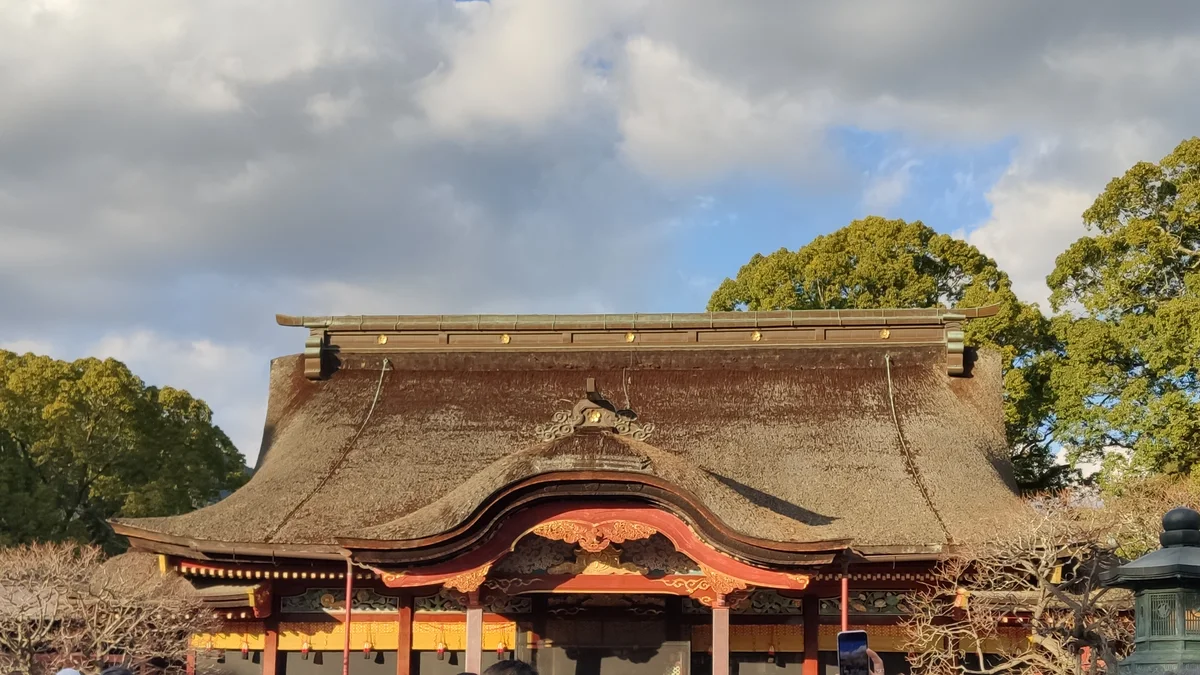
Visiting Dazaifu Tenmangu, the Shrine Where a Wronged Scholar Became a God
Is Dazaifu Tenmangu worth visiting? We weighed 49 traveler voices: 56% say worth it, and Japanese visitors land warmer at 77%. Free entry, getting there from Fukuoka, the umegae mochi and flying-plum legend, plum-blossom timing, and the Kyushu National Museum next door, with an audio guide.
Dazaifu Tenmangu
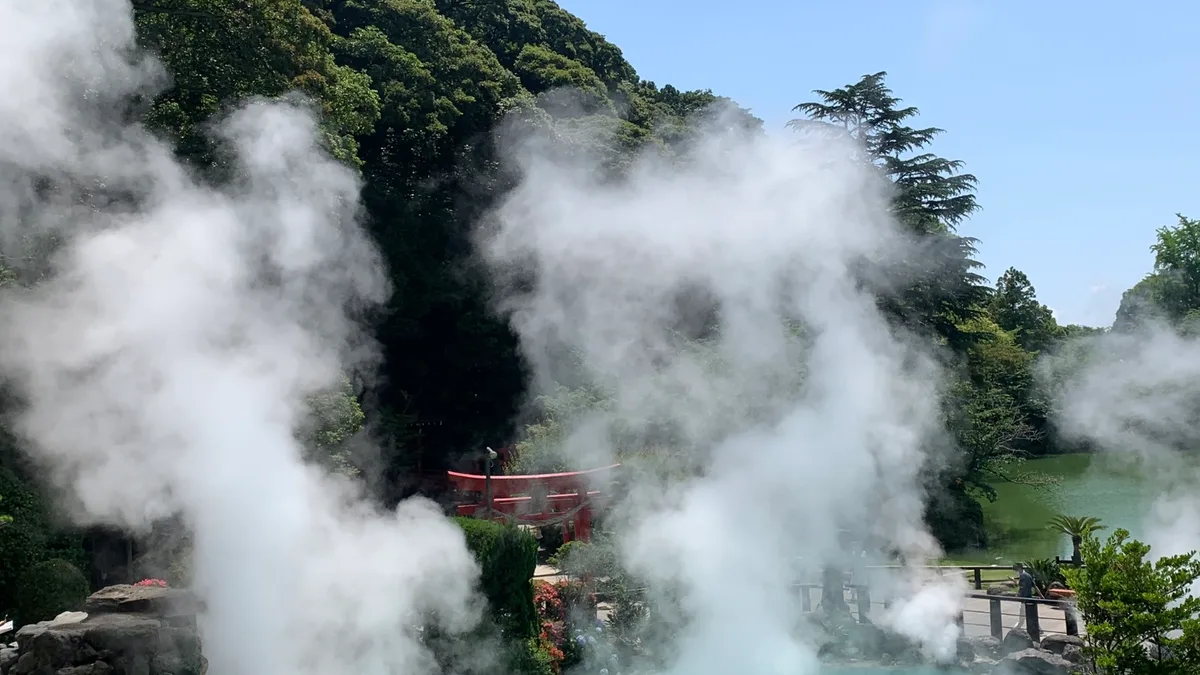
Visiting Beppu Onsen, the Town Where the Earth Boils Just Beneath Your Feet
Is Beppu worth it? We weighed 102 traveler voices: 46% say yes for the baths and boiling town, 44% say it depends on why you came, and Japanese reviewers are far warmer at 72%. The seven hells you look at but don't bathe in, steam-cooked eggs, the sand bath, and Beppu Hatto, with an audio guide.
Beppu Onsen (Kannawa)
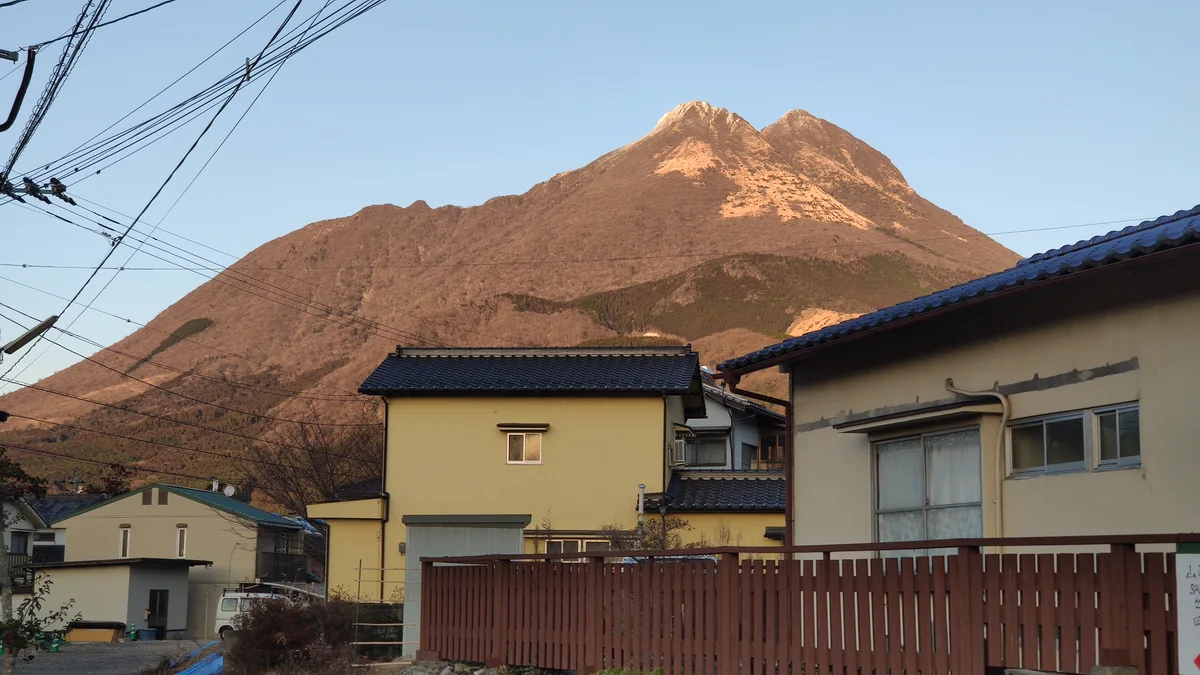
Yufuin: A Town to Walk Slowly, and a Mist That Waits for Morning
An audio cultural guide to Yufuin, verified against official sources. A hot-spring town you walk rather than watch, where the famous morning mist on Lake Kinrin belongs to those who stay the night, how it differs from Beppu, and how to actually get there on the Yufuin no Mori train.
Yufuin (Lake Kinrin)
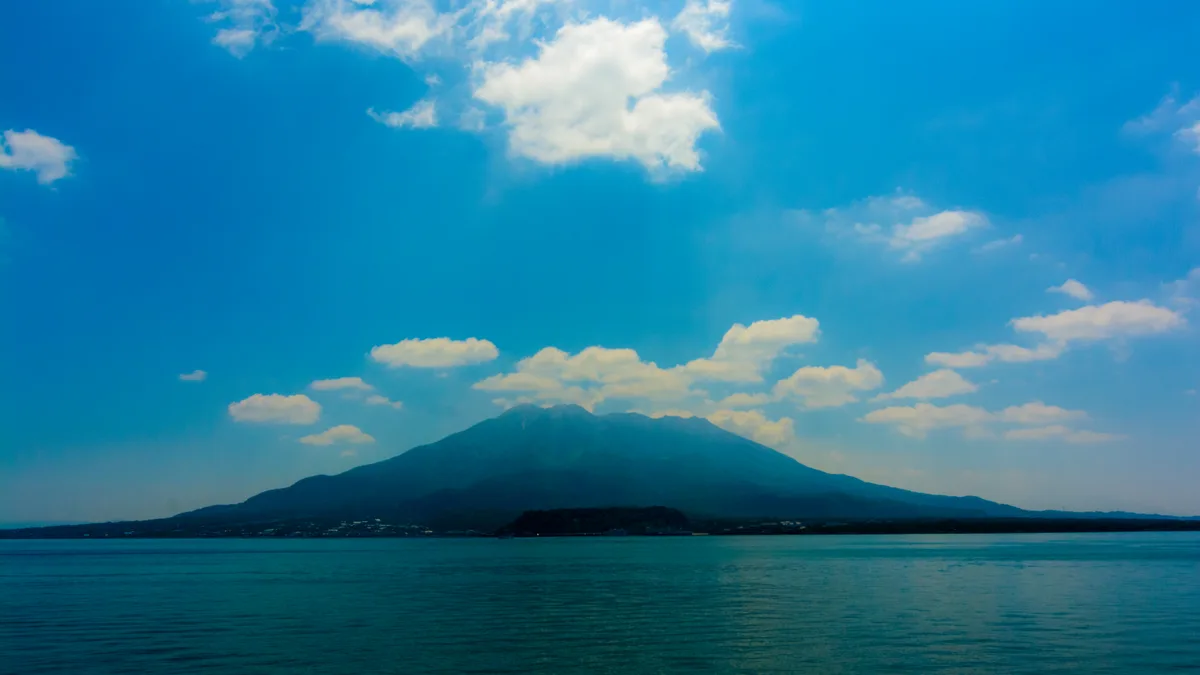
Kagoshima — The City That Lives With a Volcano
Kagoshima lives with an active volcano across the bay. An audio guide to Sakurajima: ash read like weather, a ferry to the mountain, a garden built around it.
Sakurajima