
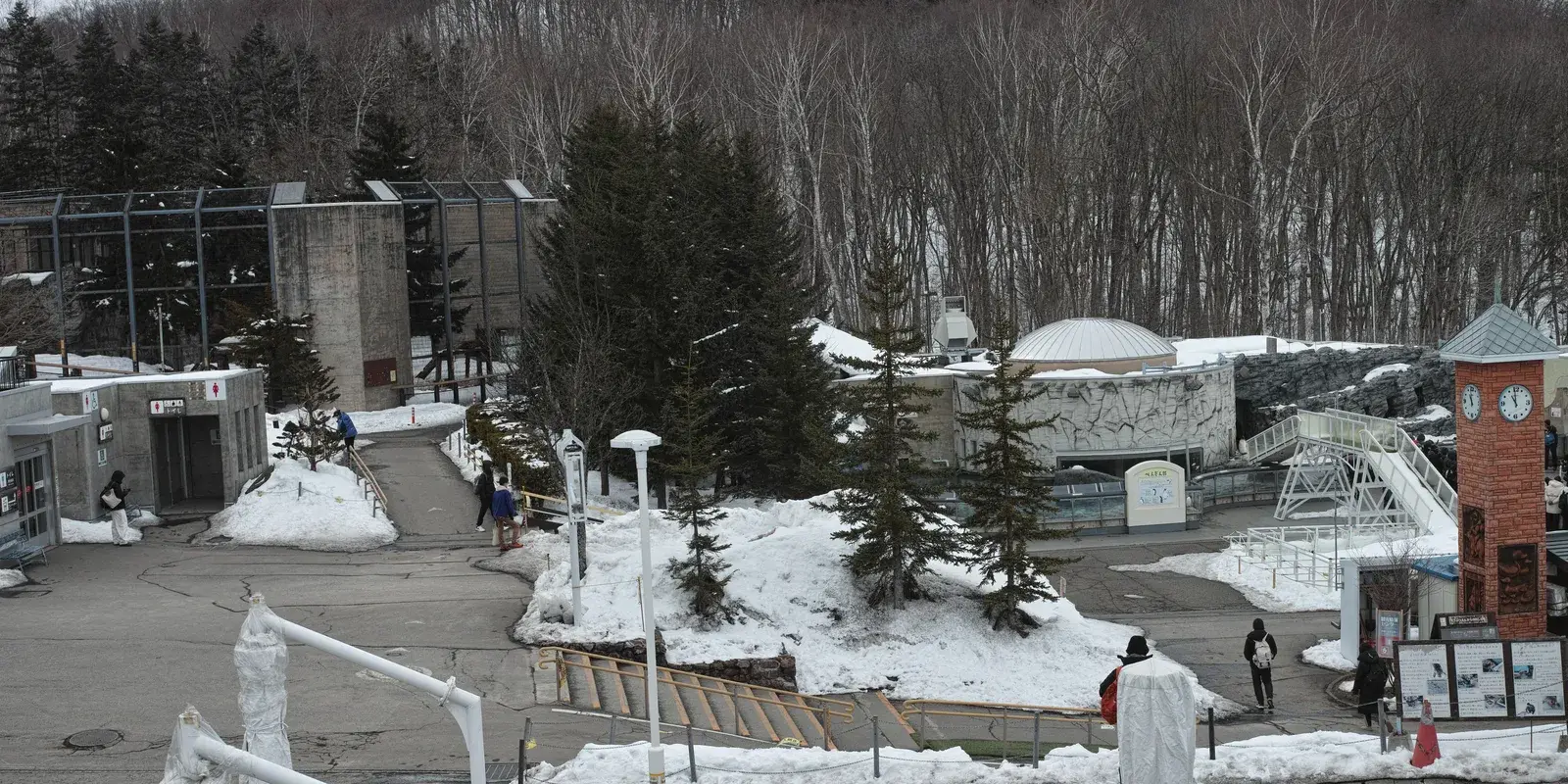
Is Asahiyama Zoo Worth It? What Visitors and Japanese Reviewers Say
Two hippos stand pressed against the door of their enclosure in the snow, scratching at the wood, waiting to be let back inside. One visitor watched them for a while and left convinced the whole zoo was a mistake. Another visitor, a different day, called the close encounters with the exact same polar bears and wolves the best part of the visit. Same building, same animals on the other side of the glass, two completely different verdicts.
That gap is the real reason to think before you commit a full day, sometimes an overnight, to a zoo two hours past Sapporo. So here is where the actual voices land.
Is it worth the trip? (foreign visitors, in their own words)
We gathered voices from international travelers who have reviewed Asahiyama Zoo on Reddit and TripAdvisor and sorted them by how the visit left them feeling.
This isn't close to a landslide, and the 35% isn't the usual worth-it complaint about crowds or price. It's about the animals themselves. "The zoo largely consists of bored and stressed animals in tiny enclosures," wrote the visitor who watched those hippos at the door, days when the outdoor temperature never rose above freezing. Another reviewer, after a visit built around the exhibits' famous design concept, wasn't persuaded: "This zoo is for the people, not animals!" These sit right next to five-star raves in the same review threads, sometimes about the very same building.
The split shows up inside single conversations, not just across the whole sample. On one Reddit thread about good zoos in Japan, someone recommended Asahiyama by name: "Asahiyama zoo in Asahikawa Hokkaido is a good one." The very next reply: "Found Asahikawa zoo to be depressing AF." One traveler who came specifically for the penguin parade found everything else about the visit fell short by comparison. Another visitor called the whole experience worth the SGD $10 admission outright, penguin parade included, and a third simply wrote that Asahiyama is "a place that I get to see animals in their closest range."
What Japanese visitors actually say
Reviews from Japanese visitors, gathered from jalan and 4travel, complain about something almost entirely different.
Almost none of that 25% is about the enclosures themselves. When an animal's discomfort comes up at all, it's tied to one specific hot afternoon, not offered as a verdict on how the exhibit is built: "I was bothered that the tigers seemed to be panting from heat," one visitor wrote of a July trip. "In such a narrow enclosure, is there no heat countermeasure?" That's as close as the honne corpus gets to the welfare language that dominates the foreign red bar: one hot afternoon's worry, not a verdict on the design.
The complaints that keep repeating are about customer service and timing. "Asking questions without even trying to read the sign means you don't really want to know about the animal," one keeper reportedly told a visitor who'd asked whether an animal was male or female. A separate review describes a similar kind of scolding at a different enclosure. And the season complaint is everywhere: "The animals that go limp from the heat in summer are a hundred times more energetic in winter," wrote one visitor who had made the trip in both seasons specifically to compare. Another visitor expected a "probably boring" midwinter trip, certain the cold would keep everything asleep, and still gave it five stars.
What we wish you'd noticed
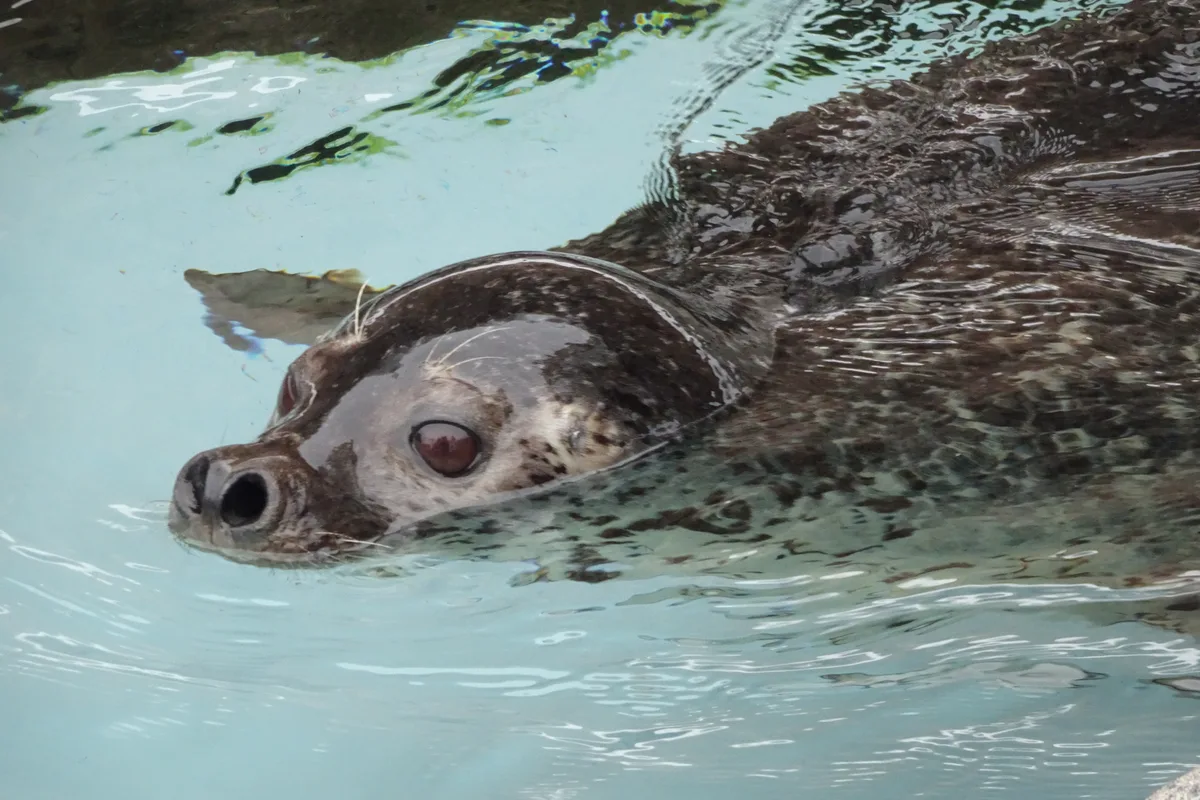
"Cage-like" and "behavioral exhibit" describe the same building. Asahiyama Zoo built its reputation on what it calls koudou tenji, or behavioral exhibits: enclosures engineered to let an animal move the way it would in the wild instead of just sitting there to be looked at. The idea runs through the zoo's expansion since the late 1990s, most visibly in the Penguin House (2000) and the Polar Bear House (2002): the glass tunnel a seal swims through overhead, the tank a polar bear dives into in front of a crowd, the hillside terrain a giraffe browses from above your head. Many Japanese visitors grew up watching this exact style of exhibit praised on national television and walk in already primed to admire it. Foreign visitors comparing it to larger, more open Western safari parks are looking at the same glass and concrete and seeing confinement. Both groups are looking at the identical building. They just brought different reference points with them, and that gap explains more of the 35% than anything about the animals.
There's no universal feeding-time schedule. "Mogumogu Time" and "Naruhodo Guide," the keeper talks that show up in almost every enthusiastic review, run daily or as staffing allows, and the exact times go up on boards near each gate as the day starts. Visitors who assume a fixed schedule, or who never look for the board, are the ones most likely to leave saying the animals were just sleeping.
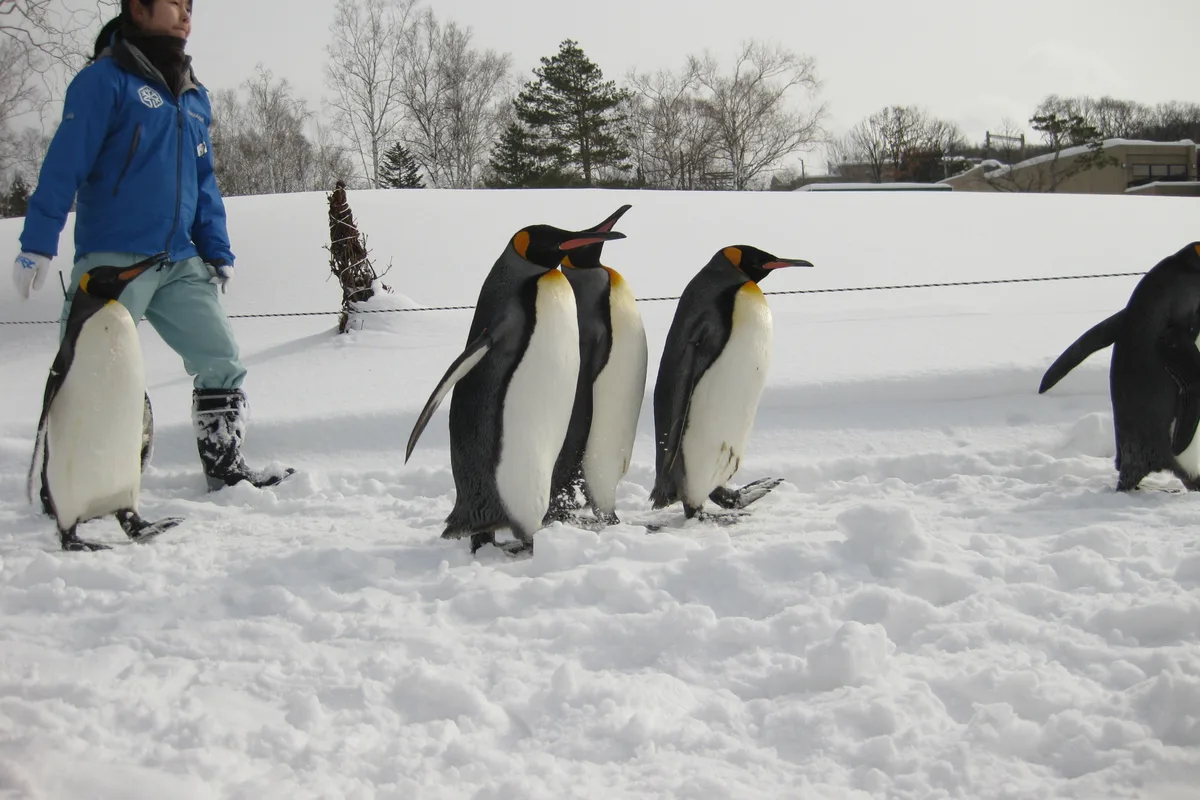
The penguin walk only happens once snow actually settles on the ground. It isn't a year-round attraction. The zoo runs it during the snow season specifically to give the king penguins the kind of exercise wild penguins get walking to feeding grounds in the sea, so the start and end dates move with the winter each year rather than sitting on a fixed calendar.
Doing it well, the welcomed way
- Pick your season with both eyes open. The winter season, roughly mid-autumn through early spring with shorter daily hours, is when the cold-climate animals are liveliest and the only stretch when the penguin walk can run at all. It's also when stroller and wheelchair rental pause for the year. Summer restores full rental services and longer hours, at the cost of hotter, sleepier animals on a shadeless hillside. Check the current-year calendar on the official site before you plan around either one.
- Once you're in, you're in. Re-entry isn't allowed, by official policy, so a quick trip out for lunch and back genuinely isn't an option; a handful of shops and eateries operate inside the grounds, plus more near the east gate, if you'd rather not carry food in.
- Budget the travel generously. From Asahikawa Station it's about 40 minutes by local bus (roughly ¥670 one-way, every 30 minutes). From Sapporo, a car covers the 152km in close to two hours; the train or highway bus gets you only as far as Asahikawa Station in about that same time, with the local bus still ahead of you, so treat two and a half hours as the realistic door-to-door figure. That makes this a poor fit bolted onto a rushed Sapporo day trip. Drivers get free parking at both the main gate (about 200 spaces) and the east gate (about 300).
- Go early on a weekday for a quieter version of everything above. Multiple reviewers, foreign and Japanese, independently landed on the same trick: arrive near opening, skip weekends and holidays, and most of the crowding that shapes the harsher reviews simply doesn't happen to you.
None of this settles the welfare question for the visitors who feel it, and it isn't meant to. What it does is sort the doubts that are really about the zoo from the ones that are really about a season, an hour, or a rule nobody told you about. Get those right, and you're left with the same thing that keeps drawing people back through decades of Hokkaido winters: a polar bear diving close enough overhead that you forget, for a second, that there's glass between you.
Planning the Hokkaido leg of a longer trip? Start with is Sapporo worth it for the city most people use as their base, and the Sapporo audio guide for the wider region this zoo sits inside.
Sources
- Asahikawa City, Asahiyama Zoo: Opening Period, Admission, and Tickets (updated 2026-07-08): current adult admission (¥1,000), free admission for junior-high age and under, annual passport pricing.
- Asahikawa City, Asahiyama Zoo: Access and Parking (updated 2026-08-14): local bus from Asahikawa Station, about 40 minutes, adult fare ¥670; travel time from Sapporo by car, train, and highway bus; free parking capacity at the main and east gates.
- Asahikawa City, Asahiyama Zoo: Visitor Guidelines (updated 2026-02-04): no re-entry policy, stroller and wheelchair rental limited to the summer season, on-site shops and eateries, the daily notice board that posts keeper-talk and feeding-time schedules each morning.
- Asahikawa City, Asahiyama Zoo: Event Schedule and Introductions (updated 2024-04-01): Mogumogu Time and Naruhodo Guide run daily or as staffing allows; the Penguin Walk runs only during the snow season, not year-round, to exercise the king penguins.
- Asahikawa City, Asahiyama Zoo: Facility Overview (updated 2025-04-01): opened July 1, 1967; Japan's northernmost zoo; site area and the building-by-building history of its behavioral exhibits, including the Penguin House (2000) and Polar Bear House (2002).
WMJS is written in Japan, in English, with AI help. We check every page, but English is not our first language. If a sentence reads oddly, tell us. One sentence is enough.
Thank you. A person reads every note.
How well do you know Japan?
Based on 51,218+ real Japanese voices
Want to know more? Ask Japanese people
Have a follow-up question about this topic? We'll ask real Japanese people.
Voice Box →