
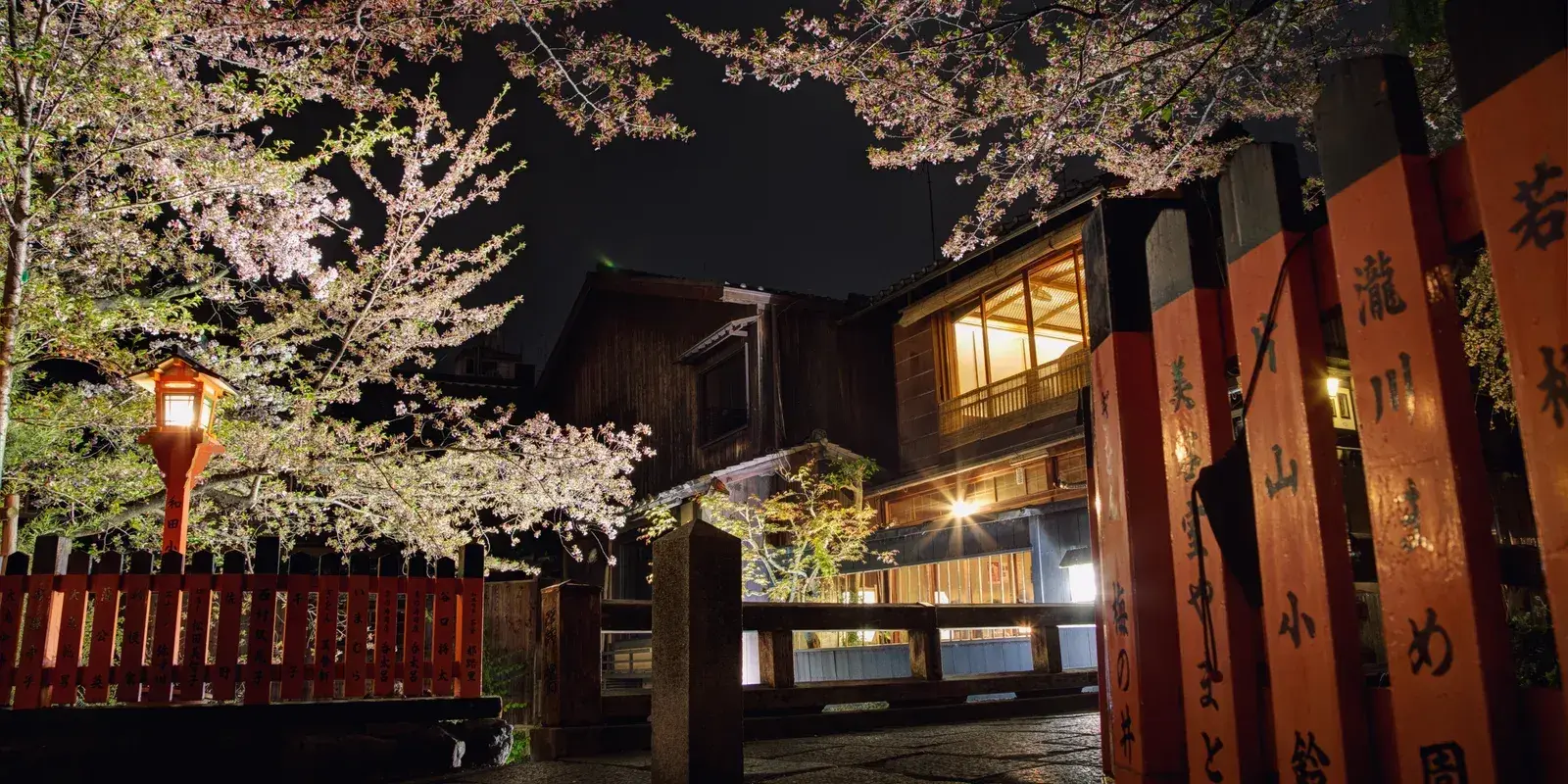
Is Gion Worth It? There Are Two Gions, and the Let-Down Visitors Met the Wrong One
You have seen the photograph: a lantern-lit lane of dark wooden teahouses, a figure in kimono disappearing around a corner. So you arrive, follow the map pin that says "Gion," and find a single stone street, shoulder-to-shoulder with people, phones up, no geisha in sight. Did we do Gion wrong? one visitor asked afterwards. Is there more to it?
The short answer: Gion is two completely different places. One is the quietest, most beautiful corner of Kyoto, and one is a crowded street that underwhelms almost everyone, and which one you get depends entirely on the hour, the lane, and what you came expecting. Almost nobody who leaves disappointed was unlucky. They met the wrong Gion, and it was avoidable.
Is it worth it? (in visitors' own words)
We gathered the voices of international travelers who have actually walked Gion and read them with one question in mind: was it worth it? Weighted by how strongly each opinion resonated with other readers, here is how they fell, and this is the most evenly split gauge we have measured:
A third let down is a lot, far more than for most famous places. But read what the disappointed actually say, and a pattern jumps out: every one of them describes something fixable. "It does look like one street that leads to a park," wrote one, "if you're not clued up on it." Another, blunter: "Gion is famous because of the geisha houses, which are private establishments and offer little to tourists who just want to come and have a look… I don't understand the appeal unless one is planning on dinner." And the most telling of all, about a relative who came for the geisha: "very let down by Gion and how different it was from her expectations."
Expectations. That word does almost all the work here. Now look at who wasn't let down. "Yes it's lit up beautifully and I think worth it," one wrote, "but don't expect fully dressed up geisha as they avoid public areas." Another: "Walking along the Shirakawa canal is nice, especially at night… the traditional architecture and the preserved wooden houses." Same district. Opposite verdict. The difference was never luck.
How the people who know it best feel
What most guides never show you is what Japanese visitors and locals say, in their own reviews, about the very same street.
This is the most important thing on the page. The Japanese red bar, 6%, is more than five times smaller than the visitors' 33%. People walking the identical stones, past the identical crowds, leave delighted at more than double the rate. One review even names the crowds out loud and still lands on warmth: "There are a lot of foreign tourists, but it really does have a lovely atmosphere." That gap between 33% and 6% has nothing to do with the place. It has everything to do with what you arrive knowing and expecting.
And the two red bars agree on the cause. The handful of disappointed Japanese reviewers say the same thing the disappointed visitors do: they came at the wrong moment. "During the daytime in Golden Week it was packed; far from savoring the Kyoto atmosphere, I retreated early," one wrote. "It seemed like a place that would have more charm from evening into night." Even the people who know Gion best confirm it: come at the wrong hour, and Gion underwhelms anyone.
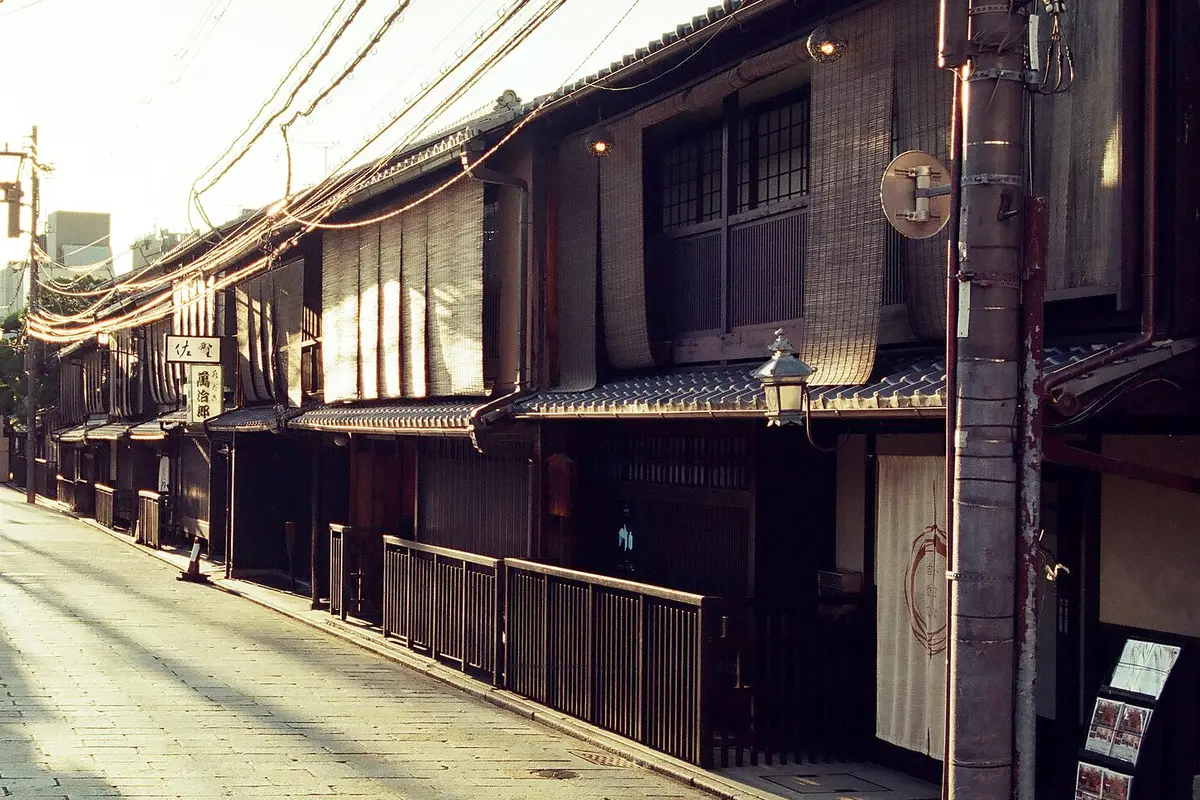
The two Gions
So what actually separates the wonderful Gion from the underwhelming one? Three things, and you control all three.
The hour. By day, especially a sunny weekend or cherry-blossom afternoon, the famous stretch of Hanamikoji is wall-to-wall, "like the Shibuya crossing," one visitor said. Come instead at early light or after dusk, and the same lane transforms. "The scenic parts of Gion are always crowded, weekday or weekend," a regular noted; "early mornings and late nights are much calmer." Japanese reviewers say it identically: "Hanamikoji in the morning is deserted. To avoid the crowds and see the beautiful streetscape at leisure, the early morning hours are the most suitable time." At dusk, the house lanterns light up behind the lattices and the working town comes to life.
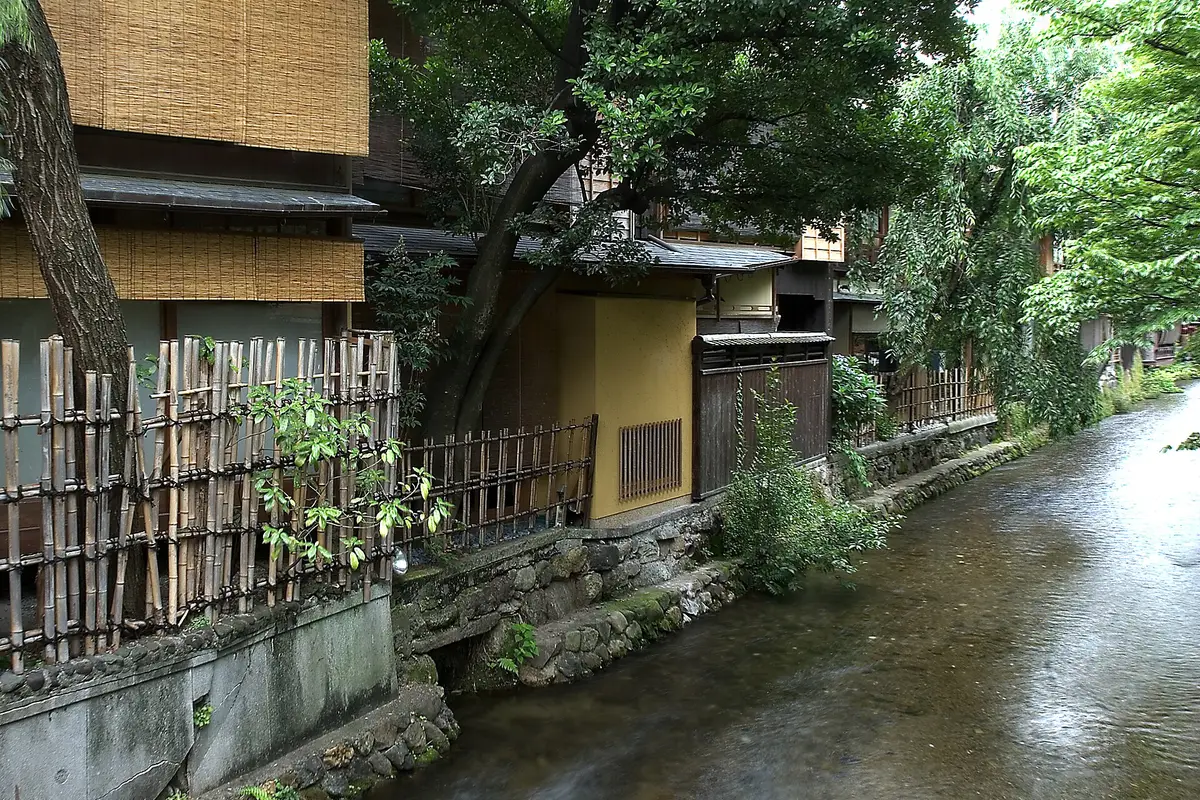
The lane. Many disappointed visitors never reached the good part. "We made that mistake," one admitted; "I looked at Google Maps and blindly followed it to the bit which said Gion." The map pin often drops you on a plain stretch. The Gion of the photographs is the paved teahouse street of Hanamikoji south of Shijo, and the quietest, loveliest corner is north, where the Shirakawa canal runs under willows past a little stone bridge. A Japanese reviewer called it "a quiet corner with few people, a clear stream beside the machiya, the charm of the ancient capital." If one lane felt like nothing, you simply had not seen Gion yet.
The geisha. Most let-down visitors came to "catch" a geisha, as though one were a costumed mascot stationed for photos. She is not. In Kyoto these women are geiko, and a maiko is one still training; Kyoto's own councils are clear about it: they are not mascot characters, but working professionals, and the request is simple: do not stop, touch, follow, or photograph them without permission. Precisely because a few visitors treated them as a free attraction, "chasing a geisha down the street with a phone," as one horrified traveler described, real geiko now mostly avoid the public lanes, and in April 2024 the city closed the private alleys to visitors with ¥10,000 warning signs. The wide public streets stay open. But if meeting a geiko is your dream, stop hunting one in an alley. "They're unlikely to be walking about," a seasoned visitor advised; "if that's on your bucket list, best to book." Treat a chance glimpse the way one traveler beautifully put it: "the same way I treat seeing a deer in the wild… I bow politely and continue on my way, happy to have seen them."
Doing it well, the welcomed way
Everything above resolves into a handful of moves that turn the underwhelming Gion into the unforgettable one.
- Come at dawn or dusk; skip the midday crowd. Early morning gives you empty, glowing lanes and the photographs you imagined; dusk gives you lit lanterns and the town waking for its evening. The middle of a sunny day is the one window almost everyone regrets.
- Walk past Hanamikoji to the Shirakawa canal. Don't stop at the first crowded street the map gives you. Cross north to the willow-lined canal and Tatsumi bridge, for many visitors and locals alike, the most beautiful few minutes of the whole district.
- Come for the atmosphere, slowly; don't come to spot a geiko. "Go for the atmosphere," as one visitor put it, "not because you may or may not see someone going to work." The reward is the streetscape itself: lattice, lantern, stone, willow. A Japanese reviewer's advice fits perfectly: "come with plenty of time; if you rush, you can't enjoy it."
- To actually see the arts, book them. You cannot wander into a teahouse, but you don't need to. Gion Corner stages short introductory performances, and in spring Gion Kobu's Miyako Odori and in autumn Gion Higashi's Gion Odori are public dances by geiko and maiko: the same arts, performed properly, in a setting made for guests.
- Stay on the wide public streets; honor the private lanes. The main paved streets are yours to enjoy. Any narrow lane with a sign or a gate is someone's doorway, and the quiet courtesy that protects places like this is exactly what keeps Gion worth visiting at all.
So: is Gion worth it? If you arrive on a crowded afternoon expecting a free geisha show, you'll likely be among the third who leave flat. But come at first light or last, walk to the water, and let the town simply be a town, and you'll understand why the people who know it best treasure it three to one. The most Kyoto street there is was never going to perform for you; it was waiting for you to slow down.
Still deciding which famous places actually earn a slot on a short trip? Start with what actually matters in Japan, and for the full walk from Yasaka Shrine through Hanamikoji to the Shirakawa canal, with audio, the Gion guide is just below.
Sources
- Kyoto City Tourism (DMO Kyoto): A Message from Southern Gionmachi: official visitor guidance issued by the Gion Kobu Tea Houses Association, the Gion Geiko Association, Kennin-ji, and the Southern Gionmachi Council: geiko and maiko "are not mascot characters"; do not stop, touch, follow, or take unauthorized photos; do not enter private property.
- Kyoto City "Kyoto wo Tsunagu" Intangible Cultural Heritage: Geiko and Maiko: geiko and maiko as bearers of traditional dance, music, and hospitality; the five hanamachi.
- Ookini Zaidan (Kyoto Traditional Musical Art Foundation): geiko/maiko training; the public ways to see the arts: Gion Corner, Miyako Odori, Gion Odori.
- JNTO: Gion & Higashiyama: Hanamikoji as the heart of the district; geography from the Kamo River to Yasaka Shrine.
- Agency for Cultural Affairs: Important Preservation Districts for Groups of Traditional Buildings: Gion Shinbashi (the Shirakawa teahouse town, designated 1976).
- Japan Today: Tourist ban now in effect in Kyoto's Gion geisha district: the April 2024 restriction on entering Gion's private alleys, with ¥10,000 warning signage (written without a thousand-separator: 10000 yen); the public streets (Hanamikoji, Shijo) remain open.
WMJS is written in Japan, in English, with AI help. We check every page, but English is not our first language. If a sentence reads oddly, tell us. One sentence is enough.
Thank you. A person reads every note.
How well do you know Japan?
Based on 51,218+ real Japanese voices
Want to know more? Ask Japanese people
Have a follow-up question about this topic? We'll ask real Japanese people.
Voice Box →