
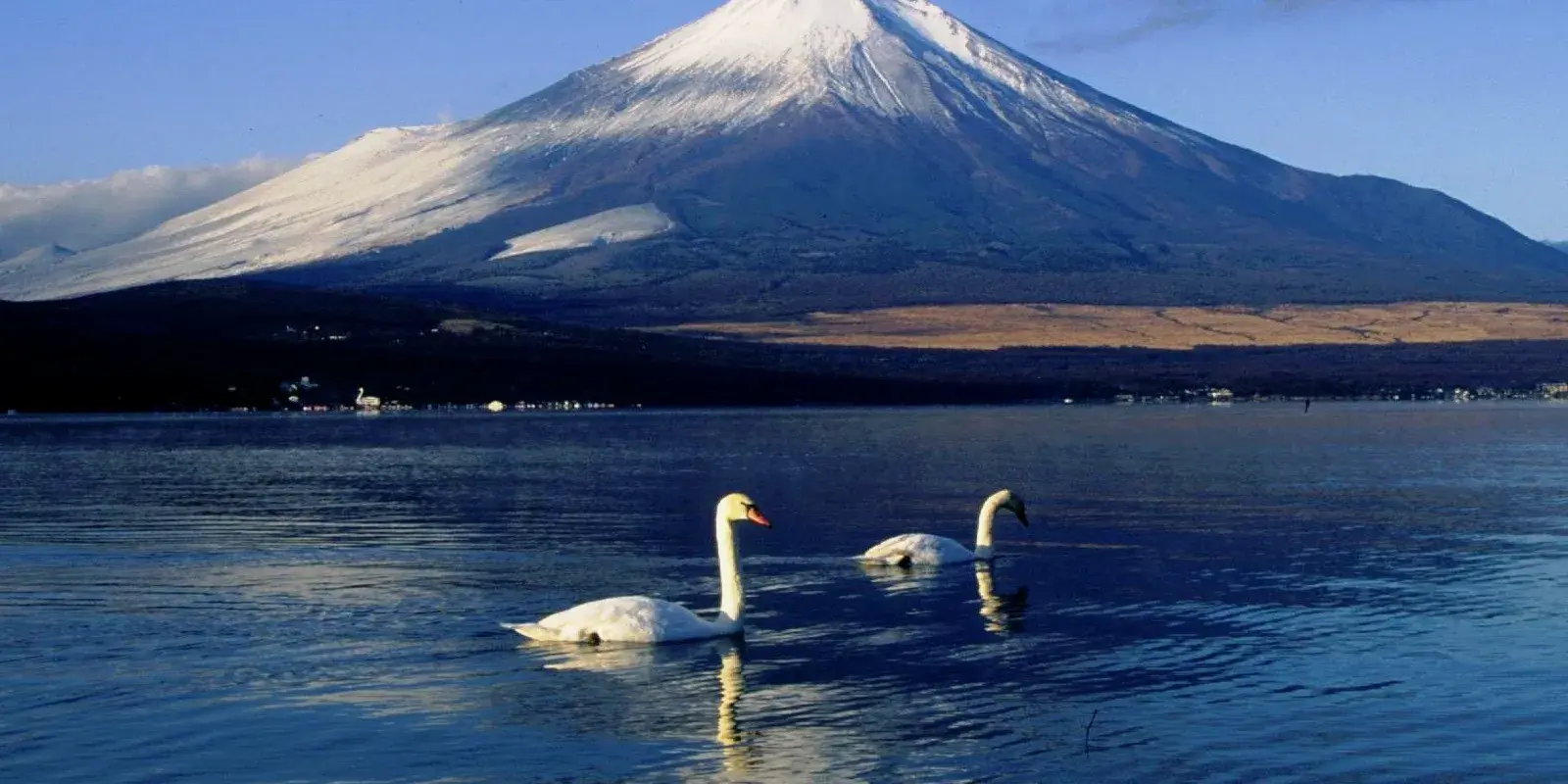
Is Mount Fuji Worth It? The Honest Answer Is About the Morning You Pick, Not the Mountain
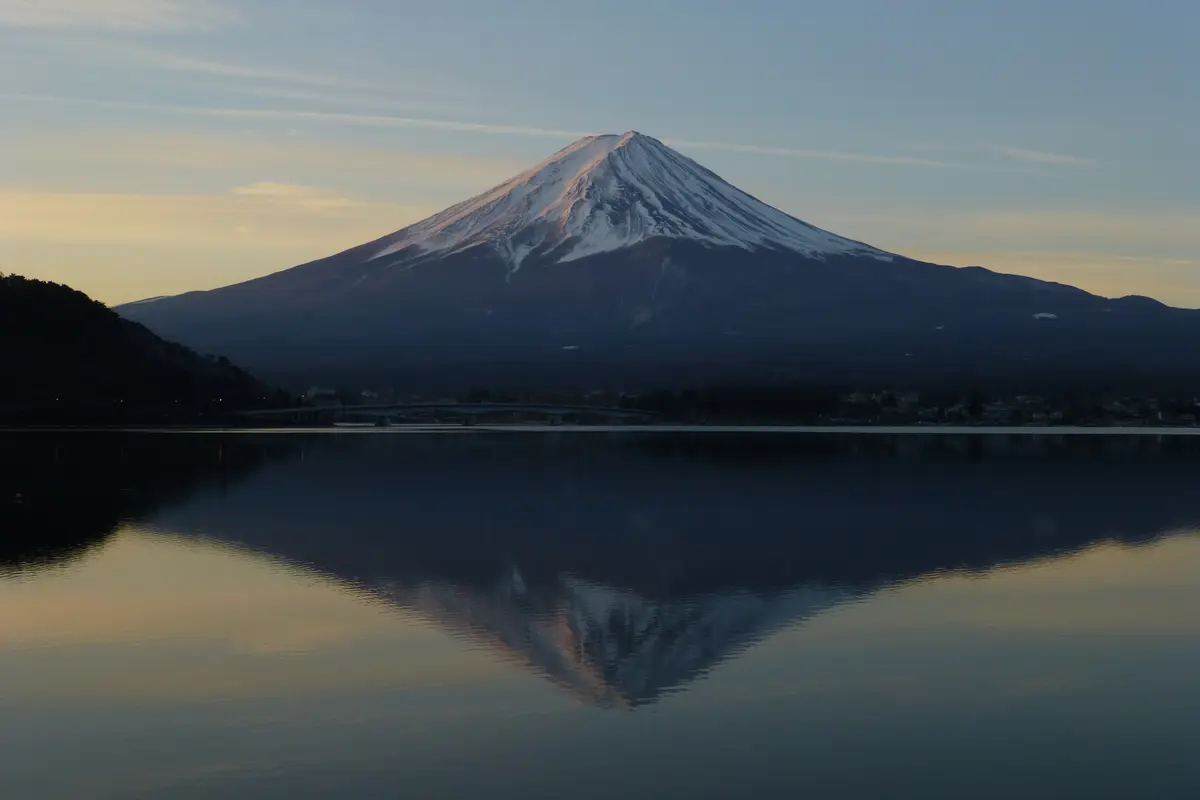
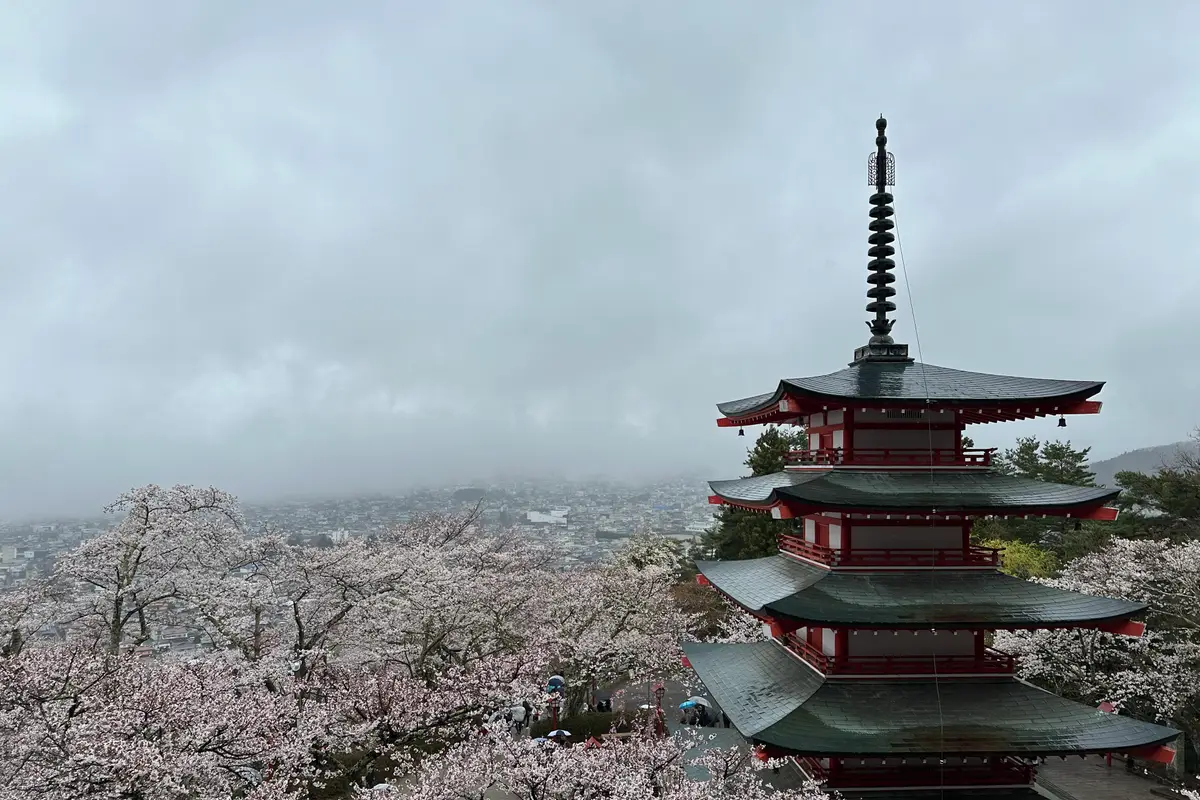
You've seen the photo: the snow-capped cone mirror-perfect on a still lake, or framed behind a vermilion pagoda and a froth of cherry blossom. So you build a whole day around it: the early train, the lake bus, the long climb to the viewpoint. Then you stand there looking at a flat grey wall of cloud where the mountain is supposed to be.
Here's the short version, and everything below unpacks it: almost everyone who sees Fuji clearly calls it unforgettable. The real question isn't whether the mountain is worth it. It's whether you'll actually see it, and that comes down far less to luck than to timing, more than most visitors realize.
Was it worth the trip? (in visitors' own words)
We gathered the voices of international travelers who made the trip out to see Mount Fuji and asked, in effect, was it worth it? Weighted by how strongly each opinion resonated with other readers, here is how they fell:
The striking thing here isn't the small red bar. It's that huge middle band. For most visitors, Fuji isn't a clear "yes" or "no." It's a gamble, and almost everyone who's been will tell you the same thing about how to win it. "The chances of a clear view of Fuji are like 50-50," one wrote. "If you plan it on your own by booking train/bus, then you can make it flexible, because Fuji suddenly becomes visible and suddenly can go into hiding."
The people in the red bar nearly always describe the same trap, and it's never the mountain itself. "We did it on a day when it was misty and never got to see Fuji, so it was a total waste of time and money," one wrote of a rushed van tour. Then, tellingly: "The locations are great, but it was a big let down." Another, after a cloudy day trip: "Not worth it to me. I should have cancelled… next time I'm gonna spend the night or two around there." Notice what they regret: not going, but how they timed it.
And the people who got the clear morning? They don't sound like they're describing a tourist stop at all. "Staying overnight by Lake Kawaguchi. Waking up before dawn and seeing Mount Fuji in the cold, still air," one remembered. "It felt distant and a bit intimidating, but also calm and familiar at the same time." Another, on a final morning: "Walking down to the lake and finally seeing the diamond reflection I'd been trying to see for three days. There's fog on the water and it's freezing cold and very quiet, and slowly the sun is rising. So magical."
How the people who live with the mountain feel
Here is the layer most guides skip: what Japanese visitors say, in their own reviews, after standing at the very same lakes and viewpoints. The register is warmer, and quietly, it's the answer key to that 50-50.
Look at the two red bars side by side: 11% of foreign visitors felt let down, and 10% of Japanese visitors did too, almost exactly the same, for almost exactly the same reason. Cloud. The wrong morning. One Japanese reviewer was so direct she docked her own rating for it: "Mt. Fuji wasn't visible, so I'll save it for next time. Hence, minus one star." The mountain didn't disappoint anyone; the weather did. And that's a thing you can plan around.
The difference is in the middle, and it's the whole lesson on this page. Where foreign visitors mostly see a coin-flip, the Japanese reviews read like people who already know the trick, because they keep coming back, and they pick their day. "I deliberately came in winter, when Mt. Fuji is easy to see," one wrote. Another caught the window exactly: "It was clearly visible at 6 a.m., but by 7 a.m. clouds had hidden the upper half. I waited 30 minutes, and a clear patch finally appeared." A third put the whole gauge into one sentence: "If clouds cover Mt. Fuji you won't get the picture-postcard scene, so you really must watch the weather. Worth a look if the sky is clear."
And when the clouds do part, the moment belongs to everyone standing there. One man, driving out with his wife after the season's first snow, found the deck clouded over ("what a letdown!"), and waited nearly an hour. "Then the clouds broke, and even the overseas tourists couldn't help saying 'Thank you, Fuji.'"
What we wish you'd known before you went
Fuji hides more than half the year, and the visibility record makes that measurable rather than a matter of luck. The city at its foot has logged the mountain's visibility three times a day since 1990. In all of 2025, the whole mountain stood clear in the morning sky on just 136 days. In June, the rainy month, it appeared on only 2. In dry, cold February: 22. This single number is why the 50-50 feels so cruel to people who show up on a humid summer afternoon, and so kind to people who come on a crisp winter dawn.
The clearest air and the climbing season are opposites. Summer, when the trails open and most people picture "doing Fuji," is among the worst times to see it from afar: warm, humid, cloud-building. The dry months from late autumn to early spring carry the best odds, and the still hours around dawn are clearest of all, before the day's heat lifts cloud onto the peak. (This is one of the genuine trade-offs of timing a trip to Japan.)
You don't have to gamble blind anymore. The most upvoted "method" among visitors who succeeded isn't a secret spot. It's a habit: "We didn't schedule the day in advance. We checked the weather forecast the day before and the day of, and checked some live webcams to make sure it's visible. That combination makes this a pretty much foolproof method." Lake-facing webcams and a same-morning forecast turn a coin-flip into a decision.
And the spots reward you even when the mountain doesn't show. This matters, because it lowers the stakes of the gamble. At Arakurayama Sengen Park (the famous five-storey pagoda view above Fujiyoshida), Japanese reviewers who arrived under cloud still climbed back down content: the pagoda, the blossom, the town spread below. At Oishi Park on Lake Kawaguchi, the lavender, kochia and seasonal flowers along the shore are their own reward. You rarely come home with nothing. You just might come home without the headline shot, and that's the part worth planning for.
Stacking the odds: the welcomed way
Everything above turns into a handful of moves that the people who came away glad almost all made.
- Pick the season, then the hour. Aim for a clear morning from late autumn to early spring, and be at the viewpoint at or before dawn: Japanese reviewers repeatedly describe Fuji crisp at 6 a.m. and gone by 7. December through February is the driest, clearest window.
- Check a live webcam and the morning forecast before you commit. This is the single habit that separates the "unforgettable" reviews from the "total waste" ones. If the lake cams are socked in, flip your plan rather than ride two hours each way to a grey wall.
- Stay overnight near Kawaguchiko if you possibly can. "There are ryokans around the lake with Fuji-view rooms; stay a night or two, and you can keep a vigil for the perfect shot," one visitor advised. A second morning roughly doubles your odds, and dawn is when the mountain is clearest. A booked-in-advance day-tour locks you to a single date and a single weather roll; doing it yourself by train and bus keeps you free to go when Fuji is visible.
- At the famous photo decks, take your turn gently. In cherry-blossom season the Arakurayama pagoda viewpoint can mean a one-to-several-hour queue, with staff letting small groups onto the deck in turns. Everyone there wants the same frame; a little patience is the local currency, and there are side angles you can shoot from without holding up the line.
- Photograph from where you're meant to stand. At spots like the much-photographed convenience store across from Fuji, the town added a low barrier in August 2025, not to stop photos but to stop people stepping into the road and traffic for them. It's an ongoing courtesy measure, and the welcomed move is simply to take the shot from the safe side. (A moment's care about where you stand is part of the etiquette of any crowded viewpoint.)
- If you only have a day, you can still win it. A clear-morning day trip from Tokyo to Kawaguchiko gives you the lakes, the pagoda, and, snow permitting, a bus to the Fifth Station at 2,305 m, where you stand on the mountain itself without climbing a step. No permit, no season, no summit required.
A note on the harder version: climbing Fuji is a different undertaking entirely, with a short July–September season, a fee, a daily cap and overnight rules: its own decision, told in full in why Mount Fuji now limits who climbs it. To simply see the mountain (the trip 99% of visitors mean), none of that applies.
So, is it worth it?
The voices land in the same place, in two languages: the mountain almost never disappoints; the timing sometimes does. The let-down bar is small, nearly identical for visitors and locals, and made almost entirely of cloud: the most preventable disappointment in Japan. Pick the cold, clear morning. Check the cam. Give yourself a second sunrise if you can. Do that, and Fuji has a quiet habit the Japanese have made peace with over centuries: on the morning you least expect it, you'll glance up, and there it will simply be, and you, too, will reach for your phone.
The Japanese have a gentle way of holding the mornings it stays hidden. Not failure. Next time. As one reviewer signed off, climbing back down under cloud: "I'd like to try again on a clear day."
Still deciding which famous sights actually earn a slot on a short trip? Start with what actually matters in Japan, and for the meaning of the mountain, where to glimpse it, and how to climb it, the full Mount Fuji guide is just below.
Sources
- Fuji City (Shizuoka): Mount Fuji visibility record (富士山が見えた日): the city's long-running tally of mornings the whole mountain is visible at 08:00: 136 days in 2025, with February at 22 and rainy June at just 2.
- JNTO: Mt. Fuji Guide: the best seasons and hours to see Fuji, the Fuji Five Lakes viewpoints, and Fifth Station access without climbing.
- Yamanashi Tourism: Fuji Five Lakes: Lake Kawaguchi and the Sakasa-Fuji reflection, the Diamond Fuji window at Lake Yamanaka (mid-October to late February), Oshino Hakkai and the lakeshore parks.
- Mt. Fuji Official Climbing Website (Council for the Promotion of Appropriate Use of Mt. Fuji): the short July–September climbing season, the climbing fee, the Yoshida daily cap and overnight gate rules (for the climb, distinct from simply seeing Fuji).
- Tokyo Weekender: "Mount Fuji Lawson Photo Spot Gets a New Barrier" (2025-08-18): the roughly 1.4-metre barrier installed on 7 August 2025 at the Kawaguchiko convenience-store viewpoint, designed to prevent unsafe road-crossing while still allowing photographs: an ongoing local crowd-management measure.
WMJS is written in Japan, in English, with AI help. We check every page, but English is not our first language. If a sentence reads oddly, tell us. One sentence is enough.
Thank you. A person reads every note.
How well do you know Japan?
Based on 51,218+ real Japanese voices
Want to know more? Ask Japanese people
Have a follow-up question about this topic? We'll ask real Japanese people.
Voice Box →