
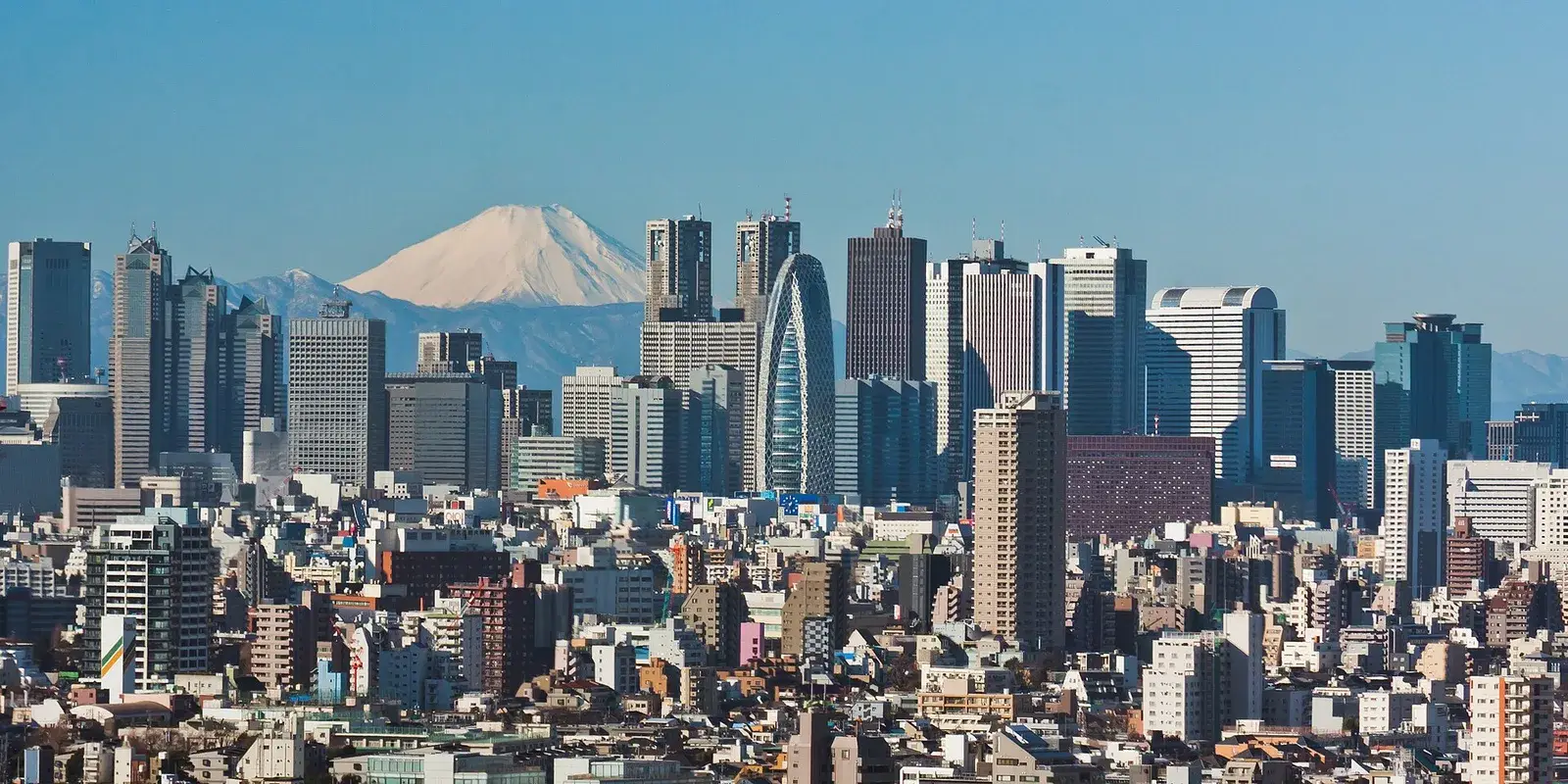
Is Shinjuku Worth It? Almost Nobody Is Arguing About the Same Place
Read a few travel threads and you will find two Shinjukus that cannot both be true. One is the place a self-described native of the city calls "gross. It's sleazy & dirty without style." The other is the place a visitor describes after two nights in the middle of it: "It was fine. There was nothing to worry about." Somewhere between them sits a traveler with three days in Tokyo, wondering whether this ward deserves a night at all.
Is Shinjuku worth it? We gathered 124 voices from international visitors who have been, and 135 reviews written by Japanese visitors and locals. Of the visitor voices, weighted by how strongly each resonated, 46% came away glad and 32% came away let down. What the let-down is about turns out to be surprisingly specific, and it is not the neon.
Is it worth it? (in visitors' own words)
We gathered the voices of international travelers who have actually spent time in Shinjuku. Weighted by how strongly each opinion resonated with other readers, here is how they fell:
Read the two sides against each other and you can hear them describing different places. The native quoted at the top went on to say what they were picturing: "I don't like being around drunk salaryman. I hate yakuza." A traveler in another thread named the same mismatch from the other direction: "I think people hating on Shinjuku are just thinking of the Kabukicho area LOL. I loved the Southern Terrace area…"
Both are reporting what they saw. They were standing in different parts of a ward that holds a red-light district, an imperial garden, a government tower with a free observatory, and the busiest railway station on earth, all within about fifteen minutes of each other.
The one thing almost everyone agrees is hard
Seventeen of the visitor voices mention Shinjuku Station. Nine of them are unhappy, four are neutral or resigned, and the four positive ones are praising something different from the rest: not crossing the station, but sleeping on top of it.
Someone who lived nearby for years, and learned every alternative route across Tokyo to avoid changing there, put the complaint at its sharpest: "Too many people, too many corridors, too many exits, too many signs… The rest of the ward is actually not that bad, but that effing station…" A traveler weighing where to stay reached the same conclusion more calmly: "Shinjuku station is big and it can be much easier to navigate a smaller station."
The people who like it are not really disagreeing. "For my last two trips I stayed in Shinjuku, not because of the night life, but because of convenience. Having a hotel literally on top of 2 metro lines, walkable to 3 others and the Yamanote line means I can get anywhere in the city with at most a fast transfer," one wrote.
That is an unusual shape for a famous place. Elsewhere the doubt is about whether the sight lives up to its photograph. Here the sights mostly land, and the friction is the infrastructure you cross to reach them.
What the people who live with it say
The same four places, reviewed by Japanese visitors and locals in their own words.
The two red bars are 32% and 7%, which is roughly a fifth. Before reading that as locals being harder to disappoint, look at what each set of voices was doing. A review site gives you one spot at a time: you write about Shinjuku Gyoen, or about the observatory. The threads on the visitor side ask a different question, whether Shinjuku, all of it, is worth a night of a short trip. One of those questions can be answered. The other gathers up everything that went wrong across a whole ward and files it under a single name.
Sorted by place, the Japanese reviews are warmest about the free observatory (83% of 30 reviews positive, averaging 4.4 stars) and the garden (83% of 40, averaging 4.2), then the lantern-lit alley (77% of 22), and coolest about the neon blocks (44% of 43). The gratitude in the observatory reviews is specific.
無料で見られるのはありがたい あの高層階からの景色を無料で見られるのはお得だと思う。降りてからもオリンピックのメダル等も見られて得した気分。全国観光資料などもあり、役に立つなと思った。 Grateful that you can see it for free. I think it's a great deal to see the view from that high floor for free. Coming down, you can see things like the Olympic medals too, which made me feel I'd gained something. There was tourist information from all over the country as well, which I thought was useful.
無料でこの夜景は良すぎ! 平日で人も少なく満足でした!カップルばっかりかなぁと思いながら行きましたがカフェスペースで1人で勉強や仕事をしてる人や子連れのファミリーなど様々な人、さまざまな国の方がいて居心地も良かったです笑 Free and this night view is too good! It was a weekday, not many people, and I was happy. I went thinking it would be all couples, but in the cafe space there were people studying or working alone, families with children, all sorts of people from all sorts of countries, and it was comfortable to be there.
The garden draws a different note, the surprise of people who had heard the name for years and only now walked in.
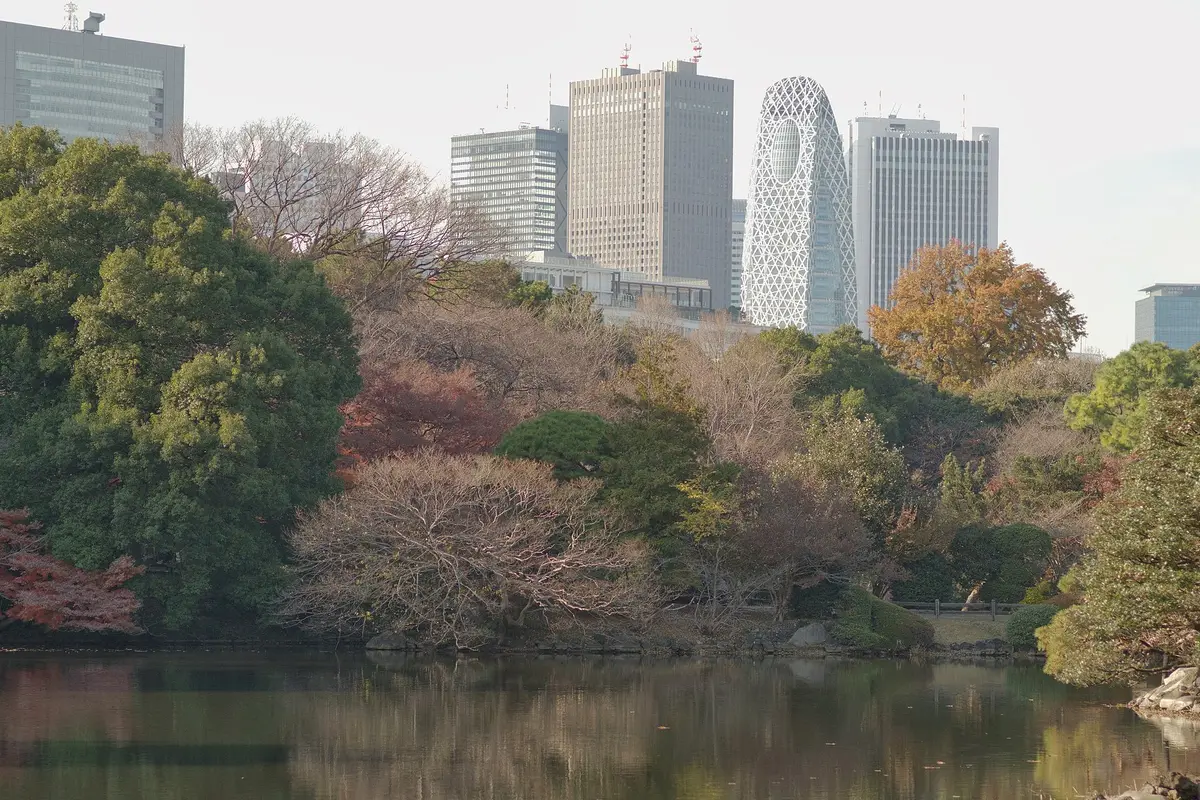
新宿にある自然を堪能出来る良施設 名前は聞いたことあったものの訪れたことの無かった新宿御苑を訪問。大人1人で500円払って入場すると、思わず「おお・・・」っていう感嘆の声をあげてしまいました。新宿の都会のど真ん中にこんな自然を堪能できる施設があったんですね。素直にこれはすごいなって思いました。… A place in Shinjuku where you can really enjoy nature. I'd heard the name but had never been to Shinjuku Gyoen. I paid the 500 yen adult admission, walked in, and let out an involuntary "ohh…". So there was a place like this, right in the middle of urban Shinjuku, where you can take in this much nature. I honestly thought it was wonderful.…
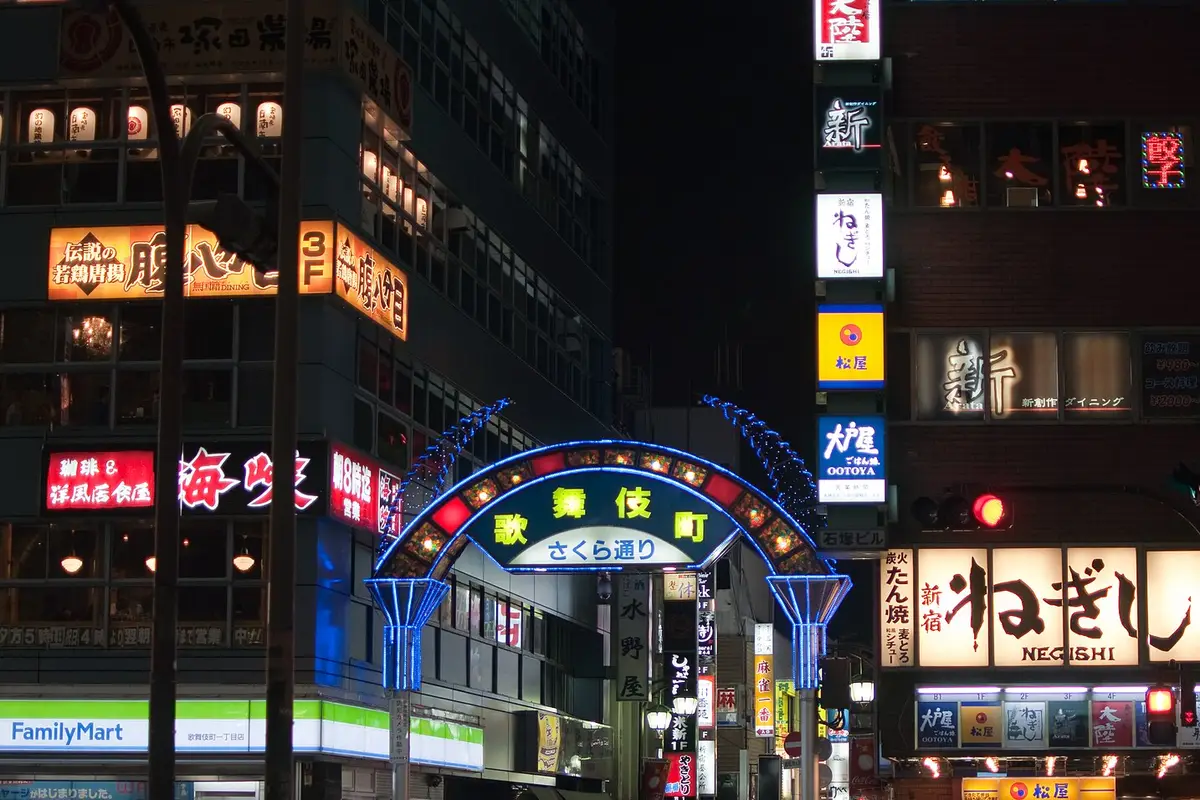
Nine of the 135 reviews landed in the red, and they repay a close reading, because six of them are about one hour of the day. They describe the recorded police warnings that play as you approach Kabukicho at night, and a reluctance to walk in there after dark at all. One is about the touts, and even that one says the pressure has eased.
歓楽街 日本一の繁華街として栄えている歌舞伎町。昔は客引きなども多く入りずらかったですが、少しは緩和されたのかなという感じはします。でも苦手かな。 Entertainment district. Kabukicho, thriving as Japan's leading downtown. In the past there were a lot of touts and it was hard to walk in, but it feels like that has eased off a little. Still not really for me, though.
The remaining three are ordinary trip misfires: a garden that felt too crowded on the day, a cherry-blossom visit turned away for want of a reservation nobody had mentioned, and a hazy afternoon at the top of the tower when Mount Fuji never appeared.
Is Kabukicho actually safe?
This is the doubt underneath most of the others, so here is what the visitors and the police each say, without smoothing either.
The people who have been are consistent, including the ones with the most reason to be careful. "I just got back and spent 2 nights in Kabukicho. It was fine. There was nothing to worry about… We were 2 women and felt 0% scared. Tell the touts no and walk away…" Another was blunter about the gap between the reputation and the experience: "it's not like it's unsafe." And one voice gave the version with the edges left on, which is the one worth carrying: "In the middle of the day, Kabuckicho is totally safe… It gets sketchier after dark."
The Tokyo Metropolitan Police are specific about what goes wrong there, and their list is worth reading rather than a summary of it. Kabukicho is one of the largest entertainment districts in Japan, and some of its venues are, in the force's words, "notorious for trying to rip you off, or may even be illegal." Those places use illegal street hawkers to bring customers in, so the police warn that hawkers "may take you to places that rip you off." Separately there are scouts who approach people with job offers, asking about hostess work in a bar when the intention may be to place them in the sex trade. One line covers both: "Even if they approach you, make sure not to follow them." Japan's tourism organization puts it in three words, "Ignore the touts," and in the same breath calls the district "lively yet safe."
The Japanese reviews sit between those two registers. Several mention the police announcements, and they are unsettled by them rather than used to them. One wrote that the warnings make anyone think twice about moving around late or into darker streets, and that a world you cannot read from the surface seems to spread out underneath. One says safety has been improving year by year and still hesitates to step in. Another just goes to the cinema there. If you want the fuller picture of why the country feels the way it does, hundreds of residents describe it in their own words.
The practical shape of all this is narrow. Walking the bright main streets is ordinary. The trouble arrives through a stranger who approaches you first.
Four Shinjukus, and who each one is for
Each of these sits within about fifteen minutes of the same station, and they ask for different hours of the day. Pick one or two; trying to collect all four in a night is how people end up tired and unimpressed.
- The free view, for anyone arriving unsure. Two observatories sit on the 45th floor of the Tokyo Metropolitan Government Building at a height of 202 meters, and admission is free with no ticket and no reservation. One visitor put it in capitals: "The government building's observatory in Shinjuku was amazing and it is FREE… if you go around sunset you get to see a whole lot in both daylight and later when the city lights up." Japanese reviewers add the practical notes: come on a weekday, allow 20 to 30 minutes of queueing, and the staff cafeteria downstairs is cheap and good. After dark the tower's east wall becomes the screen for TOKYO Night & Light, a projection mapping show that runs five times a night, costs nothing to watch from the plaza below, and holds the Guinness World Record for the largest permanent architectural projection-mapped display.
- Omoide Yokocho, for the meal you pictured before you came. A lane barely two people wide, a two-minute walk from the west side of the station, lined with yakitori counters seating five or six. It is touristy now, and the voices say so plainly: "95% of the people in Omoide Yokocho are tourists. Locals don't go there." That has not stopped it working. One traveler reassured another with the plain version: "You'll be perfectly fine in Omoide Yokocho. There will be English menus everywhere and you will be far from the only tourist." And one came back from it happy enough to post about it: "Guys I did it! I did a little izakaya crawl and went into a bunch of places, drank, ate and I am very happy I got to do one thing I’ve always wanted to do in Japan. Sit in an izakaya to drink and eat."
- Golden Gai, for the night you will still be describing next year. Around 280 bars in six lanes, most of them a single room seating five or six people. The voices are honest that it is not for everyone, and equally honest that the barrier is lower than the internet suggests. One regular counted them up: "every bar I've been to in golden gai (at least 20) clearly lists the menu prices, cover charges etc. either out front or on the menu. I never got overcharged even back when I could speak / read 0 Japanese." Which door to open, what the seat charge means, and why owners there say foreign visitors kept the street alive is its own story, told through 183 Japanese voices.
- Shinjuku Gyoen, for the morning after. 58.3 hectares of former imperial garden a few minutes from the south side. Admission is ¥500 for adults, ¥250 for seniors and students, and free for children 15 and under. It closes on Mondays, with one exception worth knowing: through cherry blossom season, 25 March to 24 April, and the chrysanthemum exhibition, 1 to 15 November, it opens every day, and entry on the busy days in those periods may require an advance reservation. Alcohol is not permitted inside. Last verified: 2026-08.
Small ways to make the night go well
The voices, foreign and Japanese, keep giving each other the same handful of tips.
- Navigate by name. Shinjuku Station serves five railway companies and handled an average of 2,704,703 people a day in 2022, which makes it the busiest railway station in the world. Nobody reads the whole map. Pick the name of your exit or destination, follow only those signs, and when you leave a platform, head out the way you came in.
- Go up before you go in. An hour at the observatory around sunset does the work of a map. You can see where the garden is, where the neon starts, and how small Kabukicho actually looks from above.
- When someone offers you a great bar, keep walking. This is the one habit that prevents nearly every bad Shinjuku story. A place worth sitting in does not need to recruit you off the pavement, and the bars people rave about all post their prices where you can read them first.
- Bring cash for the small places. The tiniest counters in both alleys still work in yen, and a card is no help at a five-seat bar.
- Go in ones, twos or threes after dark. The rooms in Golden Gai and the counters in Omoide Yokocho are small on purpose. A group of six is the one thing that genuinely does not fit.
- Let it be an evening. One traveler, advising another who was fretting about missing out: "I would just go to Shinjuki at the end of one of you days when it’s dark already and all the lights are on and wonder around aimlessly for a bit." It is decent advice for a place this large.
So, is it worth it?
About a third of the visitor voices we gathered would tell you to spend the night somewhere else, and their reasons are real: the crowds, the concourse, and a few blocks that feel harder after dark than they do at noon.
The rest of the answer is on the other side of the ticket gates. Ten minutes from that concourse there is a tower that hands you the whole city for nothing, an alley of six-seat counters that smells of charcoal, six lanes of bars the size of a spare room, and 58 hectares of imperial garden that shuts before the drinking starts. None of them are hard to enjoy. Getting through the station to reach them is the part that takes a little patience, and once you are through, Shinjuku stops being one place asking to be judged. It becomes four, and you only need the one you came for.
Still deciding which famous places earn a slot on a short trip? Start with what actually matters in Japan. Tokyo raises a version of the same argument at the Shibuya Crossing and in Harajuku. For the full walk, from the free observatory through the alleys to the last train home, the Shinjuku audio guide is just below.
Sources
- Guinness World Records: Busiest railway station Shinjuku Station as the world's busiest railway station, with an average daily throughput of 2,704,703 passengers in 2022, served by five railway companies.
- Tokyo Metropolitan Government, Bureau of Finance: Observatory information Free admission; observatories on the 45th floor at a height of 202 meters; the South observatory open until 22:00 and the North until 17:30 (extended when the South is closed); the South closed on the 1st and 3rd Tuesdays, the North on the 2nd and 4th Mondays; no reservations; a typical queue of 20 to 30 minutes; sudden weather closures announced via @tocho_tenbou. Last verified: 2026-08.
- GO TOKYO (Tokyo Convention & Visitors Bureau): Tokyo Metropolitan Government Building The observatories, the dedicated elevator, and views of Tokyo Skytree, Tokyo Bay and Mount Fuji.
- TOKYO Night & Light (Tokyo Metropolitan Government / Tokyo Projection Mapping Executive Committee) Nightly free projection mapping on the east wall of Main Building No. 1, viewed from Tomin Hiroba; five screenings a night; Guinness World Records recognition for the largest permanent architectural projection-mapped display at 13,904.956 m². Last verified: 2026-08.
- Shinjuku Gyoen official site, English (National Parks Foundation) The garden at 58.3 hectares with a circumference of 3.5 km; seasonal opening hours.
- Ministry of the Environment: Shinjuku Gyoen visitor information Admission ¥500 for adults, ¥250 for seniors 65 and over and students 16 and over, free for children 15 and under; closed Mondays (or the following weekday when Monday is a public holiday) and 29 December to 3 January; open every day during cherry blossom season (25 March to 24 April) and the Chrysanthemum Exhibition (1 to 15 November), when entry on busy days may require an advance reservation. Last verified: 2026-08.
- Ministry of the Environment: Shinjuku Gyoen garden rules Alcoholic beverages are among the items prohibited inside the garden.
- Tokyo Metropolitan Police: Safety tips for entertainment districts Kabukicho as one of the largest entertainment districts in Japan; venues "notorious for trying to rip you off, or may even be illegal"; illegal street hawkers who "may take you to places that rip you off"; scouts offering hostess work that may lead to the sex trade; "Even if they approach you, make sure not to follow them."
- JNTO (Japan National Tourism Organization): Kabukicho "the most densely packed, neon-burning, lively yet safe downtown area in Asia"; "Ignore the touts."
- GO TOKYO: Shinjuku Golden Gai Around 280 bars across six lanes, each seating only five or six people, adjacent to Kabukicho.
- GO TOKYO: Omoide Yokocho "Memory Lane"; an alley barely two people across, with yakitori counters seating five or six, about two minutes from Shinjuku Station.
WMJS is written in Japan, in English, with AI help. We check every page, but English is not our first language. If a sentence reads oddly, tell us. One sentence is enough.
Thank you. A person reads every note.
How well do you know Japan?
Based on 51,218+ real Japanese voices
Want to know more? Ask Japanese people
Have a follow-up question about this topic? We'll ask real Japanese people.
Voice Box →