
Is Kurashiki Worth It? What Visitors Say About Giving It a Day
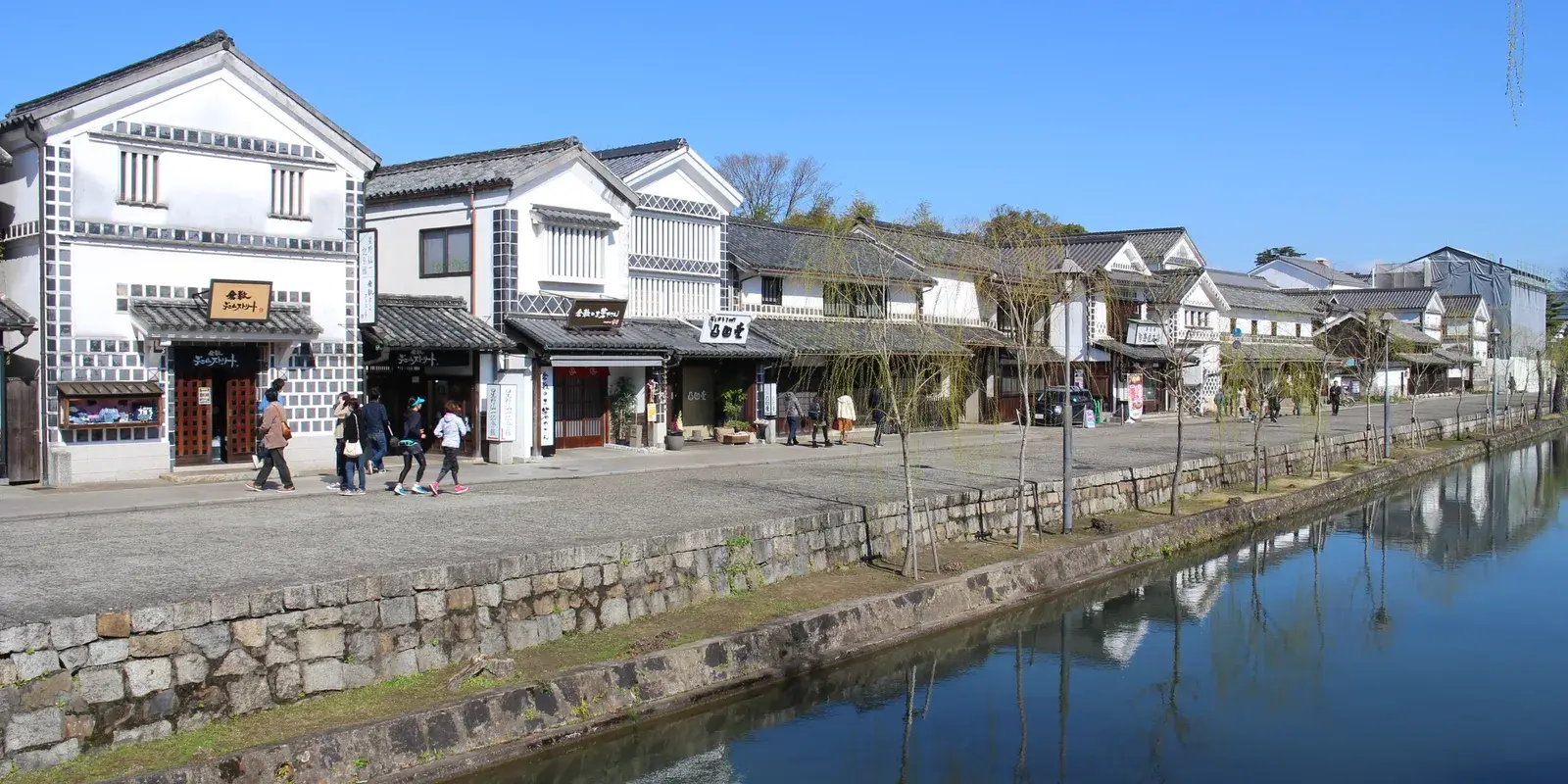
The photo that sells Kurashiki is the canal: white-walled storehouses, a low stone bridge, willows leaning over still water, a wooden boat sliding past. It looks like a place you could lose a whole day inside. The quiet surprise, for a lot of visitors, is how fast they walk the length of it.
That is the honest shape of the Kurashiki question. Almost no one who has been calls it a bad place. Read what the people who actually went wrote, and the doubt that comes up is not was it any good, it is did it earn a day out of a two-week trip, and is a detour off the main route worth it for a quarter you can see in a couple of hours. Kurashiki sits about seventeen minutes from Okayama, so the distance is not what travel forums argue over; the sticking point is the slot.
Forty-five international travellers who went have left a verdict, and it splits in a very particular way.
Is it worth it? (in visitors' own words)
We gathered the voices of foreign travellers who have been to Kurashiki and read them with one question in mind: was it worth it? Each person counts once, whether their words arrived as a review or as a reply in a planning thread. Here is how they fell.
Notice where the weight sits. The bar that should worry you, not worth it, is the smallest one, and only four of the forty-five land there. The big band is amber, and it grants that the place is lovely; its whole worry is size and fit, lovely, but small, and I am not sure it fits. That is a scheduling worry wearing the costume of a worth-it worry.
The people who loved it tend to have gone slowly and stayed past the day-trippers. The most-upvoted voice in our set says it plainly: "This part of Kurashiki is gorgeous and I can see why it's so popular with domestic tourists. It's well worth seeing the canals in the day, at sunset and again at night. I wouldn't hesitate to visit Kurashiki again..." A traveller who had waited out an afternoon of rain caught the moment it turned: "by late afternoon the rain had cleared and the Bikan Historical Quarter was glowing. Golden light reflected off wet stone pathways, white walls, tile roofs, and canal water. It was one of the most beautiful scenes of the entire trip." And one blunt endorsement, weighing it against the nearest big city: "Okayama, no. It's kinda grim. Kurashiki- hell yes. Totally worth it."
The amber voices are rarely arguing with any of that. They are doing arithmetic. "Kurashiki is nice too," one wrote, "but I think while the historical Bikan quarter is absolutely beautiful, unless you're interested in spending a lot of time visiting the various shops you'll quickly have seen everything. And it was a bit crowded to my taste." Another put the whole hesitation in one line: "I don't know if it's worth it just for Kurashiki. If you haven't been to Okayama either before then it starts to make more sense to me." A third, mapping it onto a real route, treated it as a keeper for a different trip: "Kurashiki can likewise be seen in a day. It's about a 30 minute commute from Okayama. I would probably save it for a trip where you do a more general tour of Chugoku/Shikoku."
Even the four who came away cool mostly frame it as a matter of fit rather than quality. "well it wasnt bad per se, but it was not... that special?" one wrote, before landing on the same conditional as the amber band: "if you end up spending a few days in okayama, sure, why not spend a day in Kurashiki." The single regret with real heat behind it is about timing, and it is worth reading closely, because it is the mistake the rest of this page is built to help you avoid: "I did this in February 2025, and I regret it. We did half a day in Himeji (castle, garden, shopping street), then by the time you get to Okayama to train to Kurashiki, everything is either closed or the sun is setting." The place did not fail that traveller. The clock did.
How the people who live with it feel
There is a second set of reviews for Kurashiki, written in Japanese for other Japanese travellers. Line it up against the visitors' verdict and the far end matches almost exactly. The middle does not.
One percent against nine is close enough to say both groups agree on the same thing: Kurashiki is not a place people feel cheated by. But look at the amber. It is barely a sixth of the Japanese reviews, against nearly half of the visitors'. The slot worry that dominates the foreign side almost vanishes here, and the reason is simple. Japanese reviewers are not weighing Kurashiki against Kyoto and Hiroshima for a once-in-a-lifetime fortnight. They are treating it as exactly what it is: a pretty, unhurried half-day close to home, and a couple of hours of white walls, willow shade and shopping is the whole point rather than a shortfall.
You can hear it in how they spend the time. "There are many general stores and denim shops, so you can stroll around leisurely," one wrote. "The swans on the river are cute too, and I love the atmospheric lighting at night." A reviewer who slipped out after dark found the version day-trippers miss: "I went for a walk at night. There were almost no people, and I liked it more than when I went in the daytime the next day."
Where the Japanese middle band does grumble, it lands on two things, and both are useful to you. The first is crowding, which is a matter of sheer volume rather than the place itself: one reviewer loved the scenery "no matter where you look" but added that "it's also crowded, every restaurant is full, with lines forming. I gave up on having lunch here." The second is expectation. The most instructive amber voice on the whole page is a Japanese one: "It was beautiful, had a nice atmosphere, many shops, and was clean. But maybe because my expectations were high, it felt like being at a theme park, and I don't think I'd come a second time." That is the same amber note the foreign travellers hit, said from the other side of the language line. The reviewers on both sides keep landing on the same shape: genuinely lovely and genuinely small, rewarding the visitor who comes to soak in it rather than the one arriving to be dazzled.
The lone hard review is about breakfast, of all things: a family who "wandered around from 8am looking for breakfast, but few places were open in the morning," and found the one place that was open pricey once the "atmosphere fee" was added. It is a real caution about mornings and cost, and it is about as harsh as the honne gets.
What actually earns the slot
If the walk is short, the case for a slot has to be made by what you do on it. The happiest voices, foreign and Japanese alike, made theirs indoors and after dark.
The Ohara Museum of Art, the reason a lot of people give Kurashiki a full afternoon. Founded in 1930, it was the first private museum of Western art in Japan, built by the textile magnate Ohara Magosaburo to honour his friend the painter Kojima Torajiro, who had collected in Europe on Ohara's support. Behind the columns of the main gallery hang El Greco's The Annunciation, Monet's Water Lilies, and works by Renoir and Gauguin, in a small city about ninety minutes from Kyoto. This is the part of Kurashiki you cannot photograph from the bridge, and it is what the happiest reviewers point to when they defend a full afternoon. It opens 9:00 to 17:00 and closes on Mondays (staying open when a Monday falls on a public holiday, and running without closures through August); adult admission is ¥2,000, ¥500 for anyone through high school, and free for preschoolers.
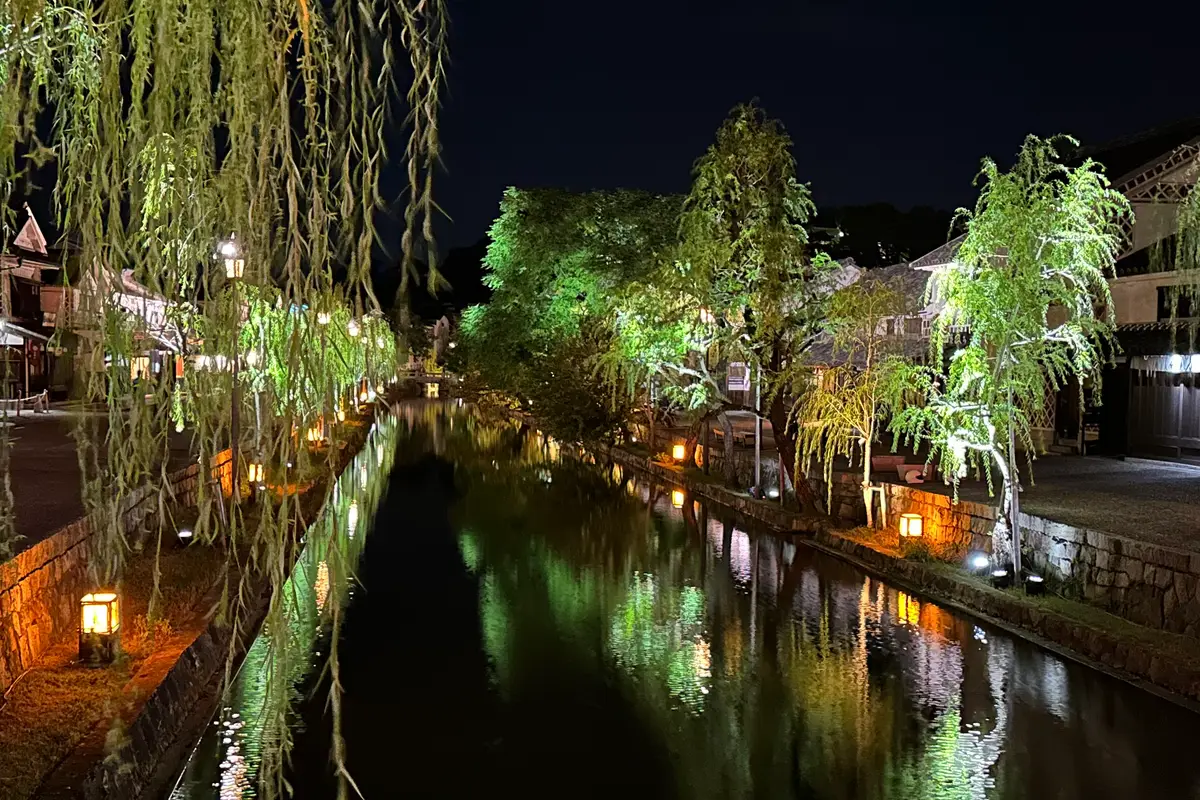
The Bikan quarter at three different hours. The white-walled kura storehouses along the willow-lined Kurashiki River were the merchant heart of a shogunate rice port in the Edo period, and they now hold shops, cafes and small museums. Midday is the crowded, sunny, shopping version. Sunset and after dark are the ones the warmest reviews keep describing: the lanterns come up, the day-trippers thin out, and the reflections do the work. If you can only give it two hours, evening two hours beat midday two hours.
A twenty-minute boat on the canal, and the shrine above it. A flat-bottomed takobune is poled along the Kurashiki River for a low, slow view of the walls the streets look down on. Up a stone stairway on the hill sits Achi Shrine, which one visitor folded into a warm day of "museums and the Achi Shrine" without any fuss about its being obscure.
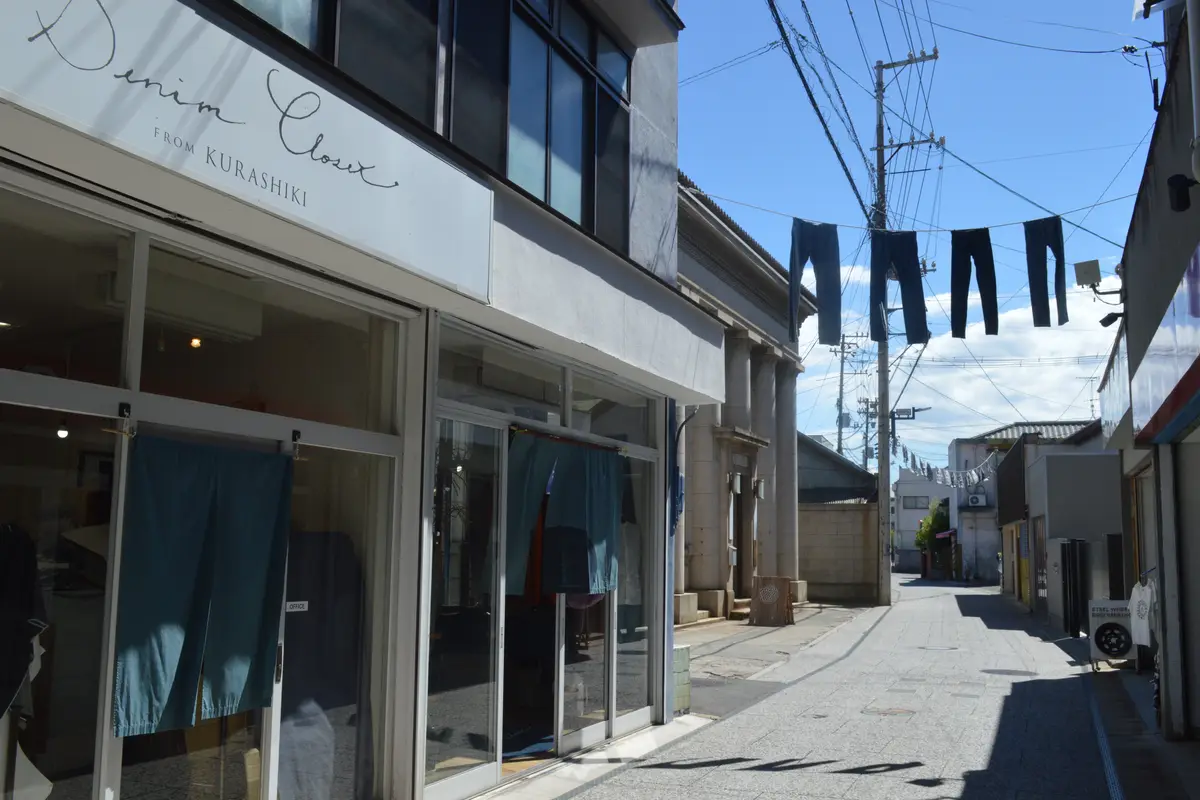
Denim, if that is your thing. Kurashiki City is the birthplace of Japan's domestic jeans industry, and the Bikan shops sell the local indigo denim by the rack; the dedicated Jeans Street is out in the Kojima district, a separate trip within the same city rather than a stop on the same walk.
Last verified: 2026-08. Opening days, fees and event dates change; the official pages in Sources below are the ones to check on the day.
Doing it well, the welcomed way
- Give it its own morning rather than the tail of a Himeji day. The one traveller in our set with real regret arrived at sunset to find things closing. If you are pairing sights, do Kurashiki first and Himeji or Okayama after, or split them across two days.
- Come early, or stay for the evening. Japanese reviewers are unanimous that the quarter is loveliest when it is quiet, which means before the coaches arrive or after they leave. The night walk is the reward day-trippers never collect.
- Go inside as well as along the water. The canal is the short part. The Ohara Museum, the folk-craft and toy museums, and the shop interiors are where the hours actually are; people who only walk the water report seeing everything fast.
- Check that it is not a Monday. The Ohara Museum closes Mondays outside holidays, and it is a large part of the case for a full afternoon; landing on the wrong day quietly removes the headline.
- Eat off the main lane, and sort breakfast in advance. Restaurants on the canal fill and queue at lunch, and mornings are thin; a reservation or a plan spares you the one complaint the locals raise.
- Treat the size as a feature. Kurashiki rewards a slow soak more than a fast march. Visitors who came to be dazzled were the ones who left amber; visitors who came to wander slowly are the ones who wrote the warmest lines.
The honest read
Put the two gauges side by side and the pattern is clear. This is not a place that divides people into lovers and haters; the not worth it bar is tiny in both languages. What divides people is the calendar. Foreign visitors, budgeting a short trip against Kyoto, Hiroshima and Osaka, hesitate over whether a small canal quarter earns a whole day, and half of them land on lovely, but. Japanese visitors, for whom a relaxed half-day close to home needs no justification, mostly just enjoy it. The gap between the two amber bands is the whole story, and it is about scheduling rather than quality.
So the useful question is not is Kurashiki worth it but what would you otherwise do with that half-day, and will you spend it inside as well as along. Give it a quiet morning or an evening, walk into the Ohara Museum, let the size be the point, and the people who have been will tell you it lands. Squeeze it onto the end of a day that starts somewhere else, and you become the one review that starts with the word regret.
Weighing which famous places earn a slot on a short trip is the whole job of these pages. What actually matters in Japan is where they begin, and the closest neighbours to this decision are the other Setouchi day-trip calls travellers argue over: Is Naoshima Worth It?, Is Miyajima Worth It?, and Is Onomichi Worth It?, a hillside temple walk more than a list of sights.
Sources
- Japan National Tourism Organization, Kurashiki Bikan Historical Quarter. The former political and commercial centre of Kurashiki, its Edo-period (1603-1867) white-walled storehouses now shops, museums and cafes; the willow-lined Kurashiki River and its guided boat rides; the Ohara Museum described as the first museum of Western art in Japan; roughly a 10-minute walk from JR Kurashiki Station via the Sanyo Line and Shinkansen; local products including Kojima denim and indigo textiles.
- Ohara Museum of Art, official site. Founded 1930 as Japan's first private museum of Western art, built by Ohara Magosaburo to commemorate the painter Kojima Torajiro; collection including El Greco's The Annunciation, Monet's Water Lilies, Renoir and Gauguin.
- Ohara Museum of Art, visitor information. Open 9:00 to 17:00; closed Mondays, open when a Monday is a public holiday, and no closures in August; admission ¥2,000 for adults, ¥500 through high school, free for preschoolers (written without thousand-separators: 2000 yen adult, 500 yen through high school).
- Japan National Tourism Organization, Kojima Jeans Street. Kojima in Kurashiki City as the birthplace of Japan's domestic denim, with the dedicated Jeans Street in the Kojima district.
- The February 2025 trip date in the "Is it worth it?" section's most-regretful quote (the traveller who paired Himeji and Kurashiki in one day) comes directly from that quoted response in our own opinion-collection corpus, a first-hand account of a personal trip rather than a verified market statistic. All source links above were last verified 2026-08.
WMJS is written in Japan, in English, with AI help. We check every page, but English is not our first language. If a sentence reads oddly, tell us. One sentence is enough.
Thank you. A person reads every note.
How well do you know Japan?
Based on 51,218+ real Japanese voices
Want to know more? Ask Japanese people
Have a follow-up question about this topic? We'll ask real Japanese people.
Voice Box →