
Is Hirosaki Castle Worth It? What Visitors and Locals Honestly Say
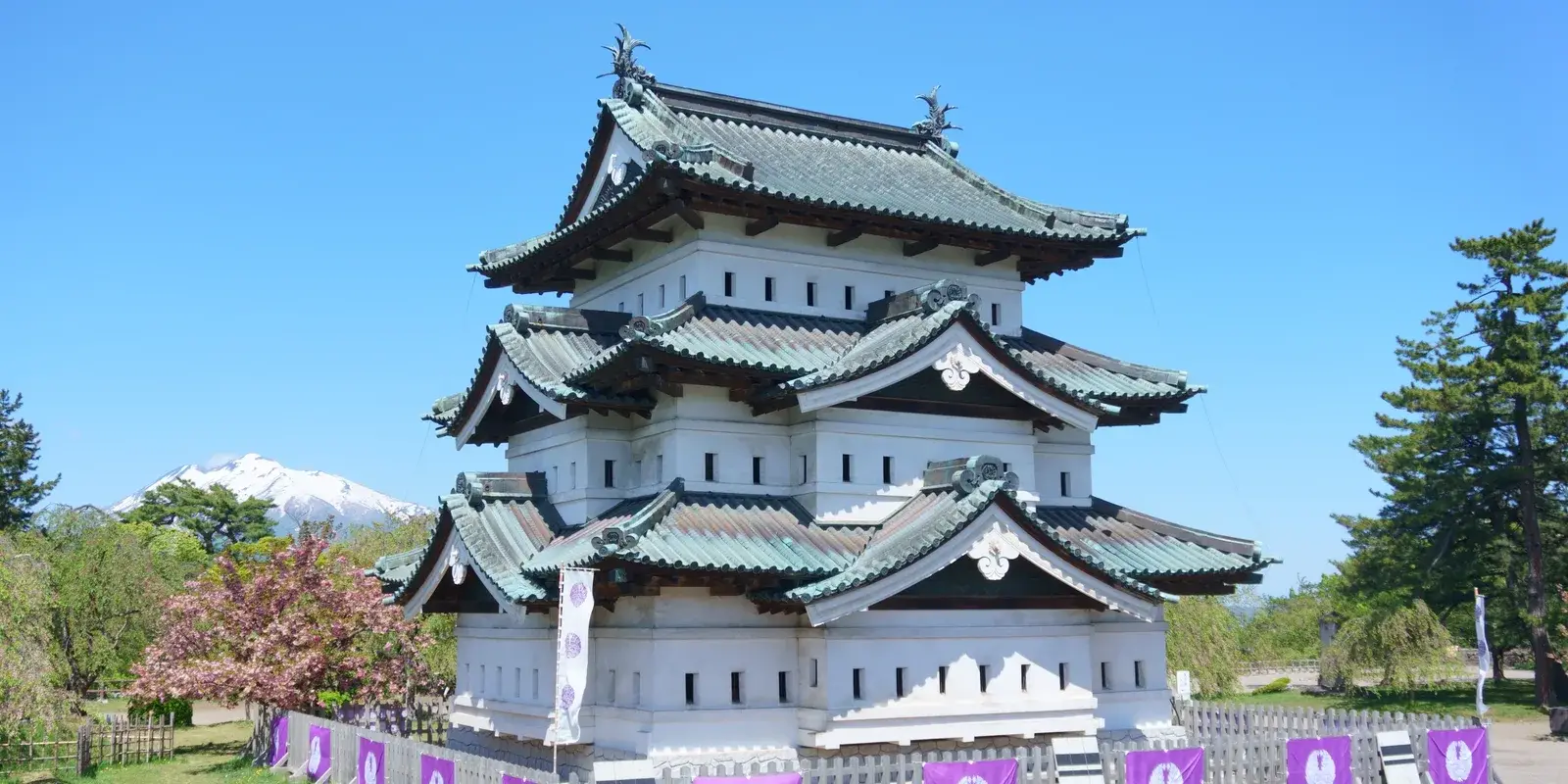
You have seen the photo: a small dark tower on a stone base, a red bridge, and cherry blossoms packed so thick the moat below turns pink. So you travel to the far north of Honshu, deep in old Tsugaru country, and some people step off the train into the most beautiful spring day of their life, while others arrive to a quiet, small castle wrapped in scaffolding and wonder what the fuss was about.
Both of those trips are real, and the reviews suggest the difference between them is almost never the place. It is when you came, and what you thought you were coming to see. The honest version is below, in the words of people who actually made the trip.
Is it worth the trip? (in visitors' own words)
We gathered the voices of international travelers who have actually been to Hirosaki, on Reddit and Tripadvisor, and weighed each one by how strongly it resonated with other readers. Here is how they fell:
That tall green bar comes almost entirely from people who came for the cherry blossoms and left stunned. "Been to many places to see cherry blossoms in Japan but Hirosaki Park was by far the most epic," one wrote of the sakura tunnel and the night illumination on the moat. A visitor from Texas found the sharpest way to say it: "This is a solid '5' park, but a '10' when the cherry trees are in bloom."
The thin red sliver is the same sentence turned inside out. Almost every let-down came from arriving off-peak. One traveler from Singapore visited between the seasons: "Went in hoping to see Hirosaki Castle but it was undergoing works. The park itself isn't anything really special, and there were no cherry blossoms, nor were there any autumn colours when I visited, making it a very mundane trip." Another, in early March: "Hirosaki Park is a sad sight in winter... the main attractions, including the botanical garden, are closed." Nobody in the red band is describing a bad place. They are describing a great park caught on a grey week.
How the people who come back every season feel
The layer most guides skip is this: what Japanese visitors say, in their own reviews, about the same castle. They come in every season, not just for the peak bloom, and their register is warmer, more practical, and a little more candid about the hard parts.
Look at the two charts side by side and the useful thing jumps out: the Japanese red bar is a little bigger than the visitors' one, and the middle "it depends" band is wider too. That is exactly what you would expect once you notice who is talking: people who come in June and November and February as readily as in the last week of April. They are the ones who will tell you the quiet truth a sakura crowd never learns.
One reviewer put the whole page into two sentences: "Even accounting for the construction, I was surprised how small the castle was. Unless it's cherry blossom season, I don't think it's worth going specifically for the castle." Another reviewer, on their sixth of Japan's twelve original keeps, admitted to being "somewhat disappointed" inside, then pointed to where the real reward was: the keep itself "from the observation deck near it, with Mt. Iwaki in the background," which they called beautiful. This is the honne, the honest inside feeling: come for the park, the mountain, and the blossom, and let the small tower be the quiet heart of the day.
What the "small castle" feeling is really about
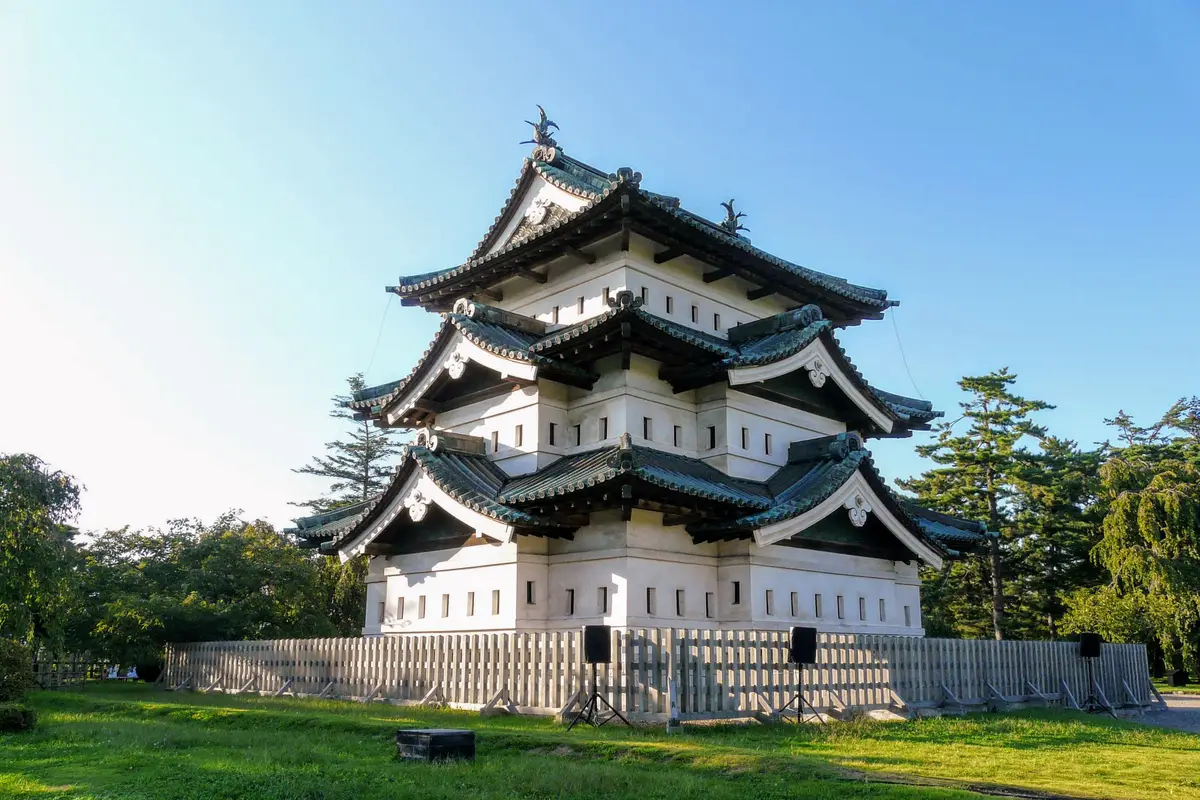
The keep looks modest because it was built to be. When the lord Tsugaru Nobuhira finished his castle in 1611, a great five-story keep stood over it. Lightning struck that tower in 1627, the fire reached the gunpowder stored inside, and it was gone. For almost two centuries the castle had no keep at all. The one you see was raised in 1810, and by then the peacetime shogunate no longer let domains build new keeps, so it was permitted only as a gosankai yagura, a "three-story turret," a keep in everything but the name. The smallness is simply the honest shape of a domain that lost its grand tower and quietly rebuilt what it was allowed to.
And it survived. Through the end of the samurai age, through the wars that took so many other keeps to fire and bombing, this small tower stood, so that today it is the only original castle keep left in all of Tohoku, and one of just twelve in the whole country. Most of Japan's famous "castles" are twentieth-century concrete rebuilds with elevators inside. This one is real wood, raised before the modern age and never torn down. That is the thing the photos undersell and the small size hides.
One honest note for 2026: right now the castle is in an unusual, temporary state that will not repeat. The great east stone wall of the inner bailey had begun to bulge and risk collapse, so in 2015 the entire wooden keep was rolled about 70 metres off its base by a technique called hikiya, and it has sat on a temporary platform ever since while the wall is rebuilt stone by stone. Through 2026 (roughly July to November) the keep is being rolled all the way back home, an engineering feat the town is celebrating with a public event in late August. The inside is closed to visitors for now, so it is exterior viewing only. Some travelers find that a disappointment. Many locals see it the other way: "being able to see the keep in its moved position is only until this autumn... so in that sense I'm glad I visited during such a precious time." You are catching a two-century-old wooden keep, raised in 1810, in the middle of its journey home, and the park's official site calls this moved-position view unique to 2026.
What actually rewards you
Strip away the expectation of a giant fortress and this is what people, in both languages, come home glad they saw.
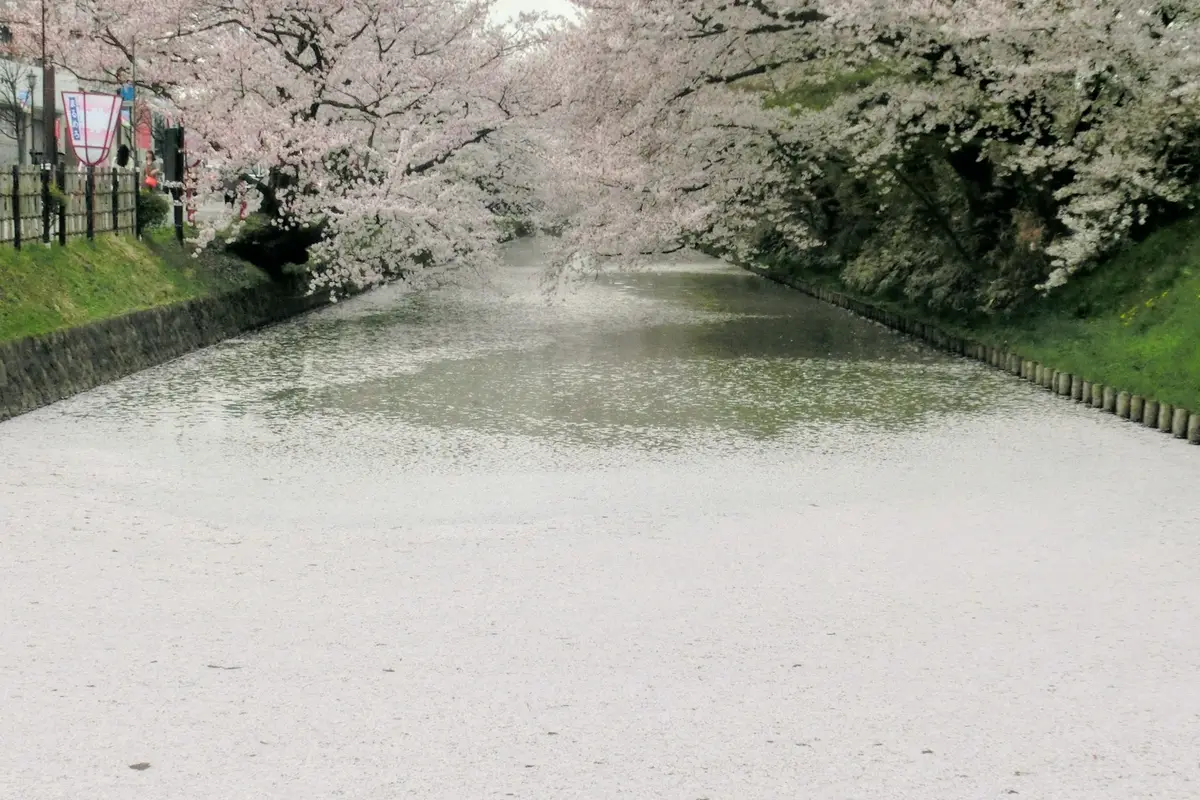
- The cherry blossoms, which visitors in both languages rank among Japan's best. Around 2,600 trees of more than fifty kinds, many pruned with a technique borrowed from Aomori's apple farmers so each tree carries nearly double the usual bloom. Along the West Moat the branches arch from both banks until they almost meet, and you walk a long pink tunnel with bright water below.
- The hana-ikada, the "flower rafts." In the days just after the peak, the fallen petals gather on the moat into a thick drifting carpet of pink. Locals prize this ending as much as the bloom itself, and it is the single image the castle is known for.
- Mt. Iwaki, the "Tsugaru Fuji," standing behind the keep. On a clear day the snow-capped cone framing the tower is what reviewers in every season keep mentioning, one calling the winter view from the castle enough to bring tears.
- The park itself, in seasons besides spring. Late October into early November brings a chrysanthemum and autumn-foliage festival when the maples and the cherries turn together; every February a snow-lantern festival fills the grounds with little snow huts and the tower floodlit above the white. A visitor from Utah came in early November for the fall colours and left calling it a "lovely park and castle."
Coming at the welcomed time
Everything above resolves into a few simple choices.
- Time it to the bloom if the blossoms are your goal. The 2026 Cherry Blossom Festival runs April 10 to May 5, but the peak is short and fickle this far north, and it shifts earlier some years. If missing full bloom would sink your mood, check the park's official bloom forecast before you commit, and give the trip a day of margin instead of betting everything on one date.
- Arrive early. Seasoned visitors say the same thing: get to the park around nine, when it is chilly and pristine and the tour buses have not yet filled the paths. By evening in peak season the grounds go shoulder to shoulder.
- Come knowing the keep's interior is closed in 2026. You can walk right up to the tower and photograph it on its temporary base, but you cannot go inside until the return work finishes. The exterior, the moat, and the blossom are all still fully open.
- Budget the fee correctly. Most of Hirosaki Park is free all year. Only the inner Honmaru area charges admission: ¥320 for adults, ¥100 for children, or a combined ticket with the Botanical Garden for ¥520 adult / ¥160 child. If you see a far larger figure online, that is a reserved festival banquet seat or a tour package, never the price of walking in to see the cherries.
- Give yourself the time the trip deserves. Hirosaki sits about thirty minutes by train from Shin-Aomori. Many visitors regret trying to fold it into a rushed day; an overnight lets you catch the night illumination on the moat, which more than one traveler called the best part.
- Dress warmer than you think. This is the deep north. The air stays cold well into cherry season, and mornings and evenings colder still (what to wear in Japan).
The one thing to carry in
If you take a single idea to Hirosaki, let it be this: you are not going to tour a great castle. You are going to walk a park that happens to be crowned by the last original keep in the north, at the moment in spring when it wears its blossoms. Come at that moment, or come for the snow and the autumn, and let the small tower settle into the quiet heart of the day. That is the pattern across the reviews above: the visitors who arrive with that expectation are the ones who leave glad they came.
For more of Japan's twelve original keeps and why they feel so different from the country's many twentieth-century concrete rebuilds, see what actually matters when you plan. And when you are ready for the deeper story of this one, the seasons, the retainers who planted the cherry trees, and the repair that has the keep on the move, our Hirosaki Castle guide walks you through it.
Sources
- Hirosaki Tourism and Convention Association: Hirosaki Castle Stone-Wall Repair and Keep Return (hikiya-modoshi). The 2015 move of the keep about 70 m off its base for the bulging east stone wall; the 2026 (Reiwa 8) July–November return of the keep to its original position; the public "Hippare! Keppare! Hirosaki" event, August 21–23, 2026. Last updated 2026-07-07.
- Hirosaki Park Official: The Keep (2026 return and interior closure). Tohoku's only surviving original keep; the temporary keep-base view available only in 2026; the keep interior closed to visitors during the return work (exterior viewing only).
- Hirosaki Park Official: 2026 Cherry Calendar. Around 2,600 cherry trees of 52 varieties; the 2026 festival dates, April 10 – May 5; bloom and hana-ikada timing.
- Hirosaki Park Official: Admission and Hours. Free park; inner Honmaru admission ¥320 adult / ¥100 child; combined ticket ¥520 / ¥160.
- Hirosaki City Official: Hirosaki Castle Keep, National Important Cultural Property. The three-story keep at the southeast corner of the Honmaru; the only surviving Edo-period keep in Tohoku.
- JNTO (Japan National Tourism Organization): Hirosaki Castle. Built in 1611 by lord Nobuhira of the Tsugaru clan; the only Edo-period castle keep in Tohoku; access about 30 minutes from Shin-Aomori.
- JNTO: Hirosaki Cherry Blossom Festival. Around 2,600 trees of more than 50 varieties; the apple-tree pruning that gives nearly double the blossom; the West Moat cherry tunnel and night illumination.
WMJS is written in Japan, in English, with AI help. We check every page, but English is not our first language. If a sentence reads oddly, tell us. One sentence is enough.
Thank you. A person reads every note.
How well do you know Japan?
Based on 51,218+ real Japanese voices
Want to know more? Ask Japanese people
Have a follow-up question about this topic? We'll ask real Japanese people.
Voice Box →