
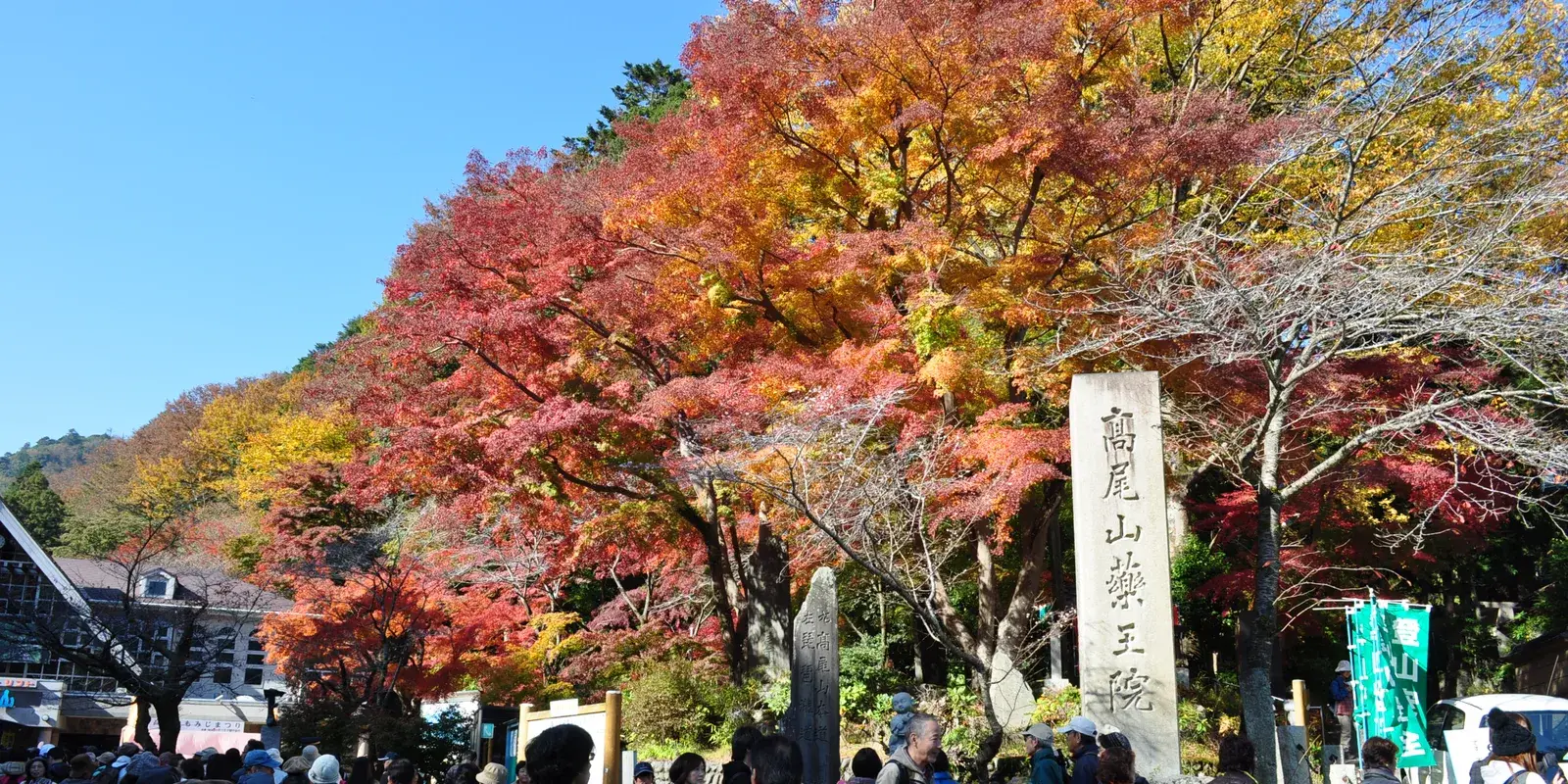
Is Mount Takao Worth It? Locals Never Doubted It. Visitors Split on What They Expected to Climb
The doubt shows up in both languages, and it sounds almost identical. On Reddit, someone asks bluntly: "Friends told me that it's nothing special. Any guide of Tokyo racommend it as a must for a daytrip from Tokyo. What's your thoughts?" On Tripadvisor's Japanese pages, a reviewer with over 36,000 posts to their name writes that the summit has little more than a visitor center and a small food stand, with no real view to speak of, and lands on three stars out of five: "確かに都心から行きやすい山ではあるがミシュランで三ツ星に選ばれるような場所ではない", certainly it's an easy mountain to reach from central Tokyo, but not a place that deserves Michelin's three stars.
Both are describing the same mountain, an hour from Shinjuku, that a cable-car operator's own count puts at more than 2.5 million hikers a year. What the voices below show is that almost nobody who has actually been disputes whether Takao is worth the trip. What splits, sharply on one side of the ocean and barely at all on the other, is what people thought they were climbing.
What international visitors say once they have been
Of the 58 voices we gathered from foreign speakers, here is how they fell:
Almost half of that gauge is the neutral band, and it says something specific: for most foreign visitors, the real question is how to do Takao well. Whether to do it at all barely comes up. "It's nice, but not a must. If you have limited time there are probably better places you can spend it." That commenter then went on to rank Kamakura, Enoshima, Hakone and Nikko above it, and in a separate thread weighing Takao against Kamakura put the same feeling in a single line: "Takao is nice but not international-tourism nice." Another commenter, back from a visit a couple of days earlier, landed in the same lukewarm place: "worth it? Maybe... nothing to wow at though. It wasn't what I expected, wasn't much of a mountain hiking per se. its a well paved road up hill. Well worth the visit if you don't have anything better to do." Neither of them is saying skip it. Both are saying it competes for a limited number of days, and loses to bigger names.
The red band is smaller but consistent, and it clusters around two complaints. The first is the pavement. One visitor wrote: "it's a paved road up a not particularly tall hill. school children were running up the entire thing the day that I went. it's not particularly scenic." Another, on a thread titled bluntly Mt Takao was disappointing, described a clear day where the promised view of Fuji never showed and the queue for the cable car back down felt endless. The second complaint is the crowd itself. One regular visitor answered a poster who called a busy day unusual: "Unusually? Don't you mean usually? It's always been mega busy whenever I've gone there." Another put it more bluntly still: "On a pleasant day with a possibility of seeing Fuji the top area is a zoo."
That second complaint gets read two ways inside the same threads. Some visitors point out, reasonably, that a large share of the crowd on any given day is simply Tokyo on its day off, out for a hike near home. Others try to fix the timing rather than the mountain. One commenter wrote, closer to the mark than they may have realized: "Some people are also just incredibly unfit and don't try to figure out what their limit is before they get stuck on a hike." Japan's National Police Agency logged 131 hikers stranded on Takao in a single recent year, roughly 50 percent above the five-year average, which is why NHK's report on the figure warned hikers not to take the mountain lightly.
What Japanese visitors add
Of the 137 voices we gathered from Japanese speakers, here is how they fell:
That gap between 12 percent and 3 percent is the real story of this mountain, and it is not that locals are less demanding. It is that they never expected wilderness in the first place. One reviewer who was born and raised nearby put the whole history in a single review, both the loss and the resolve: "圏央道が通り高尾山の中腹に風穴が空いてから、すっかり緑が色を失いました" (once the expressway punched a gap partway up the mountain, the greenery lost its old vividness), "でも今でも、秋は登るのには最適な時期と思います" (but even now, autumn is still the best season to climb). It is a working local mountain, not an untouched peak, and every reviewer who has grown up near it seems to know that going in.
What the green band actually describes is a routine, repeated across hundreds of reviews. People go with their kids the way they'll go again in twenty years: "だんだん子供に追いつけなくなるのが、嬉しいやら悲しいやら…" (it's bittersweet that I can no longer keep up with them). People go to train for something harder: one hiker practicing for a real Mount Fuji pilgrimage admitted "富士山は自分には無理だなと痛感しましたが、高尾山はぎりぎりちゃんと楽しめました" (I realized Fuji itself is beyond me, but I could just about properly enjoy Mount Takao). The red band, the honest 3 percent, is a genuinely different voice: "登山は単調、道は開発されすぎてつまらないし…" (the climb itself is monotonous, the path is overdeveloped and boring...), one reviewer wrote, unimpressed even by the souvenir shops at the bottom. It is a rare complaint in this corpus, and a real one. But nobody in the Japanese corpus writes that the mountain lied to them about what it was.
What people fall for
Set the two gauges side by side and a short list of things keep reappearing in both, in language that barely changes across the language barrier. Fuji, first of all, when the sky allows it. A foreign hiker who caught it after a long wait wrote, "I could just barely make out the silhouette of the peak so decided to hang around a bit longer and the cloud eventually dissipated completely." A Japanese reviewer on Jalan put it more simply: "お天気が良いと富士山が綺麗に見えます" (when the weather's good, Fuji looks gorgeous). Neither treats it as guaranteed. Both treat it as the point.
Then there is the food, which shows up in review after review with a specificity that feels earned rather than performed: tengu-yaki, the black-bean bun shaped like the temple's guardian spirit, tororo soba after the walk down, nameko mushroom soup a little further along the ridge. And there is the range of the place itself, six numbered trails plus two ridge routes, so that the same mountain can be a paved 90-minute stroll with a cable car halfway up, or, as one reviewer traversed it, a 20-kilometer through-hike from Mount Jinba that leaves you, in their words, simply "疲れた~" (tired).
One thread on r/Tokyo captured the range without meaning to. A visitor who called a busy day unremarkable by Takao's own standards wrote: "For an autumn Mt. Takao, this is relatively vacant." In the very same discussion, another regular insisted the crowding is not new at all: "It's always been busy but now basically become this crowded all the time now, not that unusual." Both are right about the same mountain on the same kind of day. The difference is what each of them had walked in expecting.
The welcomed way to do Mount Takao
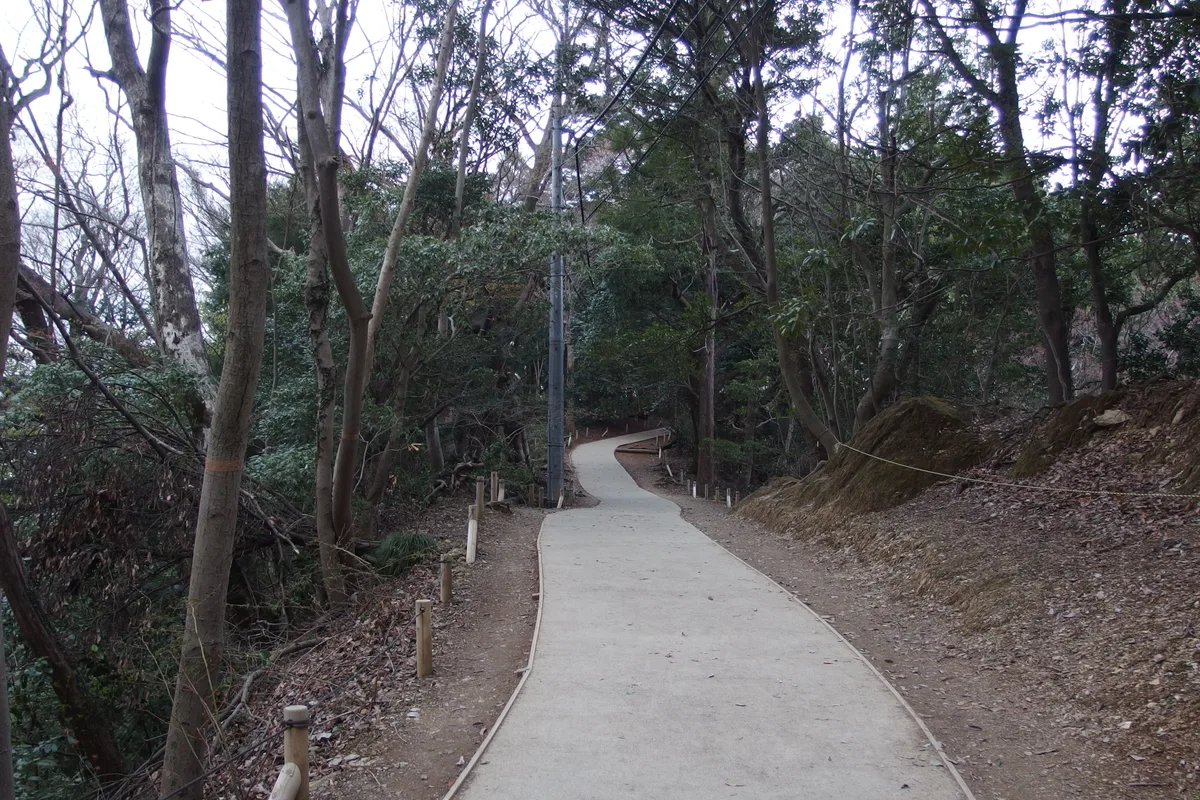
Pick the trail for the day you actually want. Trail 1, the main approach past the cable car and Yakuoin, is paved the whole way and carries most of the crowd; it is also the easiest and the one most reviews are describing when they call the mountain "just a paved road." The Inariyama course and Trail 6 run through real forest along a ridge or a stream, past cedar and cypress plantings that were once working forestry land, and cost you nothing but a bit more effort and a few more minutes. Several Japanese reviewers make a point of going up one way and down another for exactly this reason.
Go on a weekday, or go early. Every complaint about crowds in both languages traces back to the same handful of hours: a weekend or holiday, late morning through early afternoon, in the two weeks either side of peak autumn colour. One longtime Tokyo hiker who has visited for over 30 years noted that as the trails got better maintained, they also got more crowded, but "早朝の5:30頃なら、ポツポツと人がいる感じでおすすめ", around 5:30am it's just a scattering of people. The mountain opens with the first trains from Shinjuku, about an hour away.
Use the cable car or lift on your own terms. The Takao cable car covers a 271-metre climb over a kilometre of track, on a 31-degree-18-minute grade the operator advertises as the steepest railway gradient in Japan; the ride takes about six minutes and carries up to 135 people at once. The two-seat chairlift takes roughly twelve minutes and gives a slower, more open view of the forest. Either one costs 490 yen one way or 980 yen return for an adult (250 / 500 yen for a child), the same fare on both, and as of September 2026 both accept IC transit cards and tap-to-pay credit cards at the gate. Riding up does not disqualify you from a real hike. Most reviewers who love this mountain use the lift or cable car for at least one leg of the trip.
Prepare for a mountain, not a park. The paved sections and the cable car make it easy to underdress for what is still a genuine climb with real elevation change, uneven side trails, and weather that turns faster than the base-of-the-mountain forecast suggests. Japan's National Police Agency recorded 131 stranded hikers on Takao in a recent twelve-month span, well above the usual run of years; sturdy shoes, a little water, and a headlamp if you are coming down after dark solve nearly all of it.
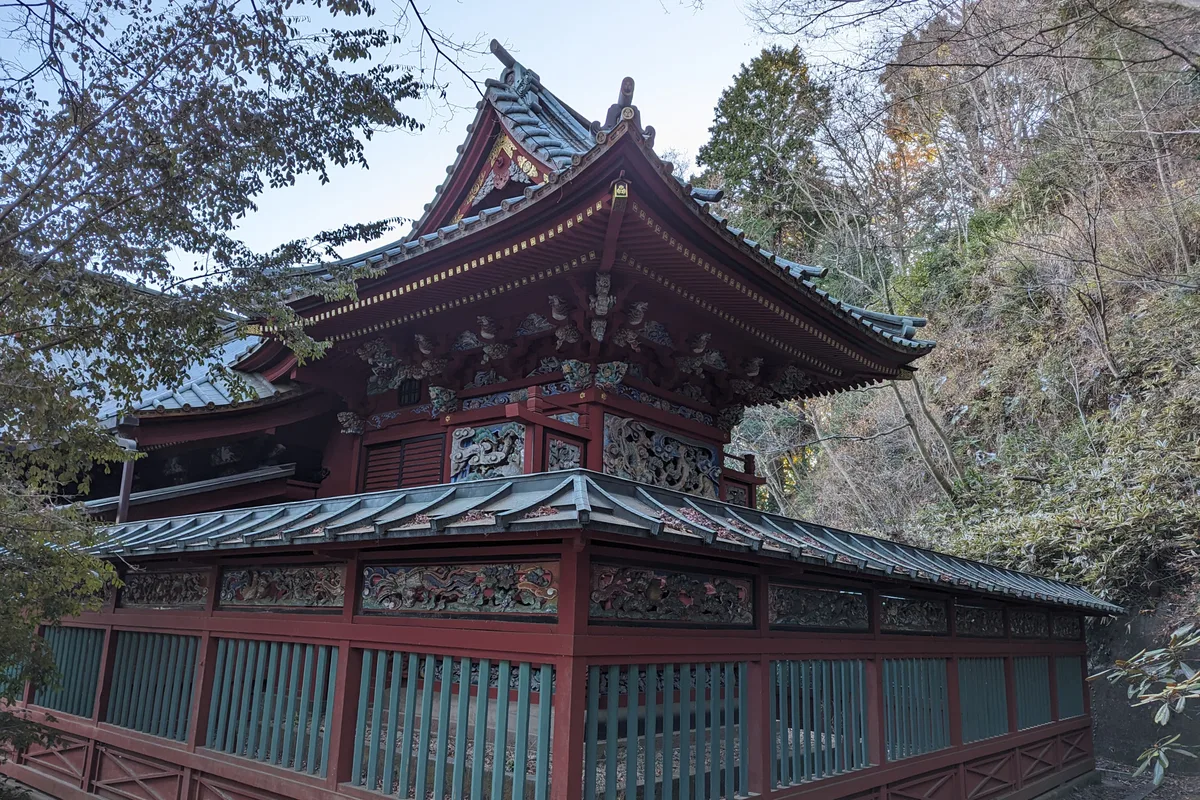
Let a full day include Yakuoin as well as the summit. The temple, its guardian tengu, its incense and its seasonal festivals (a fire-walking ritual in March, an autumn grand festival in October) are, by the reviews above, as much the point of the trip for regulars as the view is. Skipping straight past it for the summit is the fastest way to end up agreeing with the Tripadvisor reviewer who found little at the top beyond a visitor center and a small place to eat.
A simple lens for deciding
Locals never really asked whether Mount Takao was worth it. It is the hill they train on and the place they take their kids, and they show up knowing exactly what that means: pavement in places, company on the trail, a temple more than a wilderness. Visitors who arrive with the same expectation land in the same green majority. The ones who land in the red 12 percent are almost always the ones who were sold something else, a "must-see" landmark or an untouched mountain, by a guidebook or a friend who had never actually made the climb.
So borrow the read that both gauges agree on. Go on a weekday morning if your schedule allows it, take the quieter trail if your legs allow it, and treat the cable car, the tengu-yaki, and the crowd at Yakuoin as part of the day rather than something standing between you and it. Judge it for what it actually is, a busy, well-loved local mountain that has never pretended otherwise, and Takao holds up in both languages. Judge it against a postcard it never promised to be, and it never had a chance.
If a full mountain day is not what you are after, our guide to Kamakura covers an easier day trip from Tokyo with a similar train ride and none of the elevation.
Still deciding where Japan is worth your limited days? Our hub on what actually matters when choosing places in Japan gathers every gauge we have made.
Sources
- Takao Tozan Dentetsu (official), Cable Car & Lift fares and hours: adult one-way 490 yen / round-trip 980 yen (child 250 / 500 yen), cable car ride approximately 6 minutes, lift approximately 12 minutes; IC transit cards and tap-to-pay credit cards accepted at the gate as of September 2026.
- Takao Tozan Dentetsu (official), Cable car structure and history: track length 1,000m, elevation change 271m, maximum gradient 31 degrees 18 minutes, described by the operator as the steepest cable-car railway grade in Japan; maximum capacity 135 passengers.
- Takao Tozan Dentetsu (official), About Mount Takao: summit elevation 599m; designated alongside Mount Fuji with three Michelin stars in 2007; more than 2.5 million hikers visit annually by the operator's count; six numbered nature-study trails plus the Jinba-san and Inariyama routes; eastern terminus of the 1,697.2km Tokai Nature Trail.
- NHK WORLD-JAPAN, "Hikers warned not to take Tokyo's Mt. Takao lightly," Oct. 17: Japan's National Police Agency recorded 131 hikers stranded on Mount Takao in the preceding year, about 50 percent above the average of 86 in the five years before that.
Visitor voices in this article are quoted verbatim from public reviews and discussions by international visitors (Reddit) and Japanese visitors (Jalan and Tripadvisor reviews), collected in September 2026. Japanese voices are shown in translation alongside the original text. The percentage gauges summarize every usable first-hand voice we collected; they are a reading of real voices without the controlled sample a survey would have.
WMJS is written in Japan, in English, with AI help. We check every page, but English is not our first language. If a sentence reads oddly, tell us. One sentence is enough.
Thank you. A person reads every note.
How well do you know Japan?
Based on 51,218+ real Japanese voices
Want to know more? Ask Japanese people
Have a follow-up question about this topic? We'll ask real Japanese people.
Voice Box →