
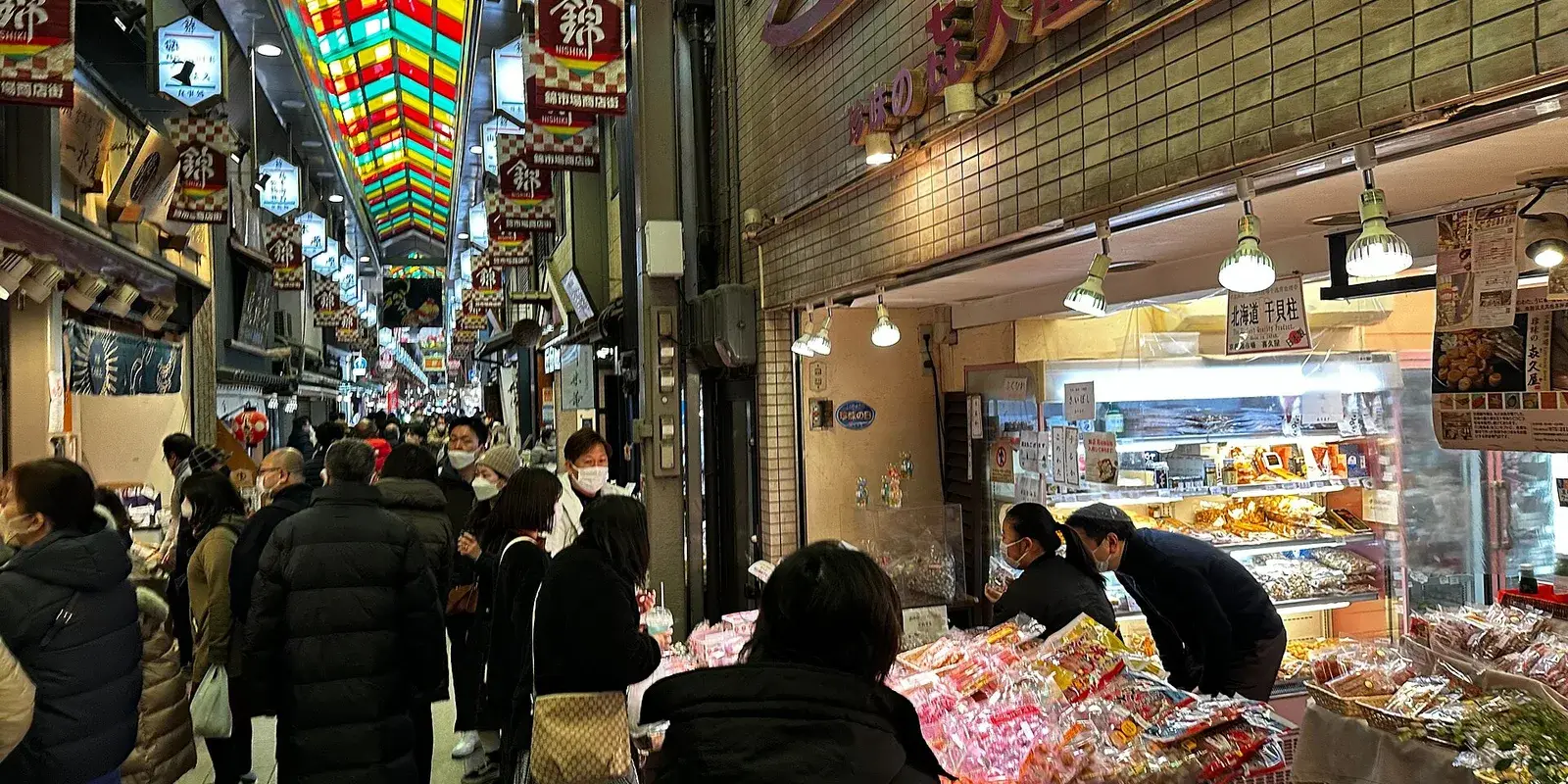
Is Nishiki Market Worth It? The Two Nishikis, in Visitors' and Locals' Own Words
Nishiki Market is the rare Kyoto place where the reviews don't just disagree. They split almost down the middle. One traveler calls a morning here "truly what dreams are made of." The next calls it "the most overpriced, overrated, tourist-trap type place I've visited. Would not go back." Both walked the same narrow, 390-meter lane. So which one is right?
Here's the short answer, and the rest of this article explains why: both are, because there are two Nishikis, and you mostly choose which one you walk into. There is the midday food-court-on-a-stick that disappoints visitors and locals alike, and there is the four-hundred-year-old specialist market you catch early and taste at the counter. The deciding factor isn't luck. It's timing, and one small habit the locals will tell you themselves.
Is it worth it? (in visitors' own words)
We gathered the voices of international travelers who have actually been to Nishiki and asked, in effect, was it worth it? Weighted by how strongly each opinion resonated with other readers, here is how they fell:
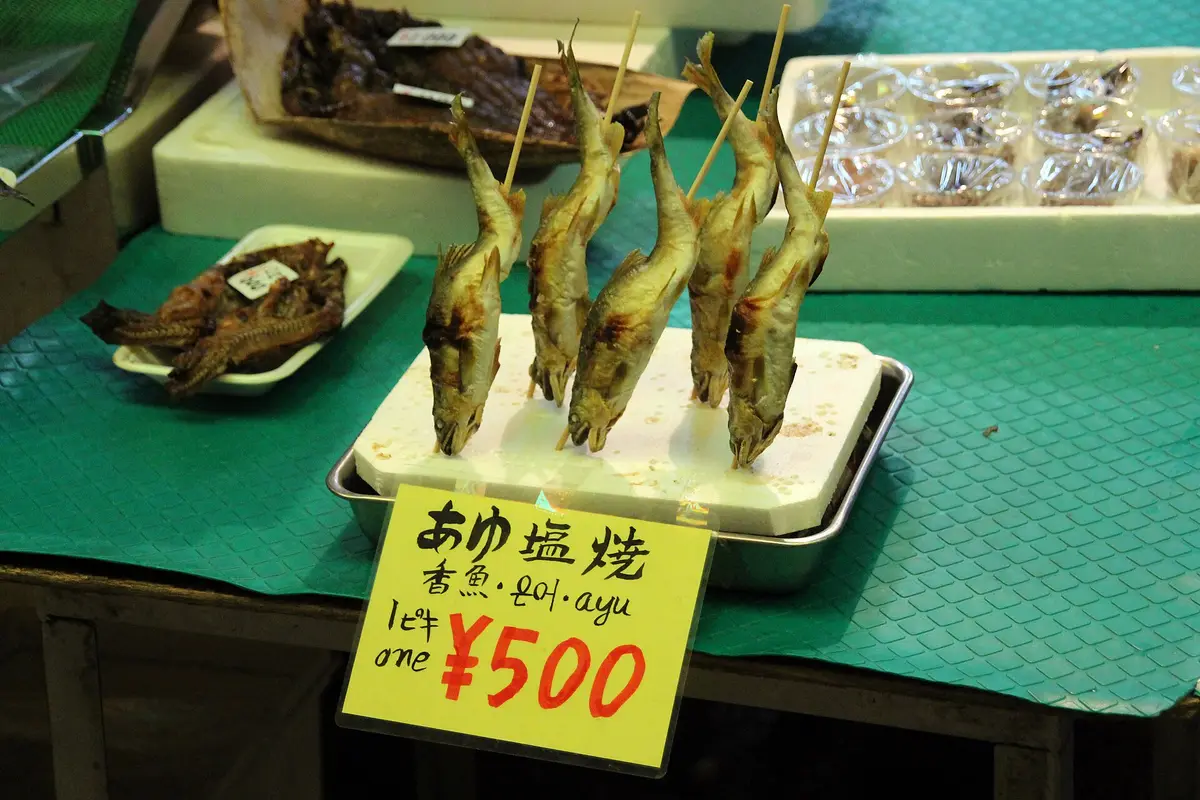
That red bar is real, and it is unusually large for a famous place, but it is also unusually specific. The people who came away unhappy almost always describe the same visit: the lane shoulder-to-shoulder after noon, a snack grabbed on the move, a price that stung. One went to a stall "where a lady was grilling eel," ordered a piece, and watched her "put it in the MICROWAVE"; he left calling it "my biggest disappointment," and in the same breath, named the fix: "If you want to go and look, go early. Leave before 12pm."
Now read the green half, and a pattern jumps out: the people who loved it are not describing a different market. They are describing a different way through the same one. "In Kyoto, there is no street where in 2–3 hours you can sample 10 different 'must-eat' foods," one regular wrote. "There's tons to see and eat, prices are totally fine and no one's trying to scam you. I loved Nishiki and visited a few times," said another. And the quietest, most useful voice of all, from a visitor who clearly understood the place: "The purpose of that place is to buy ingredients to take home… the street food is there for tourists or people wanting a snack." Arrive expecting a cheap food festival and you can be let down. Arrive expecting a working specialist market, taste a few things well, and it tends to deliver.
How Kyoto feels about its own kitchen
Here is the layer most "worth it?" guides never show you: what Japanese visitors and locals say, in their own reviews, about the same street.
Notice two things. The local red bar is smaller than the visitors' one, but it is not a different complaint. The locals who feel let down are mourning exactly what the disappointed travelers stumbled into. "It used to be Kyoto's kitchen," one writes, "but now it's just a tourist spot." Another, after a long-ago return: "I no longer feel like going… it's not aimed at us." A third names the change precisely: it has become, in their words, "a snack-walking market." When the people who grew up shopping here tell you the food-walk version isn't the real thing, that is the most valuable sentence on this page: the visitor who feels ripped off and the local who drifted away are pointing at the very same Nishiki.
And the larger, warmer half of the gauge points at the other one. The same reviews that grumble about the midday crush light up about the market itself when they catch it right. "Nishiki Market in the morning is quiet, completely different from the daytime hubbub," one writes: the dim arcade, the red, yellow and green glass overhead. "I went around 9am and it wasn't that crowded, and everything was something I wanted to buy." For locals it is still where you pick up grilled rice crackers, yuba, and pickles; still, as one put it, "a shopping street that represents Kyoto." The kitchen didn't close. It just keeps its best self for the quiet hours.
The one habit that turns the red bar green
Here is where the locals quietly hand you the map. There is a small request posted along the street. More tellingly, there is a habit Kyoto people follow without being asked. As one resident explained it plainly: "It's just best practice to eat what you buy where you buy it in Kyoto. Less garbage and spilled food for everyone." The market's own cooperative asks the same thing in its own words: please enjoy your food in front of, or inside, the shop you bought it from, rather than walking through the market with it.
It reads like an etiquette footnote. It is actually the whole difference. The lane is barely three and a half meters wide; a skewer eaten on the move through a packed crowd is how sauce ends up on a stranger's sleeve and how a wrapper ends up underfoot: the exact texture of the "tourist trap" that the unhappy reviews describe. Buy one thing, step to the counter, and eat it there, a meter from where it was made, and that same skewer is hot, unhurried, and usually better. The market didn't get worse so much as the way most people move through it did. (The wider question of when eating-as-you-walk is welcome elsewhere in Japan is its own subject, and we look at it gently in is it rude to eat while walking; here, on this one narrow street, the local answer is unusually clear, and unusually kind.)
The Habits That Keep You on the Green Side
Everything above resolves into a handful of moves that land you, and the market, on the green side of both gauges.
- Go early, or on a weekday. The single most-repeated piece of advice from happy visitors and locals alike. Before late morning the lane is walkable, the light through the arcade is lovely, and the shopkeepers have time for you. The middle of the day, especially in the afternoon, is the crush almost everyone complains about.
- Treat it as a 30-minute sensory walk rather than a meal destination. Nishiki is built for tasting and shopping, not for a sit-down lunch in the crowd. Come already fed, or come to graze a few small things, and keep your expectations set to "market," not "food festival."
- Eat at the stall, not on the move. Buy, then eat at the counter or just in front of the shop. It is what the market asks, what the locals do, and the thing that most reliably turns a frazzled visit into a warm one.
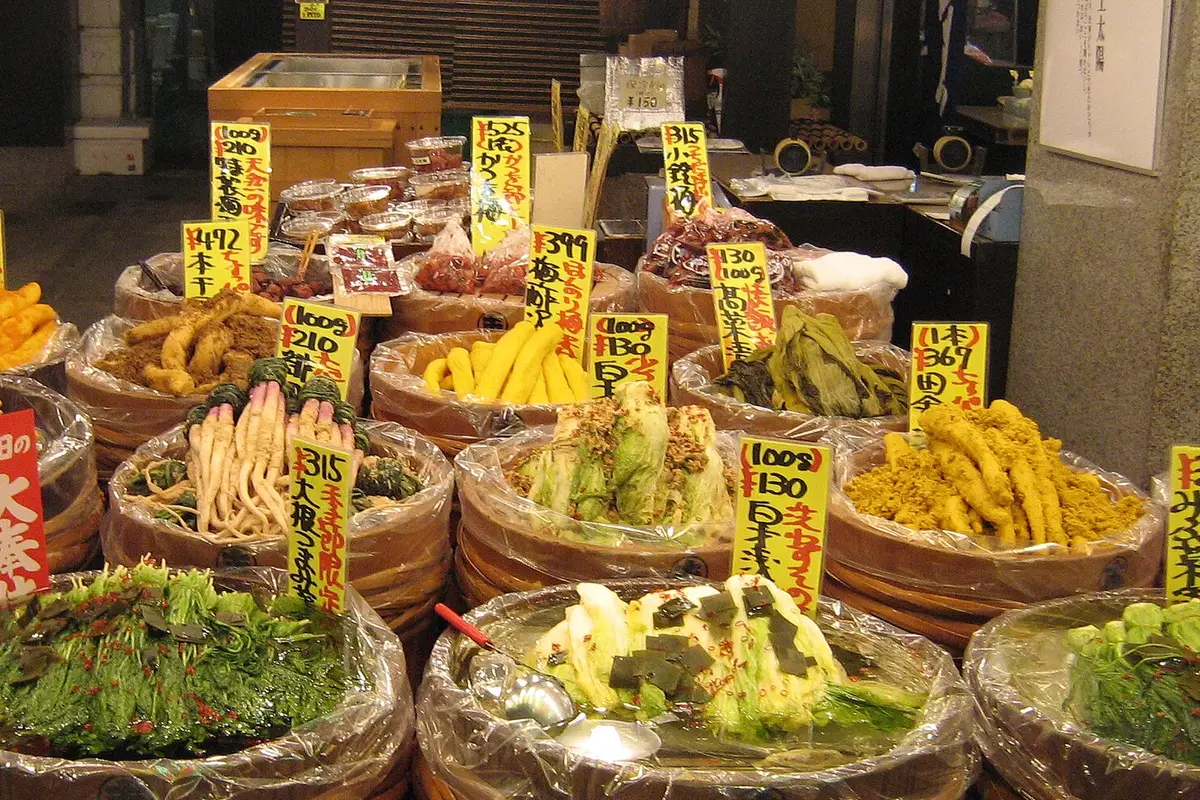
- Buy a little to carry home. Pickles, dashi, yuba, a fresh dashimaki omelette, tea roasted at the storefront, or a single good knife. This, not a snack on a stick, is the Nishiki the locals still come for, and the best souvenir of Kyoto's kitchen.
- Choose a couple of specialties on purpose. One mediocre stall, as a seasoned visitor put it, "counts for nothing" in a market this deep, but only if you choose well rather than grazing blindly. Aim for the things Nishiki does best: thin-sliced senmaizuke pickles, dashimaki, fresh yuba and warm soy milk, tako-tamago, and, for people-watching, the famous hundred-yen standing sake spot.
- Mind the hours. This is a daytime market: many shops begin closing in the late afternoon (around 5–6pm), and some close on Wednesdays. It is not a place to visit at night.
So, is it worth it? Picture a cheap street-food carnival and arrive at one in the afternoon, and you may well join the third who walk away unimpressed. Come early, taste a few good things at the counter, and carry a little of Kyoto's kitchen home, and you'll most likely land with the visitors who'd happily go back, quietly joined by the locals who still do. There are two Nishikis. The kinder, older one is still there every morning. Choose that one.
Still deciding which famous places actually earn a slot on a short trip? Start with what actually matters in Japan, and for the full walk, what to eat, which end to start from, and the cold groundwater that has kept this market alive for four hundred years, see our Nishiki Market guide.
Sources
- Nishiki Market Shopping District Cooperative: Requests to Visitors: the market's own words asking visitors not to walk through the market while eating, and to eat in front of or inside the shop where the food was bought.
- Nishiki Market Shopping District Cooperative: History & Profile: the street's four-hundred-year history, official recognition of its wholesalers in 1615, the "Kyoto's Kitchen" name, the arcade, and the dimensions of the lane.
- JNTO: Nishiki Market: "Kyoto's Kitchen, thriving for 400 years": about 390 meters, more than a hundred specialist shops, what to eat, and the best time to visit.
- Kyoto City Official Travel Guide: Nishiki Market: official tourism guidance, more than 130 shops, access, and the recommendation to come in the late morning before the busiest hours.
- Mainichi Shimbun: "Overtourism troubling Kyoto's Kitchen, Nishiki Market" (2024-07-06): reporting on the shift from a market serving local cooks to a tourist food-walking street, the narrow 3.3-meter lane, the litter left by eating-while-walking, and the multilingual signs the cooperative has posted since 2018.
WMJS is written in Japan, in English, with AI help. We check every page, but English is not our first language. If a sentence reads oddly, tell us. One sentence is enough.
Thank you. A person reads every note.
How well do you know Japan?
Based on 51,218+ real Japanese voices
Want to know more? Ask Japanese people
Have a follow-up question about this topic? We'll ask real Japanese people.
Voice Box →