
Is the Arashiyama Bamboo Grove Worth It? What Visitors and the People of Kyoto Actually Say
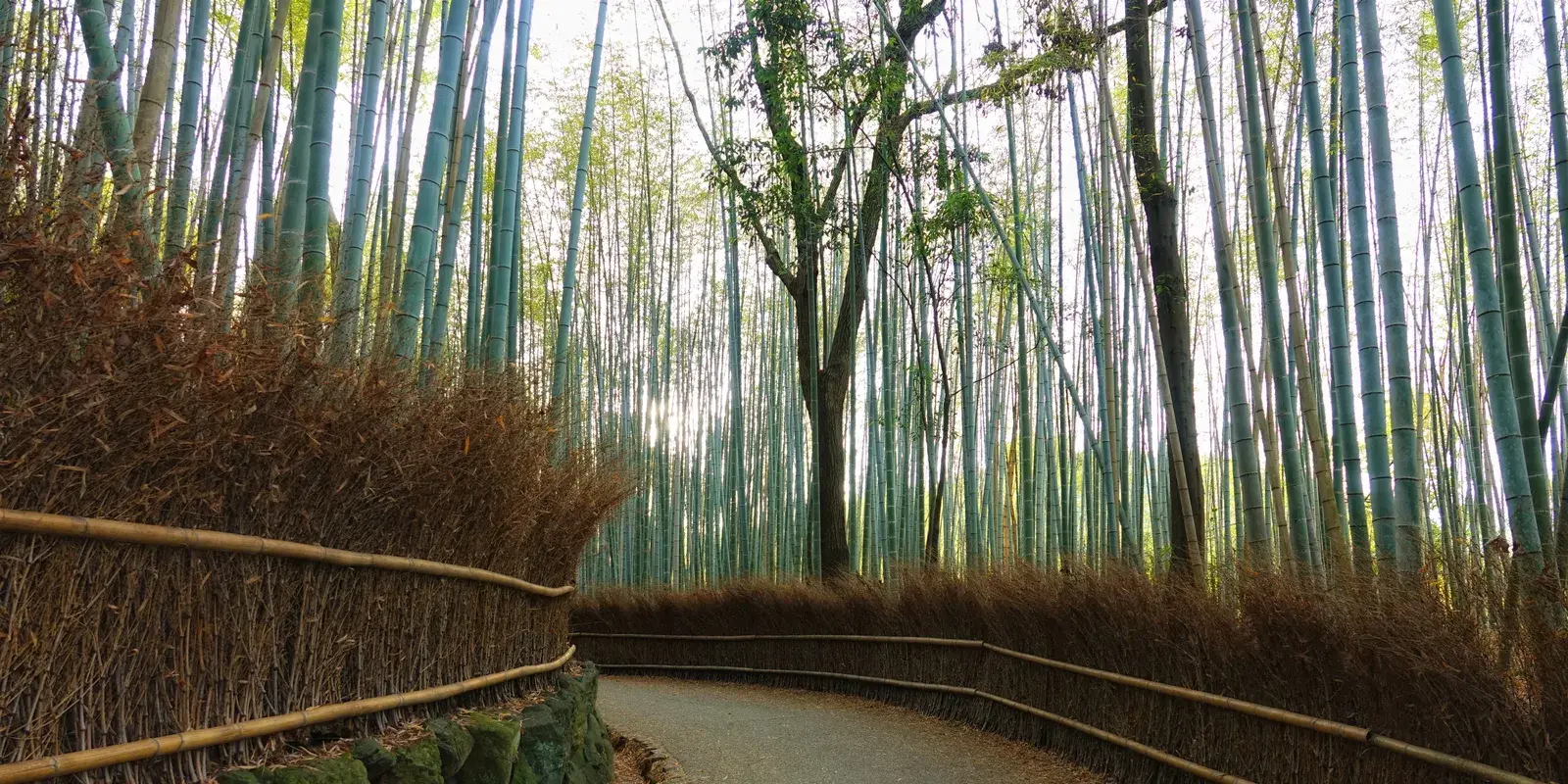
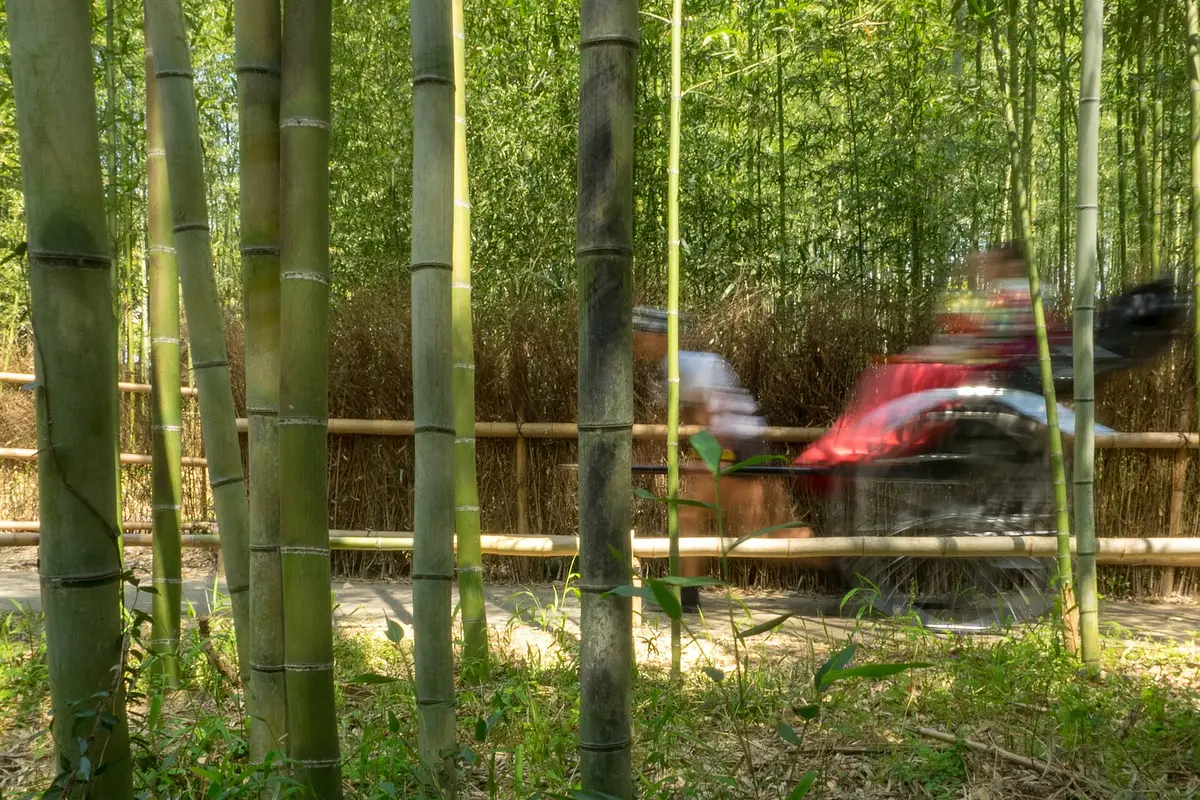
You have seen the photo a hundred times: a green tunnel of impossibly tall bamboo, soft light coming down through the leaves, no other soul in sight. So you put Arashiyama at the top of the Kyoto list, travel an hour to get there, and find a few hundred metres of path, shoulder to shoulder, with a rickshaw nudging through the middle. And the quiet word that has followed this place around the internet for years bubbles up: overrated.
Here is the short answer the voices keep giving, and everything below simply walks through it: the bamboo grove on its own is short, and after about eight in the morning it is packed, and visitors and locals both say so. But almost nobody regrets Arashiyama. The trick is two moves: go at dawn, and treat the grove as a fifteen-minute walk inside a much bigger, much gentler day.
Is it worth it? (in visitors' own words)
We gathered the voices of international travelers who have actually been to Arashiyama and asked, in effect, was it worth it? Weighted by how strongly each opinion resonated with other readers, here is how they fell:
That fat middle band is the whole story. This is one of the few famous sights where the most common verdict is not yes or no but it depends, and the people who loved it and the people who shrugged are usually describing the exact same place, visited two different ways.
The let-down is almost always an expectations problem. The single most-resonant comment on the whole subject is a small public service announcement from someone who clearly cares: "people get so hyped for it based on photos and I hate people being disappointed... that bit of the path you see in the photos is literally it... You walk through it within about 5 minutes." Their conclusion, though, is not to skip it. Instead, it is "Definitely still go though, the monkey park is legit worth the trip nearby and the surrounding area is gorgeous, just don't hype yourself up too much. Realistic expectations help a lot." Another, plainly: "It's maybe a quarter mile of sidewalk through tall bamboo... It is very pretty, it just took 20 minutes to see everything."
And the people who came away glad tend to say one thing over and over: the grove is the smallest part of the day. "Arashiyama is not just the bamboo forest," one wrote. "I spent a wonderful morning there, strolling far from the crowds. There are temples, the bamboo forest, the monkey park and very good food." Or, more bluntly: "don't buy into reading about it being over crowded — that's one path in the forest. Arashiyama is huge and absolutely stunning with a backdrop of mountain views." One traveler needed only a few words: "If I were to be married, I'd want it to be here."
How the people of Kyoto feel about it
Here is the layer most guides skip: what Japanese visitors say, in their own reviews, about the very same path. It is warmer, and, tellingly, its honest hard edge is even sharper than the visitors'.
Notice that the red bar here is larger than the visitors' one (16% against 14%), and that is the most useful thing on this page. The Japanese reviews are blunter about the crush precisely because they know what is being lost. One review lands it: the path was "so crowded it felt like Harajuku — no matter where you took a photo, only people showed up. It was a place where you felt no wabi-sabi at all."
But read the warm reviews and you find the secret hiding in plain sight. Again and again, the thing they treasure is not the look of the bamboo but the quiet: "After passing the area bustling with tourists and lined with shops, when you reach the entrance of the bamboo grove, your heart suddenly settles." Another, on a rare empty morning during the pandemic: "In a normal year it's so crowded you can barely pass each other, with rickshaws coming through too — but this year I got to stroll at a leisurely pace." The grove's real gift is stillness: "a quietness and a cool chill, a moment where you feel history." Which means the crowd does not merely inconvenience you. It deletes the actual experience. The bamboo is still there at noon; the thing it is famous for is not.
What we wish you'd noticed
The grove is officially a sound, and only secondarily a view. Japan's Ministry of the Environment includes the rustling of the Sagano bamboo in its list of the 100 Soundscapes of Japan, chosen for what it sounds like when the wind moves through it. That is the experience the early reviewers describe and the midday crowds erase. Go when you can hear it, and the place finally makes sense.
It is one beat in a genuinely lovely day. Once you step off the famous path, Arashiyama opens up. Tenryu-ji, a UNESCO World Heritage temple, has a 14th-century garden designed to "borrow" the Arashiyama mountains as its backdrop: you look at a pond and a whole mountain becomes part of the view. The Iwatayama Monkey Park is a short climb to a hilltop where around 120 wild Japanese macaques roam free and the city of Kyoto unrolls below you. There is the Togetsukyo bridge over the Katsura River, the villa garden of Okochi Sanso, and a web of quieter Sagano temples a few blocks further on, where, as one visitor found, "the afternoon crowds dissipate once you get a few blocks clear." Tenryu-ji's borrowed mountains look like a different garden once the maples turn, and that season carries its own quiet etiquette: autumn leaf season.
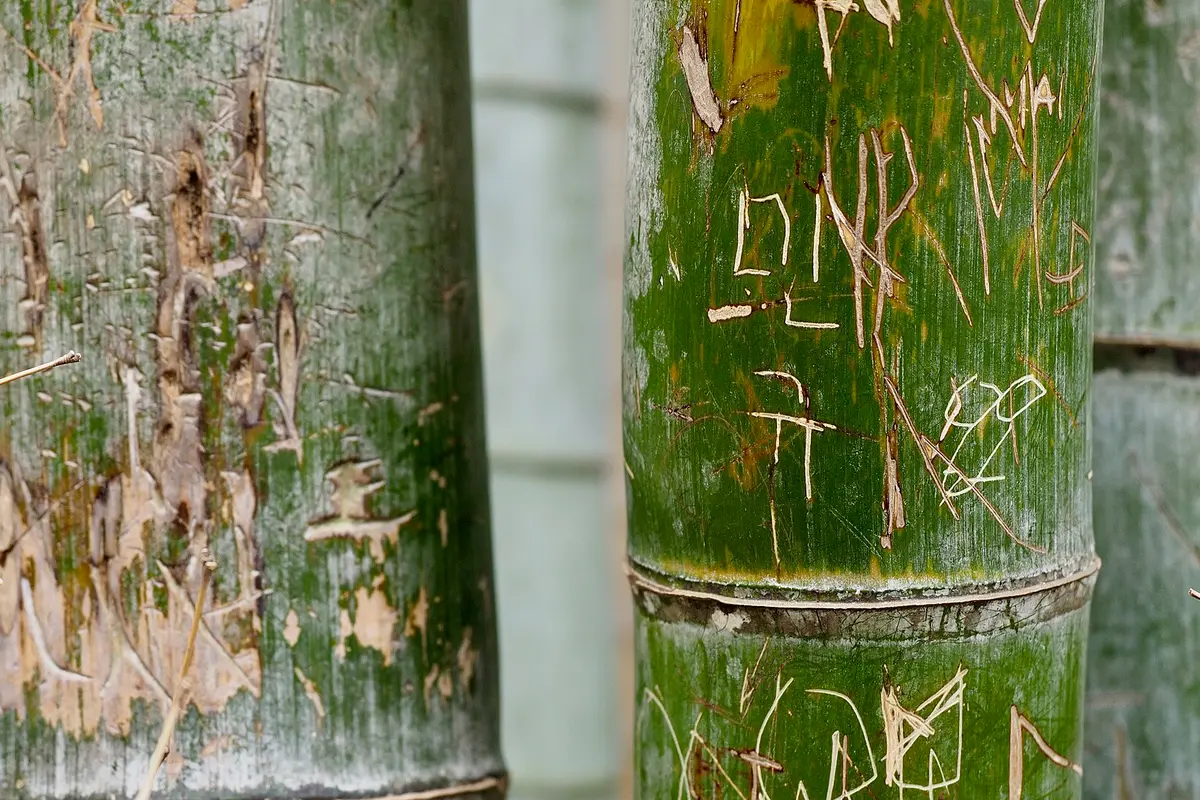
The bamboo is being loved a little too hard. In a 2025 survey of the roughly 7,000 stalks along the path, Kyoto City found about 350 of them carved with initials and hearts. The city has had to cut down the worst-damaged stalks and pull the fence back from the path to protect them. A carved stalk keeps that scar for the rest of its life. The kindest thing any of us can do here is simple: leave the bamboo exactly as we found it.
The Moves That Make It Work
Everything above resolves into a handful of moves that turn "overrated" back into the photo that pulled you here.
- Go at dawn. This is the one that changes everything. "I was there at 6 AM and had it to myself," one visitor wrote; "by noon, you couldn't even see the grove anymore." Before about 8 a.m. you get the quiet the place is actually famous for, and you will not be alone, but you will be able to hear the bamboo.
- Treat the grove as a 15-minute walk inside a bigger day. Build the day around it: Tenryu-ji's garden, the monkey park, the river and bridge, the calmer temples beyond. The people who planned it this way are the ones who came home glad.
- Right-size your expectations. It is a few hundred metres of path, and it photographs far grander than it feels. Knowing that in advance is, by the visitors' own account, the difference between delight and disappointment.
- Leave no mark. Don't carve, don't pull, don't lean your full weight on a stalk for a photo. The grove survives only because most people are gentle with it.
- If a friend is along, let one of you hold back for the photo: a clear frame on this path is a matter of timing, not luck, and it comes early in the morning.
- It is genuinely okay to skip the grove if your days are tight and you have walked through bamboo elsewhere. Several seasoned visitors say exactly that, and still suggest the monkey park and the river. Skipping the path is not the same as skipping Arashiyama.
Do these, and the day tends to go the way the glad reviewers describe rather than the way the let-down ones do. The grove is not lying to you in the photos. It just only looks like that for the first hour of the day, to the people who came early and walked softly.
Bringing it back to the question that opened this page: is it worth it? The grove alone, at midday, in a crowd: the voices are honest that it may not be. Arashiyama at dawn, walked slowly, as half a day among a temple garden, a hilltop of wild monkeys, a river, and a path of bamboo you can finally hear: almost everyone is glad they came.
Still deciding which famous places earn a slot on a short trip? Start with what actually matters in Japan, and for the full, unhurried walk through Sagano, the river, Tenryu-ji's borrowed-mountain garden, and the bamboo, the Arashiyama audio guide is just below.
Sources
- Ministry of the Environment, 100 Soundscapes of Japan (日本の音風景100選): the official list that includes the wind in the Sagano bamboo grove, recognized for its soundscape.
- Tenryu-ji, About the Temple & the Sogenchi Garden: UNESCO World Heritage Zen temple; its 14th-century garden uses the Arashiyama mountains as "borrowed scenery."
- Arashiyama Monkey Park Iwatayama, Official: about 120 wild Japanese macaques on the hillside; a hilltop rest area at 160 m with a panoramic view over Kyoto.
- JNTO, Sagano & Arashiyama Area: official overview of the wider Arashiyama district: the bamboo grove, Tenryu-ji, Togetsukyo bridge, and the Sagano temples.
- Asahi Shimbun, Trial cutting of bamboo on the Arashiyama path to deter carving (2025-11-19): Kyoto City's October 2025 survey found carving damage on about 350 of roughly 7,000 bamboo across the ~2.3-hectare grove (about half of it city-owned); the city trial-cut damaged stalks and set the path back.
- Kyoto City / DMO Kyoto, Saga-Arashiyama Comfort (Crowd) Map: official guidance on when the Arashiyama area is least crowded, recommending early-morning visits.
- Kyoto City Official Travel Guide, Togetsukyo Bridge: the Moon-Crossing Bridge over the Katsura River, the gateway to the Arashiyama district.
WMJS is written in Japan, in English, with AI help. We check every page, but English is not our first language. If a sentence reads oddly, tell us. One sentence is enough.
Thank you. A person reads every note.
How well do you know Japan?
Based on 51,218+ real Japanese voices
Want to know more? Ask Japanese people
Have a follow-up question about this topic? We'll ask real Japanese people.
Voice Box →