
Taking a Japanese Calligraphy Class: What Your Shodo Teacher Actually Sees
What you'll learn in this article:
- What 453 Japanese voices (calligraphy teachers, lifelong learners, everyday people) really think about beginners from abroad picking up a brush
- Why "one stroke, no do-overs" is far less scary than it sounds (even Japanese pros quietly break that rule)
- The most reassuring secret in the room: most Japanese adults think their own handwriting is bad, and your teacher watches how carefully you work far more than how skilled you are
Can you take a Japanese calligraphy class if you've never held a brush and can't read kanji? Yes, and you're exactly who teachers expect. We collected 453 Japanese voices, including calligraphy teachers: they watch the care you put into each stroke far more closely than your skill. Most Japanese adults say their own handwriting is bad too.
Cultural experiences are among the most loved things visitors do in Japan: 96.4% of those who tried a traditional culture experience were satisfied, second only to eating Japanese food (Japan Tourism Agency, 2024). The 453 Japanese voices we collected explain why the calligraphy classroom is such a forgiving place to start: everyone in Japan learned this at school, almost nobody thinks they're good at it, and the teacher isn't grading you.
If you've ever looked at a calligraphy class listing in Kyoto or Tokyo and thought, "I'd love that... but my handwriting is terrible, I can't read kanji, and I heard you can't fix a stroke once you've written it," this article is for you. Every one of those worries turns out to look completely different from the teacher's side of the table.
Shodo (書道) literally means "the way of writing," the art of writing characters with brush and ink, which arrived in Japan from China in the 6th century along with Buddhism. In 2021, Japan officially registered shodo as a cultural property to be safeguarded. It's also just a quiet hour at a low table, where someone who loves this art hands you a brush and genuinely wants to watch you try.
We collected 453 real Japanese voices, from calligraphy teachers and classroom owners to people who haven't touched a brush since school, to find out what they actually think when a beginner from abroad sits down, writes a wobbly line, and laughs.
Quick Guide
| Situation | What Japanese People Said | |
|---|---|---|
| 🟢 Relax | Your handwriting is "bad" | Teachers don't grade skill. "Even a clumsy hand, if it's careful, has charm." Most Japanese adults are insecure about their own handwriting, so you're in good company. |
| 🟢 Relax | You can't read kanji | The teacher gives you a model to follow and helps you choose a character whose meaning you like. Many classes turn your name into kanji. Not reading Japanese is simply the normal case. |
| 🟡 Good to know | One stroke, no do-overs | Ink can't be erased: that's the point. You'll write many sheets and keep your favorite. Blurs and dry streaks can be a kind of beauty. |
| 🟡 Good to know | Brush and ink | There's no single "correct" way: even Japanese schools disagree on how to hold and wash a brush. Wear clothes that can survive an ink splash, and let the teacher show you the rest. |
| 🔴 Worth noting | The writing moment | The one thing teachers quietly hope for: when you write, give the stroke your full attention. Photos are welcome in almost every class, just take them before or after the brush touches paper, and ask before filming someone else. |
The one thing to remember: Shodo is not a handwriting test. The ink can't be erased, and that's exactly why a single stroke written with care means something. Write badly, laugh, write again. Your teacher is watching your heart, not your lines.
How We Gathered These Voices
We collected 453 Japanese-language voices across nine questions: how teachers feel about welcoming foreign learners (58), the "one stroke, no do-overs" rule (41), handwriting insecurity (60), brushes and ink (47), what beginners should write (45), teaching across a language barrier (41), the moment a student finishes a piece (48), photos and concentration (60), and how different generations see calligraphy (53). We gathered these from public Japanese Q&A sites, forums, blogs, and social posts, including many written by calligraphy teachers themselves.
A quick note: This isn't a controlled scientific survey. It's a collection of what real Japanese people said, in their own words, on public platforms. Most English guides describe shodo as a strict, high-stakes art form. We wanted to show you what the people actually holding the classes say, because it's a much warmer picture.
First: Do Teachers Even Want a Total Beginner From Abroad?
Let's start with the worry underneath all the other worries: am I welcome here, or am I imposing?
Of 58 voices from and about the people who teach (calligraphy teachers, classroom owners, and experienced practitioners), the answer was about as warm as data gets:
外国の方が日本の文化に触れて、実際にやってくれるなんて、すごい嬉しいんですが Someone from another country engaging with our culture and actually trying it themselves? That makes me really happy.
もう少しコンスタントにインバウンドの方に来て頂きたいなぁ Honestly, I wish international visitors would come more regularly. (Calligraphy classroom owner)
That second voice is worth sitting with: the teacher's "problem" with foreign students isn't that they come. It's that they don't come often enough.
And if you've ever worried that picking up someone else's art form might be seen as appropriation, Japanese reactions to exactly that question were striking. When a thread spread about a Westerner being criticized (by other Westerners) for practicing calligraphy, Japanese commenters lined up to defend him:
アメリカ人が習字を練習するのを文化盗用なんて呼ぶ日本人はたぶん一人もいない There is probably not a single Japanese person who would call an American practicing calligraphy "cultural appropriation."
文化盗用ってフレーズ、ホントに理解不能です。興味を持たれなくなった文化は廃れるのだし The phrase "cultural appropriation" genuinely makes no sense to me here. A culture nobody takes interest in simply dies out.
(If that worry follows you around Japan, at temples, in kimono, at festivals, we wrote a whole article about it: Am I Cosplaying Their Religion?.)
Here's the part almost no guidebook mentions, though: your teacher might be nervous too. A teacher in her fifties wrote, the week before her first English-language lesson:
不安しかないアラフィフの挑戦です… A challenge for someone pushing fifty, with nothing but anxiety...
教室に来ていただき一人で対応するのは初めてのことで、最初はドキドキしましたが、何とか!(本当になんとか!笑)英語でコミュニケーションが取れました。 It was my first time handling a guest at my classroom alone, so my heart was pounding at first — but somehow (really, just barely! haha) we communicated in English. (Calligraphy teacher, after her first international guest)
The two of you will be nervous together. That's not a problem: by every account we read, it's where the warmth comes from.
The practical bits: booking, cost, time
Calligraphy experiences are easy to find through official tourism sites and experience platforms in major cities, usually in small groups with everything provided: brush, ink, paper. As reference points from official tourism listings: a Tokyo workshop listed on the city's official tourism site charges ¥5,000 for a session where you practice a word of your choice and finish a piece to take home, and a class listed by the Japan National Tourism Organization runs about 1 hour 30 minutes. Sessions built for first-timers, in English-friendly settings, are now the standard format. The Japan Tourism Agency's 2024 survey found 31.6% of visitors experienced traditional culture during their trip, and demand keeps growing. Check the meeting time, language support, and what you take home when you book; the rest is the teacher's job.
One Stroke, No Do-Overs: The Fear That Isn't
This is the rule that makes shodo sound terrifying: you cannot rewrite a stroke. No erasing, no touch-ups, one chance. English guides love this fact. And it's true, mostly. But listen to how Japanese people themselves talk about it.
Of 41 voices on the one-stroke rule:
First, a delicious secret. Japanese learners ask the exact same question you would ("why can't I fix a stroke?"), and when they do, experienced calligraphers sometimes give an answer that would scandalize the guidebooks:
「補筆」といっていわゆる2度書きは普通に行われています。これも高度な技術を要します。書道の世界では補筆はあたりまえのことなので、"ダメ"なんていうことはありませんよ。 There's actually a formal name for it — hohitsu, "supplementary strokes" — and in the professional world, retouching is done all the time. It takes advanced skill. In serious calligraphy, touch-ups are completely normal, so "forbidden" isn't really true.
So the iron rule you were nervous about? Professionals quietly bend it. The "no do-overs" you'll meet in a class is less a law of the art and more a teaching philosophy, and the philosophy is the beautiful part:
物事の瞬間(勢い)の大切さや美しさが、この書道の「二度書き禁止」には在るんですね。一瞬の儚さ、これに尽きると思います。 What the "no second strokes" idea holds is the importance and beauty of the moment — the momentum of things. The fleetingness of an instant. That's what it comes down to.
And here's the part that dissolves most of the fear: you don't get one piece of paper. You get a stack.
墨をたっぷり付けて、何枚も書いて練習するよりないと思います。 Load up the brush with ink and write sheet after sheet — that's really the only way to practice.
One stroke can't be redone, but the page can, as many times as you like. The standard rhythm of every class, for Japanese students too, is: write many sheets, compare, choose the one you like best. Even what looks like a mistake may not be one:
にじんだ方が格好いいところをにじませて、かすれた方がいいところをかすれさせて書いています Where a blur looks better, I let it blur. Where a dry, scratchy stroke looks better, I let it scratch. That's how I write.
Blurs (nijimi) and dry-brush streaks (kasure) are tools of the art, and calligraphers create them on purpose. The line between "mistake" and "expression" is far blurrier (sorry) than the rulebook version of shodo suggests. And for many Japanese adults who practice, the unredoable stroke isn't stress. It's the whole appeal:
書道の場合は、一回切り。字を間違えた場合に巻き戻し出来ないし、紙のスペースの中に収まらなくなった場合も前の状態まで戻す事が出来ないのだ。この緊張感が楽しいのだ。 With calligraphy, it's one take. You can't rewind a wrong character, you can't undo running out of space. And that tension is exactly what makes it fun.
💡 The reframe that changes everything
You can't erase a stroke, but you can always take another sheet. The ink isn't a trap; it's the reason a single careful stroke means something. Japanese practitioners describe that tension as the fun part rather than the scary part.
"But My Handwriting Is Terrible"
Now the big one. The worry that keeps more people from booking a class than any other: my handwriting is embarrassing, even in my own alphabet. In the home of beautiful writing, won't the teacher be appalled?
Here is the most liberating data point in this entire article: Japanese people are deeply insecure about their own handwriting. Of 60 voices about handwriting and skill:
The pressure is real, and Japanese people talk about it constantly:
字が汚いと、頭が悪そうに思う。実際関係ないんだろうけどね When someone's writing is messy, I assume they're not very smart. I know it's not actually related, but still.
人前で書く時緊張して手が震える… When I have to write in front of people, I get so nervous my hand shakes...
Sound familiar? That's a Japanese adult, about writing in their own language. But inside the very same conversations, another principle kept winning massive agreement, and this is the heart of the whole article:
一生懸命書いてて上手く書けないならしょうがない If someone is trying their best and it still doesn't come out well — that's completely fine.
下手でも丁寧ならよし Clumsy but careful? That's good enough.
下手より、雑な方が嫌だ。下手なりに丁寧だと味を感じる。 What bothers me isn't unskilled writing — it's careless writing. A clumsy hand that writes with care has a charm of its own.
Read that last one again. A clumsy hand that writes with care has a charm of its own. In Japanese eyes, the axis isn't skilled-versus-unskilled. It's careful-versus-careless. And "careful" is available to you on day one, before you've learned anything.
The teachers say the same thing, in their own way:
最初から上手い人はいないですよ、先生の字を真似から、始めてみなさい Nobody is good at the start. Begin by copying your teacher's characters — just begin.
私が考える真に『上手い字』というのは、『気持ちをこめて丁寧に書かれていること』、そしてその結果として『文字の中に書き手の存在が感じられること』だと思っています。 To me, truly "good" writing means writing done carefully, with feeling — so that you can sense the writer's presence inside the characters. (Zen monk who practices calligraphy)
And when a Japanese teacher actually receives clumsy, earnest writing from a foreign learner? A Japanese-language teacher in the U.S. described getting handwritten letters from her students:
一文字一文字、丁寧に書かれた日本語。習ったばかりの漢字も、一生懸命思い出しながら書いてくれています。 Japanese written carefully, one character at a time. Kanji they'd only just learned, written while trying their hardest to remember.
『日本語を教えていてよかったなぁ』と、心から感じます。 Moments like that, I feel from the bottom of my heart: I'm so glad I teach.
That's what your wobbly stroke looks like from the other side of the table.
💡 The one sentence to take into the classroom
"A clumsy hand that writes with care has a charm of its own." The axis in Japanese eyes isn't skilled versus unskilled. It's careful versus careless. Careful is available to everyone, on day one.
Brushes, Ink, and the Fear of Making a Mess
"I'll hold the brush wrong. I'll ruin their equipment. I'll get ink on everything." Three fears, one answer: relax, because even Japan hasn't agreed on the "right" way.
Of 47 voices about brushes, ink, and tools:
That giant neutral bar is the story. Ask Japanese learners "do you wash a brush or not?" and you get a debate rather than an answer:
筆は洗ってはいけないという人がいます。洗うものですという人がいます。書道教室でも二通りあるようです。 Some people say you must never wash a brush. Others say of course you wash it. Even calligraphy classrooms split both ways.
洗う派の方が人数的には多いでしょう。しかし、日展の審査をするほどの著名な先生の中でも、筆を洗わない先生もおられます。 The washers are probably the majority. But even among teachers eminent enough to judge national exhibitions, there are some who never wash their brushes.
The same goes for how you hold the brush: there are at least four traditional grips, and which one is "correct" depends on the school. One classic explanation makes it instantly accessible:
お箸を正しく持ち、どちらかの一本を引き抜いた形が正しい持ち方になります。 Hold chopsticks properly, slide one of them out — what's left in your hand is the correct brush grip.
If there's no single right answer for Japanese learners, there is certainly no exam waiting for you. Your teacher will show you the grip their school uses, position your hand, and that's that.
As for the mess, hear a teacher's actual attitude toward ink stains:
子供の書道は、洋服が汚れて当然だと思っていますので。 With children's calligraphy, I consider stained clothes simply part of the deal.
Ink on clothes is the expected outcome of practice, and hardly a scandal. (Practical translation: don't wear your favorite white shirt; many classes provide aprons.) And when a child once ruined a brush by washing out the starch, her teacher laughed, said "oh dear, you've done it now, haven't you," rewound the bristles with cotton thread, and fixed it on the spot, blackening her own fingernails with ink as she worked. The student, decades later, still remembers thinking:
「手が汚れることをいとわずにやってくれてありがとう。」と思ったものです。 I remember thinking, "thank you for fixing it without caring that your own hands got filthy."
That's the relationship Japanese people have with their teachers' strictness: underneath it, this. One more voice for anyone still hesitating over details:
何せ一生かけても極められない奥の深い世界ですから余り小さな事に拘り過ぎますと、前に進みません。 This is a world so deep that a lifetime isn't enough to master it — so if you obsess over every small thing, you'll never move forward.
Left-handed? Also fine, and also something Japan itself navigates case by case. Brush strokes were designed for the right hand, so some left-handed learners write brush characters right-handed and find it surprisingly comfortable; others write with their left, and good teachers adapt:
左手で書く、という子には左手で書かせていますし、お道具やお手本を置く場所を普通と逆にしています。 Students who want to write left-handed, I let write left-handed — and I just mirror the placement of the tools and the model sheet. (Calligraphy classroom owner)
Mention it at the start of class and let the teacher set you up. You will not be the first.
"What Will I Even Write?"
You can't read kanji. So what happens when someone hands you a brush and a blank sheet?
Of 45 voices about what beginners write, and about how Japanese people feel watching foreigners choose kanji:
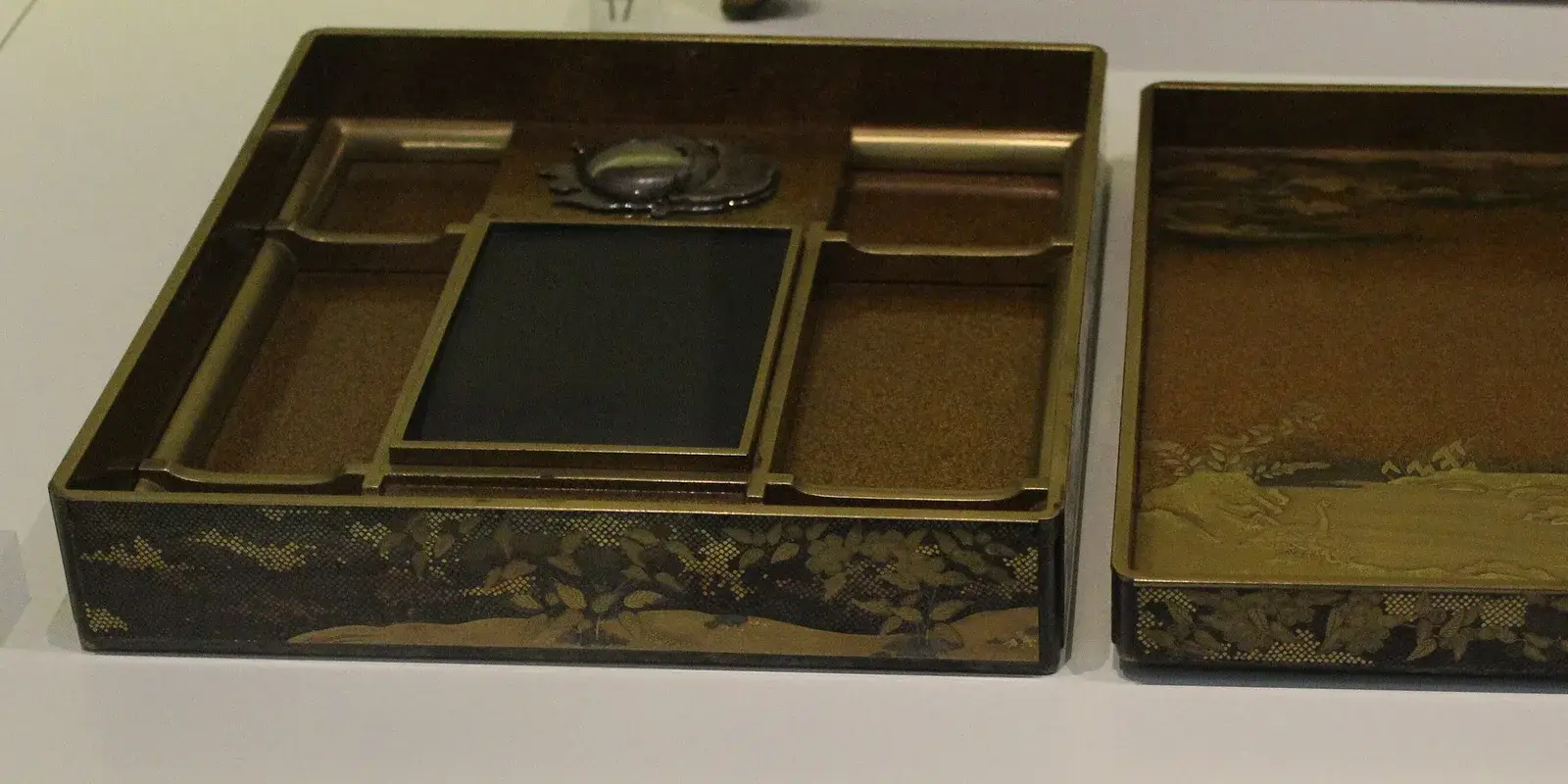
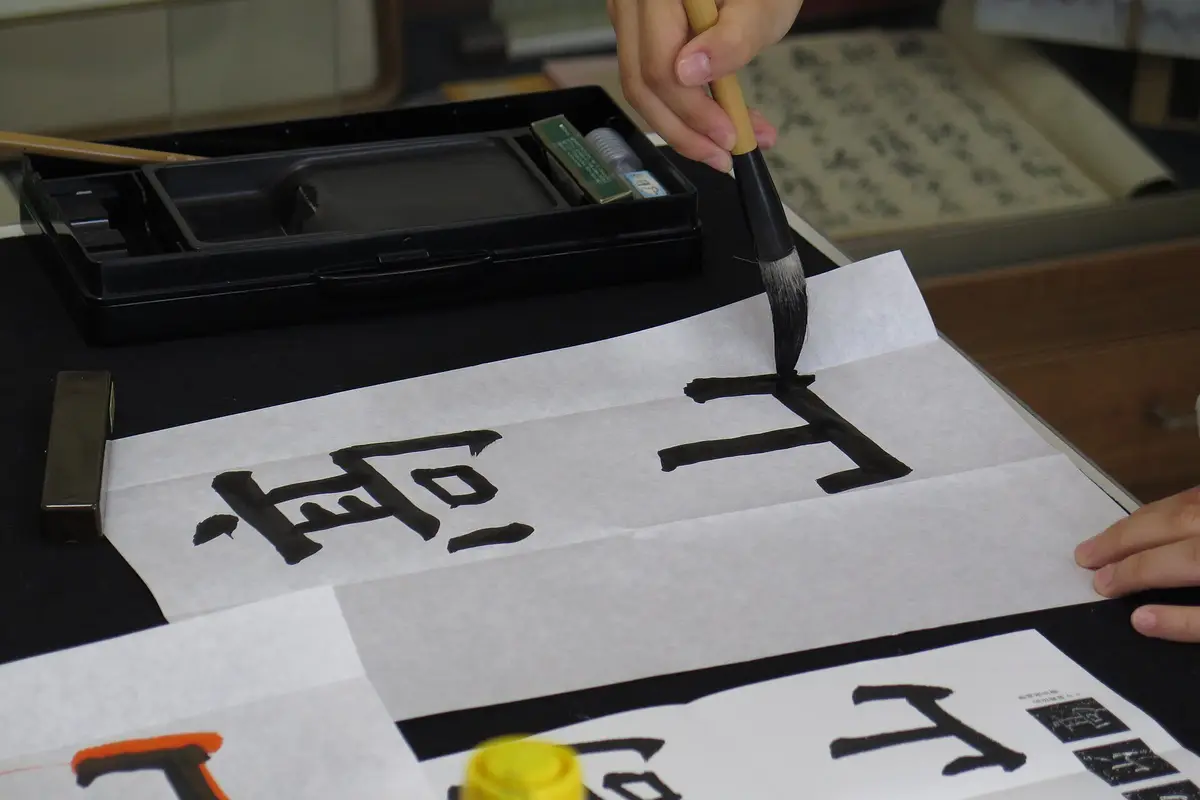
The mechanics are simple and built entirely around you not reading Japanese. The teacher prepares a tehon (a model sheet) and you follow it. Classes typically start with single characters that carry a lot of meaning in a few strokes:
まずは漢字の一を教えて ひらがなの し つ り い など画数が少なくて書きやすい字から教えてください つり いし など意味がある言葉にしてあげるとさらに良いです Start with the kanji for "one." Then easy, low-stroke characters — and it's even better if you turn them into words with meaning.
From there, most experience classes let you choose: a character you love (夢 dream, 和 harmony, 心 heart are perennial favorites), a word that matters to you, or your own name rendered into Japanese. One classroom describes sitting with each guest in conversation, then choosing a kanji that fits that person, so the character becomes a small gift. A Japanese woman who introduced calligraphy to a group abroad wrote, delighted:
その後私が一人で外国人さん達の名前の漢字をひたすら考えて命名した!!! And then I sat there coming up with kanji names for every single one of them!!!
There's a part nobody warns you about, in the best way: Japanese people find the way you see kanji genuinely delightful. A radio segment once mentioned that the character 汁 (shiru, meaning soup or broth) is weirdly popular with foreigners, because they see a cross shining with light rays. Japanese reactions:
漢字を使う国の人には出来ない発想で好きだわwwwww I love it — that's a way of seeing it that people from kanji countries could never come up with, lol
これ見てから「汁」が十字架が光ってるようにしか見えなくなった← Ever since I read this, I can't unsee it — 汁 just looks like a glowing cross to me now.
You read kanji as shapes, and that perspective is so fresh that it changes how Japanese people see their own writing system. In the classroom, that's not a deficiency. It's your superpower.
The one soft wish in the data (that 7%): when a character's meaning gets ignored entirely, mostly in tattoo stories, not classrooms, Japanese people wince a little. But even there, the dominant note was "we do the same thing":
日本人のタトゥーで梵字を時々見かけますが、あれだって読めないし意味わかりませんもんね。なんとなくカッコよく見えますもんね。それと同じで東洋的なものへの憧れというか、神秘性を感じさせるのが漢字なんでしょうね。 You sometimes see Japanese people with Sanskrit-character tattoos — we can't read those either, they just look cool. It's the same thing: kanji carries that sense of mystery for people elsewhere.
In a class, the fix is automatic: the teacher will happily tell you what your character means before you write it. Ask. Teachers love that question.
"I Don't Speak Japanese: Can They Even Teach Me?"
Of 41 voices about teaching across a language barrier:
Calligraphy has a structural advantage over almost any other cultural experience: it's taught by demonstration. The teacher writes; you watch; you write. The brush does the explaining. Here's a practitioner of tea ceremony, another teach-by-showing art, describing the principle:
身振り手振りと片言の英語で大丈夫でしょう。彼らは日本文化に興味があるので、理解しようとする心がありますから。 Gestures and broken English are enough. These guests are interested in Japanese culture — they come with a heart that's trying to understand. (Tea ceremony practitioner)
A heart that's trying to understand. The teachers are counting on yours far more than your vocabulary. One Japanese man who taught brush writing abroad found that not translating actually made the experience richer:
基礎的な用語を日本語で理解してもらうのが望ましいです。その後は「fude, sumi, suzuri」で通します。これも異国文化に触れている実感につながるのですぐ覚えてくれます。 It's best to teach the basic terms in Japanese. After that I just say "fude, sumi, suzuri" — brush, ink, inkstone. It deepens the feeling of touching another culture, so everyone picks the words up fast.
Remember the teacher in her fifties from earlier, the one with "nothing but anxiety" about her English? Teachers prepare phrase sheets, write demonstrations upside-down so you see them the right way up, point, mime, laugh. One volunteer instructor put the working standard perfectly:
たぶんけっこう間違っていると思うが通じればあまり問題ない。 My English is probably full of mistakes — but if it gets through, it's really not a problem.
If "perfect isn't the point" applies to your brushstrokes, it applies to everyone's grammar too, in both directions. (For the bigger picture on language anxiety in Japan, see Do I Need to Speak Japanese? and what happens when you try. Spoiler: trying one word in Japanese is the single most appreciated thing a visitor can do.)
The Moment You Finish, and What You Take Home
The class ends. Your best sheet, chosen from the stack, is yours. Many classes mount it on a shikishi (a firm display board), and some let you finish it the traditional way: pressing a small red seal called a rakkan, the artist's mark that says this is complete, and it's mine. Centuries of calligraphers have signed their work this way; on your first afternoon, so do you.
We collected 48 voices about this moment, and it turns out to be the teacher's favorite part too:
満足いく作品が出来上がった時の喜ぶ姿や、『頑張ってよかった』と言ってくれた時など、生徒たちの心の成長に立ち会えた気がして習字の先生をしていて本当に良かったなといつも思います。 Seeing a student's face when a piece they're satisfied with is finished, or hearing them say "I'm glad I kept trying" — at moments like that I always think: I'm so glad I teach. (Calligraphy teacher)
And the words you say at the end carry more weight than you'd ever guess. A Japanese woman who introduced calligraphy to children overseas came home convinced she had failed: she'd panicked, fumbled, run out of time. Then, at the door:
みんな帰り際に『ありがとう!』と日本語で伝えてくれたり、『僕の漢字は美しかったよ』とか『本当に良い出会いでした』とか言ってくれたり… On their way out, they told me "arigatō!" in Japanese — and things like "my kanji was beautiful" and "this was a truly good encounter"...
もう泣きそうになりながらありがとうありがとうと繰り返しお別れしました I was nearly in tears, saying thank you, thank you, over and over as we said goodbye.
One sentence from a student, my kanji was beautiful, turned her failure into something she'll keep forever. This isn't an isolated story. A veteran teacher confessed:
たまに、自分は先生を辞めるべきでは無いだろうかと考える事もあります。 Sometimes I wonder whether I should stop teaching altogether.
What kept her going? Her students' words, which she recorded like treasure:
「来年も先生の授業を受けたい」「先生の授業が楽しい」「先生が好き」 "I want to take your class again next year." "Your classes are fun." "I like you, sensei."
So when your class ends, say the thing. Tanoshikatta (that was fun). I love this stroke right here. Point at the blur you accidentally made that turned out beautiful. You will make someone's week, possibly their year. (Why do small compliments land so hard in Japan? We have data on that too.)
And the piece you carry home is, by the nature of the art, unrepeatable:
1色だけで一瞬で表現する こんな素晴らしい芸術はないと思います。1回書いたら二度と同じものは書けないし 書き直しもきかない One color, one instant — I can't think of a more wonderful art. Once you've written it, the same piece can never be written again.
Not by you, not by your teacher, not by anyone. Whatever's on that paper exists exactly once in the universe. That's a better souvenir than anything in the gift shop.
💬 What do you think?
Japanese readers: How do you feel about this?Visitors: Have you experienced this in Japan?
Share your voice →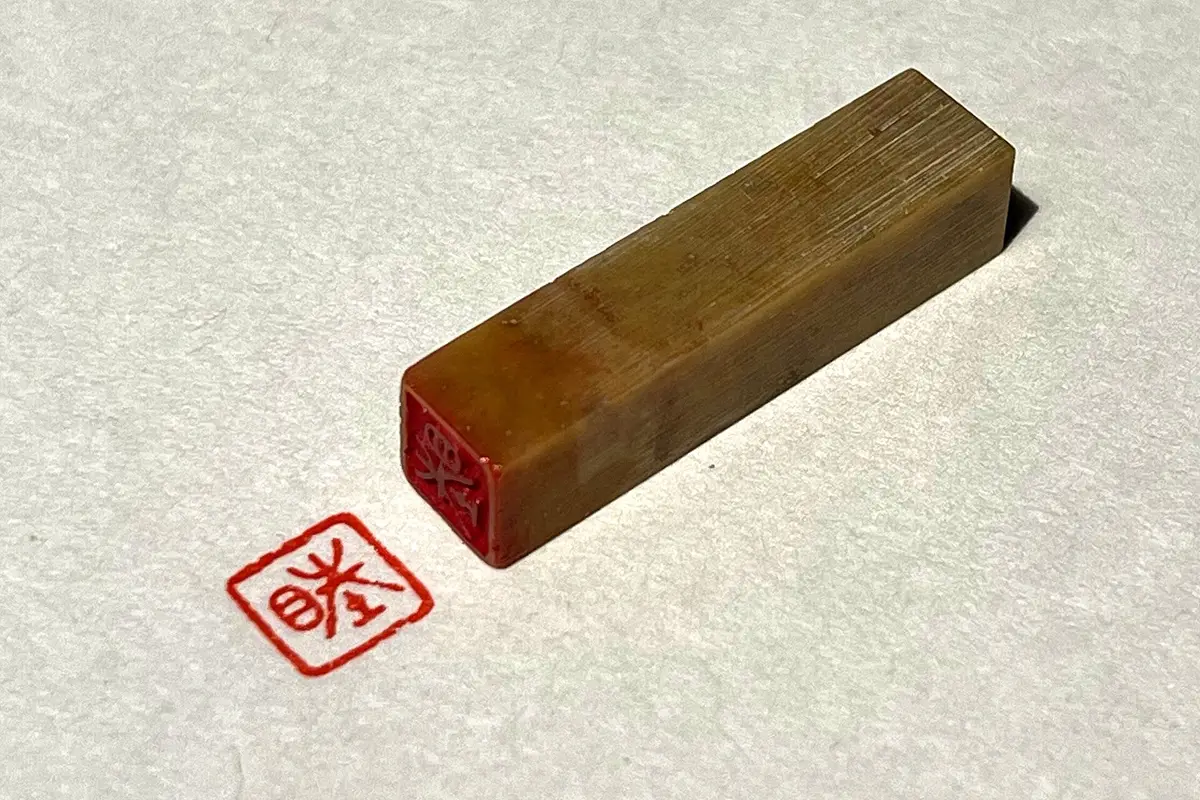
A Quick Word About Photos
Almost every experience class is photo-friendly: finishing with a group photo of everyone holding their work is practically a ritual, and many classes explicitly welcome filming the teacher's demonstration. Two gentle notes from the voices we collected: Japanese people's only real discomfort with cameras is unannounced photography of people, so a quick gesture toward your phone and a questioning look works wonders before filming anyone else. And when it's your turn to write, put the phone down. Not because it's forbidden, but because the one thing your teacher quietly hopes to see is you giving the stroke your whole attention. Teachers describe a student writing "with complete concentration" as the highlight of their day. The photo of your finished piece will be better anyway.
Why Shodo Works This Way: The Cultural Engine
Three structural facts explain almost everything that feels mysterious about the calligraphy classroom.
Ink that can't be erased
The one-stroke rule isn't a test of character. It's chemistry. Sumi ink bonds with the paper's fibers the moment it lands:
一度書いて、ほんの少しでも『間を置く』と、スッと乾いてしまいます。そしてその上にもう一度書くと、『不自然な墨の出方』になって、先生が見れば一発でわかってしまいます。 Write a stroke, pause even slightly, and it dries instantly. Write over it, and the ink sits unnaturally — a teacher spots it at a glance.
Because the material forbids revision, the art evolved to celebrate commitment instead: presence, momentum, the unrepeatable moment. Which is also why your "failed" stroke with its blur and scratch isn't an error to hide. It's a record of exactly how your hand moved, once, that afternoon.
One character that contains everything
Many classes start you on simple characters, and there's a famous traditional idea behind the choice: the character 永 (ei, "eternity") is traditionally said to contain all eight fundamental brush movements of calligraphy (dot, horizontal, vertical, hook, and the various sweeps) in a single character of eight strokes. Practice one character, and you've touched the entire toolkit. This is why shodo can be meaningfully taught in an afternoon: the art is bottomless, but the alphabet of movements is tiny.
A country where everyone did this at school, and almost nobody kept it up
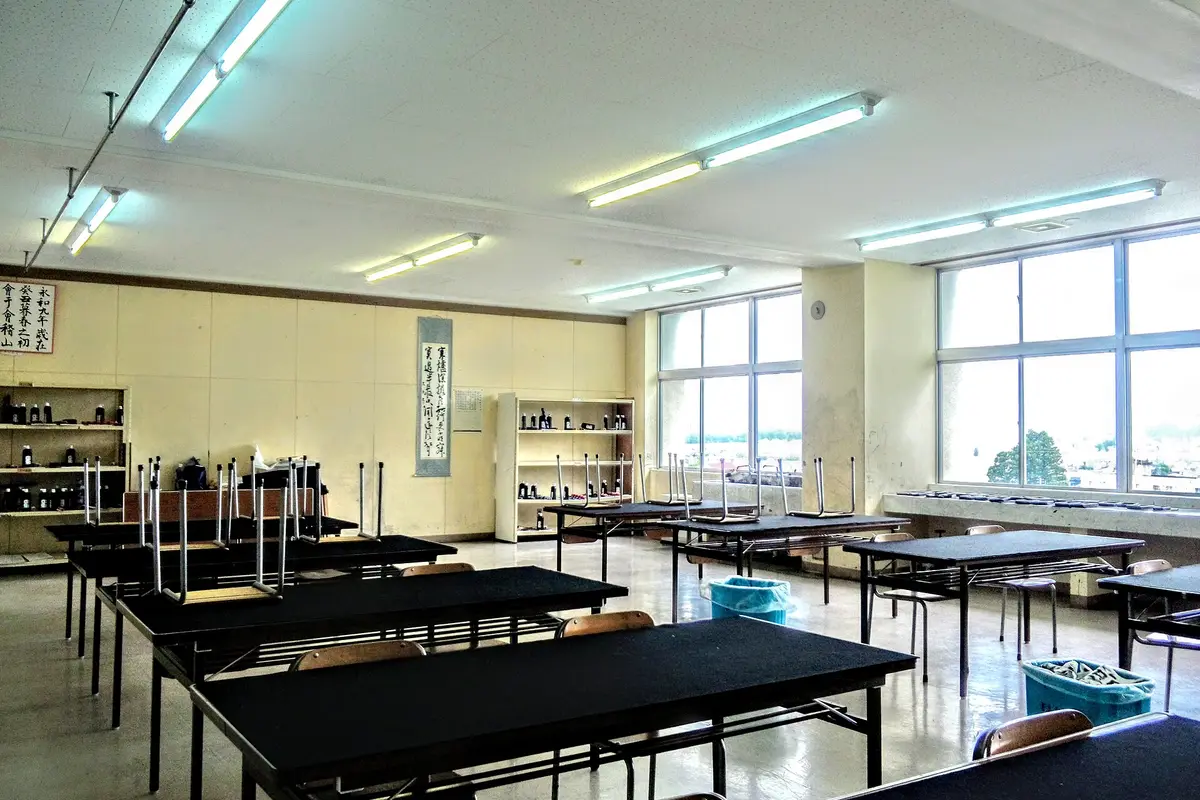
Here's the deepest reason the classroom is kind to you. Brush writing (shosha, "penmanship") is a required part of the national Japanese-language curriculum: every Japanese person practiced it from roughly age 8 through 15, about 30 class hours a year in elementary school. Everyone you'll meet in Japan has held that brush.
And then, almost everyone stopped. In a 2021 national survey, just 3.4% of Japanese people had practiced calligraphy in the past year. In a national language survey back in 2011, 66.5% already said their ability to write kanji correctly by hand had declined, and 42% said handwriting itself had come to feel like a chore, numbers gathered before another decade of smartphones.
こっちは上手下手に関わらず義務教育課程で全員が経験者であることが文化となっている Here, the culture is that everyone is an experiencer through compulsory education — regardless of being good or bad at it.
Sit with that combination: universal experience, near-universal abandonment, and a quiet nostalgia for the smell of ink. When you walk into a class as an eager beginner, you're not an outsider intruding on a sacred art. You're doing the thing nearly every Japanese adult remembers, misses a little, and feels they themselves never got good at.
💡 Why the room is on your side
Everyone in Japan learned calligraphy at school; only 3.4% still practice; almost nobody thinks they're good at it. You're not an outsider walking into an elite art. You're joining the world's largest club of humble ex-students.
Two Generations of One Brush
We collected 53 voices on how different generations see calligraphy, and found not a simple old-versus-young divide, but something more interesting: a loop.
Japan's nine years of school penmanship teach precision, and, some argue, an unintended lesson:
小学校6年間+中学校3年間の計9年間、美しさを求めて字を書き続けなければならない。その結果として生まれてしまったのが「書道は上手く書かなければならない」という誤った観念なのではないのだろうか Six years of elementary school plus three of junior high — nine years of writing in pursuit of beauty. Isn't that what produced the mistaken belief that calligraphy must be written well?
色々な人に「書道してみない?」って誘うと、全員が口をそろえて「自分書道下手だから」と返答する Whenever I invite people to try calligraphy, every single one gives the same answer: "oh, I'm bad at it."
Sound familiar? It's your worry, I'm not good enough to even try, except it's Japanese adults saying it about their own tradition. Meanwhile, the younger generation is reinventing the art from the other side: high-school "calligraphy performance" teams write room-sized characters to music, and traditionalists, to their own surprise, partially approve:
それでもあれだけの大画面を制するには、筆力は必要です。当然古典臨書による鍛錬なしには成立しないでしょう。 Still — commanding a canvas that size takes real brush strength. It couldn't exist without training in the classics.
間口を狭めすぎては衰退していく一方なので「書を楽しむ、魅せる」活動にも理解すべきじゃないかなって。 If we keep narrowing the entrance, the art only declines. We should make room for calligraphy that's enjoyed and performed, too.
One practitioner, who spent seven childhood years in strict lessons and then quit, found her way back through a friend's casual request, and summarized the generational shift in one line:
習字は習うもの(義務教育的)、書道は創るもの。 Penmanship is something you're taught. Calligraphy is something you create.
Here's where you come in. One classroom that now hosts more than a hundred international guests a year observed that visitors often arrive with fewer assumptions about what calligraphy "must" be (no nine years of "write it correctly") and engage with the art simply as art. The beginner's mind that Japanese learners have to work to recover is the one you walk in with for free.
What Japanese People Actually Want You to Know
After reading all 453 voices, the message underneath them sounds like this:
The teachers are not gatekeepers. They're missionaries. Classroom owners write about wishing international guests came more often; teachers in their fifties study English phrases the week before your arrival; the joy in their blog posts after hosting a first foreign guest is unmistakable.
Nobody expects your stroke to be good. They don't even expect their own strokes to be good. Remember, this is a country where 40% of our handwriting voices were Japanese people worrying about their own writing.
書道に楽しく取り組むためには、自分の気持ちを開放するだけでいいと知った。 I learned that to enjoy calligraphy, all you have to do is set your feelings free.
もっと自由に、もっと好きを表現できるような時代が来るといいなと思っています I hope we're heading into an era where people can write more freely — and express what they love. (Calligraphy teacher)
And one date for your calendar: if you happen to be in Japan around the New Year, look for kakizome (書き初め), traditionally the first calligraphy of the year, written on January 2nd, when people across Japan brush an auspicious word as a kind of resolution-in-ink. Some venues hold public kakizome events where visitors are welcome. There is something quietly wonderful about an entire country sitting down, once a year, to write one hopeful word, badly, in most cases, and entirely on purpose anyway.
Traveling with children? Calligraphy is one of the most genuinely kid-friendly cultural experiences in Japan: ink, big paper, and permission to make a mess. (Traveling Japan with Kids covers how welcoming Japan is to families generally.) And if you tend to over-prepare and over-worry about every cultural rule before your trip, we wrote You're Worrying Too Much precisely for you.
You've spent your whole life being told to write neatly. For one afternoon in Japan, someone will hand you a brush and ask only that you mean it. Take the afternoon.
More Japanese Perspectives
Curious how this "your effort matters more than your skill" pattern repeats across Japan? These articles are built on the same kind of data:
- Staying at a Ryokan: What Your Host Wishes You Knew: 394 voices from ryokan hosts on why guidebook "rules" matter far less than guests fear.
- Visiting Temples and Shrines: what actually matters (and what doesn't) in Japan's quiet sacred spaces.
- The Power of a Small Bow: the tiny gesture Japanese people remember long after you've gone home.
Share Your Experience
Taken a calligraphy class in Japan? Written a kanji you couldn't read and loved it anyway? Still have your first wobbly 夢 on a wall somewhere? We'd love to hear about it.
Share your experience on Voice Box →
Sources
Primary Research Data
- WMJS shodo research data (453 Japanese-language voices collected June 2026)
- Welcoming foreign learners: 58 voices / One-stroke rule: 41 / Handwriting insecurity: 60 / Brushes and ink: 47 / What to write: 45 / Language barrier: 41 / Finishing a piece: 48 / Photos and concentration: 60 / Generations: 53
Statistical Data
- Japan Tourism Agency, Inbound Consumption Trends Survey, 2024 Annual Report: 31.6% of visitors experienced traditional Japanese culture during their trip; 96.4% of those who did were satisfied (second-highest of all 20 activity categories), pp. 25-26
- Statistics Bureau of Japan, 2021 Survey on Time Use and Leisure Activities: 3.4% of Japanese (age 10+) practiced calligraphy in the past year
- Agency for Cultural Affairs, FY2011 Public Opinion Survey on the Japanese Language: 66.5% reported declining ability to write kanji correctly by hand; 42.0% said handwriting had come to feel burdensome (2011 survey)
- Ministry of Education (MEXT), Courses of Study for Japanese Language (2017 revision): brush-writing (shosha) instruction required in each grade from elementary grade 3 through junior high, approx. 30 class hours per year in elementary school
Cultural Background
- JNTO (Japan National Tourism Organization), "The Art of Calligraphy": definition and 6th-century arrival of calligraphy in Japan
- Agency for Cultural Affairs: shodo registered as an Intangible Cultural Property (registered December 2, 2021)
- GO TOKYO (Tokyo official tourism site), calligraphy workshop listing (¥5,000 reference price; written without thousand-separators, that is 5000 yen)
- JNTO Experiences in Japan, calligraphy experience listing (approx. 1.5 hours)
- Kotobank (Shogakukan/Heibonsha dictionaries): kakizome (New Year's first calligraphy, traditionally January 2), rakkan (artist's seal), eiji happō (the eight movements of 永)
Opinion Collection Sources
The following sources were used to collect Japanese people's opinions. They are not cited as factual authorities but as public platforms where real Japanese people expressed their views.
Note on Quotations
Quotes from online platforms have been lightly edited for readability (fixing typos, formatting for clarity). The meaning and intent of each comment remain unchanged.
WMJS is written in Japan, in English, with AI help. We check every page, but English is not our first language. If a sentence reads oddly, tell us. One sentence is enough.
Thank you. A person reads every note.
How well do you know Japan?
Based on 51,218+ real Japanese voices
Want to know more? Ask Japanese people
Have a follow-up question about this topic? We'll ask real Japanese people.
Voice Box →