
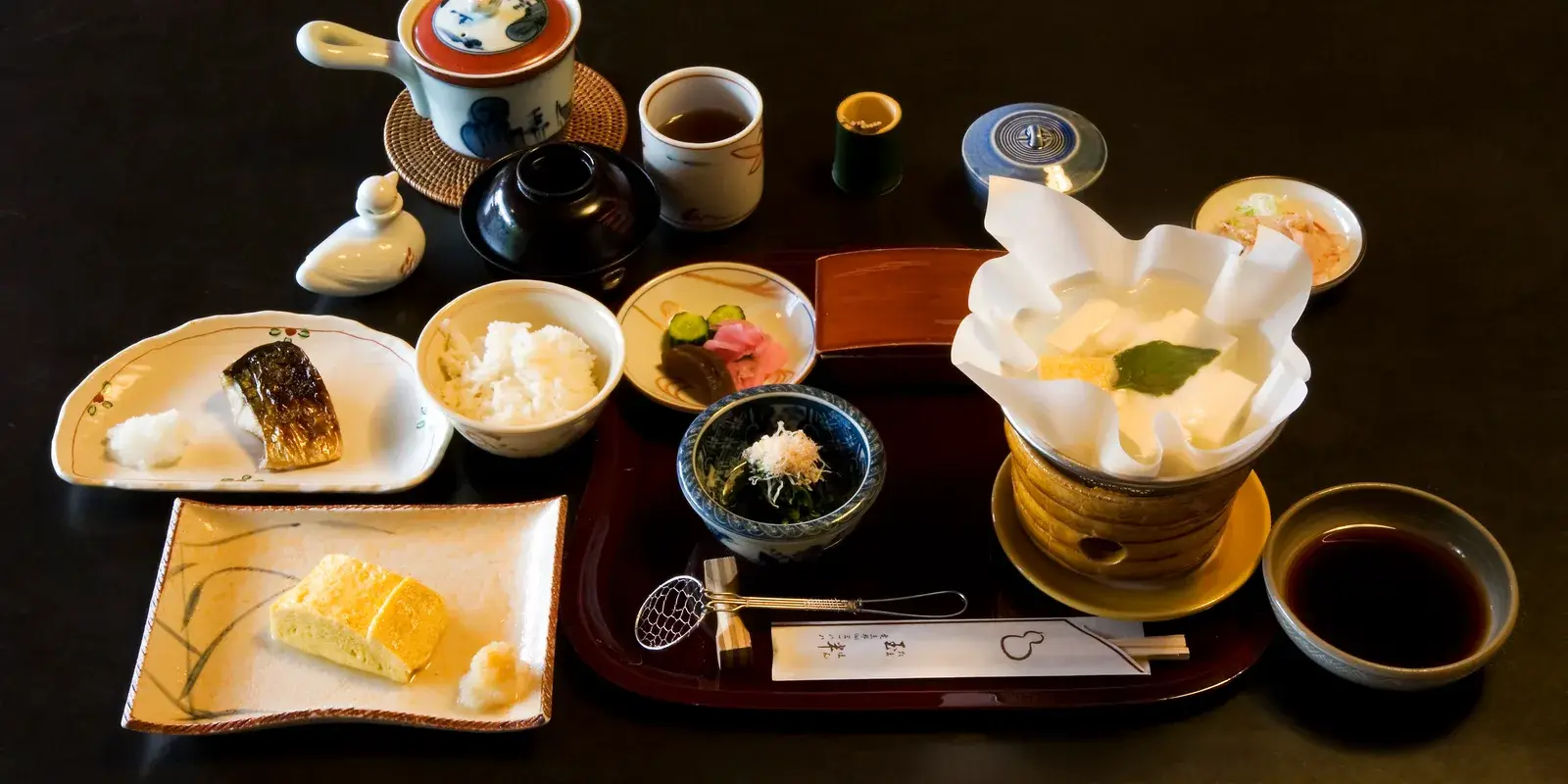
The Power of "Itadakimasu": How Two Words Can Change a Meal
What you'll learn in this article:
- What 306 Japanese people said about saying "itadakimasu," skipping it, and the hand-press gesture
- Why even Japanese people don't always say it, and why that makes it easier for you
- The beautiful meaning behind the word, and why it moves people when visitors use it
You're sitting in a ramen shop in Tokyo. Your bowl arrives, steaming and perfect. You've heard you're supposed to say something before eating, but you're not sure how to pronounce it, or whether anyone will notice, or whether you'll look silly trying.
Here's the good news: you really can't get this wrong. Say it, don't say it, whisper it, just press your hands together. It's all fine. And the best part? Most Japanese people themselves do some version of the quiet, imperfect "itadakimasu" every day. You're already closer to getting it right than you think.
We collected 306 real opinions from Japanese people across four topics: what they think when visitors say "itadakimasu," what happens when you don't, how Japanese people themselves actually practice it, and the hand-press gesture. This is what really matters and what you can relax about.
Should you say "itadakimasu" before eating in Japan? We collected 306 public posts by Japanese people. 68% said hearing it from a visitor makes them truly happy: words like "moved" and "heartwarming" came up repeatedly. But here is the surprising part: only 35% of Japanese people say it out loud at every meal themselves, and 29% say it silently in their heads. "Itadakimasu" is not a test. It is a moment of gratitude, and Japanese people appreciate the feeling far more than the pronunciation.
Quick Guide
| Situation | What Japanese People Said | |
|---|---|---|
| 🟢 Relax | You say "itadakimasu" before eating | This genuinely makes Japanese people happy. 68% of responses were positive: words like "moved," "heartwarming," and "I love it" came up again and again. |
| 🟢 Relax | You don't say anything and just start eating | Most Japanese people don't mind at all. They understand it's a cultural difference, and many admit they don't always say it themselves. |
| 🟡 Good to know | Japanese people themselves | Only about 35% say it out loud every meal. Many say it silently, in their heads, or skip it entirely when eating alone. The reality is much more relaxed than the ideal. |
| 🟡 Good to know | The hand-press gesture | Seen as charming when visitors do it, but Japanese people are genuinely split on this one. It varies wildly by region and generation. |
The one thing to remember: "Itadakimasu" isn't a test. It's a moment of gratitude, and Japanese people appreciate the feeling behind it far more than the pronunciation. If you want to try it, try it. If you forget, nobody's keeping score.
How We Gathered These Voices
We collected 306 Japanese-language responses across four "itadakimasu" topics: foreigners saying "itadakimasu" (85 responses), Japanese people's own practice (86 responses), not saying anything before eating (60 responses), and the hand-press gesture (75 responses). Sources include public Japanese Q&A sites, forums, and social posts, along with articles from PRESIDENT Online, Sirabee, and other Japanese media.
A quick note: This isn't a controlled scientific survey. It's a collection of what real Japanese people said in their own words, in their own language, on public platforms. Most English-language guides simply tell you "say itadakimasu." We wanted to show you what Japanese people actually think about it, including the surprising things they admit about their own habits.
🟢 When You Say "Itadakimasu"
The honest answer: Japanese people love it.
Of 85 responses about foreigners saying "itadakimasu," the majority were warm and positive. The word that kept coming up? Ureshii: happy.
感謝するのに、国は関係ないですし、誰かの許可が必要ではない When it comes to gratitude, nationality doesn't matter — and you don't need anyone's permission.
命や作り手への感謝は万国共通 Gratitude for the lives taken and the people who prepared the food — that's universal.
言わないけど言ってる人みても偉いなあって思うだけだよ I don't always say it myself, but when I see someone who does, I just think — that's admirable.
That last one captures something important: even Japanese people who don't always say "itadakimasu" themselves feel genuinely warm when they see others, including visitors, making the effort.
A restaurant worker shared this:
店員側は言われて嫌な気持ちになる人なんていないと思う、むしろ気持ち良い。「ありがとうございます」が言えるなら、ラーメン店に限らず絶対言った方が良いと思う No restaurant worker would feel bad hearing it — it actually feels good. If you can say "arigatou gozaimasu," you should definitely say it, not just at ramen shops but everywhere. (And if you're wondering what happens when you show gratitude in other ways — like tipping — the answer might surprise you.)
And one story that captures the charm perfectly:
常連の外人さん(日本語ちょぴっと)が連れの外人さん(ノー日本語)に「アリガトウゴザイマス」の発音を「アリガトウ、ゴッズアイマゥス」と教えていて、なんか胸がきゅんとした。 A foreign regular (tiny bit of Japanese) was teaching their friend (zero Japanese) how to pronounce "arigatou gozaimasu" as "arigatou, gods-eye-mouse" — and my heart just melted.
Your pronunciation doesn't need to be perfect. The attempt itself is what moves people.
💡 The takeaway
You don't need to speak perfect Japanese. You don't need to understand the full history of the word. If you say "itadakimasu," even quietly, even imperfectly, most Japanese people will feel a small, genuine warmth. And that's the whole point.
🟢 What If You Don't Say It?
Here's a surprise: most Japanese people really don't mind.
Of 60 responses about people not saying anything before eating, the reactions were much more relaxed than you might expect.
何故日本人はくしゃみをした人に対してbless youと言わないのですか? それと同じ質問です。異文化だからです。 Why don't Japanese people say "bless you" when someone sneezes? Same question. It's a cultural difference.
That comparison came up multiple times, and it perfectly captures how many Japanese people think about this. They understand that "itadakimasu" is a Japan-specific custom, and they don't expect visitors to know it automatically.
「いただきます」「ごちそうさま」などの言葉は、他人に強制して言わせるようなものじゃない Words like "itadakimasu" and "gochisousama" aren't something you force other people to say.
別に挨拶は在っても無くてもいい。料理の食べ方で感謝の気持ちは伝わる。 The greeting itself can be there or not. Your appreciation shows through how you eat.
Several Japanese people pointed out something that might surprise you: they don't always say it themselves.
正直ファミレスとかで食べてるといただきますって言ってる人そこまでいない気がする Honestly, at a family restaurant, I don't think that many people actually say "itadakimasu."
職場では、昼食の時言ってる人はいないよ。私も言わないし。医療現場です。 At my workplace, nobody says it during lunch. I don't either. I work in healthcare.
The bottom line: if you don't say "itadakimasu," nobody will be offended. It's not a rule. It's a custom. And many Japanese people apply it selectively in their own lives.
🟡 The Truth About Japanese People and "Itadakimasu"
This is the part most travel guides leave out, and it might be the most interesting section in this article.
There's a gap between the ideal of "itadakimasu" and the reality of how Japanese people actually practice it. Understanding this gap is what turns "itadakimasu" from a source of pressure into a moment of connection.
Here's what the data actually shows:
A Gurunavi survey (2014, n=1,200) found that only 35% of Japanese people say "itadakimasu" out loud at every meal. Men were at 28%, women at 41%. When eating alone, that number drops to 25%. When eating with family at home, it jumps to over 60%.
A Yahoo! Japan survey (2021, n=2,000) found that 56.1% say they "do it," 30.3% "sometimes do it," and 13.7% "don't do it." Among those who do, 29.4% say it silently, in their heads only. Among those who don't say it at all, the top reason was "I don't feel the need" (54.6%), followed by "It's embarrassing" (21.2%).
Hakuhodo Institute of Life and Living's longitudinal survey (2024, n=2,510), which has tracked the same question since 1998, found that 56.1% of Japanese people say they always say "itadakimasu" and "gochisousama." The figure has been gradually declining (59.0% in 2020 → 56.1% in 2024), with women scoring about 16 percentage points higher than men.
Let that sink in for a moment: nearly a quarter of Japanese people who don't say "itadakimasu" say it's because they find it embarrassing.
The voices from our research paint a vivid picture of this gap:
お昼休みにファミレスに行ったのですが食べる前に「いただきます」と言ったら隣のサラリーマン風の人にガン見されて恥ずかしい思いをしました!やっぱり心の中で唱えるのが普通なのでしょうか? I went to a family restaurant for lunch and said "itadakimasu" before eating — the businessman next to me stared right at me and I felt so embarrassed! Is saying it silently in your head the normal thing?
でもそんなにみんな本当に1人外食の時言ってる?聞こえてこないけど But does everyone really say it when eating out alone? I never hear it.
外食してるときいただきますって言ったら近くにいた女子高生らしき2人組に「今時やるやついるんだ〜きっもっ」て言われたからやらないようにしてる I said "itadakimasu" at a restaurant and two high school girls nearby said "People still do that? Gross." So I stopped doing it.
実はうちの会社の昼休みにいただきます言ってるひとが一人もいない現実 The reality is, at my company's lunch break, not a single person says "itadakimasu."
えっみんなそんな真面目に毎日毎回言ってるの? Wait — does everyone really say it every single meal? Seriously?
And here's where it gets really interesting: the gap between what people say online and what actually happens in restaurants:
絶対言うって言ってる人 綺麗事にしか聞こえない When people say "I absolutely always say it" — honestly, it just sounds like they're performing.
Multiple Japanese people observed this disconnect: online, the "I always say it" crowd is loud and dominant. In actual restaurants and offices, the silence speaks for itself.
But the story has another side. Many Japanese people carry "itadakimasu" deep in their muscle memory:
言う。なんかもう習慣になってて、言わずには食べられない。 I say it. It's just become habit — I can't eat without saying it.
どこでも誰と居ても1人でもイタダキマス、ゴチソウサマデシタ、は言うよ。刷り込まれてる Anywhere, with anyone, even alone — I say "itadakimasu" and "gochisousama." It's been programmed into me.
声に出さず「口の形がそう動いている」程度につぶやいている。自分の気持ちとしての行動 I don't say it out loud — my lips just move in the shape of the words. It's something I do for myself.
That last quote is gold. For many Japanese people, "itadakimasu" exists in a quiet, almost invisible space: a personal ritual that doesn't need an audience. It's not a performance. It's a feeling.
💡 What this means for you
Japanese people themselves practice "itadakimasu" on a spectrum, from loud and proud to silent and invisible. There's no single "correct" way. If you say it quietly, if you just press your hands together for a moment, if you simply pause and feel grateful before eating, you're doing exactly what millions of Japanese people do every day.
🟡 The Hand-Press Thing
Here's one that might surprise you: Japanese people are genuinely divided on whether you should press your hands together.
When visitors think of "itadakimasu," they often picture the full package: hands pressed together, slight bow, then eat. But the reality in Japan is far more varied than that image suggests.
Of 75 responses about the hand-press gesture:
The geographic split is striking. People from western Japan (Kansai and further south) often grew up with hand-pressing as a completely natural part of meals. People from eastern Japan (Tokyo, Tohoku, Hokkaido) frequently report never having learned it, and some find it unusual.
長野県から関西に転校した際、給食時に手を合わせる習慣に驚いた。 When I transferred from Nagano to a school in Kansai, I was shocked that everyone pressed their hands together before school lunch.
手を合わせるというのは最近の現象だという印象を持っています。現在50歳代で東京です。テレビでそのシーンをよく見ます。ただし実際にやっている人は見たことがありません。 I have the impression that pressing hands together is a recent phenomenon. I'm in my 50s, in Tokyo. I see it on TV all the time. But I've never actually seen someone do it in real life.
地域によって差がある。東北は手を合わせないほうが多い。西日本はそうやるのが普通。 It varies by region. In Tohoku, most people don't press their hands. In western Japan, it's standard.
Here's a detail that even many Japanese people don't know: in formal Japanese cuisine (washoku), the traditional gesture before eating is a silent bow rather than pressing hands together. The hand-press is actually a Buddhist-influenced practice that became widespread through school education and TV dramas, rather than an ancient tradition.
「いただきます」は正式な和食の作法ではありません。戦後一部仏教界の啓蒙運動により一般大衆に広まった世俗習慣に過ぎません。逆に日本国本来の伝統的作法を理解している方たちは、「いただきます」の言葉に特別な意味を見出さず粛々と武家の作法(無言で一礼)を守っています。 "Itadakimasu" is not a formal traditional Japanese table manner. It's a secular custom that spread through Buddhist educational campaigns after the war. Those who understand Japan's original traditional manners practice the samurai etiquette of a silent bow — without attaching special meaning to the word "itadakimasu."
Still, when visitors do the hand-press, most Japanese people find it charming.
たぶんその人主のこと「え、可愛い」って思ったよ That person probably thought "oh, how cute" about you.
何のてらいもなくそのような行動ができることに好感を抱く。 I feel fondness for someone who can do that naturally and without pretension.
礼儀正しい家庭で育ったんだな、とポジティブに見る。 I think positively — like, this person was raised in a polite household.
💬 What do you think?
Japanese readers: How do you feel about this?Visitors: Have you experienced this in Japan?
Share your voice →One practical tip: If you do press your hands together, make sure to put your chopsticks down first. Pressing hands together while holding chopsticks between your fingers (hasami-bashi) is considered a chopstick taboo in Japan. Put the chopsticks down, press your hands, then pick them up again.
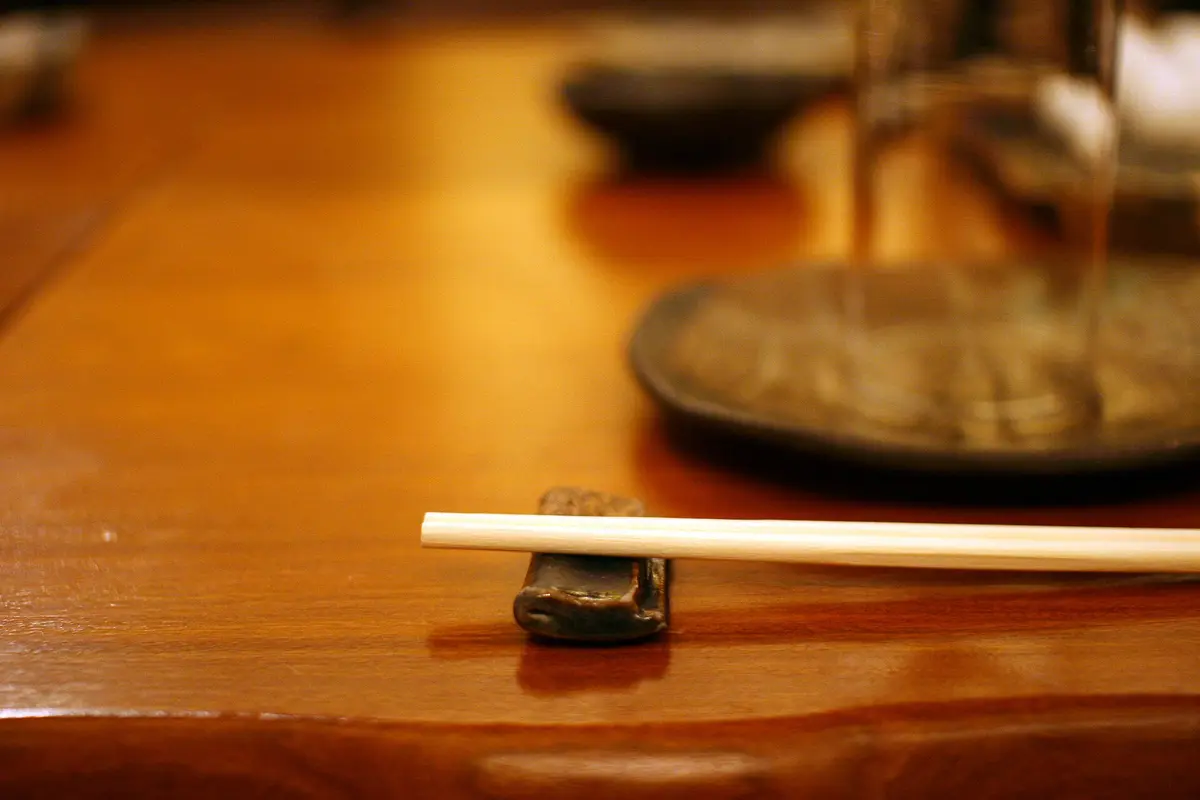
The Cultural Engine: Why "Itadakimasu" Exists
So what does "itadakimasu" actually mean? The answer is more interesting than "bon appetit."
The Word Itself
"Itadakimasu" (いただきます) comes from the verb itadaku, meaning to receive humbly, from a position below. The kanji 頂 refers to the top of something: a mountain peak, a head. One etymology traces it to the gesture of lifting food above your head to honor the gods of the mountains and rice paddies before eating.
「いただく」は山の頂に宿る稲作の神様への感謝に由来する。食材の命をいただくことへの感謝を表現している。 "Itadaku" originates from gratitude to the rice-farming gods who dwell at the mountain peak. It expresses appreciation for receiving the lives of the ingredients. (Hisao Nagayama, food culture historian, PRESIDENT Online)
Over time, its meaning expanded from divine gratitude to encompass the full chain of hands that brought food to your table: the lives given, the farmers who grew it, the fishermen who caught it, the cooks who prepared it. At a market like Kyoto's Nishiki Market, where shopkeepers hand you a taste and you carry the ingredients home yourself, that whole chain of hands becomes something you can see and thank in person.
命をいただくこと、それを育てる農業、畜産、漁業、加工工場、調理して提供してくれる全ての人達に感謝 Gratitude for receiving a life, and for everyone involved in nurturing it — farming, livestock, fishing, processing, cooking, and serving.
Not as Ancient as You'd Think
Here's something that surprises even Japanese people: "itadakimasu" as a universal pre-meal custom is relatively recent. It became widespread through school education in the early-to-mid 20th century, particularly through school lunches (kyuushoku).
「いただきます」が昭和に入ってから普及した言葉だなんて信じられない I can't believe "itadakimasu" only became widespread after the start of the Showa era.
学校給食で言わせたから広まったのかな I wonder if it spread because they made students say it at school lunch.
Before that, the traditional practice in formal Japanese dining was a silent bow: no words, no hand-press. The verbal "itadakimasu" we know today was shaped by a combination of Buddhist practice, school education, and, more recently, TV dramas.
昭和で始まり平成を超え令和に入ったし伝統でよいのでは… It started in Showa, survived through Heisei, and now we're in Reiwa — I'd say that counts as tradition by now.
The Grace Before Meals Connection
Multiple Japanese people drew a parallel that might feel familiar:
敬虔なキリスト教徒なら食事の前に神様にお礼をしますが、それが日本の「いただきます」が持っている本来の意味に通ずると思います Devout Christians give thanks to God before eating — and that connects to the original meaning of Japan's "itadakimasu."
イスラムやユダヤ教も「恵み深き神の御名において」という意味の言葉を発する。いただきますは仏教的で、食事の前に決まったアクションをする人は多い Islam and Judaism also have words meaning "in the name of the bountiful God." Itadakimasu is Buddhist in flavor. People in many cultures have a set action before meals.
The function is the same: a brief pause before eating to acknowledge that this food didn't just appear out of nowhere. The form varies across cultures, but the impulse is universal.
What makes "itadakimasu" distinctive is its object of gratitude: rather than thanking a deity, it thanks the food itself: the lives of the animals and plants that became your meal.
「いただきます」に該当する外国語はない。食材に感謝するのは日本特有の概念。 There's no exact equivalent of "itadakimasu" in any foreign language. Thanking the ingredients themselves is a uniquely Japanese concept. (Hisao Nagayama, food culture historian, PRESIDENT Online)
💡 The difference in one sentence
Grace before meals thanks God. "Itadakimasu" thanks the food itself: the lives that ended so yours could continue. The impulse is universal. The object of gratitude is uniquely Japanese.
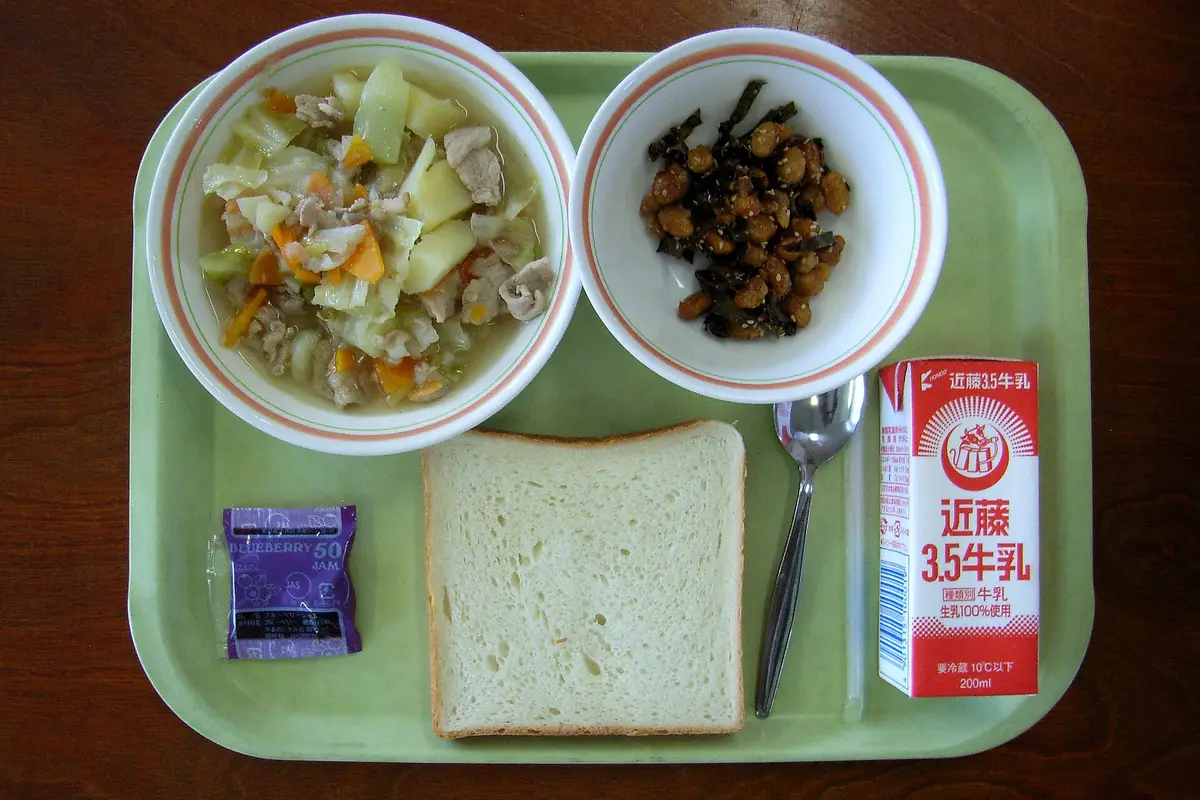
What Japanese People Actually Want You to Know
After reading all 306 responses, the most common theme wasn't "you must say it." It was something much gentler. Here's what came through again and again:
It's not about being perfect. It's about the feeling.
国々や宗教等により違いはあれど、食前にそのような挨拶はある。心の中で言うだけでも問題ない。 Across countries and religions, there are pre-meal greetings of some kind. Even saying it just in your heart is completely fine.
強制でないことが良い The best thing about it is that it's not forced.
They know their own practice is imperfect, and they're fine with it.
正直、習慣とか口癖というレベルなので、こだわりはなく、言ったり言わなかったり。 Honestly, it's at the level of a habit or verbal tic — I'm not particular about it, and I say it sometimes and don't other times.
いただきますに、命に感謝とかそこまでの意味は感じてなかった。習慣や挨拶のようなお行儀的なものだと思ってた。 I never felt the deep "gratitude for life" meaning in itadakimasu. I always thought it was just a manners thing, like a greeting.
They see visitors trying, and it makes them happy.
海外在住だけど毎回言ってるので、外国人の同僚も真似して皆言うようになった笑。色んな外国人いるけど、いただきますの意味を伝えると皆、あらステキ!と真似してくれます。 I live abroad but say it every time, and my foreign colleagues started copying me and now everyone says it. When I explain the meaning of "itadakimasu" to people from different countries, they all say "How lovely!" and start doing it too.
And a parent offered what might be the most reassuring words of all:
ラーメン屋にて...親「違うのよ、本当に笑われるのは食べ物のありがたさを知らない人の方よ」 At a ramen shop... a parent told their child: "No, the ones who should really be embarrassed are the people who don't appreciate their food."
More Japanese Perspectives
Curious about other aspects of daily life in Japan? These articles explore what Japanese people actually think, based on hundreds of real voices.
- Why Japanese Trains Are Silent: 177 Japanese people share the unwritten rules of train etiquette, and why they know their silence is the global exception, not the rule.
- No Trash Cans, No Problem: 232 Japanese people share how they really feel about the "carry your trash" culture, including why many of them are embarrassed by it.
Share Your Experience
Tried saying "itadakimasu" at a restaurant in Japan? Had a reaction: a smile, a nod, or a warm moment? We'd love to hear it. Your story helps build a bridge between cultures.
Share your experience on Voice Box →
Sources
Primary Research Data
- WMJS itadakimasu research data (306 Japanese-language responses collected April 2026)
- Foreigners saying "itadakimasu": 85 responses
- Japanese people's own practice: 86 responses
- Not saying anything before eating: 60 responses
- The hand-press gesture: 75 responses
Statistical Data
- Gurunavi (2014): 35% of Japanese people say "itadakimasu" out loud at every meal. Men 28%, women 41%. When eating alone, 25%. When eating with family, 60%+. (n=1,200)
- Yahoo! JAPAN / Otonansā (2021): 56.1% "do it," 30.3% "sometimes," 13.7% "don't." Among those who do, 70.4% say it aloud, 29.4% say it in their heads. (n=2,000)
- Sirabee (2016): Approximately 70% of households have the habit; roughly 30% do not. (n=1,352)
- Hakuhodo Institute of Life and Living "Seikatsu Teiten" (2024): 56.1% always say "itadakimasu" and "gochisousama." Declining trend (59.0% in 2020 → 56.1% in 2024). (n=2,510, longitudinal since 1998)
Opinion Collection Sources
The following sources were used to collect Japanese people's opinions and sentiments. These are not cited as factual authorities but as platforms where real Japanese people expressed their views on "itadakimasu."
Foreigners saying "itadakimasu":
- Public Japanese Q&A sites, forums, and social posts: first-hand opinions on foreigners saying "itadakimasu"
- https://www.inshokuten.com/foodist/article/7771/
- https://fundo.jp/133140
- https://sow.blog.jp/archives/1005854969.html
- https://president.jp/articles/-/28686?page=1
- https://x.com/ArturGalata/status/2029937197739098298
Japanese people's own practice:
- Public Japanese Q&A sites, forums, and social posts: first-hand opinions on Japanese people's own practice
- https://sirabee.com/2024/12/28/20163377403/
Not saying anything before eating:
- Public Japanese Q&A sites, forums, and social posts: first-hand opinions on not saying anything before eating
- https://milltalk.jp/boards/99339
- https://ginnga.blog.jp/culture/foreign-language-itadakimasu.html
- https://gakumado.mynavi.jp/gmd/articles/24346
- https://www.f-ship.jp/column/foreigners-japan-manners
- https://10mtv.jp/pc/column/article.php?column_article_id=3711
- https://cookingforeigners.org/column/gaikokujinmuke-ryourikyoushitsu-koushi
- https://president.jp/articles/-/28686?page=1
The hand-press gesture:
- Public Japanese Q&A sites, forums, and social posts: first-hand opinions on the hand-press gesture
- https://maidonanews.jp/article/15550266
- https://sirabee.com/2024/12/28/20163377403/
- https://ameblo.jp/let-us-eigo/entry-12865792226.html
- https://higan.net/column/2013/11/gassyo/
- https://mainichigahakken.net/hobby/article/post-75711643.php
- https://tripeditor.com/449486
- https://www.otera-no-jikan.com/article/10755
Note on Quotations
Quotes from online platforms have been lightly edited for readability (fixing typos, formatting for clarity). The meaning and intent of each comment remain unchanged. Original sources are linked above.
WMJS is written in Japan, in English, with AI help. We check every page, but English is not our first language. If a sentence reads oddly, tell us. One sentence is enough.
Thank you. A person reads every note.
How well do you know Japan?
Based on 51,218+ real Japanese voices
Want to know more? Ask Japanese people
Have a follow-up question about this topic? We'll ask real Japanese people.
Voice Box →