
Is Hiroshima Worth It? What International Visitors and Japanese Travelers Say
Hiroshima is a direct Shinkansen ride from Tokyo, Kyoto, Shin-Osaka, Nagoya, or Fukuoka, no transfer needed. Of the 165 international-visitor voices we gathered, 70% called the trip worth it. The most common hesitation in the rest, from 21 of those 49 voices, was about the length, pace, or cost of doing it in a single day. After people arrive, a different question takes over: whether a day covers enough, or whether the place is worth a second one.
What International Visitors Say
We gathered the voices of international travelers weighing a trip to Hiroshima, mostly on Reddit threads asking some version of "is it worth it," with japan-guide.com's forum, TripAdvisor's Japan and Hiroshima forums, and a Taiwanese travel forum filling in the rest. Here is how 165 voices fell.
A good number of the voices in the middle band are weighing a home base more than Hiroshima itself. "If you are staying near Kyoto and Osaka or more west of that, then yes, it is very much worth it. I wouldn't go if you are going to be in Tokyo for the most of your trip," one wrote. Others are weighing pace: "if you like to take your time doing things you might feel rushed" going for a single day, as one put it.
The red slice, 10%, states the pace complaint more bluntly. "...you'll need to leave your hotel so early like 5ish and won't return till like 10-11?? Crazy long day, that's not a vacation," one visitor wrote of a same-day round trip from Kansai. Another: "It's also a really expensive day trip - I wouldn't feel great about spending that much money on transport just for one day, unless there's absolutely no other option." A few recommend against the day trip outright, including a long-time Hiroshima prefecture resident who said they "would never recommend someone do a day trip to Miyajima from Osaka without having lodging in the city."
Plenty of other voices did the same day trip and call it fine. "I did a day trip from Osaka to Hiroshima and had an amazing time and got back in time for dinner after having comfortably seen all the sights I wanted to," one wrote. Others who added Miyajima to the same day found it long, while six did both and were back the same day without complaint; three who kept the day to the memorial and downtown call that comfortable or enough.
Among the 70% who said yes, several mention the same thing: there's more to the trip than the two headline sights. "There is so much to do and so much to see there besides the a-bomb dome and the peace museum!" one visitor wrote, listing Miyajima, the castle, and a building entirely dedicated to okonomiyaki. Another, who has visited Japan five times, wrote: "Hiroshima remains one of my favorite destinations."
What Japanese Travelers and Residents Say
Japanese travelers and residents write about the same question on their own forums, rarely in English and rarely picked up by search results in other languages.
Both gauges land in almost the same place, 70% green on each one. The twelve voices behind the 28% red band on the Japanese side raise roughly eight separate complaints. Three say there's surprisingly little to fill a trip with: "Surprisingly, Hiroshima doesn't really have many tourist spots..."; another, advising a traveler with an afternoon departure to spend their second day in the city, added: "Hiroshima doesn't really have a famous hot-spring town either, so it's surprisingly hard to fill the time, you know..."; a third says much the same about downtown specifically. Two are about Miyajima's deer, from droppings everywhere to animals eating plastic. Two find side trips underwhelming: one caught the Yamato Museum in Kure mid-renovation, and another found Tomonoura unremarkable. The remaining five are single complaints: a frequent visitor who calls it "a boring city" they wouldn't want to live in, while still praising the okonomiyaki, the Hiroshima dialect sounding confrontational to an outside ear, a caution about Carp baseball fandom on game days, Fukuyama residents nearby who shop in Okayama or Osaka instead, and Orizuru Tower's price.
The green side cites reasons at least as varied: the food, Miyajima, day trips to Onomichi or the Shimanami Kaido islands, and the look of the city itself. Among the specifics, one visitor described the Hiroshima Museum of Art's collection: "Van Gogh, Picasso, Matisse, Chagall... too many world-class painters to list," adding that "apparently a provincial city basically never has a museum like this." Foreign voices know this museum and Shukkei-en garden too, by similar numbers: 5 of the 165 international voices name Shukkei-en and 2 name the art museum, against 2 and 1 among the 43 Japanese voices.
The Day Trip Question
Dive! Hiroshima, the prefecture and city's official tourism portal, publishes a standard single-day walking course built around downtown alone: about an hour each at Shukkei-en garden and the castle, a little over an hour at Orizuru Tower, twenty-five minutes at the Atomic Bomb Dome, and 95 more at the Peace Memorial Museum and the National Peace Memorial Hall, about 310 minutes of stops in total before walking time between them. (The castle hour in that course was published before the keep's 2026 closure; see below.) The same portal publishes a separate one-night, two-day course: a night in the city, then a full second day on Miyajima.
One visitor weighed the trade-off this way: "I really feel like Hiroshima is better done as a 1-2 night stay. It is technically possible to do it as a day trip from Kansai, but it is very long and very rushed. Having a full day + an additional half day makes it much more enjoyable." A resident of Hiroshima put it more simply: "I would recommend staying a night if at all possible. I live here and can't tell you how many times I've seen people burning themselves out rushing it."
One day covers the Dive! Hiroshima downtown course: the Peace Memorial Park, the museum, and a pass through the rest of downtown. Add Miyajima, the art museum, or unhurried time of any kind, and a night is what the visitors quoted here recommend.
Beyond the Peace Park
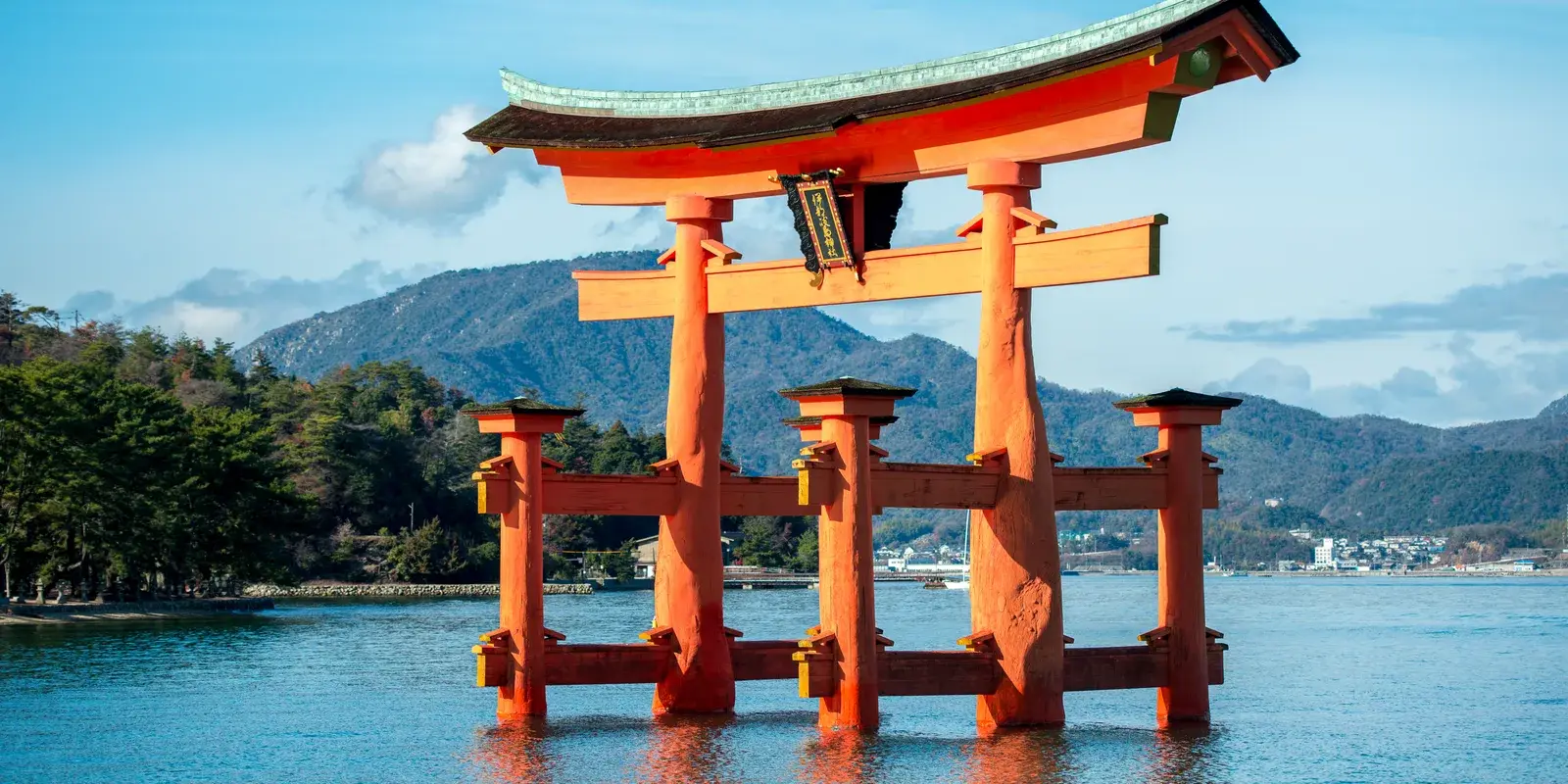
Both gauges name the same place first: Miyajima, mentioned by 90 of the 165 international voices and 9 of the 43 Japanese voices. People who talk about timing there mostly recommend a full day or a night on the island rather than an afternoon. A short train ride and ferry crossing (the ferry fare is ¥200 one way, plus a separate ¥100 Miyajima visit tax collected once per visit) gets you to Itsukushima Shrine's floating torii gate, a UNESCO World Heritage Site, with a ropeway up Mount Misen or hiking trails for those who want the climb. At low tide you can walk out across the sand to the foot of the torii gate; at high tide it stands in the water.
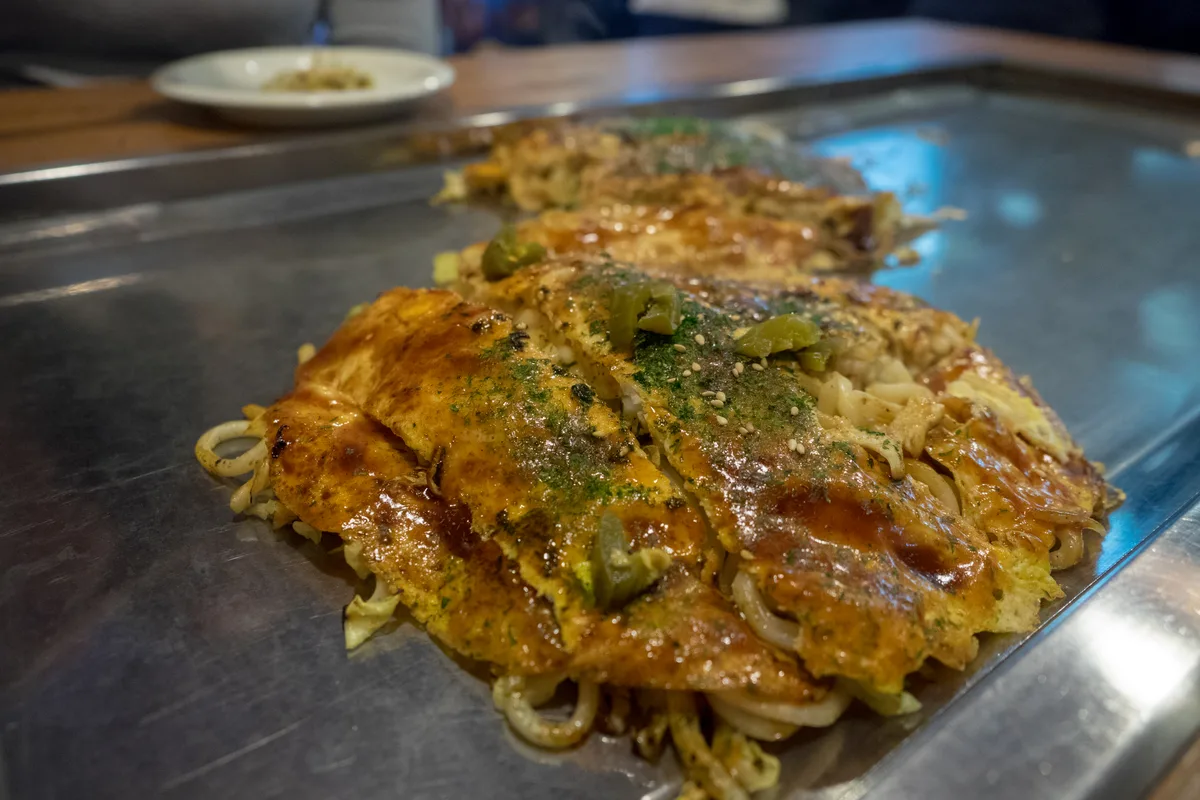
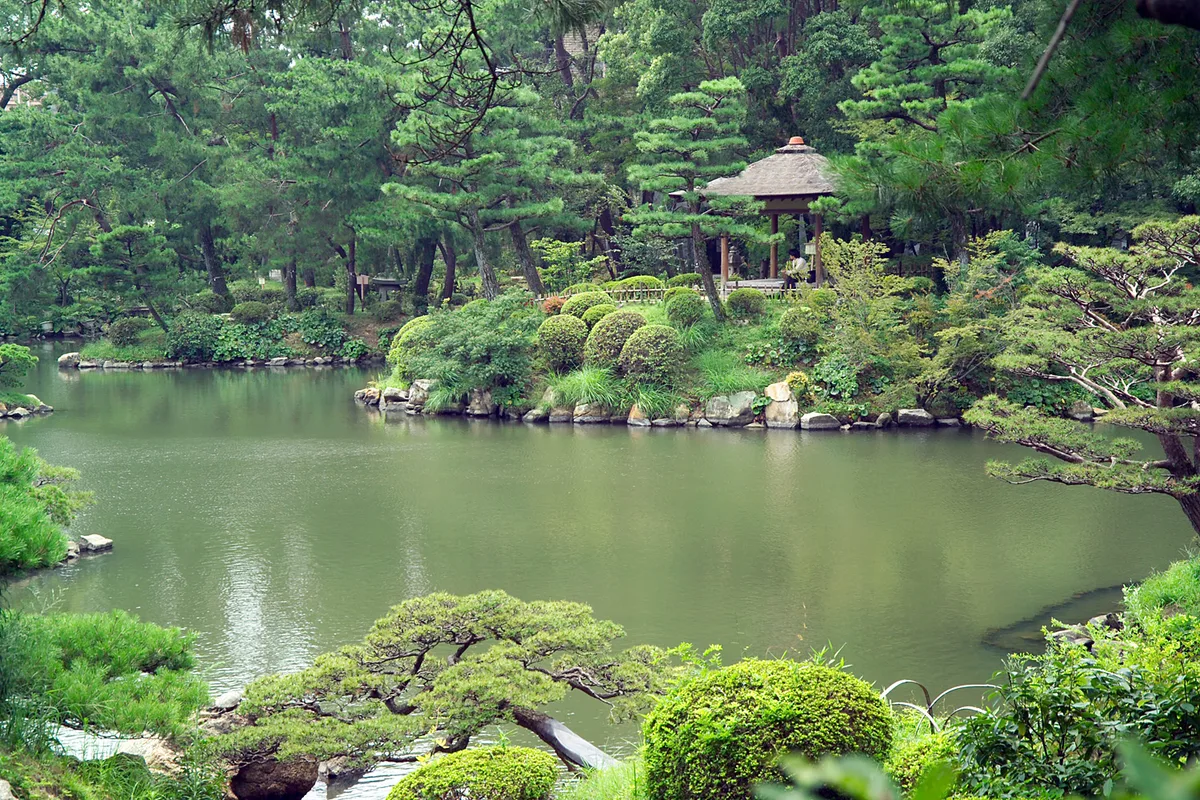
A few other places come up on both sides. Shukkei-en garden, a short walk from the station, was built in 1620 for the Hiroshima domain's lord and badly damaged in the 1945 bombing before being restored over the following decades; one Japanese visitor puts it at about fifty minutes to walk around. Hiroshima Castle's main keep, a 1958 concrete reconstruction, closed to visitors on March 22, 2026 because its concrete and aging equipment were no longer considered safe; the exterior can still be viewed, and its museum role is moving to a new history museum nearby, opening in stages from 2027. Hiroshima-style okonomiyaki is sold all over downtown; five of the international voices name Okonomimura, a building of small okonomiyaki counters, specifically.
Four Japanese voices discuss Orizuru Tower's rooftop. Two find it worth going up, one calling the view "wonderful" after visiting twice; one calls the ticket price a rip-off for the view; and a fourth, replying directly to that complaint, agrees with it while adding that visitors seem to enjoy it anyway.
Doing it well, the welcomed way
Spend the morning at the Peace Memorial Park, which has its own guide, chapter by chapter. The rest of the day fits downtown: okonomiyaki, the streetcar, Shukkei-en or the art museum if the timing allows it.
Pro baseball is popular here, and two voices suggest catching a game. "Pro sports are popular, so if your kids like that, watching games could be fun too," one Japanese voice wrote to a family about to move to Hiroshima. A foreign visitor who lived nearby for a couple of years agrees: "Try to catch a Carp's game while you're there if it's during the season!" One caution, from a Japanese commenter: walking near Hiroshima Station on a game day, they saw someone in a visiting team's happi coat get jeered at, and they recommend being ready for the rivalry when visiting the Carp's home city.
How the two groups differ
Foreign doubt and Japanese doubt point in opposite directions. Nine of the sixteen foreign red-band voices are about the length or cost of a same-day round trip, getting there and back. Three of the twelve Japanese red-band voices are about the opposite problem, not enough once you're already there.
The Japanese voices who said yes answer that second problem. Several point outward, to Onomichi, the Shimanami Kaido islands, Okunoshima, and Kure. Others point to specific spots back in the city: Shukkei-en, the art museum, the streetcar, Mazda Stadium. Either way, the pattern holds: a second day in Hiroshima has somewhere to go, once someone tells you where.
Still deciding which famous places actually earn a slot on a short trip? Start with what actually matters in Japan. For the Peace Memorial Park itself, see the Hiroshima Peace Memorial guide.
Sources
- JNTO, Japan.travel: Hiroshima destination page: Hiroshima is directly served by the JR Tokaido-Sanyo Shinkansen from Tokyo, Osaka, Nagoya, Kyoto, and Fukuoka.
- Dive! Hiroshima, official Hiroshima & Miyajima tourism portal: one-day Hiroshima City model course: the standard single-day downtown walking course (Shukkei-en, Hiroshima Castle, Orizuru Tower, Atomic Bomb Dome, Peace Memorial Museum, National Peace Memorial Hall) and its roughly 310-minute per-stop time budget.
- Dive! Hiroshima, one-night, two-day Hiroshima and Miyajima model course: a night in Hiroshima city followed by a full day on Miyajima.
- Dive! Hiroshima, Miyajima ferry fare and visit tax notice: the ¥200 one-way adult ferry fare and the separate ¥100 Miyajima visit tax in effect since October 2023.
- UNESCO World Heritage Centre, Itsukushima Shinto Shrine: the shrine's 1996 World Heritage inscription.
- Shukkei-en, official site: garden built from 1620 for the Hiroshima domain lord, designed by tea master Ueda Soko; opening hours and admission.
- Japan Ministry of Land, Infrastructure, Transport and Tourism, multilingual signage database: Shukkeien Garden: the garden's 1945 wartime damage and postwar restoration.
- Hiroshima Museum of Art, official site: collection spanning Impressionism through modern works, including Van Gogh and Picasso; opening hours.
- Hiroshima Orizuru Tower, official site: the rooftop observatory, "HIROSHIMA HILLS."
- City of Hiroshima, notice on Hiroshima Castle keep closure: the main keep's closure to visitors from March 22, 2026 due to deterioration of its concrete structure and equipment, and the planned relocation of its collection to the new Sannomaru History Museum from 2027.
WMJS is written in Japan, in English, with AI help. We check every page, but English is not our first language. If a sentence reads oddly, tell us. One sentence is enough.
Thank you. A person reads every note.
How well do you know Japan?
Based on 51,218+ real Japanese voices
Want to know more? Ask Japanese people
Have a follow-up question about this topic? We'll ask real Japanese people.
Voice Box →