
Is Izumo Taisha Worth It? 209 Voices on Japan's Shrine of Bonds
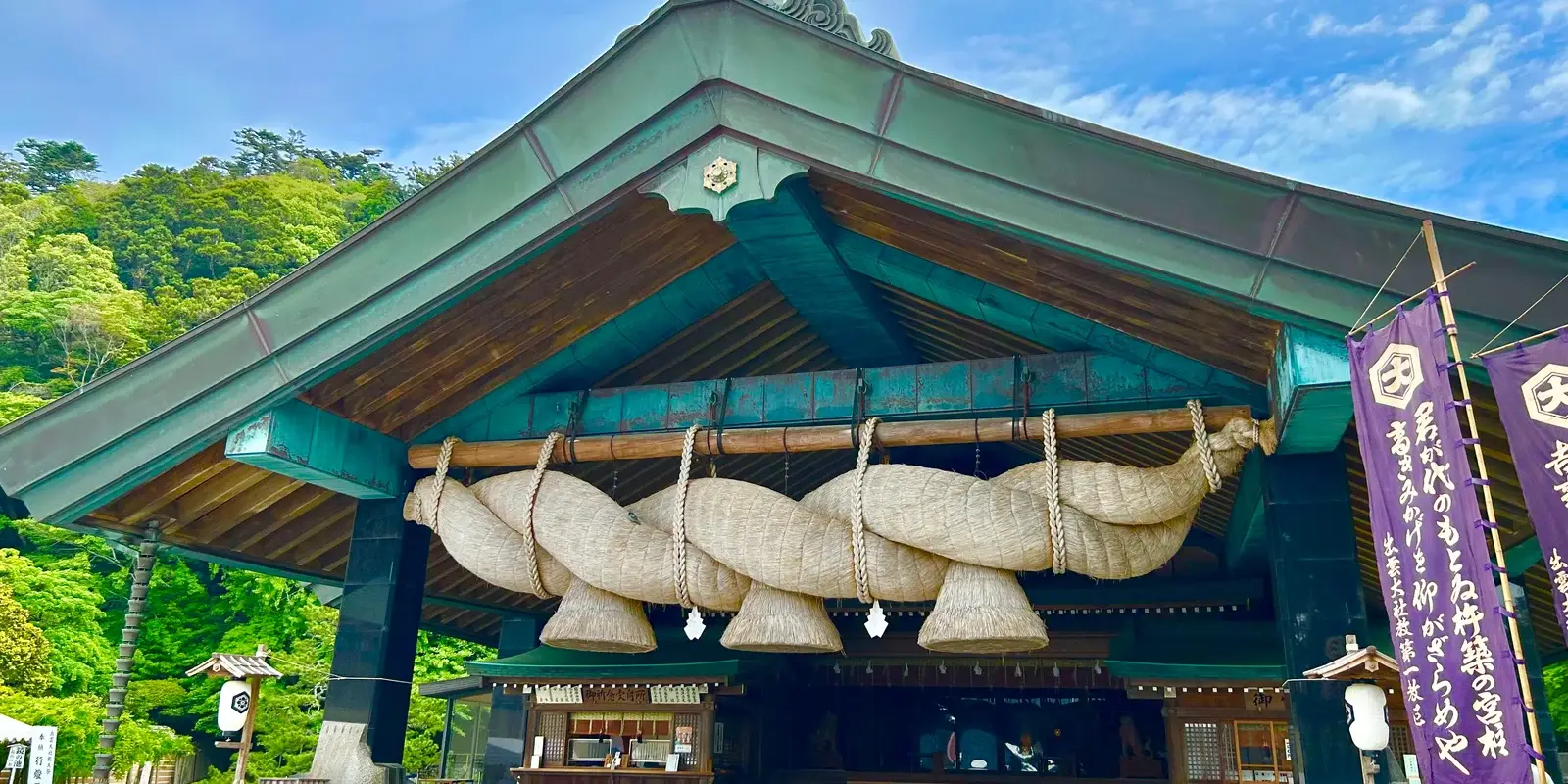
Izumo Taisha travels ahead of itself on one image: an enormous braided rope of rice straw, thicker through than a person is tall, slung under a wooden gable. What the reviews show is that a fair number of visitors get home without having stood under it, because it does not hang above the hall you reach first. That hall has a rope of its own, and it is a fraction of the size.
Izumo Taisha sits on the Sea of Japan coast, well off the route a first trip to Japan usually follows, and the last stretch is a bus or a small private railway. So the question people ask before committing two days to it is a fair one: is it worth the detour? We went looking in 209 reviews and comments, some written by people still deciding and some by people on the way home. They turn out to disagree less about the shrine than about how to spend a day there.
Is it worth the detour? (in travellers' own words)
We gathered the voices of international travellers who have weighed, or made, the trip out to Izumo, and asked, in effect, was it worth it? Weighted by how strongly each voice resonated with other readers, here is how they fell:
Three voices out of sixty sit in the red. Two of them argue about distance. The third argues about a day that ran out of things to do: "I went there via the Sunrise Izumo. Only spent one full day there - not much to do." None of the three says the shrine is poor.
One of those three dissenters also turns up on the other side of this page. Advising a family crossing many cities in thirty-three days with babies, they wrote: "with Izumo's remote location I'm not sure if I can say it's worth the hassle." The same account elsewhere calls Izumo one of their favourite cities in Japan, and, having visited the three great shrines repeatedly, says: "I've visited Izumo Taisha/Ise Jingu/Atsuta Jinju multiple times and Izumo Taisha is still my favourite architecturally." Both things are true at once, and holding them together is most of what the middle band is doing. A place can be your favourite and still be the wrong stop on somebody else's itinerary.
The wide middle band is people doing sums: train times, last buses, whether Matsue or Izumo makes the better base. One traveller weighed it out loud and landed somewhere generous: "It probably shouldn't be high up many people's priority lists of places to go as it's out of the way and there's a lot of places that are just a bit more spectacular - but if you've got the time it's worth a look." Another, writing up a nine-day trip through the region afterwards, found the stop thinner than hoped: "even destinations like Izumo felt a little bit 'one-and-done'."
In the green band the tone is warm and unfussy. "I loved Izumo shrine. Cute bunnies everywhere!" "My wife and I visited Izumo about two years ago, it was well worth our time." A traveller who went with a four-year-old and an eight-year-old found the whole thing easy, added that the town felt "Friendlier than Osaka and Tokyo (in my opinion) and no crowds of tourists," and ended: "We'd do it again."
How Japanese worshippers describe the same trip
The other half of the record is in Japanese: reviews written by people who made the same long journey and then wrote it up at home.
Distance shapes these reviews too. Japanese reviewers write about Izumo the way people write about a journey they had to save up for. "I had wanted to visit for a long time, but because it's so far away I could never quite make it," one wrote; "this year I finally decided now was the time and went." Another repeated the local saying that you cannot go to Izumo unless the gods call you. A third, arriving at last after an earlier attempt fell through, put it in terms no one totting up train hours would reach for: "precisely because it isn't a distance where you can think 'I'll just come again', it became a deeply moving visit."
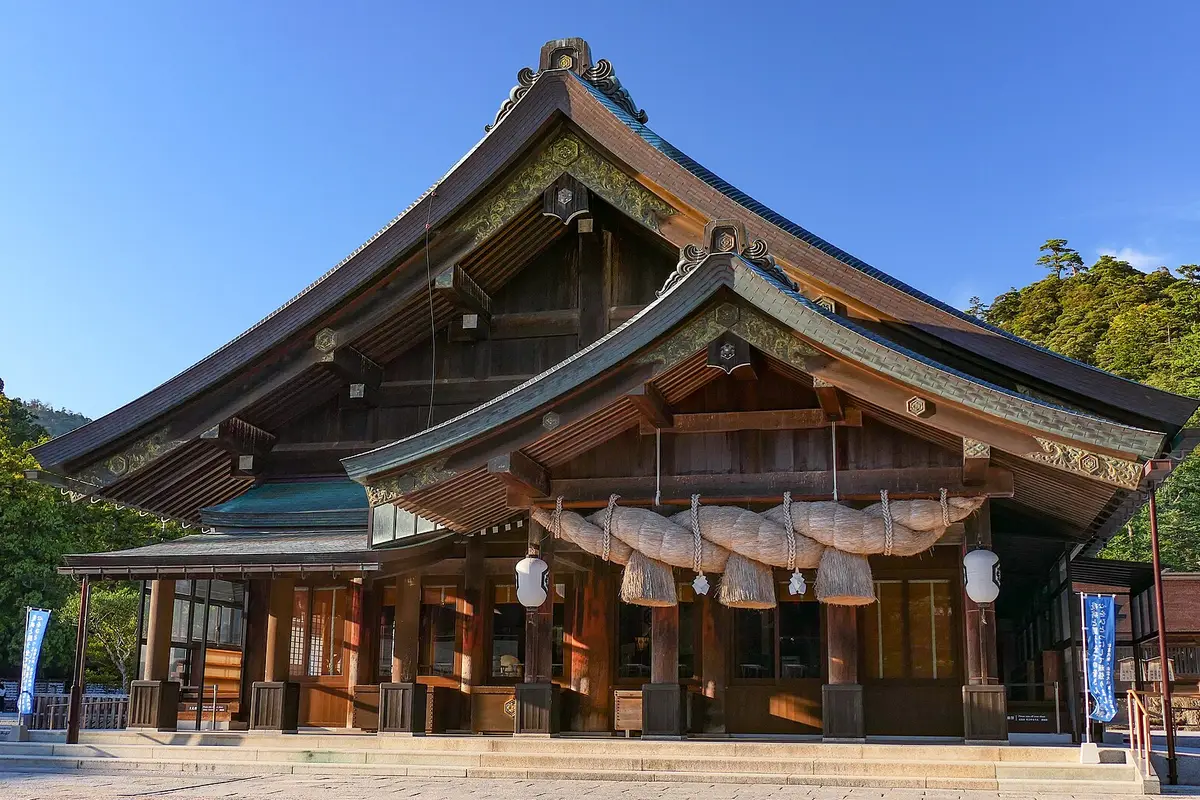
Here the red is small, and it says out loud the thing a nervous traveller pictures. "Surprisingly small-scale," one review is headed; the writer had seen the shrine in videos and photographs, and found that "the shimenawa rope wasn't as big as I expected, which was disappointing." Another review is headed "The shimenawa rope felt smaller than it looked on TV," and further down its body adds a second regret: "I wish I'd looked up the order of worship before going." Neither is complaining about the journey to Shimane; the second is talking about the walking once inside.
What separates the two middle bands is who is in each. The foreign threads mix people still deciding with people reporting back, so that band carries the hesitation as well as the advice. Every voice here is someone who already went, so this band reads as instructions from people who assume you are going and want your day to go well. Get there early, several say, and they are specific about why: "Even at 9:30am on a weekday the parking lot was nearly full, and it seems if you arrive past 10:30 you might not get in." Others mention bringing a plastic bag for the sand, bringing coins because there are many halls to greet, allowing two to three hours rather than one, and staying out of the midday heat in high summer.
At least twelve of the Japanese reviews tie the great rope to the Kagura-den, and five of those are correcting the assumption that it hangs above the hall you reach first.
The clearest of them describes the mistake from inside it. Golden Week, parked away from the crowds, walking the full approach in a good mood, and then: "Wait? This is the worship hall, right? It's not the great shimenawa I've seen on TV, it's on the smaller side..." They went home puzzled, looked it up, and found that the rope they had come for hangs at the Kagura-den, across the way. Then, near the end, two sentences: "I regret not properly looking up the manner of worship and everything before going. Next time, a rematch." A second reviewer passes the confusion on as something they had heard, and supplies the reason for it: "The Kagura-den's rope is grander than the main sanctuary's, so many people apparently mix the two up." A third, who happened to visit at half past five in the morning the day after the rope was replaced, simply gives directions to it: "the great shimenawa at the Kagura-den is a little way from the main hall. Many people seem to worship only at the main hall and go home, but I really recommend walking on to the Kagura-den. It's about a five-minute walk to the left as you face the main hall."
What we wish you'd noticed
There are two ropes, and the larger one is further on. The rope above the worship hall is genuinely big, at 6.5 metres and about a tonne by the shrine's own figures. The one people travel for hangs at the Kagura-den, the hall of sacred dance, and the shrine describes it as the largest in Japan. The reviews above suggest the walk itself does not make this obvious.
The rope now hanging went up in July 2026. On 21 July it was replaced for the first time in eight years, a job that took most of a day and a crane. Mainichi and Jiji both reported it as 13.6 metres and 4.7 tonnes, made from March by around thirty members of a straw-rope cooperative in Iinan, in central Shimane, from rice straw grown and dried for the purpose. The previous rope went up in 2018, and this is the eighth since the current hall was built in 1981. (Published figures vary a little: the shrine's English page gives 5.2 tonnes and its Japanese FAQ 13.5 metres, so the measurements above are the ones both newspapers reported.) The reviewer who gave those directions was there the next morning, and noticed the thing no photograph carries: close up, there is a faint smell of new straw.
The greeting here has four claps, where nearly every other shrine asks for two. Two bows, four claps, one bow, and the shrine asks for it at every hall in the precinct, including the smaller ones. In the shrine's own explanation, the priests clap eight times at the grand festival each May, eight being the number that has meant the boundless since ancient times, and the everyday form is simply half of that. The shrine adds that the feeling behind the prayer is no different either way.
The circuit runs anticlockwise, which means starting to your right. After you pray at the Yatsuashi gate in front of the main sanctuary, the shrine's guidance is to work anticlockwise around the surrounding fence, visiting each of the smaller halls as you go, all with the same four claps. Facing the gate, that means setting off to your right. Two long low buildings with nineteen doors each stand along the sides; these are lodgings, kept for the deities said to arrive each year. Behind the main sanctuary are the white rabbits that reviewers keep mentioning with obvious affection, and the small shrine where the sand is exchanged.
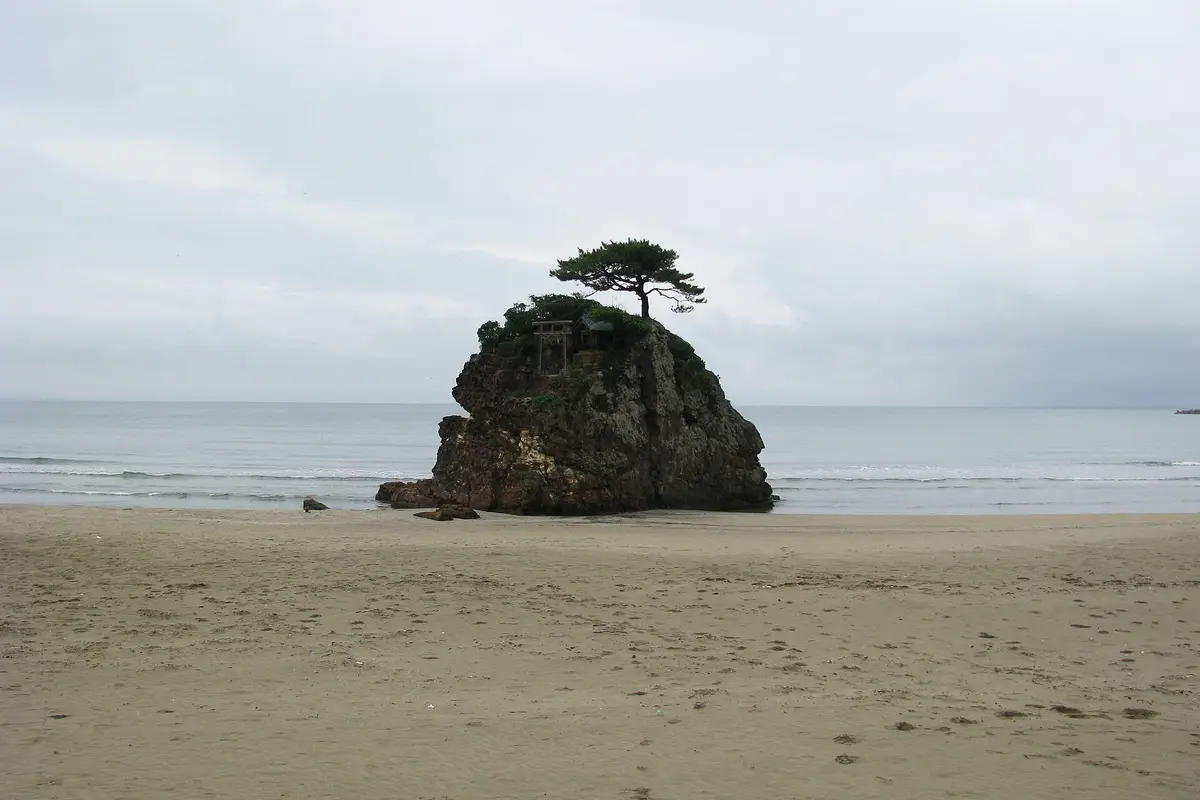
The sand has a sequence, and it starts at the beach. Many Japanese visitors take a little dry sand from Inasa Beach, about 800 metres west by the shrine's own reckoning, carry it to Soga-no-Yashiro behind the main sanctuary, leave it there and take home an equivalent amount of the shrine's sand for the family altar or the corners of their property. The full order is rarely spelled out in English. The same traveller who found the stop "one-and-done" had still picked up most of it, and wrote it down like this: "Actually there is something in Izumo Taisha where you can exchange sand from this beach for something else, so you should go here first if that interests you." The important half is there. Beach first.
The bond you are asking about is wider than the guidebook word. Izumo is usually introduced in English as a shrine for matchmaking. The shrine's own answer is broader: the bonds it speaks of run past husband and wife to every connection that surrounds a person, the whole web a life is made from. Work, friendship, family, the people you have not met yet. One reviewer listed what they had come to ask for, and romance was only part of it, alongside good ties at work and in the relationships of a life.
How to make the day land
- Allow more time than the map suggests. Reviewers report a little over an hour at the brisk end, an hour and a half to two hours taken slowly, and three to four hours once the approach street and a bowl of Izumo soba are in the day.
- Go early. This is the most repeated advice in the Japanese reviews, and it is about parking as much as peace. One reviewer arriving just after 8am found it calm; another found the lot nearly full at 9:30 on a weekday, and reckoned that past 10:30 you might not get in. A visitor who came at 6am found the air clear and birds of every kind about, and two unhurried hours went by.
- Walk on to the Kagura-den before you leave. Five minutes, to the left as you face the main hall. This is the rope.
- Do the beach first if you want to do the sand at all. Inasa Beach, then Soga-no-Yashiro. Bring a small bag.
- Bring coins. There are many halls to greet, and each one takes the same two bows, four claps, one bow.
- Base yourself where the day works. One traveller calls Izumo Taisha an easy day trip from Matsue, and Matsue draws its own praise for the castle and the Lafcadio Hearn house. Coming by train, note that the shrine sits away from the JR station, about 25 minutes by bus from Izumoshi. The Ichibata railway also runs out this way, though one reviewer notes its station sits a little further from the shrine than the bus stop does. If you are continuing to the lighthouse at Hinomisaki for sunset, check the last bus before you commit, since more than one traveller found the last return leaves before the sun does. If your San'in days have room, the sand dunes over in Tottori are the other coastal stop travellers weigh on the same trip.
- In the Kamiari season, the rhythm of the day changes. One reviewer notes that in that week the crowds run from early morning until about 4pm and thin out after 5, though some areas have closed by then. Outside that season, the early-morning advice is the one that holds.
- If you want the week the deities are said to be in residence, the dates move with the moon. In 2026 the welcoming rite falls on the evening of 18 November, with the main observances on the 19th, 23rd and 25th. Expect company, and expect quiet: the shrine describes every effort being made not to disturb what it calls the deities' discussions.
None of this is hard, and none of it is obvious from the path itself. A beach to start at, a different greeting, a circuit that runs the unfamiliar way round, and a rope most people walk past. Japanese reviewers miss them too, and write about it afterwards without much drama. One called it a rematch for next time. Whether the detour earns two days of your trip is yours to decide, and the bars above are there for that. Enough of these reviews land on the same small thing. Knowing what you are walking towards changes how the day goes.
Still working out which famous places earn a slot on a short trip? Start with what actually matters in Japan. And for the meaning behind the four claps, the rope, and the month the deities are said to gather, the Izumo Taisha audio guide walks the precinct with you.
Sources
- Izumo Oyashiro (Izumo Taisha): Kaguraden (Sacred Dance Hall), official English site the O-shimenawa above the Kaguraden, described by the shrine as the largest in Japan; replaced every six to eight years; woven by volunteers from Iinan; the rope is twisted from the left, the reverse of most shrines. This page gives 13.6 m and 5.2 t; the shrine Japanese FAQ gives 13.5 m and 4.7 t, and the figures reported at the July 2026 replacement were 13.6 m and 4.7 t.
- Izumo Oyashiro: Honden (Main Sanctuary), official English site the main sanctuary is 24 metres high, the tallest shrine building in Japan; last rebuilt in 1744; designated a National Treasure in 1952.
- Izumo Oyashiro: Kamiari Festival, official English site the tenth lunar month as the "month with gods"; the deities' arrival at Inasa Beach according to Shinto belief; the Jukusha lodgings with nineteen doors; the sand exchange at Soga-no-Yashiro; en-musubi as all the relationships that exist between people in society.
- Izumo Oyashiro: official FAQ (Japanese) the 2026 Kamiari-sai dates (welcoming rite 18 November, observances 19, 23 and 25 November); two bows, four claps, one bow, and the eight claps of the May festival; the anticlockwise circuit of the surrounding fence; rope measurements for the worship hall (6.5 m, 1 t) and the Kaguraden (13.5 m, 4.7 t); Inasa Beach as about 800 m west of the shrine, and the beach-first order of the sand exchange; en-musubi as every connection surrounding a person.
- Izumo Oyashiro: access, official site (Japanese) 25 minutes by Ichibata bus from JR Izumoshi Station; parking capacities.
- Mainichi Shimbun: Izumo Taisha's great shimenawa replaced, first time in eight years (2026-07-21) the new rope is 13.6 metres and 4.7 tonnes; made from March by around thirty members of the Iinan straw-rope cooperative; the previous rope dates from 2018 and this is the eighth since 1981.
- Jiji Press: Great shimenawa replaced at Izumo Taisha, Izumo City, Shimane (2026-07-29) the replacement on 21 July 2026, produced at the Iinan great-shimenawa workshop and delivered to the shrine.
- Visit Shimane (official prefectural tourism): Enmusubi tour of Shimane six million worshippers a year; four claps at every hall in the precinct; the purification shrine early on the approach; walking to the right to begin the counter-clockwise circuit of the main sanctuary; ryoen as bonds including work, friends and relatives.
WMJS is written in Japan, in English, with AI help. We check every page, but English is not our first language. If a sentence reads oddly, tell us. One sentence is enough.
Thank you. A person reads every note.
How well do you know Japan?
Based on 51,218+ real Japanese voices
Want to know more? Ask Japanese people
Have a follow-up question about this topic? We'll ask real Japanese people.
Voice Box →