
このページは日本語でも読めます。日本語で読む →
이 페이지는 한국어로도 읽을 수 있습니다.한국어로 읽기 →
這個頁面也有繁體中文版。閱讀繁體中文版 →
这个页面也有简体中文版。阅读简体中文版 →
หน้านี้มีภาษาไทยด้วยอ่านภาษาไทย →
Trang này cũng có bản tiếng Việt.Đọc bằng tiếng Việt →
Halaman ini juga tersedia dalam Bahasa Indonesia.Baca dalam Bahasa Indonesia →
Cette page existe aussi en français.Lire en français →
Diese Seite gibt es auch auf Deutsch.Auf Deutsch lesen →
Esta página también está disponible en español.Leer en español →
Questa pagina è disponibile anche in italiano.Leggi in italiano →
Where to go
Japan's open-port cities, where the world came in
Hakodate, Kobe and Nagasaki: three harbor towns that opened to the world, and the night views their hills gave them
Last verified: 2026-07-21
Days
A day, or an evening and a morning, in whichever one is near you; not one trip stringing all three together
Best season
Any season works for the walking. What actually matters is a clear evening, since all three night views depend on visibility, not the calendar
Base yourself
No shared base. Each city gets its own overnight, wherever your regional trip happens to be passing
Getting around
Each is a short hop from its own regional hub: Kobe from Osaka or Kyoto, Nagasaki from Fukuoka/Hakata, Hakodate from the Shinkansen terminus at Shin-Hakodate-Hokuto
Who this plan suits
- First tripWorks well
- Been beforeGreat fit
- With kidsNot the focus
- SoloGreat fit
- As a coupleGreat fit
- Gentle paceNot the focus
When to goYear-round
Any season works for the daytime walking; what matters most is a clear evening, since all three night views depend on visibility rather than the calendar.
Three Japanese cities are, by long tradition, grouped together for one specific thing: the view from their hills after dark. Hakodate in the far north, Kobe in the middle, Nagasaki in the far south. What the ranking never quite explains is why those three, out of every port in the country, and not some obvious fourth. The answer is the same answer to almost everything else about them. Each one is a harbor squeezed onto a strip of flat land between a mountain and the sea, and each one was forced, at a specific moment in the 1800s, to let the outside world in and build somewhere to live. The night view is what that geography and that history look like once the sun goes down.
I'd visit these three less like a checklist of quaint old towns and more like reading the same event from three different vantage points. A church built next to a Japanese street. A hillside that filled with foreign merchants because there was nowhere flat left to put them. A single fenced island that, for over two centuries, was the one crack Japan left open to the rest of the world. Skip the history and you'll still see nice buildings; a traveler who did exactly that called Nagasaki's own Glover Garden 'skippable unless you have a particular interest.' Carry the history with you and the same buildings read completely differently, which is the whole case for this page.
They're a long way apart, and I wouldn't try to string all three into one trip unless you have real time to spend. This is closer to three separate doors, each one worth opening if it happens to sit near a trip you're already taking.
Where to base yourself
I wouldn't pick a single base for this one, because there isn't one. These three cities sit in three different corners of the country, each its own door onto the outside world, and the way I'd see them is one at a time: Hakodate onto a Hokkaido trip, Kobe onto a Kansai trip, Nagasaki onto a Kyushu trip.
If you're only doing one. Kobe is the shortest hop of the three, about 20 minutes from Osaka, and doable as a half-day without even staying the night. Nagasaki and Hakodate both reward staying over, since the reason to go is partly an evening view and partly a slower morning the next day.
If you'd like to do two or three. That's a genuinely bigger trip in its own right, since these cities don't sit near each other. I've put the honest numbers for chaining them in the extend section below, so you can decide with your eyes open rather than guessing.
Hakodate
~1h40 flight + transfer, or ~7h all-railKobe
~1h flight, or ~4h ShinkansenNagasaki
Getting around & tickets
Kobe is barely a trip at all. A JR Special Rapid train reaches Sannomiya, central Kobe, from Osaka in about 20 to 22 minutes, or from Kyoto in about 50 minutes, on a normal IC-card fare with nothing to book ahead. If you're already anywhere in Kansai, Kobe is closer than it feels on a map.
Nagasaki takes a change of trains. From Hakata in Fukuoka, the limited express Relay Kamome carries you to Takeo-Onsen, where you cross the same platform onto the Nishi-Kyushu Shinkansen Kamome for the run into Nagasaki; the fastest official combination is about 1 hour 20 minutes on the current timetable, which holds through the February 2027 revision.
Hakodate has a well-known catch. The Hokkaido Shinkansen's terminus, Shin-Hakodate-Hokuto, sits about 18 km outside the city center; the connecting Hakodate Liner covers that last stretch in 15 to 22 minutes. And if you're coming from Sapporo rather than the south, know before you go that the Shinkansen doesn't reach Sapporo yet. The extension has already slipped past its original target and isn't expected before the late 2030s, so for now Sapporo to Hakodate means riding a limited express for roughly 3 hours 30 to 40 minutes.
The night view is the one piece of timing that matters everywhere. All three cable cars and ropeways run on a fixed last-departure schedule that can arrive surprisingly early on quiet weekdays. Decide your way down before you ride up, whichever city you're in.
Hakodate, the door the north opened first
Hakodate is the oldest of the three, opened as a full trading port in 1859, and it wears that history on its hillside rather than behind glass. I'd start low, at the water, and climb slowly, the way the town itself grew. The point isn't to collect three churches and a fort; it's to notice how close together a Russian church, a Catholic mission and a Japanese neighborhood ended up standing, on a strip of land that could barely fit them.
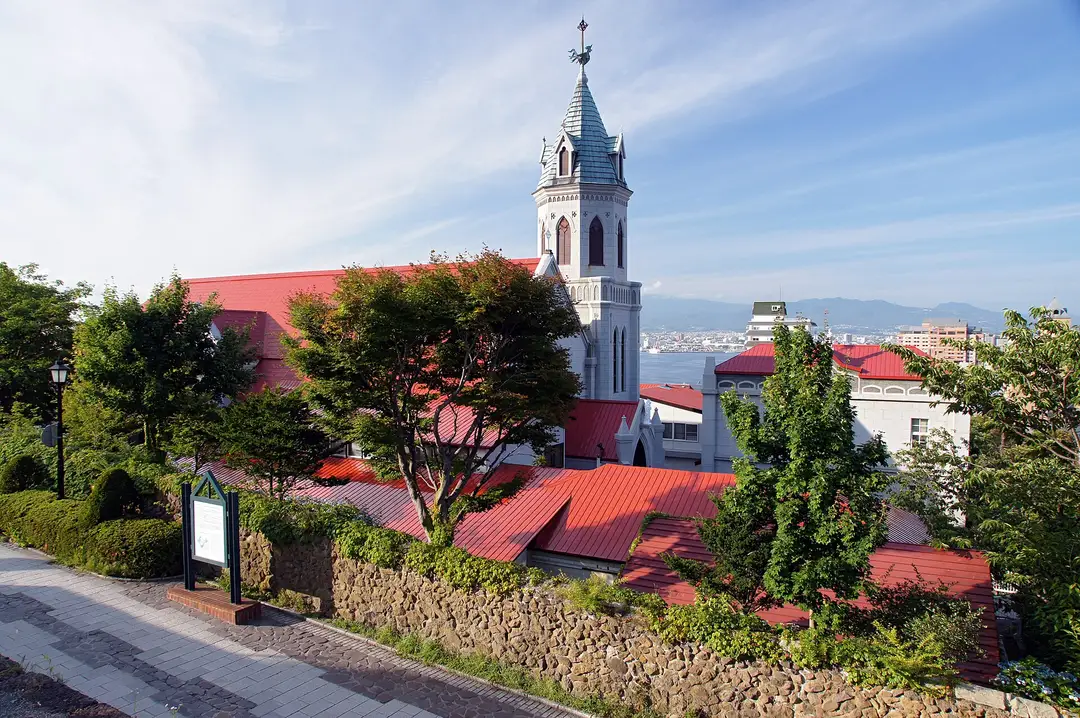
- MorningThe bay and the warehousesStart at the water, where the old red-brick trading warehouses face the harbor. The port that put Hakodate on the map is right in front of you, ships, cranes and all, before you turn uphill. Linked guide: Hakodate.
- MiddayMotomachi's slopes and churchesClimb into Motomachi, where a Russian Orthodox church, Japan's first, stands close by a Catholic mission and an Anglican one, all built on land that had been closed to them a few years earlier. The steepness is the point; this hillside is what land-hungry foreign traders were actually given, while the flat harbor front stayed Japanese ground.
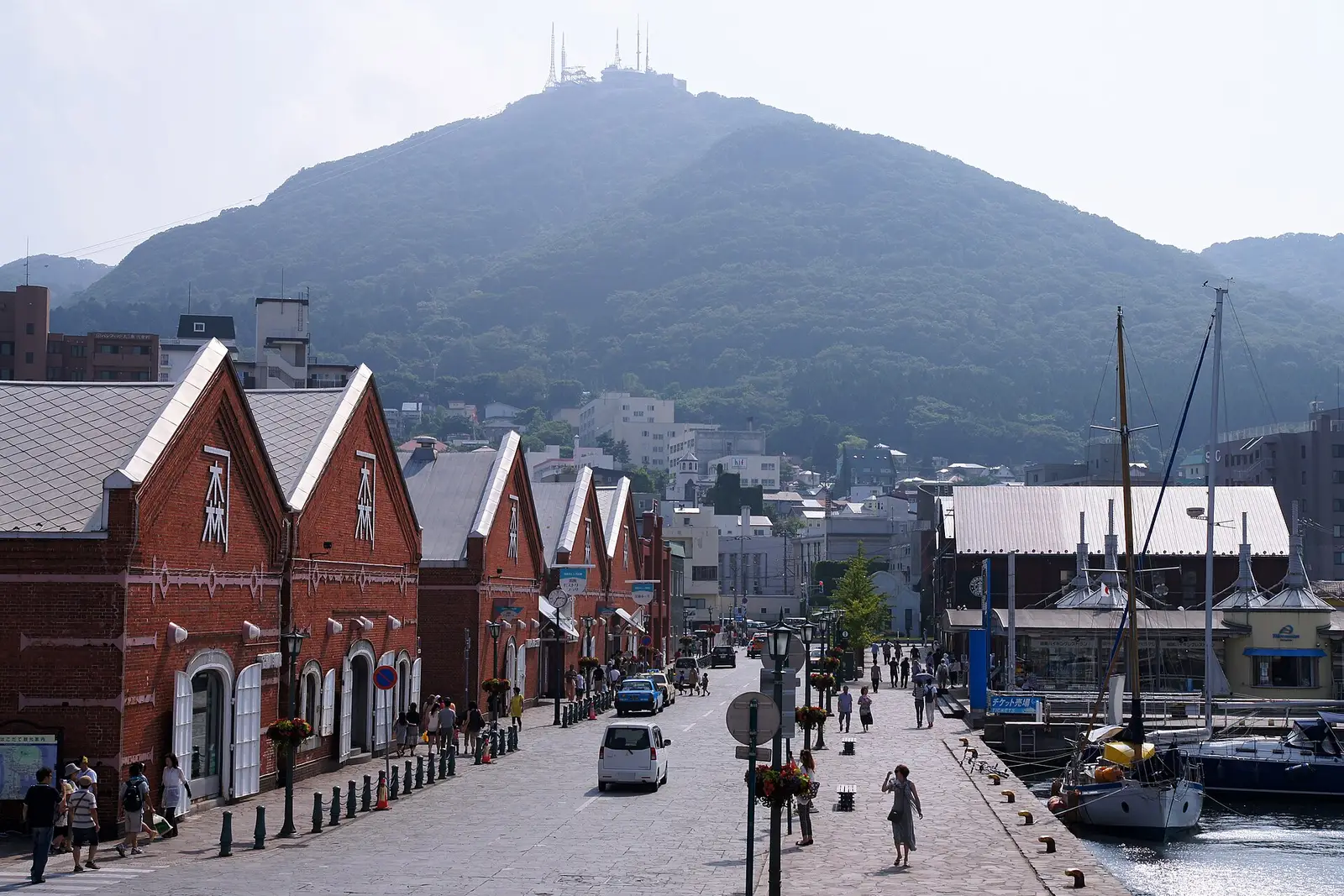
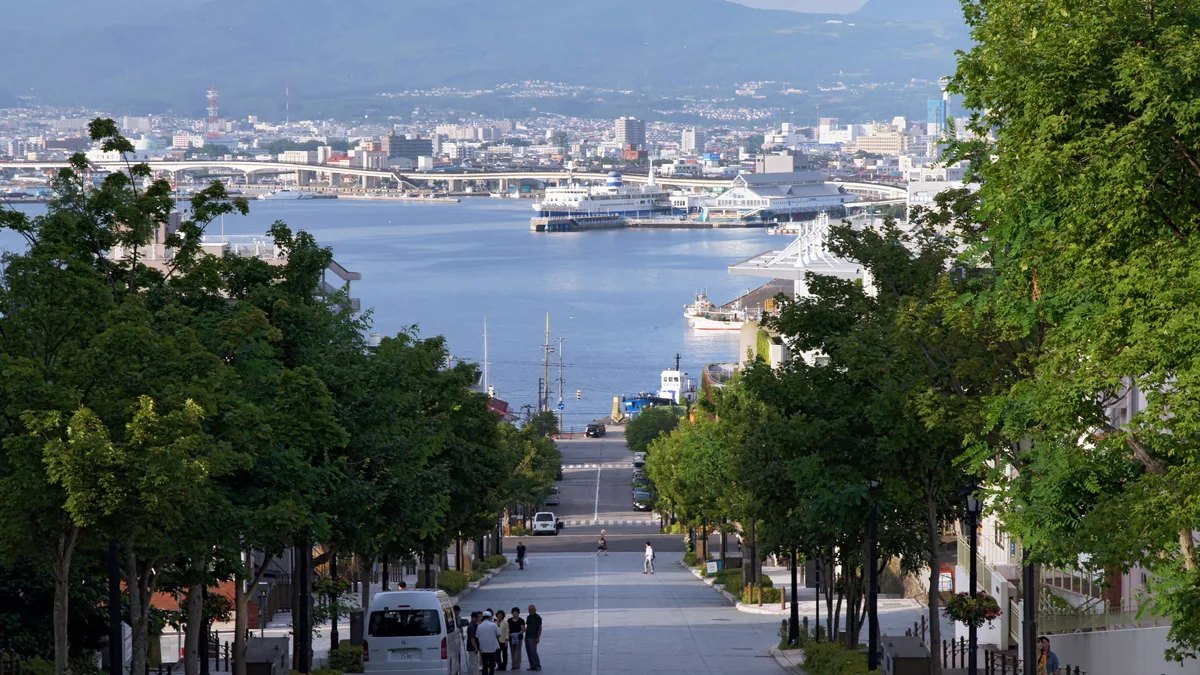
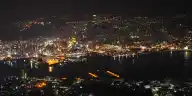
- EveningThe night view, and the reason for its shapeRide the ropeway up Mt Hakodate for the view that put the town on a thousand posters, part of Japan's traditional 'three great night views' alongside Kobe and Nagasaki. The city below narrows into an hourglass because the land itself narrows there; the light is just tracing ground that was never wide enough to spread onto. Go up around thirty minutes after sunset, and know the queue for the return car can run long at that exact hour.
Kobe, the port that grew too fast for the flat land it had
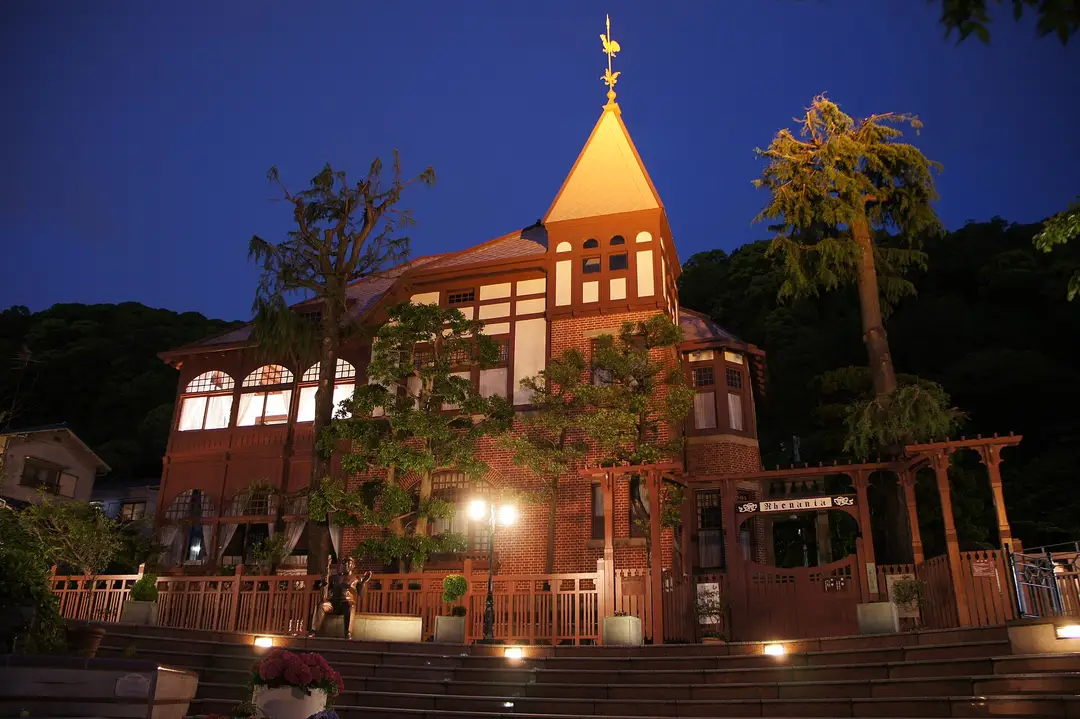
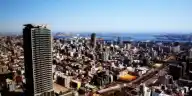
Kobe opened nine years after Hakodate, in 1868, and unlike the other two it wasn't a modest fishing town beforehand; it was largely farmland, laid out from scratch as a planned foreign settlement on a European grid. When that settlement filled up, incoming traders were pushed onto the Kitano hillside above it, which is why Kobe's most photographed street looks faintly like a European village dropped onto a Japanese slope. I'd walk it in one line, roughly four to five unhurried hours from Sannomiya Station: down from the hill, through the mixed streets below, out to the water where the whole idea started.
- MorningKitano's hillside housesWalk the ijinkan district slowly. These Western-style houses, verandas and all, exist because Kobe's flat foreign settlement ran out of room and pushed newcomers uphill. You don't need to buy a ticket into every house; the lanes themselves, free to walk, carry most of the feeling.
- AfternoonNankinmachi and the harborDownhill into Nankinmachi, Kobe's Chinatown, then out to the old foreign settlement streets and Meriken Park by the water. In a few streets you pass from a Japanese city, through a Chinese one, to the harbor that made both possible. Linked guide: Kobe.
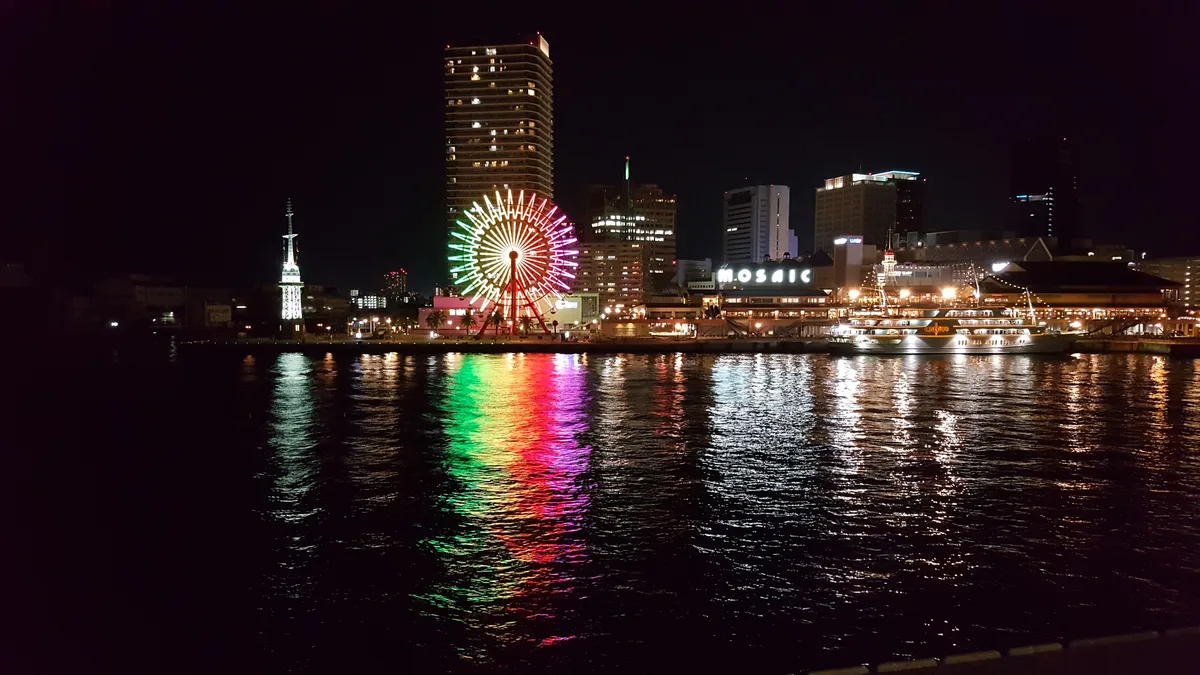
- Evening (optional)Kikuseidai, the same view from a different mountainIf you have the evening for it, Mt Maya's Kikuseidai terrace is Kobe's own entry in the three-great-night-views pairing, the city's lights pressed into the same kind of narrow band between mountain and sea. It's a genuine detour up the Rokko range, so treat it as a bonus rather than something to force into a half-day visit.
Nagasaki, the one window that never closed
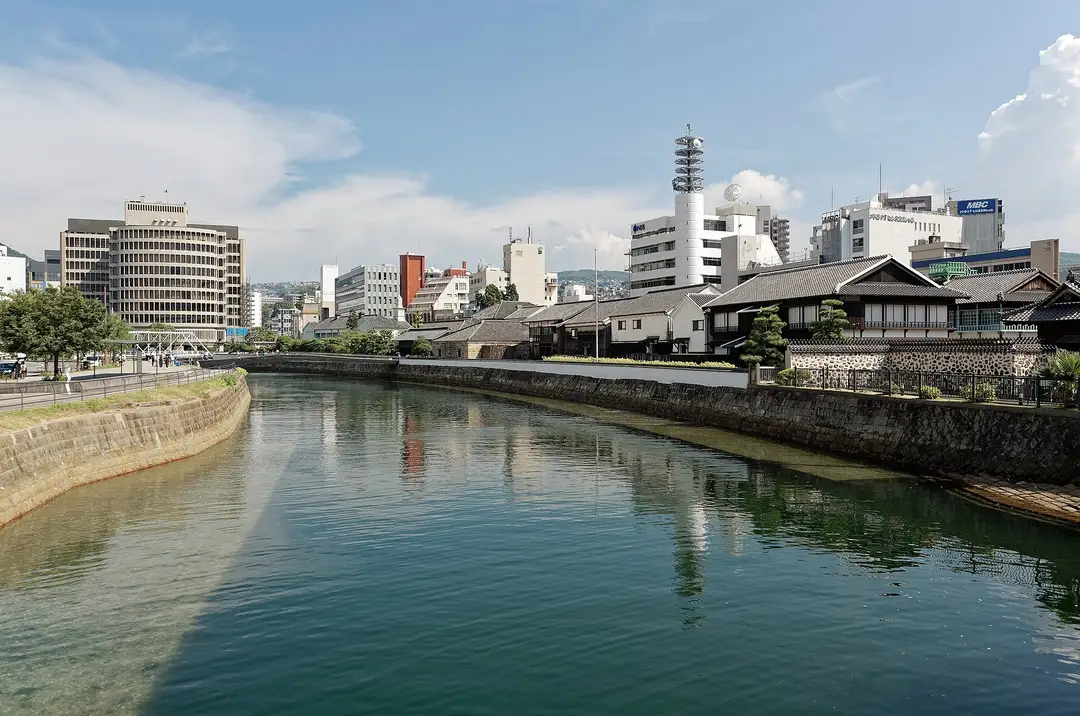
For roughly two centuries, while the rest of Japan was shut to the West, a small fan-shaped island called Dejima stayed open, a single sanctioned crack for Dutch and Chinese trade. Nagasaki is the one of the three where the 'opening' isn't a single treaty date; it's an unbroken thread running from long before 1859 to today. I'd give it the most unhurried pace of the three, because the buildings ask to be read slowly and mean much more once you know what kept the window from ever fully closing.
- MorningDejima, the island that stayed openStart at Dejima's reconstructed trading post, and take the time for it; a history-minded traveler who thought they'd rush through admitted they 'could've easily spent more time there.' This is the one stop on this page where the whole through-line sits in a single place. Linked guide: Nagasaki.
- MiddayChinatown, then the hill of churchesNagasaki's Chinatown grew from the same era as Dejima, a second thread of the same story rather than a separate attraction. From there, climb to Oura Church, Japan's oldest surviving Christian church, and pause at the foot of Glover Garden's Western merchant houses on the hill above if there's still daylight for it. The fenced-off Dutch island, the Chinese quarter and the hillside of churches are one city's answer to being told it could open, but only a little.
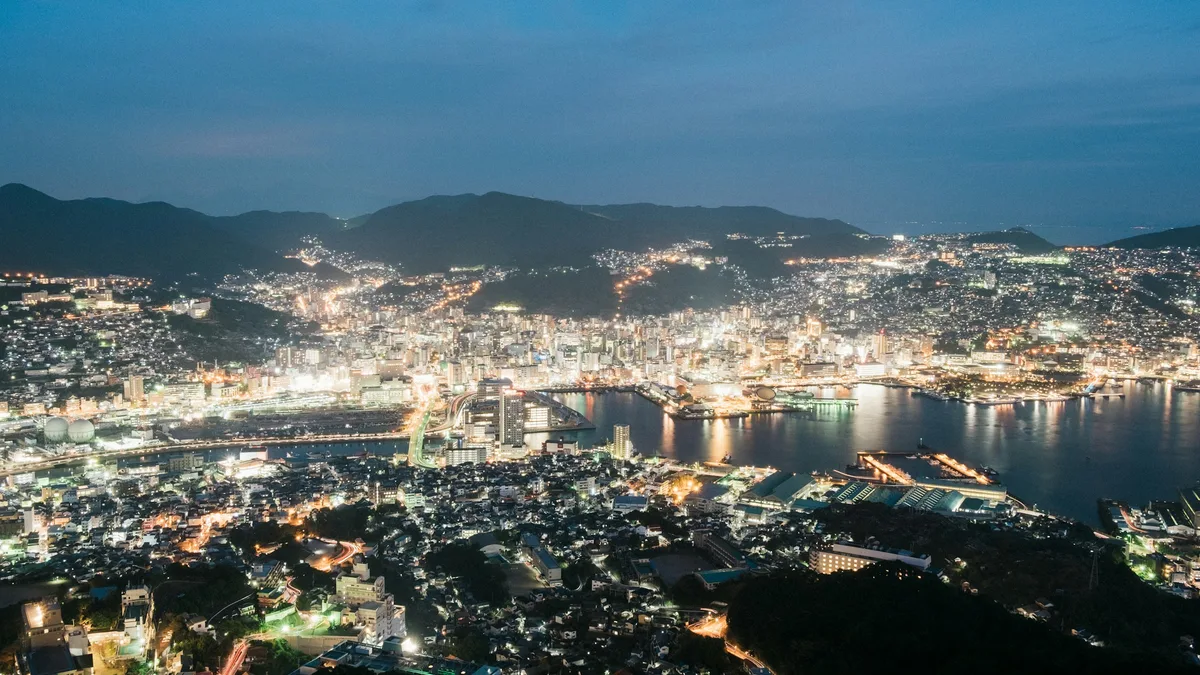
- EveningMt Inasa after darkClose the day on Mt Inasa, whose view completes the trio with Hakodate and Kobe and has separately been named among the world's great night views twice over. Locals favor the bus over the more crowded cable car, and eating at the summit restaurant before the sunset crowd arrives is a quieter way to see the same lights.
If you have one more day
+1 dayTwo of the three, if the geography lines up. Kobe folds easily onto a Kansai trip with a day to spare. Nagasaki pairs naturally with the rest of a Kyushu itinerary, most easily reached from Fukuoka. Neither of those additions asks you to reroute a trip; they slot into one you'd likely already be taking.
A slower Nagasaki. If Dejima and the church hill move you, an extra half-day for a quieter, later Mt Inasa visit, or a second look at Glover Garden without the day's other stops competing for time, is something I wouldn't count as repetition.
If you're short a day
−1 dayYou don't need all three, and you don't need a special trip to see any of them. If your route already passes near one, a single afternoon and evening, walking the old quarter and riding up for the night view, is enough to get the whole idea. I'd rather give one city my full attention than rush a triangle across the length of the country.
Extend from here
OnwardChaining more than one is a real trip in its own right. These three sit far enough apart that connecting them honestly needs a plan of its own.
Hakodate to Kobe. No direct flight or train links them. The realistic options are a domestic flight (JAL or ANA, Hakodate to Osaka's Itami Airport, about 1 hour 35 to 1 hour 48 minutes in the air, plus a transfer into Kobe) or an all-rail route north to south through Tokyo and Shin-Osaka, roughly 6.5 to 7.5 hours of ride time alone.
Kobe to Nagasaki. This one is genuinely direct: Skymark flies Kobe Airport to Nagasaki Airport three times a day each way, about an hour in the air. By rail, it's the Sanyo Shinkansen to Hakata, then the Kamome combination into Nagasaki, roughly 4 to 4.5 hours combined.
Where this composes with the rest of the site. Hakodate sits inside the Hokkaido block, Kobe next door to the Kansai block, and Nagasaki inside the Kyushu block. For my own trips, tucking one open-port city into a regional trip I'm already taking has worked better than chasing all three at once.
WMJS is written in Japan, in English, with AI help. We check every page, but English is not our first language. If a sentence reads oddly, tell us. One sentence is enough.
Thank you. A person reads every note.
Good to know — fares & times
Hakodate opens, 1859
Hakodate opened as a full foreign trading port in 1859, one of the first three in Japan alongside Yokohama and Nagasaki, five years after a smaller 1854 treaty had already opened it on a limited basis.
Kobe opens, 1868
Kobe's port opened on 1 January 1868, nine years after Hakodate and Nagasaki. Unlike the other two, its foreign settlement was laid out from scratch as a planned European-style grid by a British engineer, on what had largely been farmland.
Nagasaki's one window, 1641 to 1859
For roughly 218 years, from 1641 until the port fully reopened in 1859, the small fan-shaped island of Dejima was Japan's only officially sanctioned point of contact with the outside world, hosting Dutch and Chinese trade while the rest of the country stayed closed.
Dejima (Official): Historyas of 2026-06
Japan's three great night views
Hakodate, Kobe and Nagasaki are conventionally grouped as Japan's 'three great night views,' a long-standing pairing rather than a formal award. All three sit where a harbor is squeezed between a mountain and the sea, which is what gives each view its shape.
Nippon.com: Japan Dataas of 2026-07
Kobe's night view, Kikuseidai
Kobe's own tourism board names the Kikuseidai terrace on Mt Maya, about 700 m up and reached by the Maya Viewline cable car and ropeway, as one of Japan's three great night views. Unlike Hakodate's and Nagasaki's, it isn't a short in-city ropeway ride; it's a genuine excursion up the Rokko range, worth planning as its own outing rather than a stop tacked onto a Kitano afternoon.
FEEL KOBE (Official Kobe Travel Guide)as of 2026-07
Nagasaki's night view, twice over
Beyond the traditional three-great-night-views pairing, Nagasaki has separately been certified as one of the 'World New Three Major Night View Cities' (with Monaco and Shanghai, recertified 2021) and, as of December 2024, one of Japan's own 'New Three Major Night View Cities.'
City of Nagasaki (Official)as of 2026-07
Reaching Kobe
Kobe (Sannomiya Station) is a short commuter hop rather than a trip of its own: a JR Special Rapid train reaches it from Osaka in about 20-22 minutes, or from Kyoto in about 50 minutes, at a regular IC-card fare with no reservation needed.
Osaka Station Travel Guide: JR Kobe Lineas of 2026-07
Reaching Nagasaki
From Hakata (Fukuoka), the limited express Relay Kamome connects cross-platform at Takeo-Onsen to the Nishi-Kyushu Shinkansen Kamome. The fastest official combination covers Hakata to Nagasaki in about 1 hour 20 minutes.
JR Kyushu (Official): Nagasaki routeas of 2026-07, valid through the Feb 2027 timetable revision
Reaching Hakodate
The Hokkaido Shinkansen's terminus, Shin-Hakodate-Hokuto, sits about 18 km outside the city. The connecting Hakodate Liner covers that gap in 15-22 minutes for about ¥360.
Travel Hakodate (Official city tourism)as of 2026-07
The honest gap: Sapporo to Hakodate
The Hokkaido Shinkansen does not yet reach Sapporo. The extension has slipped past its original target and isn't expected before the late 2030s. Until it opens, Sapporo to Hakodate means riding a limited express for roughly 3 hours 30-40 minutes.
Hokkaido Shinkansen construction status (Official)as of 2026-07, delay estimate dated March 2025
Extend: Hakodate to Kobe
No direct flight or train links them. The fastest realistic option is a nonstop domestic flight, JAL or ANA, Hakodate to Osaka's Itami Airport in about 1 hour 35 to 1 hour 48 minutes, before a further transfer into Kobe.
Flight timetable aggregator (ekitan.com)as of 2026-07
Extend: Hakodate to Kobe, all-rail alternative
By rail the route runs Hokkaido Shinkansen from Shin-Hakodate-Hokuto to Tokyo (about 3 hours 58 minutes to 4 hours 15 minutes on the fastest Hayabusa services), a change of stations in Tokyo onto the Tokaido Shinkansen Nozomi to Shin-Osaka (a minimum of 2 hours 21 minutes), then the Kobe Line Special Rapid to Sannomiya (about 27 minutes). Ride time alone runs roughly 6.5 to 7.5 hours, before connection buffers.
Nippon.com: Japan Dataas of 2026-07
Extend: Kobe to Nagasaki
Skymark Airlines flies Kobe Airport to Nagasaki Airport nonstop, three times a day each way, in about 1 hour to 1 hour 10 minutes. By rail, Shin-Osaka to Hakata on the Nozomi (about 2 hours 28 minutes) plus the Kamome combination to Nagasaki (about 1 hour 20 minutes) totals roughly 4 to 4.5 hours.
Skymark Airlines (Official)as of 2026-07
Go deeper
11 min· 6 ch
Before you goWhile you walk
Hakodate — Where Japan Opened Its Northern Door to the World
An audio guide to Hakodate, the northern port that reopened Japan to the world — why its night view is shaped by the land, and how to visit it well.
Hakodate
10 min· 6 ch
Before you goWhile you walk
Visiting Kobe, Japan's Designed 19th-Century Port City
Is Kobe worth visiting? We weighed 114 traveler voices: 57% say worth it, beyond the beef. Kitano's foreign houses, Nankinmachi, the harbor, and one of Japan's three great night views, with an audio guide.
Kobe
13 min· 6 ch
Before you goWhile you walk
Nagasaki — The Port That Was Japan's One Open Window to the World
An audio guide to Nagasaki, Japan's one open window to the world — Dejima, Chinatown's champon, the Peace Park, Glover Garden, and the hillside night view.
Nagasaki
Read before you go
Combine with another plan
Hokkaido, an easy few days
Japan's frontier north — Sapporo and Otaru, the lavender hills or the snow, the steaming onsen valleys, and Hakodate — at an unhurried, season-led pace
Kansai, an easy few days
Japan's older heart — Kyoto, Nara, Osaka — at a comfortable pace
Kyushu, an easy few days
A north-to-south spine down the island — a shrine of hope, an open-window harbour, a castle being healed, and a city under a volcano
Sources
- Hakodate City (Official): Motomachi-Suehirocho Preservation District
- City of Kobe (Official): Kitano-cho / Yamamoto-dori district history
- Dejima (Official): History
- Nippon.com: Japan Data, Japan's three great night views
- FEEL KOBE (Official Kobe Travel Guide)
- City of Nagasaki (Official): night view awards
- Osaka Station Travel Guide: JR Kobe Line
- JR Kyushu (Official): Nagasaki via Nishi-Kyushu Shinkansen
- Travel Hakodate (Official city tourism)
- Hokkaido Shinkansen construction status (Official)
- Skymark Airlines (Official)