
Is Hiraizumi Worth It? Japan's First National Treasure Is One Small Hall, a Long Way North
Hiraizumi asks more of an itinerary than most places on it. From Tokyo the bullet train runs about two and a half hours to Ichinoseki, a local line adds another nine minutes, and waiting at the end of that is a single hall that Chuson-ji's own English guide describes, without apology, as "this small hall." It stands inside a modern shelter building, behind glass, in low light, and you may not photograph it. Meanwhile the town gets called the Kyoto of the north, and travelers arrive having been told the gold here is the ancestor of Kyoto's famous Kinkaku-ji. Somewhere between the length of that journey and the size of that promise, a fair doubt forms.
So we went looking for people who actually made the trip. Two things came back. Almost nobody regrets going: in both groups of voices, the share who came away genuinely let down is 5%. And the doubt does not fall away evenly. One in five of the international voices lands on "it depends," against one in twenty of the Japanese ones, and what the "it depends" turns out to be about is the journey and the billing rather than the hall.
Is it worth the detour? (in visitors' own words)
We gathered what international travelers who have walked Hiraizumi say when they weigh up whether the trip paid off. Weighted by how strongly each opinion resonated with other readers, here is how they fell.
The green band is more emphatic than we expected for a place this far off the usual line. A traveler with four decades of trips behind them called Chuson-ji "so far the best religious site I've visited in Japan after about 40 years of travels - better than Kyoto and Nikko for me - maybe Nara comes close." Someone writing up a two-week Tohoku route put it more bluntly: "Chusonji easily outshines majority of Kyoto's temples in my opinion." A visitor who arrived in January found the free grounds unremarkable and then walked into the ticketed section: "It is one of the few exhibitions I have seen in JP that made me go 'woah' as my first instinct. Strongly recommended." And the note that keeps recurring is the one about arriving uninformed. "Hiraizumi is one of those places I didn't know much about before my trip, but am very glad I visited - strong recommendation for anyone interested in history."
Now the 20%, which is the useful band, because it is not lukewarm about the place at all. Almost every voice in it is doing arithmetic about the trip rather than the temple. "If you enjoy temples / autumn foliage / checking off UNESCO sites then it's really lovely." That traveler went on to point out that an exhausted person can find all three elsewhere in Japan. Another, answering someone already footsore in Morioka, gave the same shape of answer: "That said, if you're feeling worn out, you won't miss anything absolutely essential by skipping it." A third had been, and drew the boundary precisely: "It's a nice detour if you're already in Tohoku but there really isn't that much to the area."
That leaves three voices out of sixty-five who were properly disappointed, and each of the three arrived measuring Hiraizumi against something else. One found the ticketed halls unimpressive after a day trip from Sendai and said so in five words: "I wasn't too impressed with either." Another had simply seen a great many Japanese temples already: "It could be fun to see these historical temples if we hadn't traveled much in Japan. They looked similar as other temples in Japan with more expensive tickets." The third is the most instructive, because it comes from the person who had spread the billing in the first place. Having titled their own post "Hiraizumi, the Kyoto of the north," they came back into the thread to take it apart: "I hope I didn't mislead anyone into going there, thinking they'd see Kyoto 2.0."
How it reads to the people who grew up with it in the textbook
There is a second set of voices most guides never surface: Japanese visitors reviewing the same temples in their own language, for each other.
The greener band is the easy part to predict. What repays attention is how these reviewers handle the smallness. They notice it constantly, say so plainly, and then hand out five stars anyway. "The Golden Hall felt smaller than I had imagined, but it has kept a level of craft and brilliance you would not believe was nine hundred years old, and I thought it was wonderful," wrote one visitor who came in April and found the grounds calm (「金色堂は想像していたよりも小さく感じましたが、900年前のものとは思えないほどの技術と輝きを保っていて素晴らしいと思いました。」). Another, who had waited most of a lifetime to get there, was cheerfully rueful: "The Golden Hall I had longed for, and kept picturing from photographs and footage, was smaller than I had imagined (laughs)" (「恋焦がれて写真や映像から想像し続けた金色堂は、想像していたより小さかった(笑)」). The same review closes on the glass and the camera ban: "Well, it can't be helped. A World Heritage site has to be properly protected!" (「ま~致し方ないです。世界遺産はしっかり保護しないと!」).
Read the five disappointed Japanese reviews and the pattern holds. Two of them are about how somebody was treated at a stamp desk. One is about the ticket price, from a visitor who noticed that the rest of the mountain is free: "Everything in the Chuson-ji complex can be visited free of charge, and only this part costs money" (「中尊寺の寺社群は無料で拝観できますが、ここだけ有料(拝観料1,000円)でした。」). One is about August heat and a bus that was not running, and it ends on the flattest verdict in the corpus: "I'd wanted to see it once, but I think that's enough for me" (「一度は見たかったがもういいかな。」). Exactly one of the five was let down by the hall itself, and that reviewer got there by measuring it against Kinkaku-ji.
Set the two gauges beside each other and the finding is not that one audience loves it and the other does not. Both audiences see the same small gilded hall behind the same glass. The hesitation only appears when someone carries a comparison in from outside.
What we wish you'd noticed
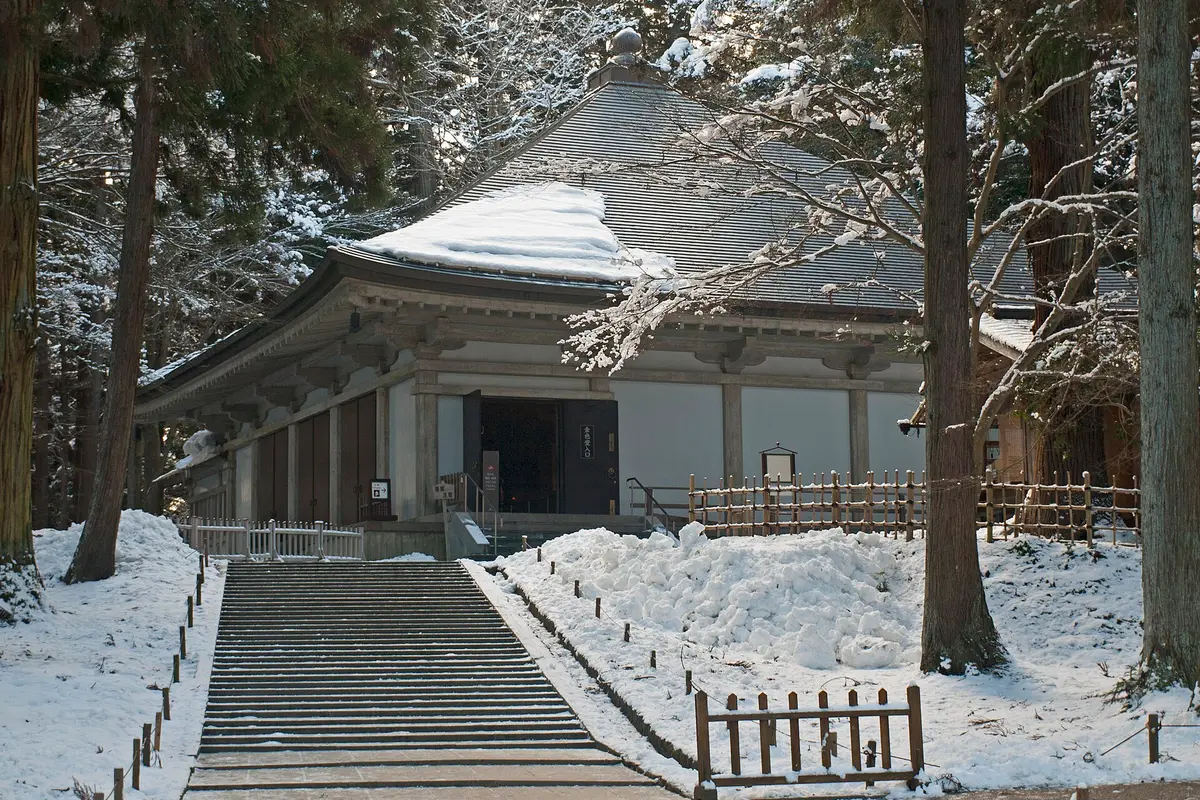
The hall is small, and that is the official description. Chuson-ji's own English guide calls the Konjikido "this small hall," completed in 1124 and the only twelfth-century structure at the temple to survive in its original form. Apart from the roof, it is covered in gold leaf inside and out. And when Japan drew up its modern system of National Treasures, this was the structure it designated first. Somewhere over three thousand National Treasures and Important Cultural Properties came through the centuries here, most of them now in the Sankozo museum on the same ticket. The smallness is a fact everyone agrees on. What differs is what people expected it to be measured against.
Hiraizumi really did rival Kyoto, and that is a claim about power. UNESCO's description of the World Heritage site records that this was the administrative centre of the northern realm of Japan in the eleventh and twelfth centuries, and that it "rivalled Kyoto, politically and commercially." The same description notes that much of the area was destroyed in 1189, and that Chuson-ji is the only one of Hiraizumi's temples remaining from the twelfth century. So the billing is accurate about a vanished city and misleading about a day out, which is why so many reviewers reach for Kyoto and then have to set it down again. One traveler from Singapore had already worked that through and put it in two sentences: "It's not exactly Kyoto, as some guides may claim. But the Konjikido makes it worth a visit."
The gold was raised as a peace offering. Chuson-ji's account of why the complex exists is startlingly specific. Kiyohira, the first Oshu Fujiwara lord, intended it to placate the spirits of those who had died in the bitter conflicts that had dominated Tohoku, friend or foe alike, and he wished to found a peaceful state on Buddhist principles. The Golden Hall is also a tomb: four generations of the family lie inside it in golden coffins, beneath an altar worked with peacocks, and the inner sanctuary is inlaid with mother-of-pearl cut from night-glow shells carried from the far southern seas, finished with ivory and gemstones. A Japanese reviewer who had gone in expecting glitter came out having counted things instead. The name Golden Hall makes you picture only the sparkle, they wrote, but the longer you look at the mausoleum, the Amida at its center and the ranks of figures around it, the more the place dissolves into something dreamlike.
Japan's most loved account of this place is a poem about how little is left. In 1689 the poet Matsuo Basho climbed Takadachi and looked down over rustling summer grass where a capital had been. UNESCO quotes what he wrote: "Three generations of glory vanished in the space of a dream..." The haiku he composed there, on summer grasses and the dreams of warriors, is among the most famous in the language. Anyone arriving expecting a skyline is working against three hundred years of the opposite instruction.
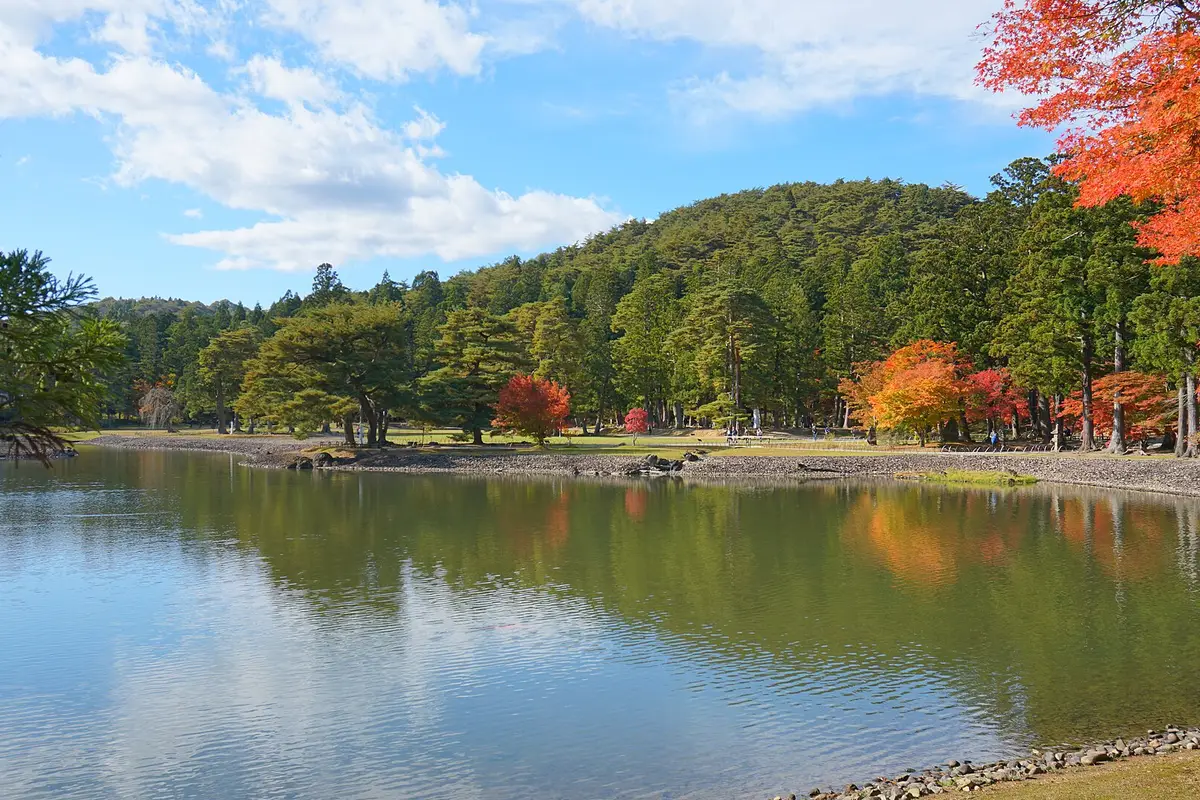
Motsu-ji is mostly ground plan. Almost none of the second great temple's buildings survive. What is there is a Pure Land garden around a pond, laid out to put paradise on the ground, and the outlines of what is gone. The most even-handed review in our whole Japanese corpus belongs to someone who loved it and still would not oversell it: "Personally I think it's a wonderful piece of scenery, but I'd accept that for some people 'there's nothing but a pond and a field' is a fair opinion" (「個人的には素晴らしい景勝地なんですが、人によっては『池と原っぱしかない』って意見も妥当かと。」). One of the two trip reports we read ends on exactly that trade-off as a regret: they should have given Chuson-ji more time and Motsu-ji less.
Doing it well, the welcomed way
- Check the day of the week before you plan the walking. The Runrun loop bus that links the station, Motsu-ji and Chuson-ji runs on weekends and public holidays only, from 11 April to 29 November 2026, with daily service from 13 to 16 August. It is ¥200 a ride and ¥550 for a day pass. On a weekday you are walking (roughly twenty to twenty-five minutes from Hiraizumi Station to the Chuson-ji entrance), renting a bicycle by the station, or taking a taxi. More than one traveler in our corpus found this out on arrival.
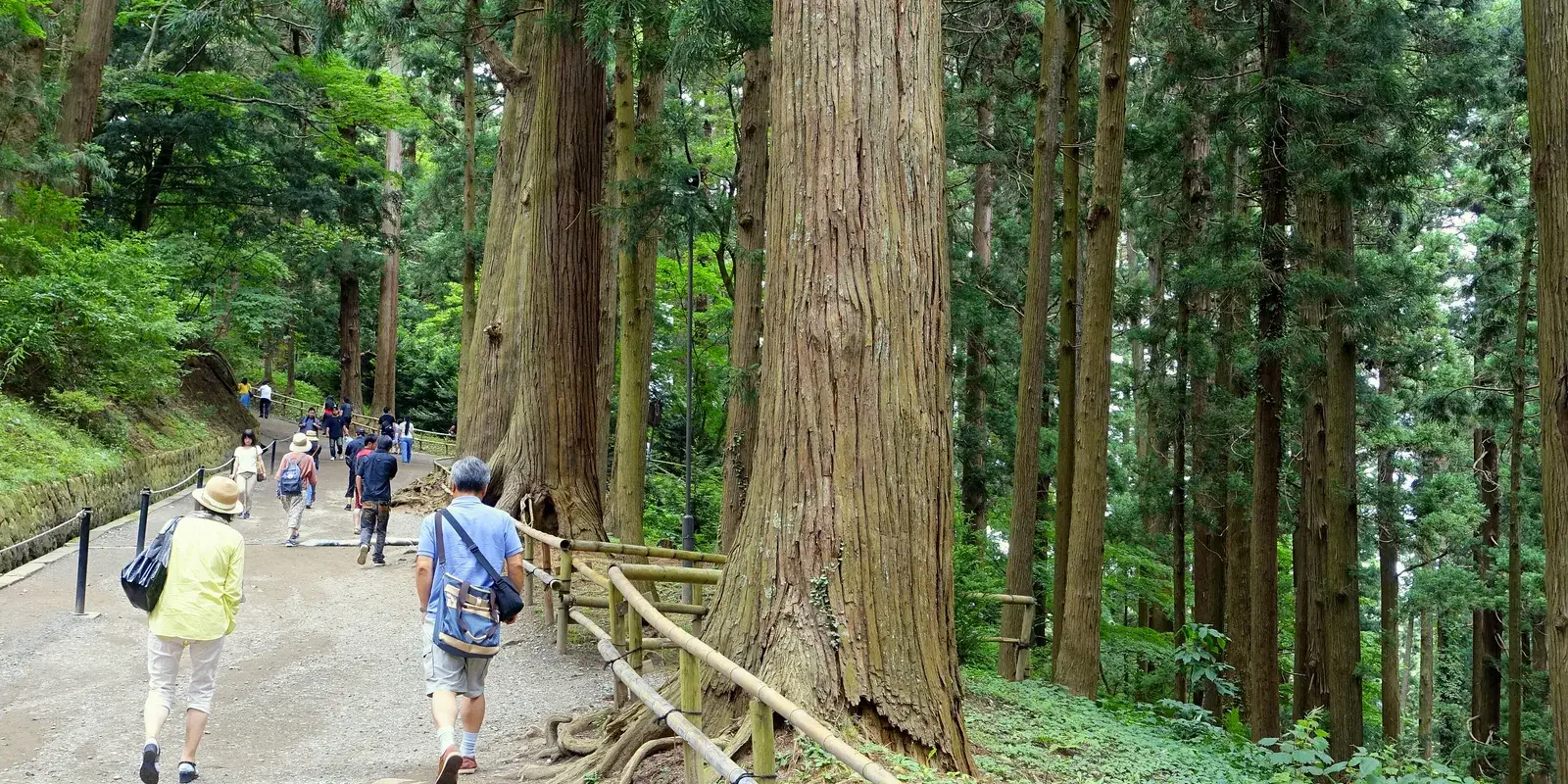
- Respect the Tsukimizaka. The Moon Viewing Slope is the main approach, lined with cryptomeria that the Date clan of Sendai planted three to four centuries ago, and it climbs steadily. It comes up again and again in the Japanese reviews. Wear shoes you can climb in. If someone in your party cannot manage a sustained slope, the temple names the Sakanoue (Hilltop) Parking Lot as the nearest option, and the review that other Japanese readers marked helpful more than any other in our corpus comes from an older group who used it and reached the hall without arriving exhausted.
- Do the treasure hall first. Voices in both languages agree: see the Sankozo before the Golden Hall, so you know what you are looking at when you get there. One ticket covers the Konjikido, the Sankozo, the sutra repository and the old shelter hall.
- Ask about the English commentary, and consider binoculars. Reviewers report that a recorded explanation plays on a loop and that an English version can be played for you. One visitor who has clearly done this a lot advises that "A pair of opera glasses or binoculars often proves invaluable in Japanese temples when lighting is dim or you are restricted behind barriers." You are looking at fine twelfth-century work from behind glass, at a fixed distance.
- Allow one to two hours, and mind the closing time. That is the temple's own estimate, and the reviewers who enjoyed it least were usually short of time. Chuson-ji is open 8:30 to 17:00 from 1 March to 3 November and 8:30 to 16:30 from 4 November to the end of February, with ticket sales ending ten minutes before. Adult admission is ¥1,000. Motsu-ji is ¥700 and a seven-minute walk from the station. There are no coin lockers at the temple, so leave bags at Hiraizumi Station.
- Let the ban on photography do its work. Nobody leaves with a picture of the Golden Hall. Several reviewers grumbled about that and then noticed that a room where no one is holding up a phone is a different kind of room.
There is one more thing worth carrying up the slope. In the dedication pledge Kiyohira wrote for Chuson-ji, he set down that all travelers, whatever their status, would be greeted affectionately by the Buddhas and would receive their blessings without fail, and that the temple's merits were to be shared out evenly and universally among everyone who wanted them. That was written nine hundred years ago about people walking a long way north to a small gold hall. If you make the trip, you are the traveler it had in mind, and you do not need to have read a word of the history first. Three in four of the visitors before you came home glad they went, and most of them arrived knowing very little.
Trying to work out which of Japan's big names deserve a place on a short trip? What actually matters in Japan is a good place to begin. And for the fuller story of Kiyohira's vow, the moon-viewing slope and the garden of what is gone, the Hiraizumi and Chuson-ji audio guide picks up where this leaves off.
Sources
- Chuson-ji Temple, official English guide. The 850 founding attributed to Ennin (Jikaku Daishi); Kiyohira's intention that Chuson-ji placate the spirits of those who died in Tohoku's conflicts, friend or foe, and his wish for a peaceful state on Buddhist principles; the Ganmon dedication pledge that all travelers regardless of status would be greeted affectionately and the temple's merits distributed evenly and universally; the Konjikido described as "the small, golden Amida hall which was the first structure designated a Japanese National Treasure"; the Konjikido completed in 1124 as the only 12th-century structure surviving in its original form at Chuson-ji, gold-leafed inside and out apart from the roof; more than 3,000 National Treasures and Important Cultural Properties, most now in the Sankozo (opened 2000); the Tsukimizaka cryptomeria planted three to four centuries ago by the Date clan of Sendai; adult admission ¥1,000; a typical visit of one to two hours; no coin lockers at the temple (use Hiraizumi Station); the Sakanoue (Hilltop) Parking Lot as the nearest parking for visitors with difficulty walking; and ticket sales closing ten minutes before the gates.
- Chuson-ji Temple, About the Konjikido (official, Japanese). The 1124 raising by Fujiwara no Kiyohira; the kai-konjiki all-gold finish; mother-of-pearl worked from night-glow shells brought from the far southern seas, with ivory and gemstones; the remains of four generations of the Oshu Fujiwara in golden coffins within the peacock-decorated altar; and Kiyohira's purpose of leading to the Pure Land the souls of all who died in the region's two great wars and of every creature that died without cause.
- Chuson-ji Temple, Visiting Information (official, Japanese). Opening hours of 8:30 to 17:00 from 1 March to 3 November and 8:30 to 16:30 from 4 November to the end of February, with ticket issue ending ten minutes before closing; the ¥1,000 adult admission (written without thousand-separators: 1000 yen) covering the Konjikido, Sankozo, sutra repository and old shelter hall.
- Motsu-ji Temple, Visiting and Access (official, Japanese). The ¥700 adult admission; opening hours; the 0.7 km, seven-minute walk from Hiraizumi Station; and the rail times from Tokyo, Sendai and Morioka to Ichinoseki and on to Hiraizumi.
- UNESCO World Heritage Centre, Hiraizumi (List No. 1277). The 2011 inscription as "Hiraizumi - Temples, Gardens and Archaeological Sites Representing the Buddhist Pure Land"; Hiraizumi as the administrative centre of the northern realm in the 11th and 12th centuries, which "rivalled Kyoto, politically and commercially"; the destruction of much of the area in 1189; Chuson-ji as the only one remaining from the 12th century; and Basho's 1689 line, "Three generations of glory vanished in the space of a dream..."
- Gikeido (Yoshitsune Hall), Matsuo Basho and Oku no Hosomichi (official, English). Basho's visit to Hiraizumi on 29 June 1689 and the summer-grass haiku composed looking down from Takadachi over the ruins of the Fujiwara capital.
- Iwate Kenkotsu, Hiraizumi Runrun loop bus (official). The ¥200 single fare and ¥550 one-day pass; the 2026 operating period of 11 April to 29 November, weekends and public holidays only, with daily operation from 13 to 16 August; and the route linking Hiraizumi Station, Motsu-ji, the Cultural Heritage Center, Chuson-ji and Takadachi Gikeido.
WMJS is written in Japan, in English, with AI help. We check every page, but English is not our first language. If a sentence reads oddly, tell us. One sentence is enough.
Thank you. A person reads every note.
How well do you know Japan?
Based on 51,218+ real Japanese voices
Want to know more? Ask Japanese people
Have a follow-up question about this topic? We'll ask real Japanese people.
Voice Box →