
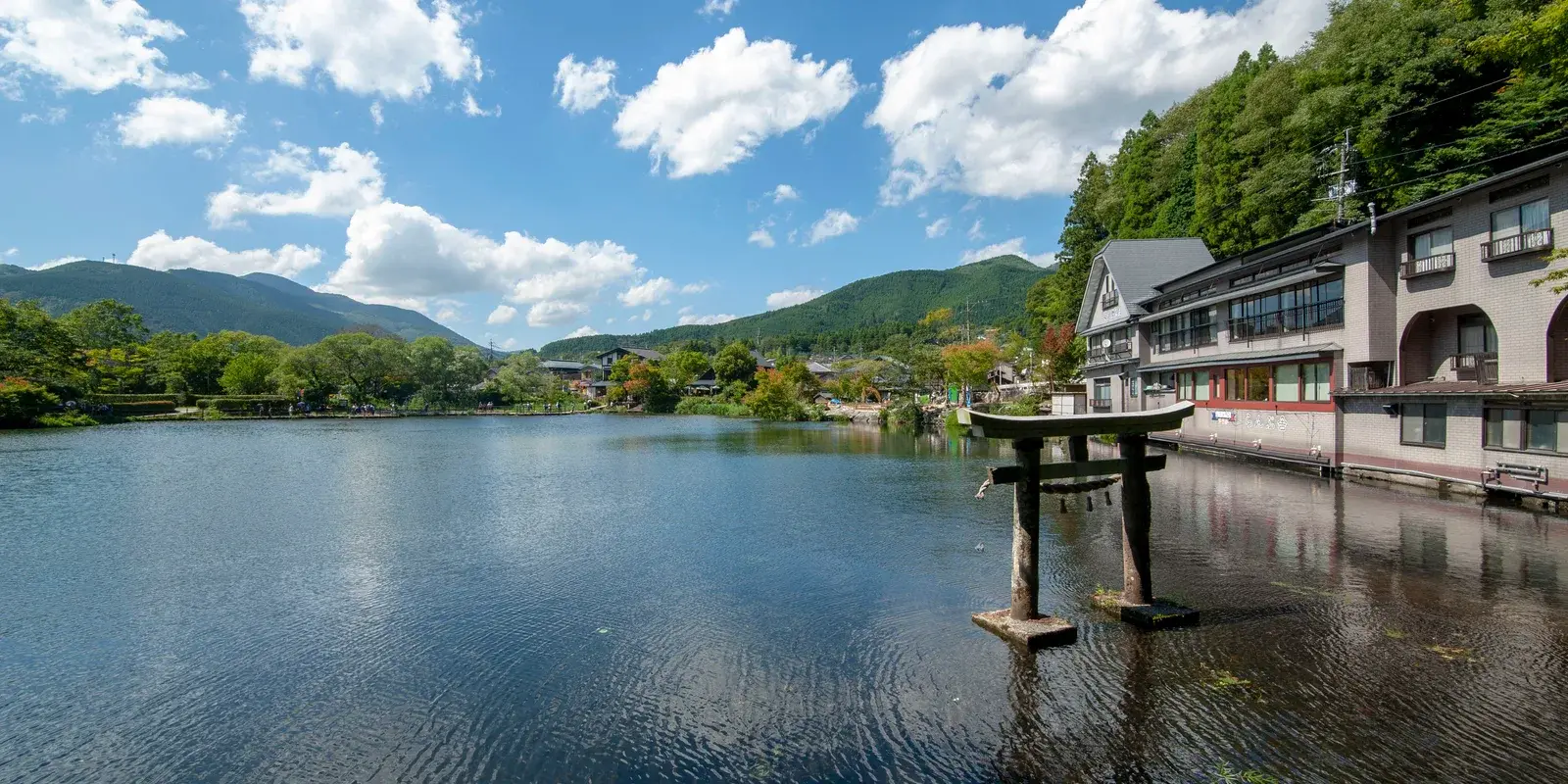
Is Yufuin Worth It? The Same 24% Are Let Down on Both Sides, for Opposite Reasons
Ask the question in any language and the same argument comes back. One traveller calls Yufuin the loveliest morning of their trip. The next calls it a souvenir street with a pond at the end. On a Taiwanese travel forum, one poster reached for a comparison that lands instantly for anyone from Taipei, calling it "Japan's little Jiufen" before adding a beach-resort town to the list for good measure.
So we went looking for the argument itself. We gathered 135 voices from international travellers who have written about being there, and 120 reviews written by Japanese visitors of that same lane and lake, and set the two groups side by side. The share who came away disappointed turned out to be identical: 24% on each side. What we did not expect was that the two groups are not complaining about the same thing at all. The visitors who regret Yufuin mostly found it ordinary. The Japanese reviewers who regret it mostly found it crowded and commercial. One group wanted more than the town gave them, the other wanted less.
The short answer the voices give, then: yes, and both complaints exist because the part of Yufuin people come back for, a bath, a dinner, a slow morning, is not visible while you are walking through it. Two out of every three arrivals in the city leave the same day.
Is it worth it? (in visitors' own words)
We gathered the voices of international travellers writing about Yufuin from experience and asked, in effect, was it worth it?
The middle bar is the biggest one in that gauge, and those 41% are not undecided. They are attaching a condition, and about one in five of them attach the same one: the night, or the early morning. "To see Lake Kinrin you really must go at dawn", one Taiwanese traveller wrote, and then, without softening it, "too late and the view is just ordinary, just a small pond." Another put the whole visit in one sentence: "This kind of place is for staying overnight sleeping on tatami, waking up in the morning to look at Lake Kinrin and zone out. If you're going with expectations of great scenery, you probably don't need to go." Even travellers who came down firmly on the worth-it side put a time on it. One, weighing Yufuin against Beppu, wrote that "It's smaller and situated in a more beautiful area. Outside of the mid-day crowds, early morning and evening, it's quieter too."
Very little of the red bar is about crowds. What the disappointed quarter mostly says is that the place was unremarkable. "Lake Kinrin is quite ordinary", runs one, before adding the qualifier that a good deal of this bar is quietly carrying: "maybe I went at the wrong time". Another is blunter about what a walk-through amounts to: "Not worth it. If you don't do the onsen, going there is just looking at a lake and a bunch of tourist shops." One traveller reduced the entire stop to a joke: "Walk out of the station, take a photo facing outward, turn 180 degrees, take another photo, and then you can leave". And several say plainly why: the photographs promise a scene rather than a stay. "The photos online are too beautiful, expectations get set too high", wrote one. Another: "It's fine as long as you've been there once - maybe expectations before the trip were too high, so there's a kind of letdown".
Only a handful of this bar is about the crush, and one of them ends somewhere unexpected. One traveller called Yufuin the single biggest disappointment of their trip, described the streets as packed solid, and said they would have skipped it. Then, in that same comment's final paragraph: "I think if you want to enjoy yufui or take nice pictures i think you will have to take like the first train in the morning that goes, when all the tourists arent there yet. Or you have to actually stay there for a day." It still signs off recommending Beppu or Mount Aso instead, but its advice for anyone who does go is the advice the fondest reviews give.
How Japanese visitors write about the same lane
Japanese visitors review the same eight hundred metres on Jalan, and they are a much warmer crowd.
54% treasure the place against 35% of the international visitors, and where they do call something ordinary it is usually the lake they mean rather than the town. Their red bar lands on the same 24%, but it is made of something else entirely: the lane is too full, and it has changed. One reviewer wrote of the shops that "there were so many people that I couldn't really look into them properly", and finished the thought this way: "it felt like I went to look at people rather than shops or goods, and it was tiring." Another described her walk as weaving: "I walked carefully so as not to bump into anyone. There were so many people that even eating while walking wasn't easy; each shop has some chairs, but not enough." A returning visitor found the town had moved on without her: "I came back for the first time in over 10 years, and it was disappointing that most shops now cater to tourists. Every shop was overpriced." And one reviewer who had longed to see Yufuin arrived with a picture in her head and could not find it: "The Yufuin I had longed for turned out, to my dismay, to feel just like Harajuku... but the Yufuin I had pictured in my mind wasn't here."
The most practical complaints in this bar are worth knowing in advance. Several reviewers raise the same one: there are very few public toilets along the lane for the number of people on it. "If you don't research where the restrooms are beforehand, you'll have a hard time." That reviewer goes on to describe a queue running out of the door, and says it is hardest on older visitors and families with small children. Another went for the food and could not relax into it: "there were very few restrooms... I was too worried to eat or drink." Eight of the 120 Japanese reviews raise the toilets. Not one of the 135 foreign voices does.
The two red bars are the same height and they point in opposite directions. International visitors arrive expecting a sight and find a shopping street. Japanese visitors arrive remembering a quiet hot-spring town and find a shopping street. The street is the same one in both cases. What each group expected instead is what differs. Some in each group simply find the lake small. "it's more the scale of a marsh than a lake, and there isn't really any particular highlight, I'd say?" wrote one Japanese reviewer, who still signed off "Good as a change of pace while strolling Yunotsubo Street!" And the lake does let people down when they come at the wrong end of the day. Another reviewer arrived at dusk expecting the water to sparkle: "It seems the morning mist would have been better. I hadn't done my homework."
What the town's own count says
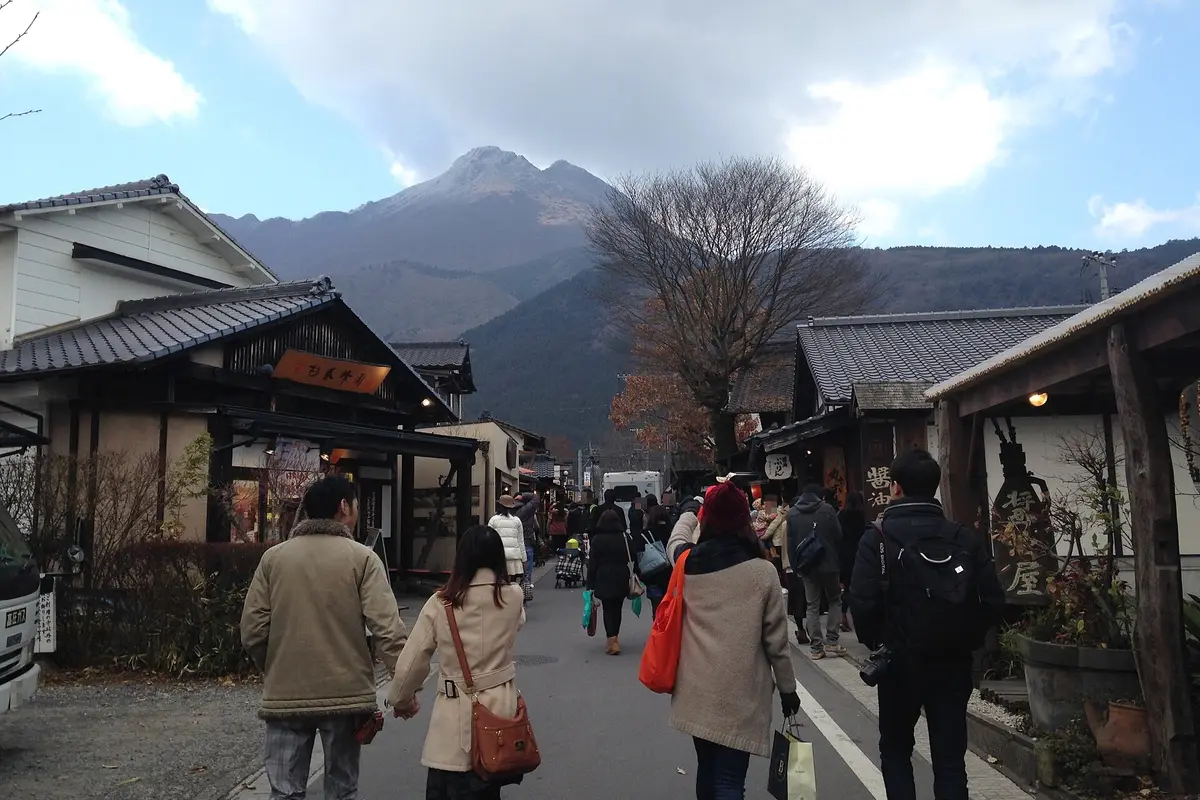
Yufu City measures this every year, and the 2025 survey published in June 2026 puts numbers on it. The city logged 4,196,408 tourist arrivals across the whole municipality, of which 2,803,083 were day trips and 1,393,325 involved a night's stay. Two in three arrivals, in other words, never stay for an evening. The survey is more specific about overseas visitors, and what it describes there is a timetable pattern rather than a visitor one: about 90% of them go nowhere in the municipality except the Yufuin area, and about 80% of those come only for the day, against two in three across all arrivals. The city's word for the result is overtourism, and the cause it gives is the converging of arrivals on one place within one narrow window, around the middle of the day.
The town is small enough that those arrivals have to go somewhere. The Yunotsubo lane runs roughly eight hundred metres from Shirataki Bridge towards Lake Kinrin, and the lake itself is about four hundred metres around, some thirty minutes' walk from the station. Concentrate a day's worth of coaches and trains into that, within the same few hours, and the lane at noon is a queue rather than a stroll. Come before the coaches or after they leave and it is a different eight hundred metres.
The quiet hours are not a cure-all, and one voice sets the ceiling honestly. Someone in the international corpus who says they live near Yufuin wrote: "Every time I go, regardless of time of day, there is a wait time to eat." Eating on the lane means queuing whenever you come. What the quiet hours change is the lake, the walk, and how much room you have on the pavement.
What we wish you'd noticed
Lake Kinrin at first light is a genuinely different place, and the reason is physical. Both hot-spring water and cold spring water feed the lake, so on a cold, still morning in autumn or winter the warm surface meets the cold air and mist lifts off the water. The Japanese reviews on this are specific in the way people are about something they still think about. "I stayed in Yufuin in late November and went before 7am. There was morning mist and it was a fantastical scene... I think it's worth getting up a little early." Another gives you the window: "On cold mornings (until around 10am) mist rises off the lake and it's very magical!" A third, more simply: "The morning cold and steam create a mystical scene." Nobody is guaranteeing it, and a warm or windy dawn will not produce it. But the walk down there before the town wakes is its own reward. One review is titled "No one around in the early morning, great for a walk", and mentions, almost as an aside, that "During the day there are lots of people." Of the 60 Lake Kinrin reviews in this collection, 27 mention a time of day, and 22 of those point to the morning or dawn.
The evening belongs to whoever stayed. The shops along the lane close early in the evening, and the visitors who love Yufuin most describe the hours after that as the actual product. "You are doing yourself a disservice by not spending the night, eating a delicious dinner then soaking in the onsen." That is the most upvoted piece of advice we collected on the overnight question. A Taiwanese traveller compared it to Jiaoxi, the hot-spring town in Yilan, and laid out the whole shape of it: "It's actually just like Jiaoxi: stay one night, soak in the onsen, eat and walk around the shopping street, get up in the morning to see the morning mist at Lake Kinrin, then go back to the hotel for a Japanese breakfast... If you rush there and back in a day, the experience really is quite different."
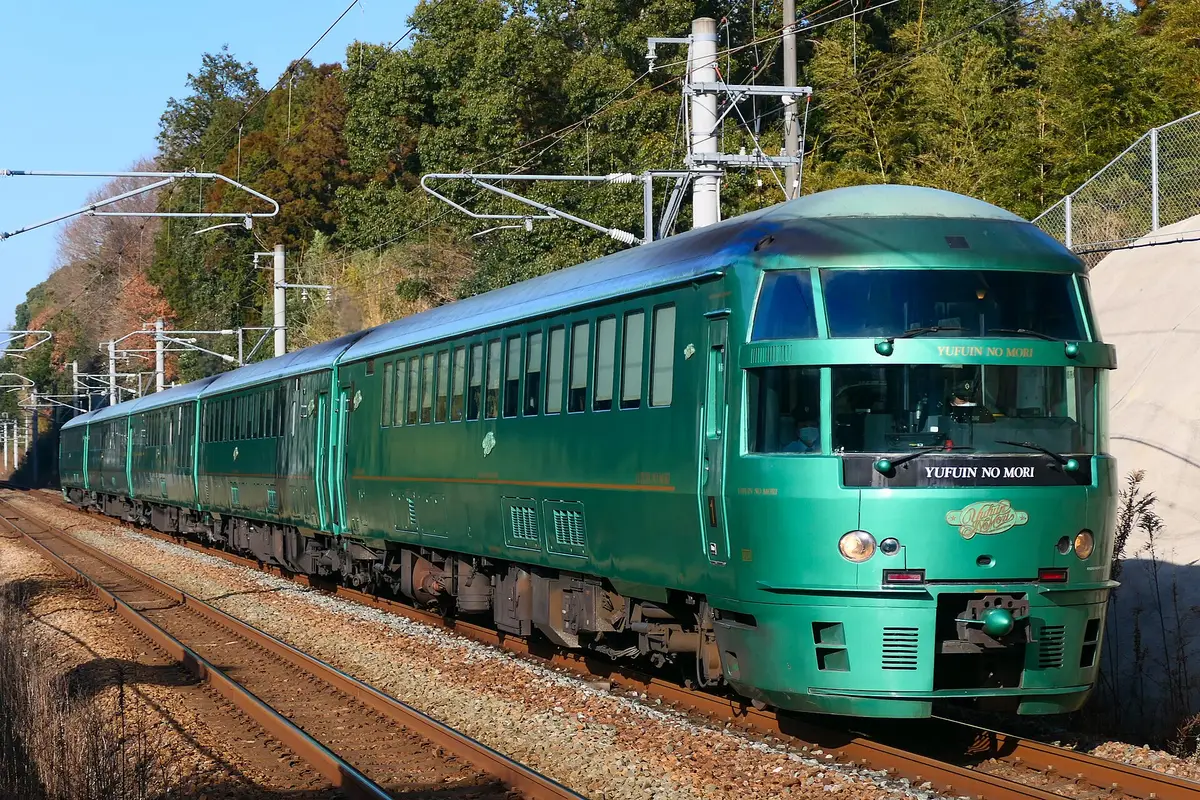
The travellers who actually rode the famous train mostly file it under transport. The green Yufuin no Mori is all-reserved and runs only a few times a day: service 1 leaves Hakata at 9:17 and reaches Yufuin at 11:31, the adult fare from Hakata is about ¥6,130 including the reserved seat, and tickets go on sale at 10:00 one month before the travel date. Travellers arrive braced for disappointment if they cannot get a seat. Two things are worth knowing. First, check the operator's operating calendar before you build a day around it: under JR Kyushu's notice of 18 August 2026, all six services run as normal from 1 October 2026, but some days are off for scheduled vehicle inspections, and on those days a limited express Yufu runs at the same times, without on-board sales. Second, the seat may matter less than the hour. One traveller who could not get a seat found the swap improved their day. They describe taking the 7:43 ordinary Yufu instead, which put them in town ahead of the first tourist train: the station lockers still had space, they could queue for the restaurant they wanted as it opened, and they walked the main lane while "it was not that crowded since the main train doesn't arrive until 11:30". They were blunt about the trade: "I felt that being in Yufuin earlier was way more valuable". Among those who did ride the green train, the common verdict is milder than its reputation: "I wouldn't call it an attraction in and of itself. Just a fancier way to get from A to B."
The welcomed way to enjoy Yufuin
All of that comes down to a few choices, and none of them are hard or expensive.
Decide about the night first, and let the rest follow. In the voices, staying over is the single decision that moves visitors from one gauge to the other. If the mist-quiet lake and the long ryokan dinner are what drew you here, book the night, and the plan arranges itself around it.
If it has to be a day trip, take the earliest train, not the prettiest one. The first scenic express from Hakata arrives at 11:31, straight into the busiest window. An earlier ordinary train on the same line gives you the lane before the coaches, and on a day the scenic train is running you can still ride it back.
Walk the lane early, and give the middle of the day to something else: the lake, a café, an inn's afternoon bath, the quieter paths off the lane. The shops close early in the evening, so the evening on the lane belongs to whoever booked the night. If midday is the only slot you have, that is genuinely fine: it is still a good lunch and a pretty walk under a volcano, and spending the busiest hour by the water rather than shoulder to shoulder on the lane is most of the difference.
If the mist is what you want, come on a cold, clear, still morning in autumn or winter, before the sun is properly up. It is never guaranteed, and the walk is worth doing anyway.
Plan the toilets, especially with children or older parents. There are few along the lane for the numbers using it, so use the ones at the station or at your inn before you set out. It is the kind of detail Japanese reviewers pass to each other in reviews.
Let the mountain count. Yufuin's sight is not a building. Mount Yufu, a 1,583-metre active volcano with twin peaks, stands over the basin and closes the view at the far end of the lane.
The gap between the two red bars is a gap between two pictures of the same place, and before the first trains arrive neither picture is true. One Japanese reviewer, writing about a clear morning at the lake, put it this way: "Yufuin is best in the quiet moments of the morning when there are few people!" The lake is a thirty-minute walk from the station, and the reviewers who got there earliest are the ones who describe having the shore nearly to themselves.
Weighing up which famous places actually earn a slot on a short trip? Start with what actually matters in Japan. And for the full walk through the basin, the lane, the lake and the night in between, the Yufuin guide is right here.
Sources
- Yufu City, 2025 Tourism Trends Survey (Japanese, PDF, published 3 June 2026): 4,196,408 tourist arrivals across Yufu City in calendar 2025 (2,803,083 day trips and 1,393,325 overnight); and, in the passage specifically about overseas visitors, that about 90% of them visit only the Yufuin area, about 80% of those on a day trip, with the city describing an overtourism phenomenon arising from the concentration of arrivals into a single district within a single part of the day (お昼前後, around the middle of the day).
- Yufuin tourism, Yunotsubo Kaido (Yufu City Tourism Bureau, Japanese): Yunotsubo Kaido as the roughly 800-metre main lane beginning at Shirataki Bridge, reached from JR Yufuin Station by way of the station approach and Yufumi-dori.
- Yufuin tourism (Yufu City Tourism Bureau, Japanese): the tourism board's own feature inviting visitors beyond the bustle and into Yufuin's back lanes.
- Yufuin tourism, Lake Kinrin (Yufu City Tourism Bureau, Japanese): the lake named in 1884 by the Confucian scholar Mori Kuso, and the mist-wrapped lake seen on cold early mornings from autumn into winter.
- Visit Oita, Lake Kinrin (Oita Prefecture, English): the lake's 400-metre circumference, its warmth from mixed hot-spring and cold-water inflow, the resulting winter-morning steam, and the roughly 30-minute walk from Yufuin Station.
- Visit Oita, Mount Yufu (Oita Prefecture, English): Mount Yufu as a 1,583-metre active volcano with twin peaks standing over the basin.
- JR Kyushu, Yufuin no Mori (Japanese): the limited express from Hakata to Yufuin in a little over two hours (service 1: 9:17 from Hakata, 11:31 at Yufuin; timetable revised 14 March 2026), around ¥6,130 for an adult including the reserved seat, all seats reserved with only a few services a day, and tickets on sale from 10:00 one month before the travel date. Page information as of 21 August 2026. The same page links the operator's notice of 18 August 2026: services 3 and 4 returned to normal service from 19 September 2026, and from 1 October 2026 services 1 to 6 run as normal, with some days off for scheduled vehicle inspections, when a limited express Yufu runs at the same times; the operating calendar shows the days. The 7:43 departure of the ordinary Yufu is the traveller's own account rather than a figure from this page.
- JNTO, Lake Kinrin (English): the English framing of Lake Kinrin and its morning mist, and Yufuin's hot springs among the highest-flowing in Japan.
WMJS is written in Japan, in English, with AI help. We check every page, but English is not our first language. If a sentence reads oddly, tell us. One sentence is enough.
Thank you. A person reads every note.
How well do you know Japan?
Based on 51,218+ real Japanese voices
Want to know more? Ask Japanese people
Have a follow-up question about this topic? We'll ask real Japanese people.
Voice Box →