
Is Shimokitazawa Worth It? It Depends Whether You Ask a Visitor or a Resident
A Reddit thread titled "Has Shimokitazawa really become that bad or are people overexaggerating?" ran to eighty-one comments, roughly split between people mourning a vanished golden age and people telling them to get over it. The same split shows up across dozens of threads about the neighborhood: a tangle of vintage shops and live houses that outside write-ups still describe as Tokyo's answer to Brooklyn, against a station front that got rebuilt, a steady run of chain stores, and a decade of "it's not what it used to be."
We gathered voices on both sides of that argument, foreign visitors on Reddit and Japanese residents and visitors in posts on X and jalan reviews, and read what each group wrote with the same question in mind: was it worth it? The two groups don't answer the same way, and the direction of the disagreement is the more interesting finding.
Is it worth a visit? (in visitors' own words)
About a third of the people we read left disappointed, and the disappointment has a specific shape. It's rarely one bad experience; it's a sense that the place sold in travel blogs, scrappy and underground, doesn't match the one they found. "It was a husk, 80% overpriced thrift shops and the rest is that giant new business developments that's so sterile and boring," one resident wrote after returning a few years after a 2017 visit. Another, more clipped: "You need to go to Shimokitazawa for an hour to learn that the hype is just hype."
The green and neutral bars together cover roughly two-thirds of the voices, though, and plenty of recent visitors push back hard on the decline story. "People love to pearl clutch and scream gentrification at the slightest bit of development," one wrote. "It's still a perfectly charming neighborhood with many independent businesses." Someone who stayed five nights in September called it simply "I enjoyed it very much. I couldn't give a rip about shopping or thrifting but found it great to wander around at all hours, and was a nice refuge from the chaos of the rest of Tokyo."
How the people who live with the change feel
Most travel guides skip this part entirely. Here, Japanese residents and visitors describe the same redevelopment in their own words.
Here the doubt takes up less of the chart than it does on the visitors' gauge, which runs against the usual script for a neighborhood accused of losing its soul. "As someone who lives near Shimokita, I think this redevelopment was quite successful," one person wrote. "It's not a high-rise forest like Shibuya. The local independent shops that were already there opened branches in the new facilities. It became an inclusive town that's easy to walk with kids." A different poster, more pointed about who's doing the complaining: "90% of the people who over-romanticize the grungy-but-good restaurants and hard-to-enter mixed-use buildings are outsiders."
The doubt that exists is real. "There's no longer that air that only existed in Shimokitazawa," one longtime visitor wrote. "It feels like a suburban shopping mall now." A former resident who grew up in the neighborhood described getting off the train after a decade away and being so disoriented he couldn't tell which way led to the old main street, then immediately added: "the shopping streets on both the south and north exits haven't changed much, Suzunari is still there, and that railway crossing was a long-time bottleneck for locals, so I think it had to go." People who remember the old chaos tend to grieve it and then, in the same breath, point out how much of it is still standing a few minutes from the station.
What we wish you'd noticed
The thing visitors call "the redevelopment" has a much longer and messier history than the new station suggests. Tokyo decided to elevate and quadruple-track the Odakyu line through the area back in 1964. A petition with roughly 35,000 signatures called for the plan to be reconsidered by 1970, and the dispute eventually spilled into lawsuits in the 1990s. In 2003, nearly forty years after that first plan, the city settled on putting the line underground instead of elevating it. The change took effect on March 13, 2013, when nine railway crossings between Higashi-Kitazawa and Setagaya-Daita disappeared along with the line.
Running alongside the rail project were two road plans that worried residents just as much as the trains did. One would have cut a street east to west through the area north of the station; the other would have added a traffic plaza and a connecting road out front. A local orthodontist and rock-bar owner, Kenji Shimodaira, led the residents' group "Save the Shimokitazawa" that organized against them: "A new road would physically divide the town. Shimokitazawa's appeal is that you can walk all through it, and that would become impossible. And once you build a road, land consolidation and high-rises follow. We didn't want to turn this into a cookie-cutter town." What eventually got built followed more than two hundred rounds of dialogue between Odakyu, the local ward, and residents, a process Shimodaira later summed up this way: "We weren't opposing for opposition's sake. We couldn't accept development that would erase what makes Shimokita Shimokita. Odakyu and the ward took that seriously, and we were able to build the new town together."
None of this unfolded in a sleepy backwater. Shimokitazawa's station handles an average of 118,852 boardings and alightings a day, the eighth-highest of any of Odakyu Electric Railway's 70 stations. Weekend crowding is partly just what a genuinely popular destination looks like.
Odakyu's name for its approach to the freed-up rail corridor was "servant development," its own term for prioritizing support over control. BONUS TRACK, a cluster of independently run restaurants, a bookstore, and small shops, opened in April 2020; reload, a 24-building complex of small, separately fronted stores built so visitors walk between buildings instead of through a single one, opened in June 2021. Thirteen facilities have opened along the 1.7-kilometer corridor in total, including a hot spring inn, a nursery, and student housing.
Rising rents, not nostalgia by itself, explain why a specific favorite shop keeps disappearing. Government-assessed land near the station was worth 1.83 million yen per square meter in 2013, the year the line went underground, and 3.48 million yen per square meter in 2026, nearly double. Higher land costs make it harder for a small, low-margin shop to renew its lease. That's happening on the same streets where new, independently run businesses keep opening, which is why both stories, old favorites closing and new creators moving in, are true at once.
Doing it well, the welcomed way
The visitors who came away happy and the ones who didn't were often describing different corners of the same neighborhood.
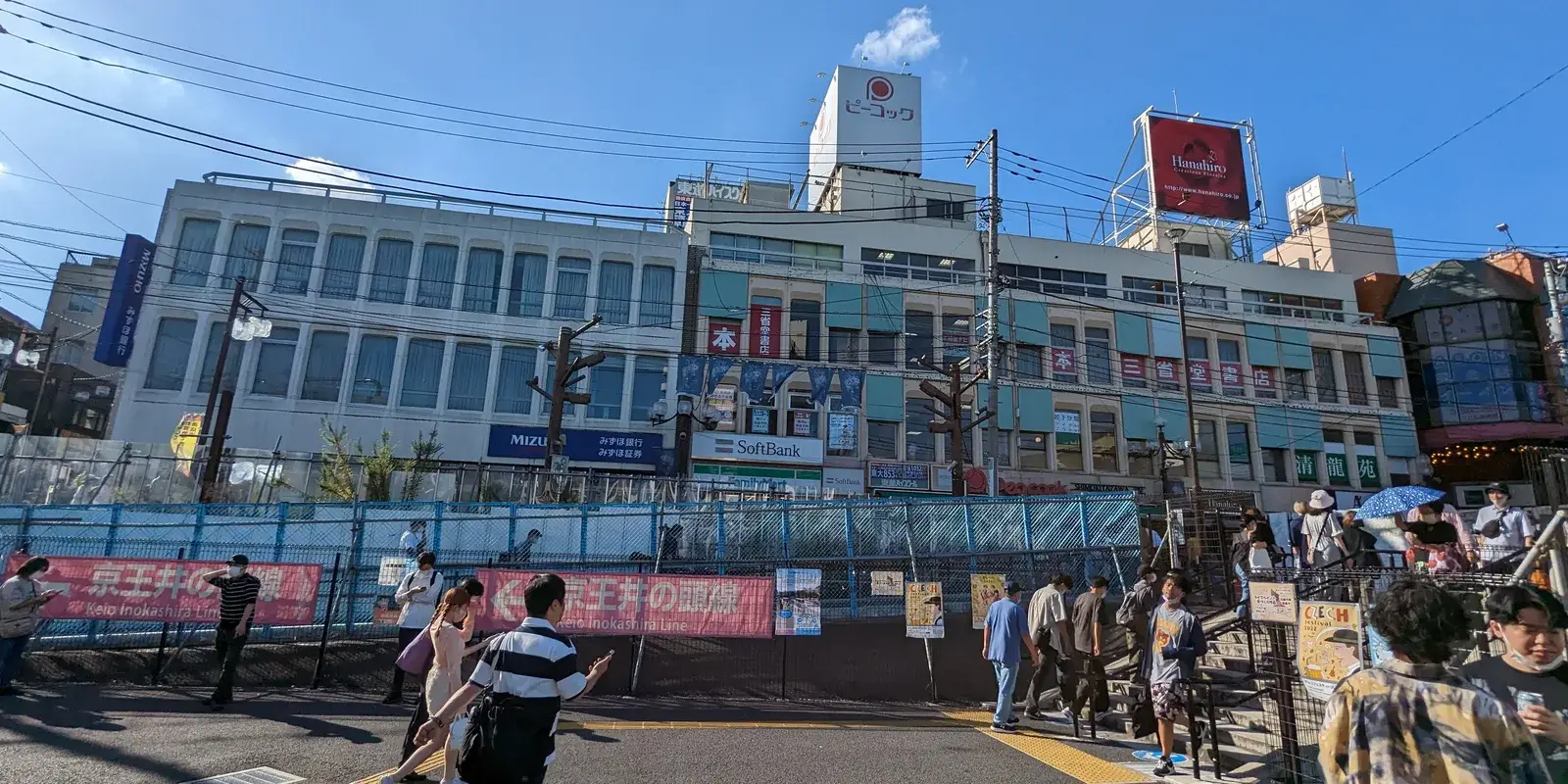
Both the complaints and the defenses agree on where the new construction actually sits. It's concentrated right at the station, on the former rail corridor and the open plaza in front of the east exit. A few minutes south or west of that, the narrow shotengai streets and the small theaters that built the area's reputation are substantially the ones that were there before. BONUS TRACK and reload deserve an actual visit, too, since both were built so independent tenants could take the smaller units, a bookstore here, a fermented-food shop there, the kind of business a standard station-front development usually has no room for.
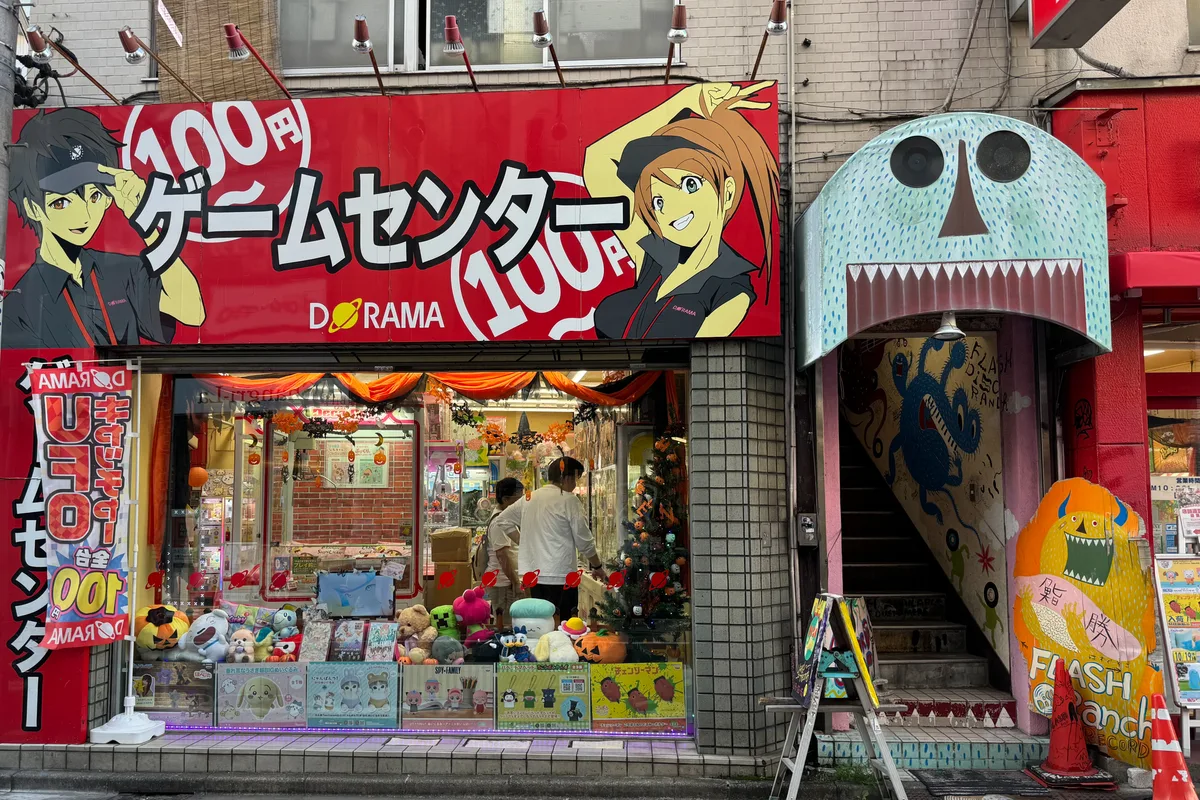
If the vintage-shop prices put you off, the live houses are the thing visitors who still love the place keep pointing back to. "The townscape has more vintage shops than convenience stores, the live houses and theatres are still there despite some turnover, and nothing but the station itself really changed," as one resident summarized it. The small clubs and dive bars tucked behind the main streets keep much of the programming that built the area's reputation in the 1980s.
A weekday visit shows you a closer match to what the write-ups promised than a weekend one does. Most of the "it's just mainstream now" complaints are set against a crowded Saturday backdrop, and the post-pandemic rebound in inbound tourism has made those weekends busier still.
So is it worth it? The two gauges above are the honest answer. A third of outside visitors feel let down by a gap between reputation and reality, while most of the people who deal with the actual changes day to day call the result a success. Which one you'll agree with probably depends on whether you're chasing a decade-old blog post or judging the neighborhood actually standing in front of you.
Looking for other famous Tokyo neighborhoods worth a second look past the station exit? Start with what actually matters in Japan.
Sources
- Toyo Keizai Online, "Shimokitazawa Station after undergrounding: has the subculture feel survived?" (2025-05-15): Odakyu Shimokitazawa Station's FY2023 average daily boardings and alightings of 118,852, ranking 8th of Odakyu's 70 stations; history of the Odakyu (1927) and Keio Inokashira (1933) lines opening at the site.
- AERA dot. (Asahi Shimbun Publications), "We didn't want to turn it into a cookie-cutter town: inside Odakyu and residents' 200-plus dialogues behind Shimokita Senrogai" (2023-11-12): the 1964 city planning decision to elevate and quadruple-track the line; the 1970 petition against it (approximately 35,000 signatures) and subsequent 1990s litigation; the 2003 decision to underground the line instead; the separate road plans opposed by the "Save the Shimokitazawa" residents' group led by Kenji Shimodaira, and the more than 200 dialogue sessions between Odakyu, the ward, and residents that followed, quoted on both the group's original opposition and the collaborative process that followed.
- LIFULL HOME'S PRESS, "How did the 'town of longing' change? What Shimokitazawa's Odakyu undergrounding and redevelopment ask about coexisting culture and redevelopment" (2026-06-14): the March 2013 completion of the undergrounding and elimination of 9 railway crossings between Higashi-Kitazawa and Setagaya-Daita; the "servant development" concept for Shimokita Senrogai; BONUS TRACK's April 2020 opening and reload's June 2021 opening (24 buildings); 13 total facilities opened along the 1.7km former rail corridor; government-assessed land price near the station rising from 1.83 million yen/m² (2013) to 3.48 million yen/m² (2026).
WMJS is written in Japan, in English, with AI help. We check every page, but English is not our first language. If a sentence reads oddly, tell us. One sentence is enough.
Thank you. A person reads every note.
How well do you know Japan?
Based on 51,218+ real Japanese voices
Want to know more? Ask Japanese people
Have a follow-up question about this topic? We'll ask real Japanese people.
Voice Box →