
Anime Pilgrimage and the People Who Live There
There's a small seaside town in Ibaraki where elderly shopkeepers greet visitors with okaeri, "welcome home." Most of those visitors arrived because of a cartoon about high-school girls who drive tanks. None of the residents chose to live inside a story. And yet, somehow, the story made the town love its visitors back.
This is the part of anime pilgrimage (seichi junrei, "sacred-site pilgrimage") that the spot-lists never explain. You can find a hundred guides telling you where the real-world locations are. Almost none tell you how the people who actually live there feel when fans show up on their street, at their shrine, outside their family business.
So we went looking for those voices. And the answer is warmer than you'd expect.
Key Takeaways:
- Towns made famous by anime, such as Oarai (Girls und Panzer), Washinomiya (Lucky Star), and Numazu (Love Live! Sunshine!!), were often revitalized by fans rather than burdened by them
- Washinomiya Shrine's New Year visitors jumped from 90,000 to 470,000 after the anime aired; Oarai's town festival grew from around 65,000 to 135,000
- Of 48 resident and local voices we collected, about 83% welcomed fans, and the wary minority worried about manners rather than about fans existing
- The friction that does happen (the famous Kamakura railway crossing, a private home in Chichibu) is almost always about specific behavior, such as blocking traffic, trespassing, or noise, rather than about fans coming at all
- The one thing that decides everything: whether you treat the place as a living town or a film set
How do Japanese towns feel about anime fans visiting? We gathered voices from residents of places made famous by anime, and the answer is genuinely warm. Towns like Oarai and Washinomiya were revived by fans, and shopkeepers now call regulars by name. The friction that exists is almost entirely about specific behavior rather than about fans coming. Treat the town as a place people live, and you're welcome.
Washinomiya Shrine's New Year visitors rose from 90,000 to 470,000 after one anime. Oarai's town festival grew to around 135,000.
These towns weren't overwhelmed by fans. They were revived by them.
Quick Guide
| What you're doing | How locals tend to feel | |
|---|---|---|
| 🟢 Welcome | Visiting, buying something, saying hello, treating the place like a town | "Come back home." In Oarai, Numazu, and Washinomiya, shopkeepers learn fans' faces, remember regulars, and genuinely look forward to seeing them. Your visit helps a small town stay alive. |
| 🟡 Depends | Coming in a large excited group, lingering in a quiet residential lane | Most people don't mind that you came, but a narrow street full of slow-walking, loud visitors wears on the people who live there. Smaller groups, lower voices. |
| 🔴 The line | Standing in the road to film, stepping onto private land, going at night, leaving litter | This is where warmth turns to weariness. What wears on people is never the fandom itself; it is seeing a home, a railway crossing, or a working shrine treated as a stage set. |
The one thing to remember: almost nobody in these towns wishes fans wouldn't come. What they ask is small: that you remember real people live, work, sleep, and cross the street here. Treat it as a town, and the town treats you as a guest.
A Place That Became a Destination Because of a Story
Most travel destinations earn their fame slowly: a famous castle, a thousand-year-old shrine, a natural wonder. Anime pilgrimage works differently. A town can become a destination overnight, for a reason its residents never asked for: a studio chose their ordinary street as the backdrop for a story, and suddenly the world wants to stand where a fictional character once stood.
This isn't a fringe hobby anymore. Japan's Anime Tourism Association, founded in 2016, runs an annual fan vote for the "anime pilgrimage sites you most want to visit." The 2026 edition drew roughly 85,000 votes from 110 countries and regions, with about a third of voters living overseas. Travel platform Trip.com Group reported a 195% year-on-year jump in searches for anime- and comic-related travel across Asia, and a 697% surge in international ticket sales for AnimeJapan 2026, with attendees from 82 countries. And Japan's own government tourism survey found that 8.1% of inbound visitors had already visited a movie or anime location on their trip, with another 11.8% saying they wanted to next time.
In other words: a growing share of visitors are arriving at someone's hometown holding a screenshot. Which raises the question this article exists to answer: how do the someones feel about it?
A note on what you're reading: this isn't a scientific survey. It's a collection of what Japanese residents, shopkeepers, and locals said in their own words, in on-the-record interviews, in town-council reports, and on public forums, alongside the documented facts of what happened to these towns. Some voices are full of gratitude. A few are weary. The mix is the point.
The Temperature: These Towns Are Glad You Came
We gathered voices from residents, shopkeepers, and locals of towns made famous by anime, along with public commentary about pilgrimage. Of the 48 voices, here's how they fell:
The warmth in the resident interviews is striking. In Oarai, the Girls und Panzer town, a tofu-shop owner described what the fans have become to her:
ウチに来る人は地元のお土産を持ってきてくれて、『お母さん、いつも買い物できなくてすいません』って言うんですよ The people who come to my shop bring me souvenirs from their hometowns and say, "Mom, sorry I can't shop here more often." (Oarai tofu-shop owner)
なんか自分の息子よりファンの人の顔を見ている方が多いですね Honestly, I see the fans' faces more often than I see my own son's. (Oarai tofu-shop owner)
A local barber put the transformation even more plainly, including the part where skeptics came around:
私の古い知り合いには『ガルパン』をすぐには受け入れられない店主もいたのですが、今は『ファンとだけ商売したいぐらいだ』と話しているのを耳にしています Some older shopkeepers I know couldn't accept the anime at first. Now I hear them say they'd be happy doing business with nothing but the fans. (Oarai barber)
This isn't unique to one town. In Numazu, the seaside city behind Love Live! Sunshine!!, a shopkeeper who helped rally her shopping street to welcome fans said simply:
『ラブライブ!サンシャイン!!』のファンはとってもいい子が多いんですよ。悪いところが見当たらないくらい The Love Live! Sunshine!! fans are such good kids. I can hardly find anything bad to say about them. (Numazu shopkeeper)
思えば、私の40~50代は『ラブライブ!サンシャイン‼』のおかげで充実したものになったと感じます。本当に感謝しています Looking back, my forties and fifties were made rich by Love Live! Sunshine!! I'm truly grateful. (Numazu shopkeeper)
💡 Beyond tolerance
These towns don't merely put up with fans. Many residents describe them as a gift: people who revived a dying shopping street, who feel like family, who they actively look forward to seeing. The warmth runs both ways.
Why a Cartoon Can Save a Town
To understand the welcome, it helps to understand what these towns were facing before the fans arrived.
Oarai is a small port town of around 17,000 people. When Girls und Panzer aired in 2012, the town was still reeling. The 2011 earthquake and tsunami had battered the coast, and the nearby Fukushima accident had scared tourists away with reputational damage that lingered for years. The shopping street had gone quiet. Then fans of a tank-battle anime started showing up, and the local chamber of commerce leaned in.
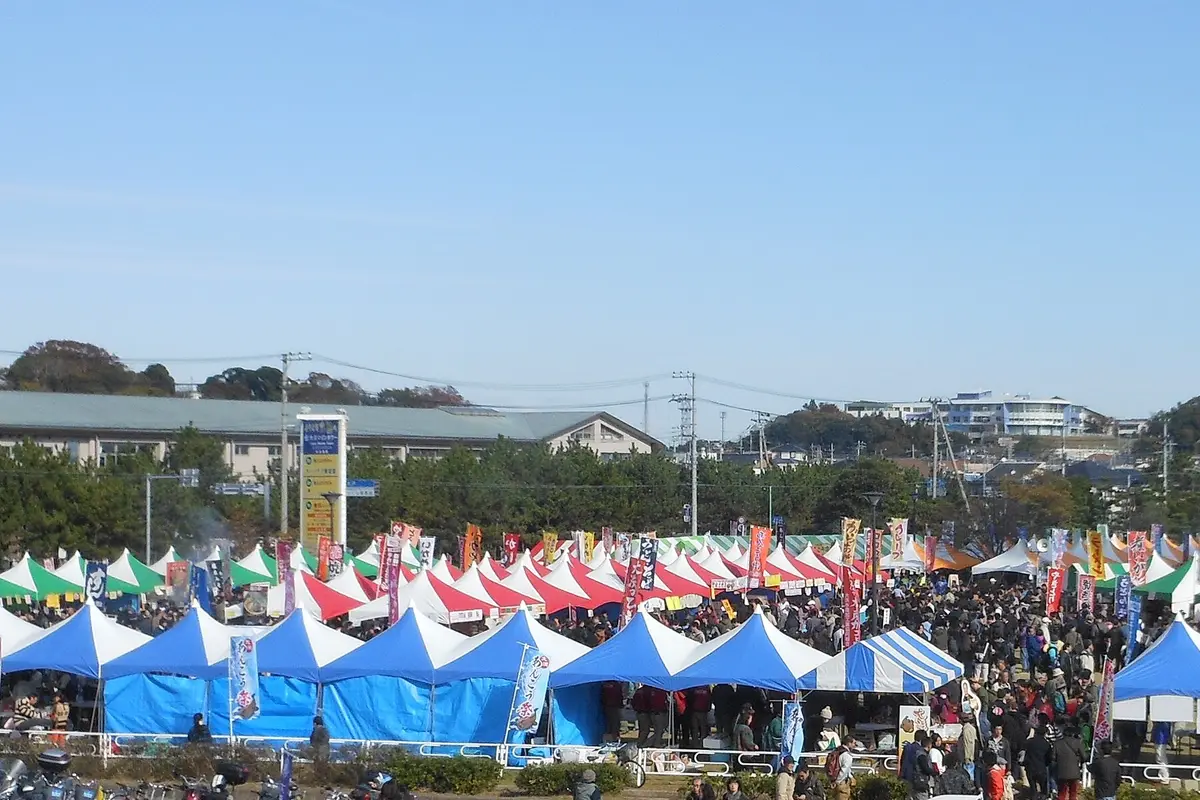
The town's annual Anglerfish Festival tells the story in numbers. With the first Girls und Panzer tie-in, attendance roughly doubled to around 65,000 in 2012, hit a record 100,000 in 2013, and reached about 135,000 by 2018. Tellingly, the town has said it deliberately doesn't calculate a headline "economic impact" figure. The point was never a number on a spreadsheet.
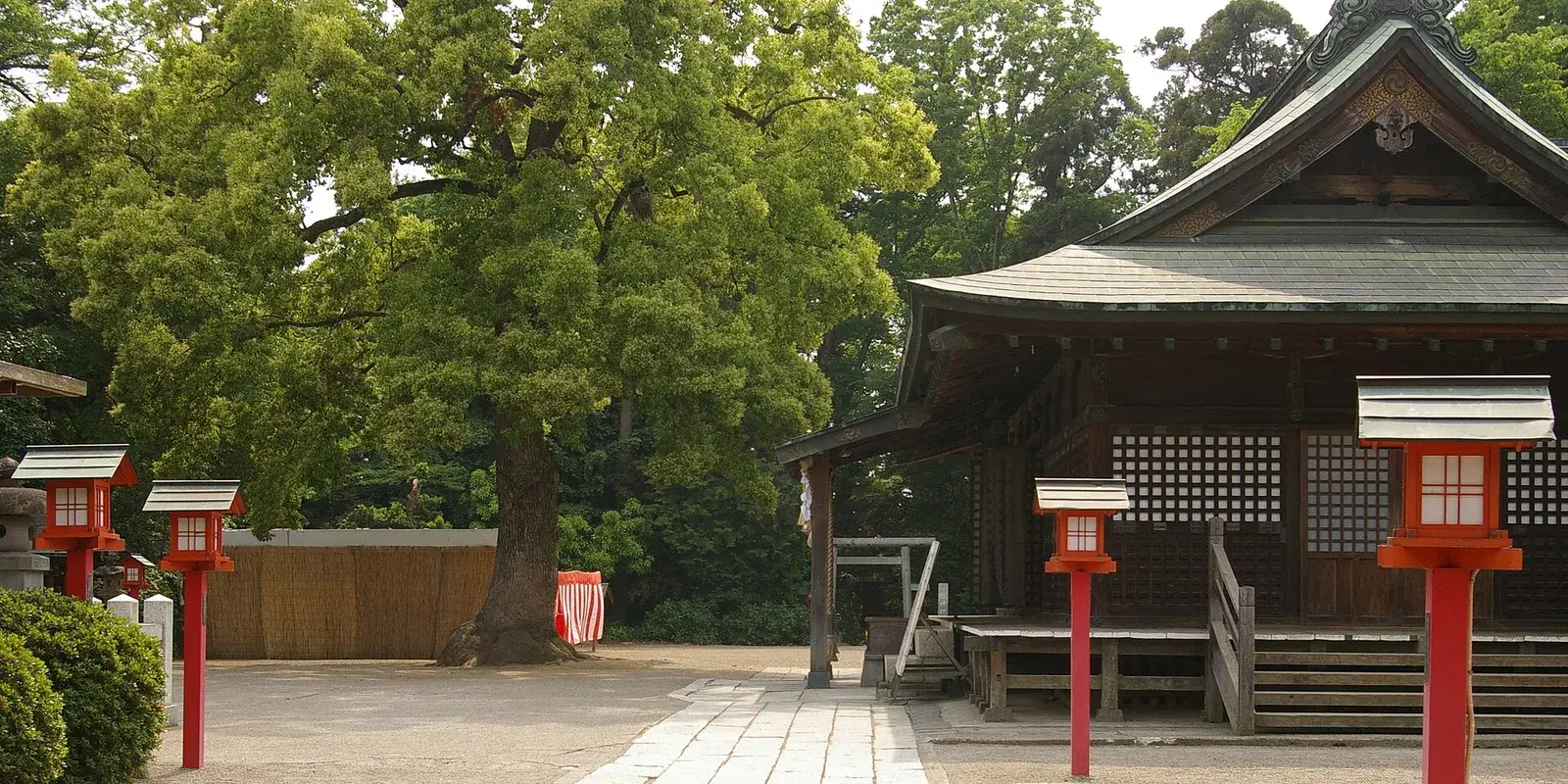
Washinomiya, north of Tokyo, shows the same pattern even more dramatically. Before Lucky Star, the local shrine drew about 90,000 visitors over the three days of New Year. After the anime, that figure leapt to 300,000 the next year and peaked around 470,000. In 2008, the town went so far as to issue the anime's characters official "special resident certificates." The local chamber of commerce didn't fight the phenomenon; it organized around it.
What made these places work, when other towns tried the same thing and failed, comes down to a few human things rather than marketing budgets. An Oarai resident who watched it happen described the turning point:
きっかけはガルパンだったかもしれませんが、みなさん何度か通ううちにアニメのファンからまちのファンになっていきました The trigger may have been the anime, but as people kept coming back, they turned from fans of the anime into fans of the town. (Oarai resident)
A town official put the secret bluntly, and it had nothing to do with the anime:
商店街の強みってコミュニケーション力だと思うんです I think a shopping street's real strength is its power to connect with people. (Oarai town official)
And crucially, the welcome was conditional, earned by how fans behaved. The same barber who described shopkeepers coming around explained why:
『ガルパン』関係のイベントは終了後もゴミがまったく落ちていないんですよ。そのようにマナーの良いお客さんだからこそ我々も快く受け入れることができ、現在のような良い関係へと繋がった After the anime's events, there's not a single piece of litter left behind. It's because the guests have such good manners that we could welcome them gladly — and that's what grew into the good relationship we have now. (Oarai barber)
💡 What keeps fans coming is reciprocity
A famous anime can put a town on the map. But what keeps people coming, and what turns a town's wariness into warmth, is a loop: fans behave like grateful guests, residents respond with genuine hospitality, and the fans come back as something closer to family. The anime opens the door. Manners and reciprocity are what walk through it.
The Line: It Comes Down to Behavior
If the welcome is so warm, where do the overtourism headlines come from? This is the most important thing to understand before you go, and the data is remarkably clear about it.
We collected voices about pilgrimage friction specifically. Here's what those residents and locals were actually objecting to:
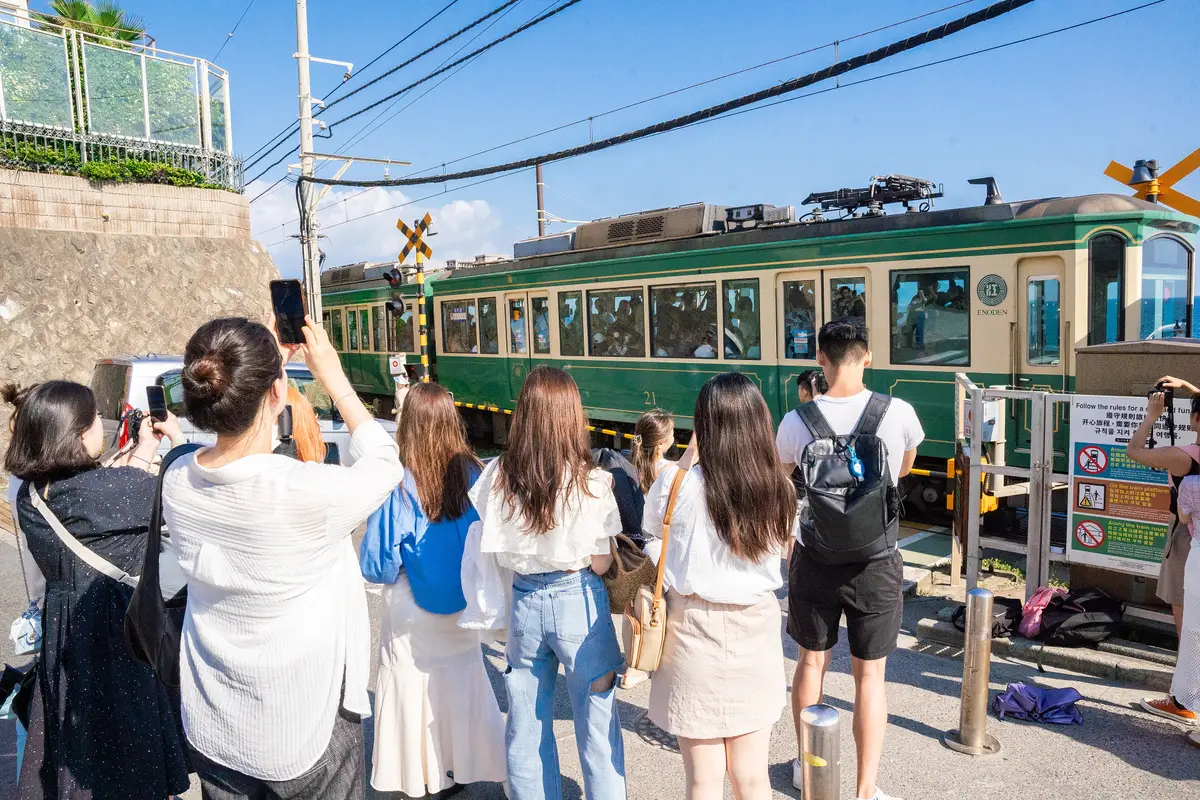
The most famous friction point is the Kamakura-Kōkō-Mae railway crossing, the seaside level crossing made iconic by Slam Dunk. The city has stationed guards there and asked visitors to mind their manners; during one peak period, the number of guards rose from two to seven. But listen to what a local actually objects to:
観光客が線路内に侵入したり、道路のど真ん中で撮影したりしていて危ないと思ったことが何度もあります。単純に、交通の妨げになるのは生活するうえで迷惑なのですが I've often felt it was dangerous — tourists stepping inside the tracks, photographing in the dead center of the road. It's simply that blocking traffic makes daily life difficult. (a Kamakura resident)
The complaint isn't "fans came." It's "people stood in the road." That distinction runs through almost every friction story we found. A resident of Shimokitazawa, a Tokyo neighborhood featured in Bocchi the Rock!, drew the line precisely:
『来ないでくれ』とは言いませんが、住宅地なのに観光地に遊びに行くような感覚はやめてほしいです I won't say "don't come." But this is a residential area — please stop treating it like a tourist attraction you've come to play in. (a Shimokitazawa resident)
That single sentence may be the most useful thing in this entire article. I won't say don't come: the welcome is real. But don't treat my home like a theme park: that's the whole ask. Even people on anonymous forums, with no stake in any town's tourism, kept arriving at the same conclusion:
聖地巡礼かどうかは全く問題ではなく、その人の倫理観、常識に問題があるのだと思います Whether it's an anime pilgrimage or not is completely beside the point — the problem is one person's ethics and common sense.
The sharpest version of the line appears where a "location" is actually someone's house. In Chichibu, the model for a shrine gate in one film turned out to sit on private family land. The homeowner's request was almost gentle:
ただ、家には入らないでってだけなんです It's just — please don't come into my home. That's all. (a homeowner in Chichibu)
And the director of In This Corner of the World asked fans to stay out of one narrow residential district with a line that captures the entire principle:
現地にはコンビニも商店もなく借りられるトイレもありません。そこは観光地ではないのです There are no convenience stores, no shops, no toilets you can borrow. It is not a tourist destination. (the film's director)
💡 Almost nobody says "don't come"
This is the finding that should change how you travel. Across the friction voices we collected, almost no one objected to fans visiting. The objection was to a handful of behaviors, like standing on the tracks, walking onto private land, going at night, or leaving trash, that treat a living place as scenery. Avoid those, and you're simply a guest.
More Than Money: When Fans Become Locals
The deepest sign that these relationships are real is what happens over time. In the towns that got it right, fans stopped being tourists and became something else entirely.
In Oarai, locals have a nickname for the visitors. A fan recalled:
数年前大洗に行った時、地元のおばあちゃんに『ガルパンさんですか?』って聞かれた A few years ago in Oarai, a local grandmother asked me, "Are you one of the Garupan folks?"
That word, Garupan-san, roughly "Mr. and Ms. Girls-und-Panzer," is its own small monument. The town gave its visitors an affectionate name. A town official described the shift in status:
もはやガルパンファンの方々は、観光客ではあるんでしょうけど、観光客ではないんでしょうね。大洗にすごく愛着をもっていただけていると思います At this point the fans are technically tourists, I suppose — but they're not really tourists anymore. They've come to feel real affection for Oarai. (Oarai town official)
The bonds outlast the anime's popularity. In Washinomiya, a sweets-shop owner has watched a full chapter of his customers' lives unfold:
10年前には高校生や大学生だったファンの方から、今では『結婚した』とか『子供ができた』といった報告も受けるようになりました。それでも皆さん来てくださいます Fans who were high-schoolers or university students ten years ago now tell me they've gotten married, or had a child. And still they keep coming. (Washinomiya sweets-shop owner)
There's a generational story folded into this too. Many of the shopkeepers who now adore the fans started out completely baffled. The Washinomiya merchants admitted as much, and chose curiosity over rejection:
正直、このアニメについて、当初自分たちには理解できない部分もあった。…まずはちゃんと話をしてみるべきではないか Honestly, at first there were parts of this anime we just couldn't understand. [But] shouldn't we at least sit down and actually talk with them first? (Washinomiya merchants' association)
That choice, to talk first and judge later, is how an aging shopping street full of people who'd never seen the show ended up trading souvenirs and inside jokes with twenty-somethings from across the country. As one Numazu shopkeeper marveled, the streets that had been quietly graying suddenly filled with young people in their twenties and thirties, and the town "brightened up."
💡 The real product was never the merchandise
A Washinomiya merchant said the goal was never short-term profit. It was for the fans to be happy, trusting that the economics would follow. That's the quiet logic of these towns. They didn't sell to fans. They befriended them. And friendship, it turns out, brings people back for ten years.
How Japan Works: The System Behind the Welcome
Warmth like this doesn't happen entirely by accident. Over the past decade Japan has quietly built both an official framework and a civic playbook around anime pilgrimage, and understanding them explains why the phenomenon so rarely turns sour.
The formal layer is the Anime Tourism Association, a nonprofit launched in 2016 at the initiative of publisher KADOKAWA. Each year it runs a global fan vote and publishes a rolling list of roughly eighty-eight destinations, the "Anime Pilgrimage 88." But the list isn't a raw popularity ranking. Before a place is confirmed, the association coordinates with the work's rights holders and the local municipality, so that every designated site is one where both the studio and the town have agreed to welcome fans. That permission-based structure is the quiet reason pilgrimage in Japan tends to be cooperative rather than contested: the towns on the map chose to be there. You can browse the official list and its selection criteria on the association's own site.
Underneath the official framework is something more human, and it has a name. Rural Japan, facing decades of decline and depopulation, has come to prize what regional planners call kankei jinkō, or "relationship population": people who form a lasting bond with a place without ever living there. Anime fans turned out to be relationship population in its purest form; some Oarai regulars grew so attached that around a hundred of them eventually moved to the town for good. And the model spreads by imitation: once Washinomiya showed what was possible, later towns studied it on purpose. A Chichibu organizer described the aim as building fans a place they could come back to, rather than simply drawing a crowd. The 88 list is the official map; kankei jinkō is the reason the towns keep saying okaeri.
What This Means for Your Visit
If you're planning a pilgrimage of your own, to an anime town, a film location, or a spot from a music video, the takeaway is freeing: you are almost certainly welcome. The towns that built their identity around a story want you there. Your visit is a small act of keeping a place alive.
The whole etiquette fits in one idea: treat it as a town, not a set.
- Buy something, say hello. The magic of these places is the conversation. A purchase and a greeting at a local shop is the entire ritual: it's what turns you from a photographer into a guest.
- Mind the shared spaces. At spots like the Kamakura crossing, stay out of the road and off the tracks, and don't block traffic or doorways for a photo. For the full picture on respectful photography, see our guide to photo etiquette at tourist spots; and on filming people, what being filmed actually feels like in Japan.
- Never step onto private land. If a "location" looks like someone's house, garden, or workplace, it is. Photograph from the public road, and never enter.
- Read the room on groups, noise, and timing. A quiet residential lane at 7 a.m. is not the place for an excited group photo session. Smaller groups, lower voices, daytime hours.
- Spread out. Anime tourism, like all of Japan's travel, is really a distribution challenge. The real fix is fans who spread out, treating the lesser-known towns as warmly as the famous crossings. Towns like Kamakura reward the visitor who comes early and lingers thoughtfully.
- Not every pilgrimage is to a quiet town. For some fans the sacred ground is the subculture itself: the figures, games, and back-alley floors of Tokyo's Akihabara, a district Japan's own national press calls a pilgrimage site. If that's the pull you feel, start with our honest take on whether Akihabara is worth it and the Akihabara guide.
Do these, and you're not braving a town that resents you. You're walking into one that, quite possibly, will learn your face.
Have You Made a Pilgrimage?
Have you visited the real-world setting of an anime, film, or song in Japan, and met the people who live there? We'd love to hear how it went.
Sources
Facts & Figures (Tier 1-2)
- Oarai & the Anglerfish Festival (Girls und Panzer)
- National Association of Towns and Villages (全国町村会), Oarai case essay, festival attendance roughly doubled to ~65,000 (2012), ~100,000 (2013–14); town states it deliberately did not calculate an economic-impact figure: zck.or.jp
- University of Tsukuba, regional research annual (地域研究年報 38, 2016), recovery context after the 2011 disaster and reputational damage: geoenv.tsukuba.ac.jp (PDF)
- Kyoto University DPRI disaster-research paper, chamber-of-commerce role, fan volunteering, and the conditions for success: dpri.kyoto-u.ac.jp (PDF)
- Festival attendance ~135,000 (2018), organizer-reported: Famitsu
- Washinomiya Shrine (Lucky Star)
- MANTANWEB (Mainichi group), New Year three-day visitors: 90,000 (2007, pre-anime) → 300,000 (2008) → ~470,000 (2011–12 peak): mantan-web.jp
- Dengeki Online, special resident certificates issued to the anime's characters (April 2008): dengekionline.com
- National Association of Towns and Villages (全国町村会), Washinomiya merchants' association approach: zck.or.jp
- Kamakura-Kōkō-Mae crossing (Slam Dunk)
- Tokyo Shimbun, city stations guards and asks for manner adherence: tokyo-np.co.jp
- Kanagawa Shimbun (Kanaloco), guards increased from two to seven during a peak period; tourists asked not to photograph in the road: kanaloco.jp
- Scale of anime tourism
- KADOKAWA Group, Anime Tourism Association founded 2016; annual "anime pilgrimage sites" fan vote: group.kadokawa.co.jp
- Anime Tourism Association (official site): the "Anime Pilgrimage 88" list and its published selection criteria; sites are confirmed in coordination with rights holders and municipalities: animetourism88.com
- ASCII.jp, 2026 vote: ~85,000 votes from 110 countries/regions: ascii.jp
- Trip.com Group press release (May 2026): +195% YoY anime/comic travel searches across Asia; +697% YoY AnimeJapan 2026 international ticket sales (corporate figures, attributed to Trip.com): prnewswire.com
- Japan Tourism Agency (観光庁), 2024 Inbound Consumption Survey: 8.1% of inbound visitors visited a movie/anime location this trip; 11.8% want to next time: mlit.go.jp (PDF)
News Media & On-the-Record Interviews
- Oarai shopkeepers and residents (Bandai Namco official V-STORAGE interviews): tofu-shop owner · barber · market representative
- Oarai residents and officials, LIFULL HOME'S PRESS: revival cycle · town affairs · and SMOUT Lab: relationship-population feature
- Numazu shopkeeper (Realsound): Love Live! Sunshine!! welcome
- Washinomiya sweets-shop owner (DANRO): ten years of fans; merchants' association (Newswitch / Nikkan Kogyo): newswitch.jp
- Numazu merchants' academic interviews (Akita University report, PDF): akita-u.ac.jp
- Residents on friction at Slam Dunk, Bocchi the Rock! and Love Live! locations (MoneyPost): moneypost.jp
- Campground manager near a Yuru Camp△ location (J-CAST): j-cast.com
- Your Name. production committee on resident complaints (Cinema Today): cinematoday.jp
Online Voices
- Public Japanese Q&A sites, forums, and social posts, offering first-hand opinions on whether locals welcome anime pilgrims, where the line between welcome and nuisance falls, private-property locations, and behavior at residential pilgrimage sites.
Note on Quotations
Quotes from online platforms have been lightly edited for readability (fixing typos, formatting for clarity). The meaning and intent of each comment remain unchanged. Original sources are linked above.
This article is available in languages covering 95%+ of visitors to Japan (based on JNTO 2025 data). Need another language? Let us know through Voice Box.
WMJS is written in Japan, in English, with AI help. We check every page, but English is not our first language. If a sentence reads oddly, tell us. One sentence is enough.
Thank you. A person reads every note.
How well do you know Japan?
Based on 51,218+ real Japanese voices
Want to know more? Ask Japanese people
Have a follow-up question about this topic? We'll ask real Japanese people.
Voice Box →