
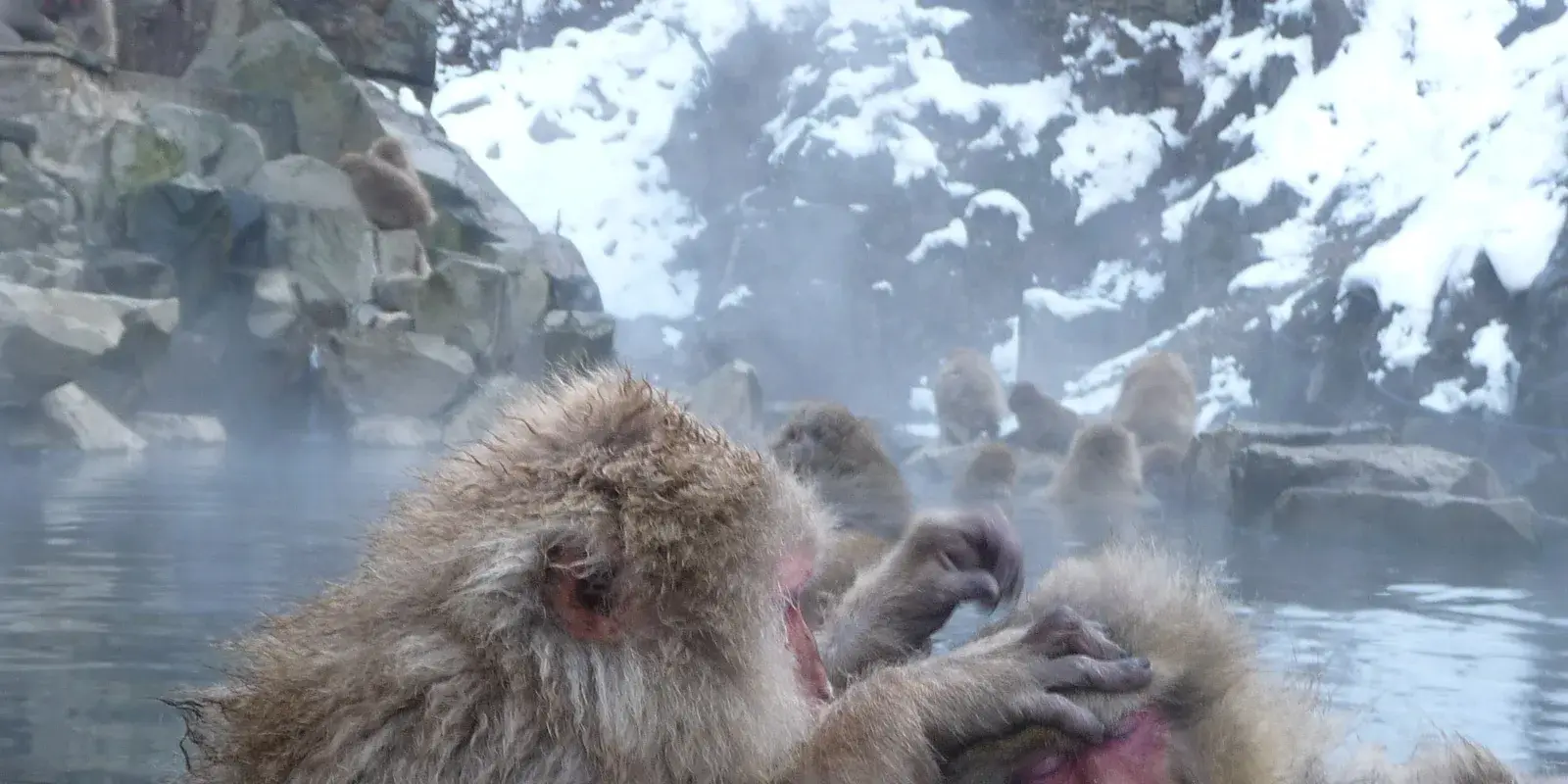
Are the Jigokudani Snow Monkeys Worth It? The Real Question Is When, Not Whether
You have seen the photograph: a wild monkey up to its shoulders in a steaming pool, snow on its head, eyes closed in what looks like pure bliss. Then you start reading, and the internet splits in two. One traveler calls it a highlight of their whole trip; the next says they trekked for hours and barely saw a monkey in the water at all. So which is it: magic, or a long way to go for not much?
Here is the short answer, and everything below explains exactly why it holds: yes, it's worth it. But almost everything people call a let-down comes down to when they went, not whether it was worth going. The monkeys bathe to survive the cold rather than on cue. So "will they be in the hot spring?" is really one question: "is it cold enough?"
Is it worth it? (in visitors' own words)
We gathered the voices of international travelers who have actually made the trip to Jigokudani and read them with one question in mind: was it worth it? Weighted by how strongly each opinion resonated with other readers, here is how they fell:
Look at the middle bar. It's the biggest one on this page, and it's the whole story: for most visitors the answer isn't a clean yes or no. It's "it depends." And it depends on remarkably few things. "It's only worth it if there is snow on the ground," one wrote; "it's not really a place you'd spend hours and hours at." Another, on doing it as a long day trip from far away: "It is worth it, if you make a weekend of it: stay in the nearby town, Shibu Onsen... If you have to travel 4 hours and take all manner of bus and train just to look at the monkeys and turn back around, [I'm] not sure if it's worth it."
The people who loved it tend to have gone in deep winter and built a little trip around it. "I waited 12 years before finally going," one long-term resident wrote, "every year being 'too busy' or thinking 'it's too far.' Honestly, it's one of the greatest things I've done in my many years in Japan." Another: "The town is beautiful, the hike to the park is lovely... Nagano was one of the most memorable places we visited." And the red bar is rarely about the monkeys themselves. It's about the trip math. "Four hours each way just to see them seems like a lot," said one; another suggested pairing it with a ski trip, since the park sits near the slopes. The disappointment, almost always, is a detour that didn't earn its day, or a season that was never going to deliver the photo.
How the people who keep going back feel
Japanese visitors write their own reviews of this same valley, and that perspective rarely makes it into guides written for foreign travelers. They go in every season, year after year, and the picture they paint is warmer, and far more matter-of-fact, about exactly what makes or breaks a visit.
Notice that the green bar is much taller (most go home delighted), and yet the reds on both gauges point at the exact same thing. "I'd been wanting to come for ages, and finally made it," one wrote, "only to be met with the sign: 'no monkeys today.' They're wild animals, so it can't be helped", and, tellingly, "being told before we'd done the walk was kind." Another, in May: "I came hoping to see the famous bathing scene, but there was none: a shame." And another, plainly: "I expected them soaking in the bath, but not one got in that day. I asked, and apparently they don't go in unless it's cold. There were lots of monkeys, which made it more of a pity." The locals aren't more disappointed than the foreign visitors. They're more informed, and they tell you precisely why a bad day goes bad.
They are also the most honest about the part the brochures skip. "It's famous for monkeys in the bath," one wrote, "but once it warms up, even these monkeys won't get into the hot water. The tourists still want the bathing shot, though, so food gets put in to coax them in. Mixed feelings." That unease is the same one a winter visitor voiced from the other direction: "Going in winter, early in the day, it didn't strike me as crossing any lines: it seemed chill... it's only worth it in winter." Put both together and the lesson is gentle, not grim: in deep winter the monkeys bathe entirely on their own, to keep warm, and that, unstaged, is the thing you actually came to see.
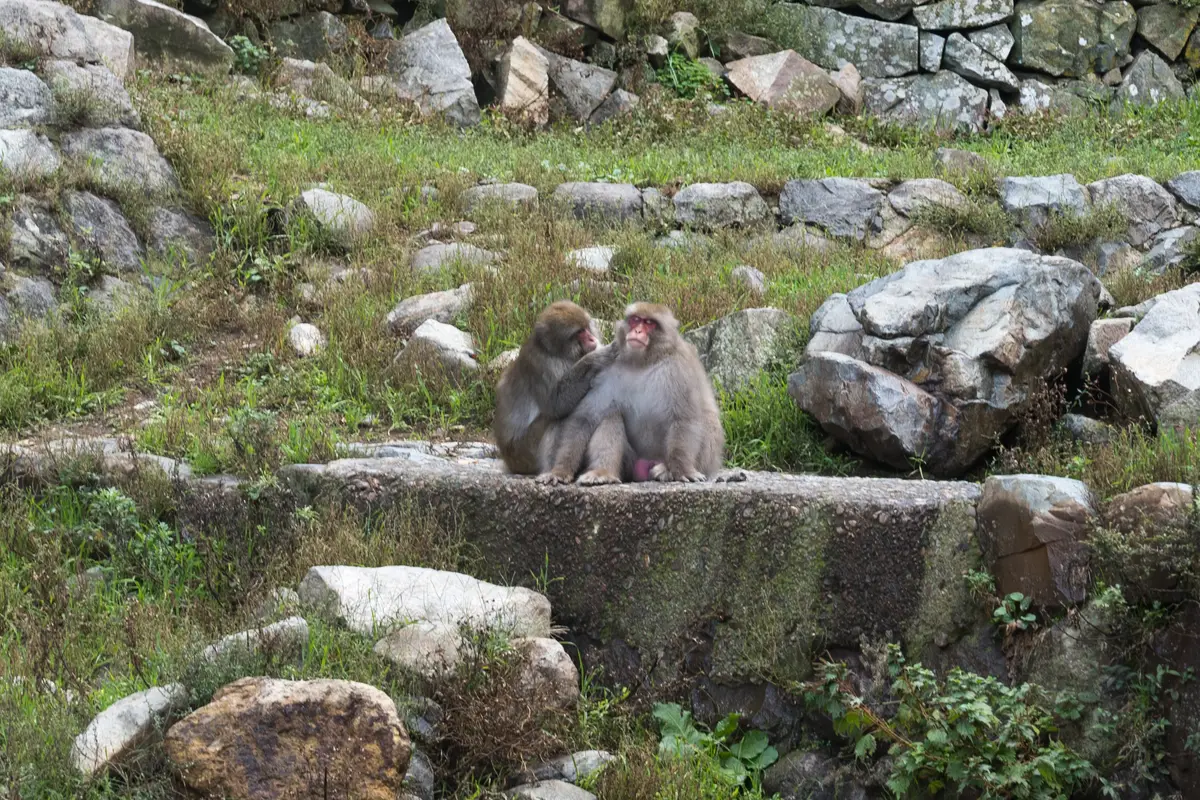
What we wish you'd noticed
The bath is survival rather than a show. The Japanese macaque is the northernmost monkey on earth. No wild primate but us lives in colder country. At Jigokudani, 850 metres up, the snow can lie over a metre deep and nights fall below −10°C, and this troop long ago learned to borrow a hot spring's heat to get through it. Researchers who studied these exact monkeys found that a soak measurably lowers their winter stress. So they bathe in the coldest months, are reluctant to in the warmth, and some never bathe at all. Read that twice before you book: the famous scene is a cold-weather scene. Come on a mild day and you may see the whole troop sitting beside a bath nobody wants to get into.
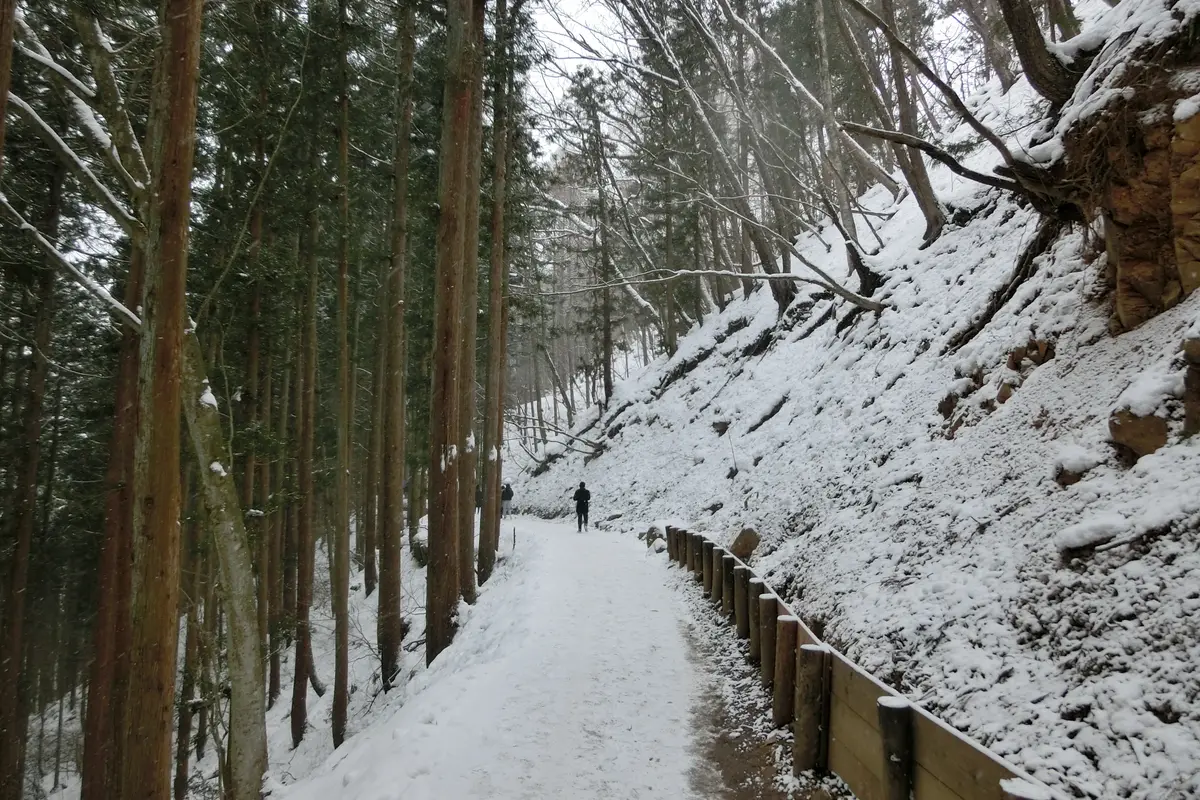
It is a real walk to a wild animal that keeps no schedule. From the bus stop and car park it's about two kilometres (roughly a 30–40 minute walk) on an unpaved forest trail with steps, snow-packed and icy in winter. This surprises people who pictured a car park beside a zoo. "I walked far more than I expected," one visitor wrote; "the path was frozen, and carrying a child it took nearly twice as long, a genuinely hard slog. But once we arrived, seeing so many monkeys up close, it was completely worth the effort." And because the monkeys are wild, they don't appear on demand: some days the valley is full, some days nearly empty. This isn't bad luck. It's the deal. The good news is you don't have to gamble blind: the park feeds the troop itself (visitors feed nothing), which is what keeps them coming down to be watched, and it posts the day's monkey activity on its official social media, so you can check before you set out.
So the worth-it question has a checklist, not a verdict. Go in deep winter, on a genuinely cold day, having glanced at the day's activity, expecting a 30–40 minute walk and a wild animal rather than a guaranteed photo, and you are almost certainly in the green. Miss those, and you've signed up for a long trek to watch a fed troop sit in the cold. The monkeys aren't overrated. The timing just does almost all the work.
Getting the Jigokudani Timing Right
Everything above resolves into a handful of moves that turn a gamble into a highlight.
- Go in the cold months: December through February is surest. That is when the monkeys bathe for warmth, and when the snow-and-steam photo is actually possible. If your trip falls in a warmer month you can still visit (the troop is around much of the year), but go for the place and the walk instead of the bathing shot. For how the seasons trade off across a wider trip, see the best time to visit Japan.
- Pick a cold, clear morning, and check the day's activity first. A mild day empties the baths; the troop is most reliably down in the valley from morning into early afternoon. The park posts the day's monkey activity online. A thirty-second look can save you a long trip on a quiet day. As one regular put it, the count can swing from a hundred monkeys one visit to barely ten the next.
- Dress for a real winter walk. Waterproof, well-gripping boots, and the simple strap-on crampons sold near the trailhead, make the icy path easy instead of frightening. People in ordinary city shoes end up shuffling; people who came prepared barely notice it.
- Make it a stay instead of a sprint. The travelers who found it "worth it" almost all built a night around it: the nearby onsen towns of Shibu, Yudanaka, and Kanbayashi turn a four-hour-each-way day trip into a gentle weekend. If it's a long detour from your route, that one decision is what tips it into the green.
- Come for a wild animal's ordinary day. This isn't a performance. Feed nothing, keep snacks and bags out of sight, don't crowd or stare, and let the monkeys ignore you, which is exactly what they'll do. The best photo is the one where they've forgotten you're there.
Do these, and the day tends to go the way the delighted reviewers describe rather than the way the let-down ones do. "I'd been wanting to come for years," one wrote after finally making it in winter, "and it was one of the greatest things I've done." The monkeys were never the variable. You are: the season you pick, the morning you choose, the shoes on your feet.
So: Are the Snow Monkeys Worth It? If you go in summer expecting the postcard, you will likely come home with the red bar. But come on a cold winter morning, with proper boots and a night booked nearby, to a steaming valley where wild monkeys soak shoulder-deep in the snow because it is the only way to stay warm, and you will come home with the highlight. Match the season, and Jigokudani is exactly the photograph, only better, because nobody arranged it for you.
Still deciding which famous places actually earn a slot on a short trip? Start with what actually matters in Japan, and for the full winter day in the valley, the walk in, the rule of distance, and how to time your visit, the Jigokudani snow monkeys audio guide is just below.
Sources
- Jigokudani Yaen-koen Official: The Monkeys and the Hot Spring: the macaques bathe for warmth in the coldest months, are reluctant to in summer, and not all of them bathe.
- Jigokudani Yaen-koen Official: The Valley Through the Year: elevation 850 m, winter snow over a metre and lows below −10°C, why the deep cold drives the troop to the warm water.
- Jigokudani Yaen-koen Official: First-Time Visitor's Guide: the monkeys are wild and not present every day; the day's activity is posted on the park's official social media; winter footwear and crampons.
- Jigokudani Yaen-koen Official: Access & the Yumichi Trail: the roughly 2 km / 30–40 minute walk from Kanbayashi Onsen to the park entrance.
- Jigokudani Yaen-koen Official: Visitor Rules / Caution: visitors feed nothing; do not touch, crowd, or stare; consider the encounter from the monkey's side.
- Jigokudani Yaen-koen Official: About the Park: the park opened in 1964; the bathing behaviour began at the foot of the valley in the early 1960s; the park feeds the troop to keep them coming down.
- Takeshita, Bercovitch, Kinoshita & Huffman (2018), "Beneficial effect of hot spring bathing on stress levels in Japanese macaques," Primates 59(3) (Kyoto University), a study of this troop finding that bathing lowers winter stress-hormone levels: a thermoregulatory, adaptive behaviour rather than play.
- Government of Japan, Highlighting Japan, "Native Creatures of Japan: Japanese Macaque" (January 2026): the Japanese macaque as the northernmost-living non-human primate.
- Snow Monkey & Nagano: The Jigokudani Wild Snow Monkey Park Guide (Nagano Prefecture official tourism): resident troop of more than 200, access and transfer times, the nearby onsen-town stays at Yudanaka, Shibu, and Kanbayashi.
WMJS is written in Japan, in English, with AI help. We check every page, but English is not our first language. If a sentence reads oddly, tell us. One sentence is enough.
Thank you. A person reads every note.
How well do you know Japan?
Based on 51,218+ real Japanese voices
Want to know more? Ask Japanese people
Have a follow-up question about this topic? We'll ask real Japanese people.
Voice Box →