
Is Fushimi Inari Worth It? What Visitors, and the People Who Pray Here, Actually Say
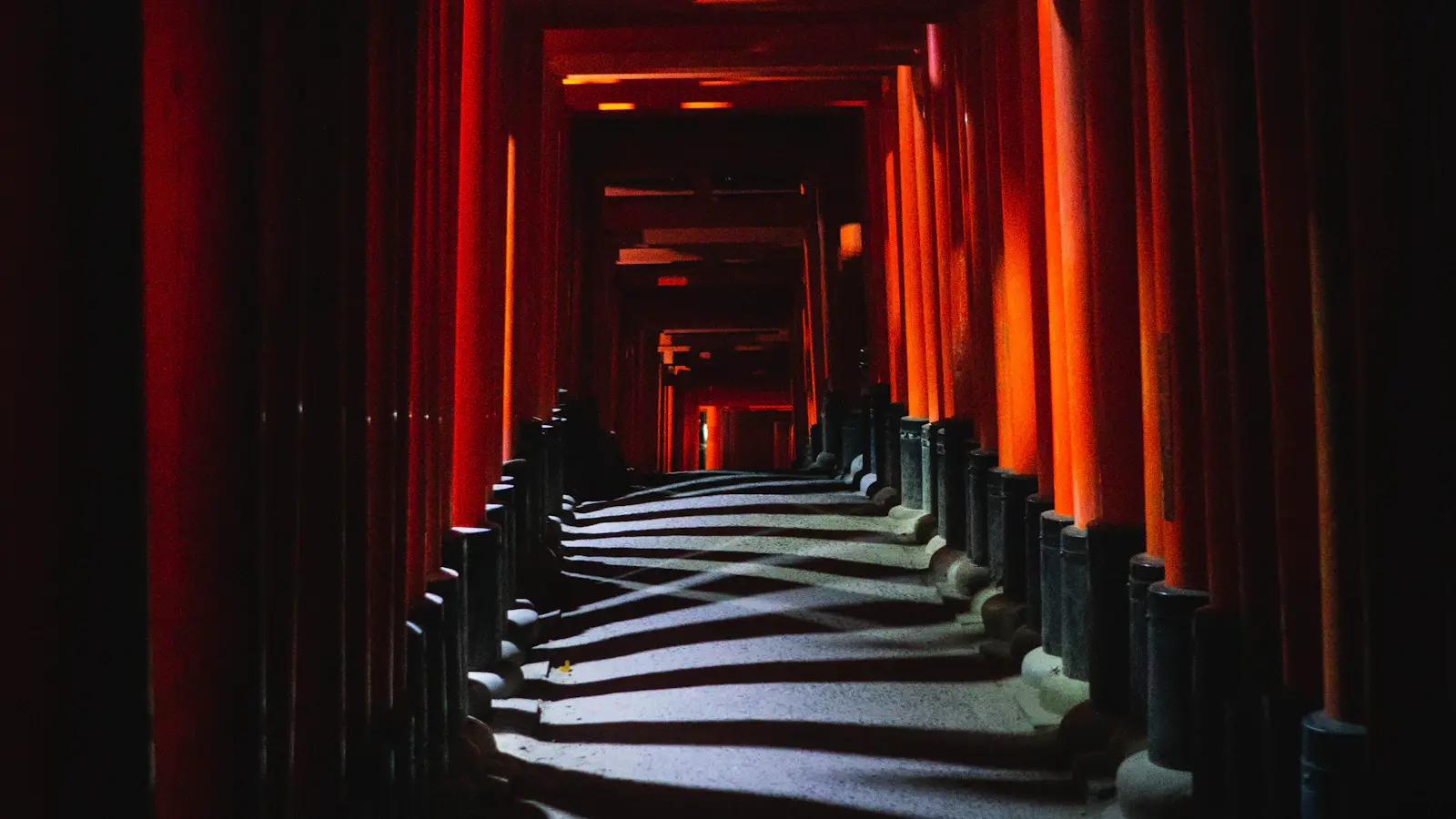
You have seen the photograph: an endless tunnel of vermillion gates, glowing, empty, impossibly serene. Then you arrive, and the first stretch is a slow shuffle of raised phones, and you wonder whether the picture lied to you.
Here is the short version, and everything below simply unpacks it further: yes, it's worth it, but with Fushimi Inari the real question was never whether. It's how. Almost everyone who came away underwhelmed did the same thing: they stopped at the crowded bottom and turned around.
Is it worth it? (in visitors' own words)
We gathered the voices of international travelers who have actually climbed the mountain and asked, in effect, was it worth it? Weighted by how strongly each opinion resonated with other readers, here is how they fell:
Look at that middle bar. It is unusually large, and it is the whole story. Hardly anyone thinks Fushimi Inari isn't worth visiting; the disagreement is almost entirely about method. The travelers who came away glowing and the travelers who shrugged often saw two completely different shrines on the same mountain, and the only difference was the hour and how far they walked.
The single most-upvoted piece of advice is blunt about it: "Besides the common advice of arriving before 8am, definitely arrive before 8 to beat the crowds." And the reward for doing so is real: "The highlight of the whole day for me was the hike up Mt. Inari," one wrote. Another, on the night climb: "One of the most memorable events from my last trip to Japan was climbing Fushimi Inari at night… we were completely alone for the majority of the walk up."
The thin red sliver is mostly people who got the method wrong. "Pretty mid if you just go to the bottom and leave," one put it. The let-down isn't the shrine. It's stopping where everyone else stops.
How the people who pray here feel
This next part goes beyond what most guides show: what Japanese visitors and locals write, in their own reviews, about the same mountain. It is a warmer register in places, and a more honest one about the hard part.
Notice that the red bar here is larger than the visitors' one. That is the most useful thing on this page. For travelers, the worst case is a crowded photo. For the people who have prayed here their whole lives, the harder loss is quieter: a sacred mountain slowly turning into a backdrop. One regular writes, simply, that it is "a place where you really feel overtourism. If you want to walk the approach a bit more leisurely, your only option is to go early in the morning."
But read closely and the complaint is almost never about who is there. It is about a handful of behaviors that crowd the quiet out, and, tellingly, foreign visitors name the very same ones. "People taking every twenty steps to stop and check their phones for likes on the pic they posted at the entrance," one traveler wrote, exasperated. The strain isn't a nationality. It's the narrow path turned into a photo studio, the voices pitched too high for a place of prayer, the standing where others are trying to pass.
And this is the part worth holding onto: the shrine itself asks for exactly the opposite of those behaviors. Its posted request to all visitors (this has been a sacred site since 711) asks people not to block the narrow paths while photographing, not to sit down or raise their voices in ways that trouble other worshippers, and to eat only in the designated rest areas rather than while walking. The honne isn't gatekeeping. It's the same gentle request the shrine makes of everyone, Japanese and foreign alike.
And the warmth is the dominant note. "The Senbon Torii is the best. I get the feeling this is probably the only place like it in all of Japan," one writes. Another, on a twenty-year habit: "As our family's New Year first-visit tradition, I've been coming for some twenty years. It's crowded every year, but that's exactly what makes it feel like the New Year." When the crowd is part of the meaning, it stops being a problem. That is the secret the let-down reviews are missing.
What we wish you'd noticed
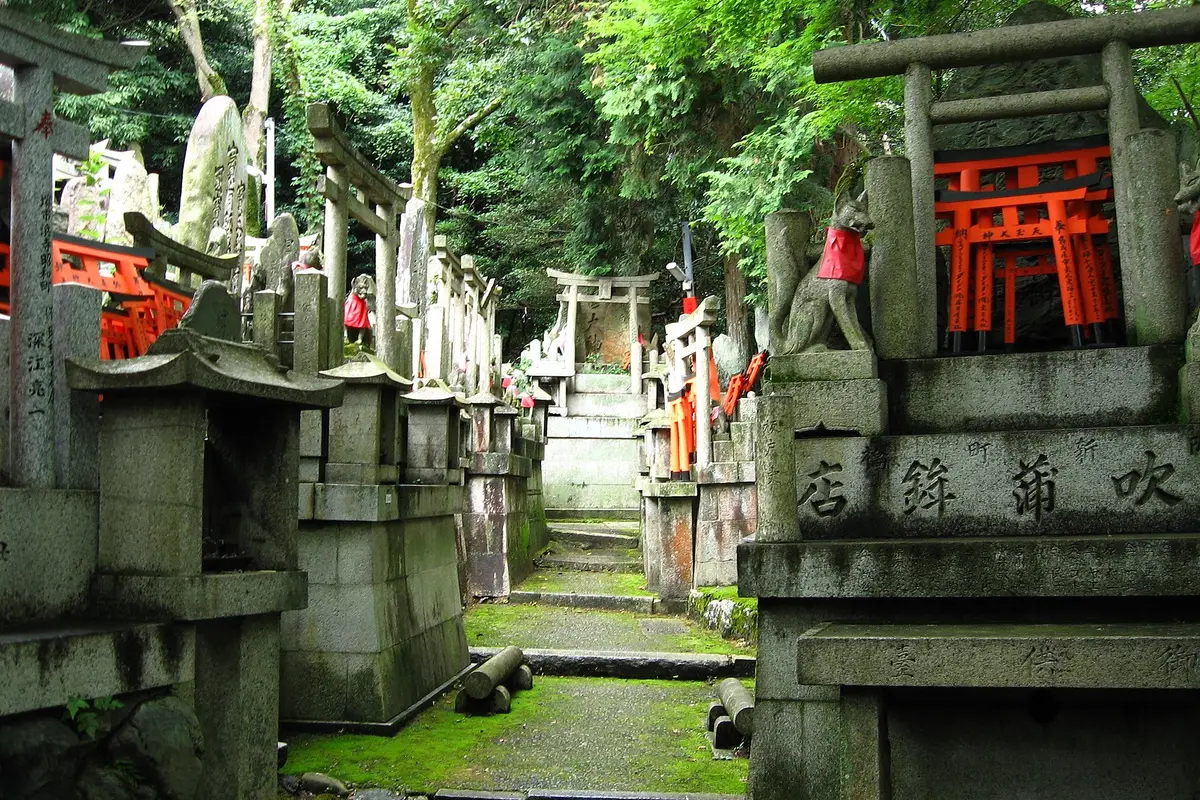
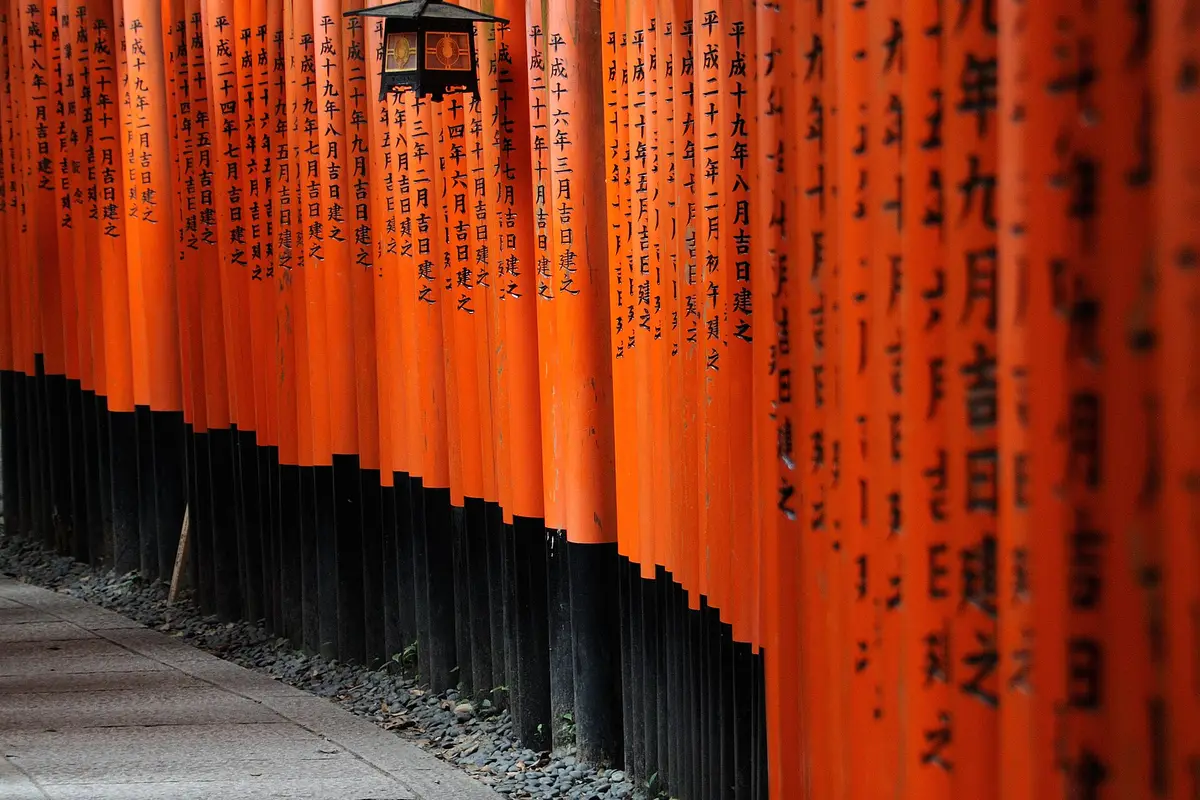
The gates aren't decoration. They're answered prayers. Each of the roughly 10,000 vermillion torii was paid for by someone: a business that survived a hard year, a family that stayed well. Turn one around and read the back: you'll find a name and a date. You are not walking through a photo op. You're walking through 1,300 years of other people's gratitude, and a few new gates go up every week.
It's a mountain rather than a corridor. This surprises people more than anything. "Under the torii it was all uphill stairs and slopes the whole way," one visitor wrote; "partway up it felt like mountain climbing." The full loop up Mt Inari and back is about 4 kilometres with a real climb to the 233-metre summit, and takes most people two to three hours. Wear shoes you can walk in. If you're not sure about the climb, that's fine: you don't have to do all of it.
You do not need the very top. The summit is forested and, as climbers report, has no view; the reward isn't a panorama at the peak. The lovely lookout over Kyoto is at the Yotsutsuji intersection, about thirty to forty-five minutes up. Most people turn back there, and that is a complete, satisfying visit. "There's one point close to the top that gives you a good view of Kyoto, and at that point you can go back because there's not much to see at the actual top," as one regular put it.
The crowds genuinely evaporate as you climb. This is the one fact that resolves almost every let-down. "The area around the first torii gates is very crowded and you have no choice but to go with the flow," a Japanese reviewer writes, "but the higher you climb, the more dramatically the people thin out." A visitor agrees: "Most of the crowds stay near the start. The higher you go, the emptier the path." The famous photo is taken in the least peaceful 200 metres of the entire mountain.
Walking it well: the welcomed way
Everything above resolves into a handful of moves that the mountain, and the people who pray on it, quietly reward.
- Go at dawn, or after dark. The shrine never closes; it is open 24 hours, free, with no admission. Arrive before 8am and the Senbon Torii is nearly your own; come at night and the lantern-lit gates are surreal and almost empty. Kyoto City even publishes a live congestion forecast for Fushimi Inari, so you can pick a calm hour on purpose.
- Keep walking: past where everyone stops. If one thing on this page sticks, make it this: climb past the Senbon Torii crush toward Yotsutsuji. The crowds thin sharply, and that's where the mountain becomes what the photographs promised.
- On the narrow path, step aside to take your photo. This is the single kindest thing you can do, and it's the shrine's own request: don't stop in the middle of a narrow approach to shoot; let the flow of people pass, then take your time at the edge. It's the difference between adding to the crush and easing it.
- Eat at the bottom rather than on the climb. The stalls near the base serve kitsune udon and inari-zushi, fox foods tied to the shrine's messengers. The shrine asks visitors to eat in the designated areas rather than while walking the sacred paths, and the food tastes better sitting down anyway.
- Pitch your voice for a place of prayer. People are making wishes all around you. A lowered voice is all it takes, and it's the thing locals notice most.
- Don't over-plan the summit. Decide up front whether you're doing the full loop or turning back at Yotsutsuji. Both are real visits. The worst outcome is feeling rushed.
Do these, and the day tends to go the way the glowing reviews describe rather than the way the disappointed ones do. Fushimi Inari isn't a place you check off in fifteen minutes at the bottom. It's a mountain that opens up to whoever is willing to walk a little higher and a little quieter.
So, is it worth it? Nine in ten visitors who climbed it say yes without hesitation, and the people who pray here treasure it. The only catch is the one the let-down reviews keep proving: the crowded bottom is not the shrine. Come early, climb past the crowd, lower your voice, and a 1,300-year-old mountain of answered prayers opens up around you, free, at any hour you like.
Still deciding which famous places actually earn a slot on a short trip? We counted sixty of them one at a time. Start with what actually matters in Japan, and for the meaning behind the gates, the fox messengers, and the climb itself, the Fushimi Inari audio guide is just below.
Sources
- Fushimi Inari Taisha: Official Website (English): founding in 711 CE and the 1,300-year history; head shrine of some 30,000 Inari shrines; the five enshrined deities; Mt Inari and the mountain pilgrimage path.
- Fushimi Inari Taisha: Request for All Visitors (伏見稲荷大社からのお願い, 2022): the shrine's official requests: do not obstruct other worshippers by photographing on the narrow approaches; do not sit down or raise your voice in ways that disturb others; eat only in the designated rest areas, not while walking; do not climb on the gates or lanterns; the precinct has been a sacred place of prayer since 711.
- Fushimi Inari Taisha: FAQ (Japanese): the approximately 10,000 torii along the mountain paths and why no exact count exists; the meaning of the vermillion color.
- Kyoto City Tourism: Congestion Forecast: Fushimi-Inari Taisha: the official, time-of-day crowd-comfort forecast for the shrine, supporting early-morning and evening visits.
- JNTO (Japan National Tourism Organization): Fushimi Inari Taisha: visitor overview, the Yotsutsuji viewpoint, the 233-metre Mt Inari summit, and the mountain circuit.
- Kyoto City Official Travel Guide: Fushimi Inari Taisha: regional context, access, and the 24-hour, no-admission grounds.
WMJS is written in Japan, in English, with AI help. We check every page, but English is not our first language. If a sentence reads oddly, tell us. One sentence is enough.
Thank you. A person reads every note.
How well do you know Japan?
Based on 51,218+ real Japanese voices
Want to know more? Ask Japanese people
Have a follow-up question about this topic? We'll ask real Japanese people.
Voice Box →