
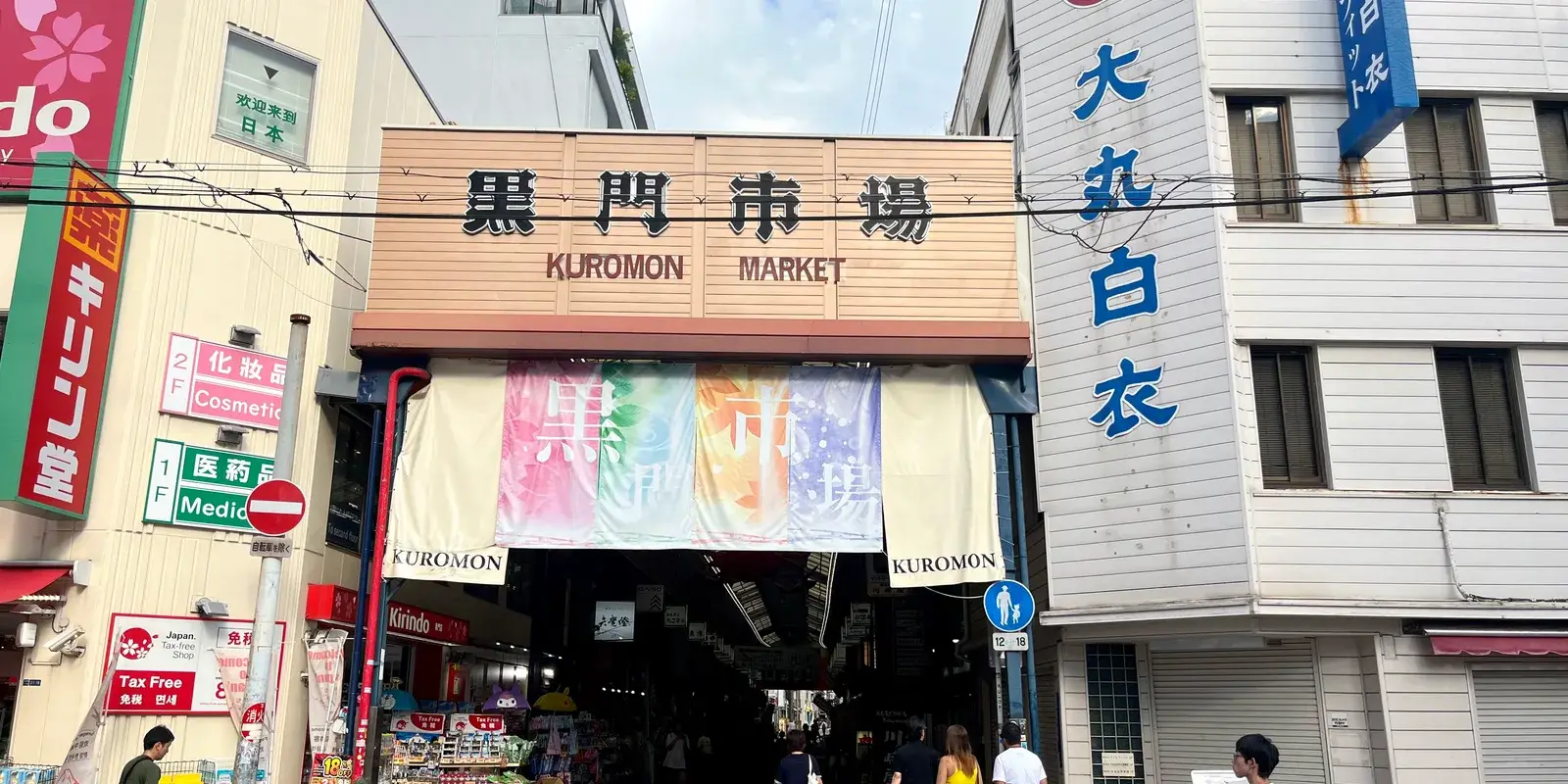
Is Kuromon Market Worth It? International and Japanese Visitors, in Their Own Words
Kuromon Market is a covered shopping street in Nippombashi, Osaka, about 580 meters long, with around 150 shops selling seafood, wagyu beef, fruit and vegetables, and sweets. It began as a market where restaurant buyers and neighbors came to shop. Since the early 2010s it has drawn large numbers of international visitors. About a quarter of the international and Japanese reviewers we read came away disappointed, and the two groups were disappointed for partly different reasons.
We read reviews from two groups. International travelers wrote theirs on TripAdvisor and Reddit, and Japanese visitors, some of them from Osaka, wrote on Jalan and TripAdvisor Japan. Each group's answer to "was it worth it?" has its own gauge.
Is it worth it? (in visitors' own words)
About six in ten came away glad they went. One traveler wrote that Kobe beef here cost half of what the group had paid at restaurants in Kobe itself. Another group came after hearing rave reviews of the sushi, called the tuna and salmon sashimi "among the best we've ever tried, and at great prices too," and wrote that they would "100% go back." A third visitor hadn't been to Tsukiji and found Nishiki not worth it, then wrote of Kuromon, "I could live there."
About a quarter came away disappointed. The costliest story came from one visitor who ate alone at a stall with no menu and no posted prices. "At the end I got charged 48100 yen eating solo, 3 sea urchins 24000 yen!!" the visitor wrote. Two other visitors each describe their own trouble at a stall. One was sold "the smallest skewer of a low grade beef for 2000 yen" when it was supposed to be A5 wagyu, and the vendor refused to swap it. Another "paid 19900yen for 2 uni, 6 scallops, 1 beer and a coke," called it "incredibly scammy," and added that it wasn't even that good. The other ten are more familiar travel complaints, about a market that felt too touristy, pricier than other places, or less interesting than other markets they had seen. One found it too crowded, and another found it quiet, with fewer shops open than on a visit five years before.
What Japanese visitors say about Kuromon
Japanese visitors review Kuromon too, and about ten of these 136 reviewers say they live in Osaka or once did.
Of the 35 voices in the red bar, 19 are about the visit itself and sound much like the international complaints, with prices that felt high, crowds, food that didn't appeal, shutters already down, and one couple who followed a tout's cheap menu into a shop and paid more than double what they had expected. Four wrote during the pandemic years and found the street quiet or nearly empty. The other 12 compare today's market with the Kuromon of earlier years, and nine of them knew that older market themselves. Three of them describe the change in detail.
One reviewer from Osaka City wrote, "I've lived nearby for a long time and used to shop at Kuromon every day, but I will never shop there again. Once it became a tourist spot, local people stopped shopping at Kuromon. It's way too much of a rip-off. Also, there are too many people, it's dangerous."
Another reviewer, a self-described Osakan, used to go often. Once the market grew busy with tourists, this reviewer wrote, prices went up and the staff began to seem curt, perhaps from being so busy, so this reviewer went less and less often. "Until that curt impression from the busy period is gone, I won't feel like going back. The old Kuromon Market was good."
A third reviewer wrote that Kuromon was once loved by local merchants and neighbors as Osaka's kitchen and has turned into a shopping street just for tourists, with prices and goods now aimed at them, "which is somehow very sad." Some shops still work hard to offer locals good things at low prices, the same reviewer added, but judging by what most of the stalls out front sell, fewer and fewer local people come.
There is more than one explanation for the change. One Reddit commenter wrote that two decades ago Kuromon "was not a tourist trap yet," and its businesses thrived on mostly local customers. When shopkeepers died, the commenter went on, their families chose not to keep the shops running and rented out or sold the space, and "the place gradually turned into a tourist trap as a whole." In December 2023, a travel industry source quoted by Shueisha Online described a different cause. "Kuromon Market used to give people a sense of reassurance that prices were a bit high but the goods were good. But due to the impact of inbound tourism, more shops raised their prices to … tourist-spot levels, and regular local customers stopped coming."
In the same article, a man who has run a seafood shop at Kuromon for many years was more hopeful. After the market was called a "rip-off shopping street" online, he said, "The people working here were bothered by that too, and prices overall have come down now. We used to run on inbound-visitor pricing, but now more shops do business at conscientious prices so that local people will buy from them. One shop runs a discount sale every day at 4pm, and some shops give repeat customers one extra item for free." When the same reporters walked the market that December, king crab had dropped to 15,000 to 19,000 yen for four legs, from 30,000 yen in their July report, while some other shops were still charging high prices.
Almost a year later, in November 2024, the market's shopping district cooperative gave a named interview to Money Gendai, a Kodansha news site. About 40 years ago, the cooperative's chairman recalled, "the restaurant workers back then all lived on-site, so the restaurants' helpers would come and buy the staff meals too. It was very lively… It was about half trade buyers and half local people."
After that, the cooperative's officials said, restaurants gradually disappeared, large commercial buildings went up nearby, the live-in system faded and the neighborhood's population shrank, so the street was already declining. After the 2011 Great East Japan Earthquake, the street was nearly empty for about half a year, and the first customers to come back were visitors from abroad. In the officials' account, those visitors are why the market recovered when it could have become a street of closed shops.
Money Gendai reported that land prices near the market have climbed sharply in recent years, and the cooperative's office manager described what that means for the shops. "Each shop has to charge a somewhat high price, or it can't stay in business."
What people enjoy at Kuromon
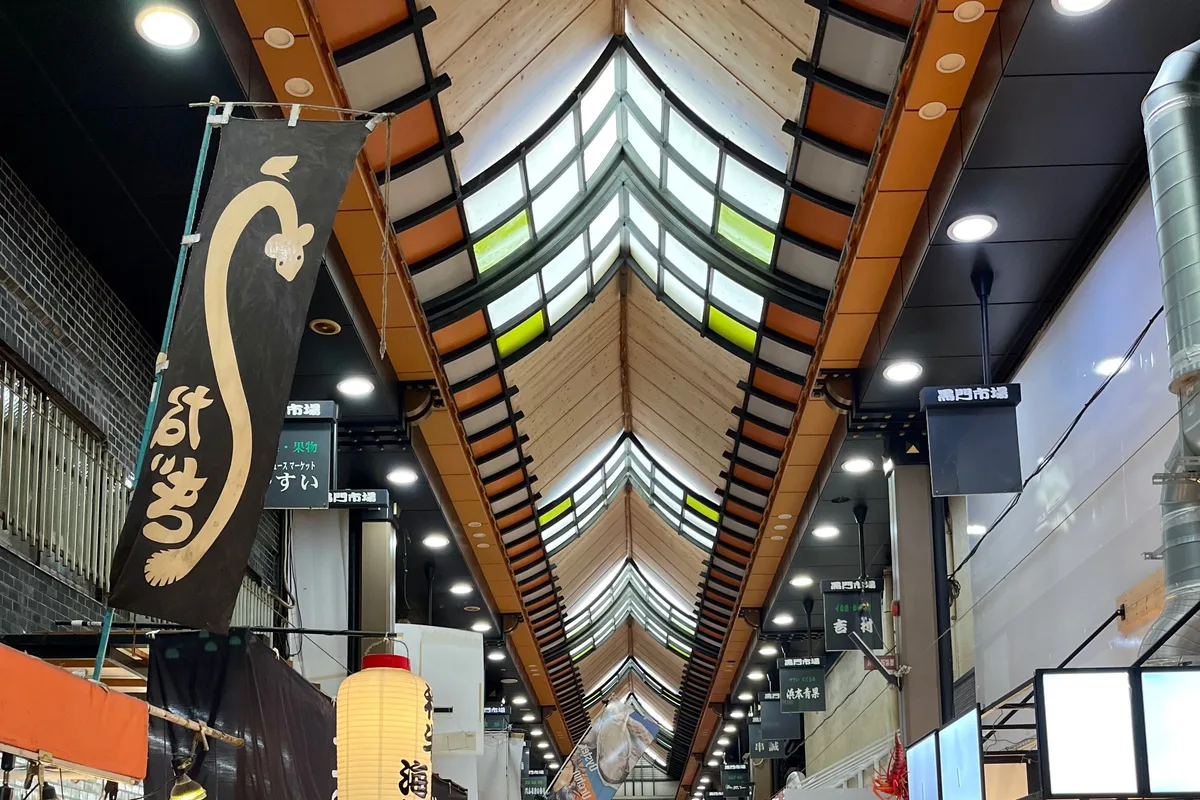
The warm reviews are mostly about the food, which comes up in 26 of the 32 from international visitors and 47 of the 63 from Japanese visitors. One international visitor called the Kobe and wagyu beef "out of this world." Two Japanese reviewers enjoyed simply walking the lane. One listed Kobe beef skewers, fugu, tuna, sushi and fruit among the stalls, and the other found fresh fish and fugu that could be eaten standing up. On the market's own site, conger pike (hamo) is listed as the summer specialty and fugu as the winter one. Another Japanese reviewer came after lunch, found everything looked delicious and cheap, ate along the lane anyway, and singled out sushi marked down to half price or less toward evening.
Two Japanese reviewers also wrote about the everyday shops. One noticed greengrocers, butchers and fishmongers, a sweet shop and a supermarket-style store. The other, who was less taken with the grilled snacks, stepped into a supermarket in the market and bought ingredients that are rarely sold in the Kanto region around Tokyo.
Doing it well, the welcomed way
Six Japanese reviewers found the lane already busy in the morning, and one who came on a public holiday morning found few people around. An international visitor who came around 3pm found it "not overcrowded." Three Japanese reviewers who came in the evening or at night found many shops already closed, and a fourth noted how early they close in the evening. Most of the shop hours listed on the market's official site end between 2:30 and 6pm, so the daytime is when the most stalls are open.
Reviewers differ on haggling. One Japanese reviewer, who has known Kuromon since a part-time job there as a student more than 40 years ago, says vendors will sometimes take a little off depending on their mood, and encourages first-timers to ask. An international visitor felt the displayed prices made haggling unnecessary.
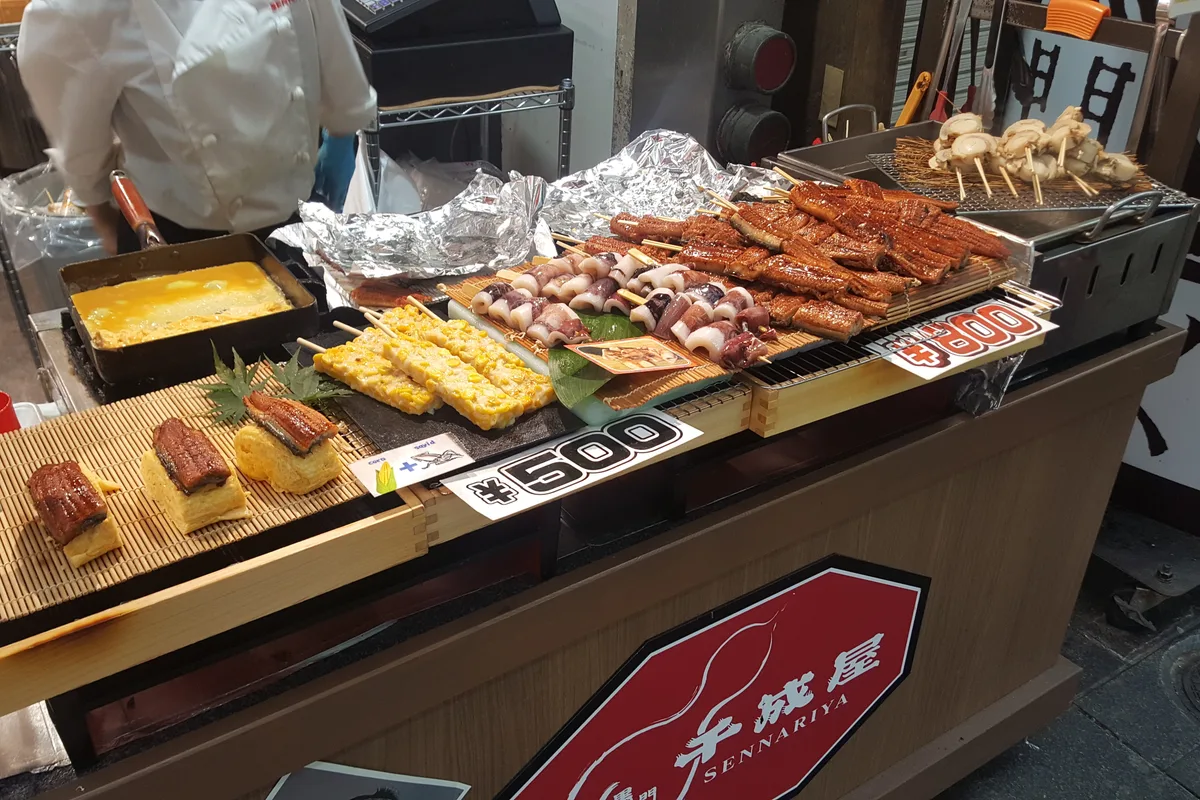
In the 48,100-yen story told earlier, the stall had posted no price before the food was ordered. It helps to look for a price on the sign before you order, especially at seafood counters that sell by the piece. The same visitor who saw no need to haggle found shopping at Kuromon "straightforward and stress-free" because the prices were clearly displayed. The next photo, taken in 2017, has the kind of printed price card to look for.
A simple lens for deciding
Among the international visitors we heard from, about six in ten said Kuromon was worth it, and the most expensive bill on the disappointed side came from a stall with no posted price. Japanese visitors are less warm about the same street. Just under half of them enjoyed it, most of their complaints are about prices and crowds, and 12 of the 35 in the red bar compare today's market with the Kuromon of earlier years, nine of them from their own memory. Three Japanese reviewers saw locals shopping there, while eight others describe few local shoppers or say they themselves stopped going. Four reviewers, Japanese and international, say in one way or another that it is best to arrive hungry.
Still deciding which famous places actually earn a slot on a short trip? Start with what actually matters in Japan. If you are also weighing Kyoto's best-known food market, we gathered the same two kinds of voices in is Nishiki Market worth it.
Sources
- Kuromon Market official site: the market's own description (a covered market of about 580 meters with about 150 shops), its best-known specialties (conger pike in summer, fugu in winter), and the opening hours of its listed shops.
- Money Gendai (Kodansha), "Why Kuromon Market Had No Choice but to Become an Inbound Tourist Spot" (title shortened; November 2024): on-record interview with the shopping district cooperative's chairman and office manager on the market's history, the decline in local demand, the recovery after 2011, and the land-price pressure behind today's pricing.
- Shueisha Online, "Four Crab Legs for 30,000 Yen... What Happened to Kuromon Market After the 'Rip-Off Market' Backlash" (title shortened; December 2023): accounts from a travel industry source on why regular local customers stopped coming, and from a longtime seafood shop owner on price corrections and one shop's daily 4pm discount sale, following the outlet's own July 2023 report on the market's prices, and the reporters' December 2023 walk-through in which king crab cost 15,000 to 19,000 yen for four legs, down from 30,000 yen in July, while some shops still charged high prices.
Visitor voices in this article come from public reviews and discussions by international travelers (TripAdvisor and Reddit) and Japanese visitors (Jalan and TripAdvisor Japan), collected in September 2026. International visitors' words are quoted as they wrote them; Japanese voices are shown in translation. The percentage gauges summarize every usable voice we collected; they summarize real voices and are not a survey.
WMJS is written in Japan, in English, with AI help. We check every page, but English is not our first language. If a sentence reads oddly, tell us. One sentence is enough.
Thank you. A person reads every note.
How well do you know Japan?
Based on 51,218+ real Japanese voices
Want to know more? Ask Japanese people
Have a follow-up question about this topic? We'll ask real Japanese people.
Voice Box →